
How past extinctions can help us manage climate change today
Key Points
The Earth has experienced five mass extinctions, four of which are known to have been caused by climate change. Biodiversity is currently declining so rapidly that many scientists believe we are facing a sixth mass extinction.
A new Wrigley Institute-funded initiative, Extinction Insights for a Sustainable Tomorrow (EXIST), studies past mass extinctions for lessons to help manage climate change today.
USC professor Carly Kenkel has witnessed extinction in real time, as the corals she studies have become functionally extinct due to ocean warming caused by climate change.
Research by USC professor Frank Corsetti and La Brea Tar Pits Museum curator Regan Dunn shows that Earth is resilient after mass extinctions, but recovery can take many generations and does not always mean a return to pre-extinction conditions.
Our current mass extinction is the first involving humans, but the extinction of mega-mammals within the last 50,000 years shows how humans can affect the trajectory of similar events.
Recovery success stories – such as the California condor, Channel Island fox, and giant sea bass – show how collective human activity can help create a hopeful future for at-risk species.
How can extinctions that occurred millions of years ago help us plan for and manage the effects of climate change today?
A new initiative is bringing together experts from several USC departments and local research institutions to answer that question. Supported by a 2025-2027 Wrigley Institute Faculty Innovation Award, Extinction Insights for a Sustainable Tomorrow (EXIST) is studying Earth’s past mass extinctions for insights that can help us understand biodiversity loss from modern climate change and develop strategies for resilience and recovery.
According to David Bottjer, the USC professor of Earth sciences, biological sciences, and environmental studies who leads the initiative, “Studies of ancient extinctions have been on a large scale and have mostly verified the extent and causes of those extinctions. Very little study has been focused on retrieving information from the past to inform strategies for managing outcomes [today].”
Echoes of the Past
The ancient extinctions Bottjer references are what Earth scientists often call the “Big Five”: five mass extinction events where more than 75% of Earth’s species disappeared, typically over a period of less than 2 million years. According to fossil and geologic evidence, at least four of them were caused by climate change.
- The End Ordovician extinction, 444 million years ago (mya), eliminated 86% of species then living. It occurred due to abrupt climate change, as Earth’s temperature swung from periods of rapid cooling and glacier formation to rapid warming and glacial retreat.
- The Late Devonian extinction, 360 mya, eliminated 75% of species. The fossil record shows that it primarily affected marine life, but its primary cause or causes are not yet clear.
- The End Permian extinction, 252 mya, eliminated 96% of species. It happened when volcanic eruptions in Siberia ejected huge amounts of carbon dioxide and sulfur dioxide into the atmosphere, causing widespread climate change and ocean acidification.
- The End Triassic extinction, 201 mya, eliminated 80% of species. It occurred as the supercontinent of Pangaea broke apart and the Atlantic Ocean formed. This cataclysmic process triggered numerous volcanic eruptions, which ejected climate-changing particulates and greenhouse gasses into the atmosphere.
- The End Cretaceous extinction, 66 mya, is popularly known as the extinction that killed the dinosaurs. It occurred after a massive asteroid impact caused near-instantaneous climate change, wiping out 76% of species.
Today, Earth is experiencing a biodiversity crisis so severe that many scientists consider it the beginning of a sixth mass extinction. Since 1970, global monitored wildlife populations have declined 73%, and Earth’s current species extinction rate is 100-1,000 times greater than pre-human rates. About 25% of our existing species are likely to go extinct within the next several decades.
As with past mass extinctions, climate change is a key cause of today’s crisis – but unlike with the Big Five, humans are involved. According to a 2023 United Nations report on biodiversity surveys from 49 nations, the current mass extinction has five primary causes, all led by human activity: the introduction of invasive species, changes in land and sea use, pollution from chemicals and waste, direct extraction of natural resources, and climate change triggered by large-scale use of fossil fuels.
“Human involvement in this mass extinction has both a downside and an upside,” Bottjer says. “The downside is that we’re the cause of the problem. But the upside, unlike life during the Big Five, is that we actually have the resources and the brainpower to do something about it.”
Witnessing extinction in real time
This is why Bottjer created the EXIST initiative: to bring together the resources and brainpower needed to find solutions. At the initiative’s first event, a symposium held October 29 at the Natural History Museum of Los Angeles County, participating researchers shared their thoughts on possible lines of inquiry.
Carly Kenkel, the Wilford and Daris Zinsmeyer Early Career Chair in Marine Studies and an associate professor of biological sciences, took the podium first to present a case study of what’s at stake. In her work with coral reefs, Kenkel has been witnessing extinction in real time.

Ocean warming caused by climate change has been triggering coral bleaching since at least the 1980s. But in the last three years, Kenkel explained, the intensity of impact has accelerated. In 2023, corals in the Caribbean Ocean experienced 2-4 times more heat stress than ever before. Temperature increases were so extreme that the National Oceanic and Atmospheric Administration had to add multiple levels to its ocean warming scale. Vast amounts of corals died in the heat. Of 200 specimens Kenkel’s lab team had transplanted for research, only three survived. Two of the species she studies, staghorn and elkhorn coral, are now functionally extinct off the coast of Florida.
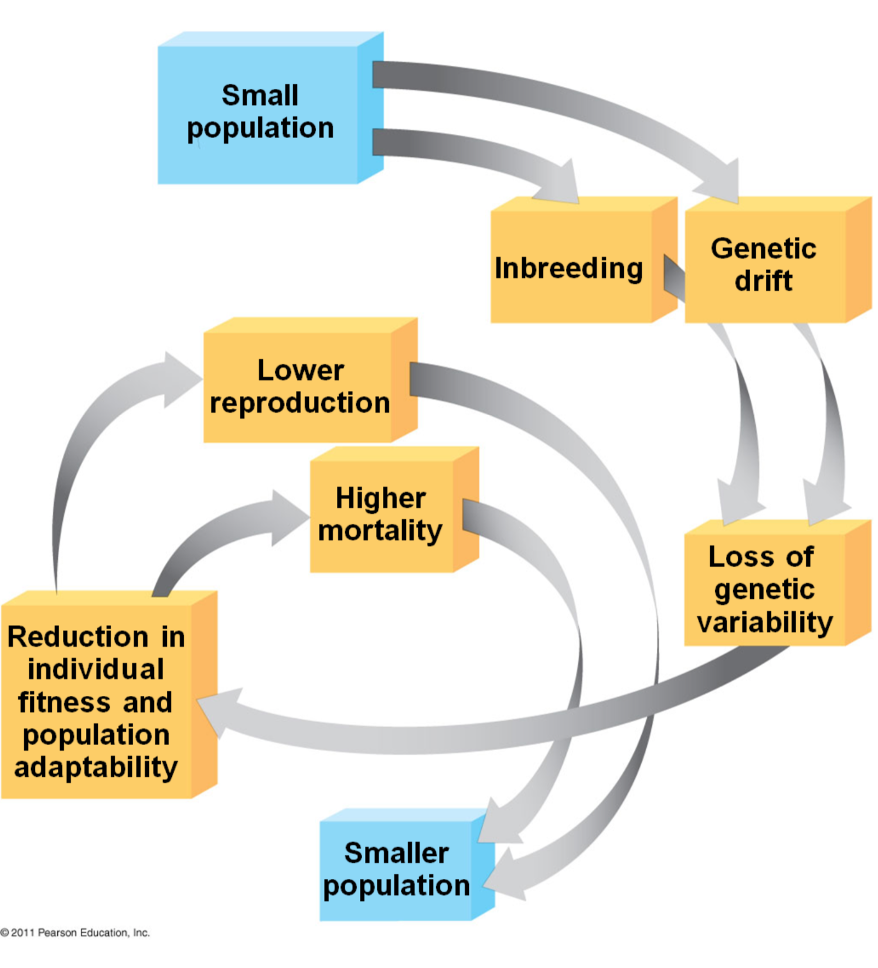
Functional extinction is a fate facing numerous species on our planet today. Species that are functionally extinct may still be present in the ecosystem, but their numbers have dropped so low that they’ve entered what Kenkel called an “extinction spiral.” Species in this situation are doubly vulnerable: they don’t have enough remaining reproductive individuals to maintain their population, and there are so few of them, with such low genetic diversity, that a single destructive event could wipe out all that remain.
Facing the devastation of 2023, Kenkel began looking for hope. “Where are the possible solutions?” she asked herself. “What are we going to do about it?”
In seeking answers to these questions, Kenkel has found ways to support coral health and possibly restore damaged reefs. A special method called microfragmentation, which uses very small pieces of coral to help rebuild reefs, has been shown to produce more growth in transplanted specimens. Another promising option: cryobanking (deep-freezing) coral sperm for future use. NGOs and scientists are also coordinating better with each other and listening more to local communities, she said, leading to more effective on-the-ground solutions.
From past resilience to future hope
Other symposium presenters, all EXIST collaborators who research ancient mass extinctions, found evidence in their work to support a hopeful outlook.
USC Professor of Earth Sciences Frank Corsetti, for instance, delved into the End Triassic mass extinction, which also had a catastrophic effect on coral reefs. The event happened in three main “pulses” over a period of about 700,000 years, as waves of volcanic eruptions injected Earth’s atmosphere with roughly 15.4 gigatons of carbon dioxide per year. Each time the amount of carbon dioxide in the atmosphere doubled, Earth’s temperature increased by 1.5-4.5 degrees Celsius. The result: mass die-offs of species, including corals.
Unfortunately, Corsetti pointed out, today’s Earth is on track to experience similar impacts. Humans are currently adding about 40 gigatons of CO2 to our atmosphere each year (more than twice the amount produced by the End Triassic’s volcanic eruptions), mostly by burning fossil fuels. Because we started from a lower temperature than at the beginning of the Triassic extinction, we haven’t yet reached the same warming threshold. But we are almost there: 2024 saw a mean temperature increase of 1.4 to 1.5 degrees Celsius over pre-industrial levels, and we are currently on track to reach 3 degrees of warming by 2100. Though those numbers sound small in the absolute, past warming trends like the End Triassic show how devastating they can actually be.
But Corsetti also pointed to reason for hope. The fossil record shows that, following the End Triassic extinction, our oceans looked much different for a while. As today, ocean acidification from climate change weakened and destroyed calcium-based coral reefs. But sponges, which rely on silica, were resistant to acidification and multiplied. As acidification and planetary temperatures returned to pre-extinction levels, corals gradually returned – and while sponges were “elbowed aside a bit,” Corsetti explained, they remained plentiful.
“It wasn’t simply that things went extinct and things came back,” he said. “Things came back, but in a different way than we expected.”
That’s actually a positive sign, he said, because it demonstrates that some species – like the sponges – may have hidden potential for adapting to extreme changes. It also shows that Earth has the ability to recover from catastrophic events. But just as the end-Triassic volcanic eruptions had to end before recovery could begin, our current extinction likely won’t end until well after humans stop using fossil fuels.
“It’s not just a numbers game. It’s about how the ecosystem responds. Proper recovery can’t begin until CO2 injection stops, and then there’s still a period of different ecology,” Corsetti said.
Regan Dunn, an associate curator at the La Brea Tar Pits Museum, drew similar lessons from the End Cretaceous extinction. The meteor impact that triggered the event was so huge that the resulting 110-mile-wide crater is still visible in Mexico’s Yucatan Peninsula. The force of the impact flattened forests and triggered tsunamis more than a mile high, while the heat of the blast sparked global firestorms. Longer-term, the ejection of tons of vaporized sulfur into the atmosphere led to climate change in the form of nuclear winter, as particulates drastically reduced the amount of sunlight reaching Earth.
While dinosaurs are the best-known victims of this devastation, many other plant and animal species also disappeared. Underwater, ammonites and corals died, while on land, the extinction killed 75% of bird species, 42% of insect species, and 60% of plant species.
But the event also made room for some of the species and ecosystems we know today. Mammals survived especially well, diversifying in the wake of the disaster. Rainforests filled in empty land (including today’s Amazon basin), and familiar tree species such as palms, ginkgos, and sycamores appeared. However, the overall recovery process took about 1,500 years, and new ecosystems were not as diverse as those that existed before the extinction.
According to Dunn, her work agreed with two hopeful points illuminated by Corsetti’s research. First, Earth is resilient and will eventually recover from climate change, whatever its cause. Second, recovery takes much longer than a human lifetime, and doesn’t guarantee that Earth will return to its previous state. Like the dinosaurs or the forests they roamed, plant and animal species that have disappeared over the last 50 years may be gone for good. But surviving members of their genera could diversify, evolving new life.
The human factor
Of course, the ultimate outcome of our current climate event depends heavily on the dominant mammal that emerged after the last mass extinction: humans. Emily Lindsey, an associate curator at the La Brea Tar Pits Museum, addressed this issue.
The Tar Pits Museum sits in a remarkable geologic location. It’s surrounded by still-active “seeps,” where sticky, liquid asphalt bubbles up through the ground. These seeps have been trapping animals for 60,000 years, and Lindsey directs the team that excavates them. Some of the fossils they retrieve offer insights into a widespread extinction: over the last 50,000 years, Earth has lost roughly two-thirds of its megafauna, or mammal species weighing 100 pounds or more. These include familiar animals such as the saber-toothed cat, wooly mammoth, and dire wolf.
This extinction wasn’t large enough to qualify as one of the Big Five, but it’s still highly significant, in part because it can shed light on the role of humans in affecting the environment. The megafaunal extinction’s timing parallels the spread of modern humans, and the work of Lindsey and other researchers indicates that human activity was a likely contributor to the event. Around the globe, evidence shows that, when humans entered an area, a spike in megafaunal deaths followed.

These deaths were likely due to multiple human activities, such as hunting (sometimes too much of it), habitat takeover, and fire-starting. Ancient megafauna, like elephants today, naturally cleared dead vegetation from their environments. As the animals’ populations dwindled, humans began using fires as a tool to manage the landscape – but they didn’t always know how to keep the fires under control. In fact, Lindsey and her colleagues discovered evidence at La Brea that human-caused wildfires likely contributed to the extinction of local megafauna.
“But after the initial megafaunal extinction event, humans around the globe established a really good balanced management of the ecosystem. Southern California is just an example of that,” Lindsey said. “In effect, humans have been actively reshaping landscapes since we took over from the megafauna. That’s a really important thing to think about when it comes to restoration.”
Proof of concept: recent restorations
Just as Southern California’s ancient history shows how humans previously shaped the landscape, our recent history shows how humans can intervene for good in the present day.
We may be on the verge of a sixth mass extinction, but the last 50 years have also seen numerous species brought back from the brink. The California condor is one close-to-home example. And the Wrigley Institute has helped support recovery for two other species: Channel Island foxes and giant sea bass.
Channel Island foxes live off the coast of Southern California on the island chain of the same name. The size of a large housecat, they evolved from mainland gray foxes that arrived on the islands around 8,000 years ago. In the 1990s, they nearly went extinct, due to a disease epidemic and predation by golden eagles. The Catalina Island Conservancy, working with collaborators including the Wrigley Institute, implemented an intensive species rescue program that has increased the animals’ population.

The foxes aren’t out of the woods just yet. They are still considered critically endangered, and their low genetic diversity means they are especially vulnerable to diseases or inherited weaknesses. But their population continues to grow, and ongoing care and research are giving them a fighting chance at roaming the Channel Islands for many generations to come.
Giant sea bass have a similar story. The massive fish, which historically ranged from Central California down to Mexico, can live to about 70 years old and typically weigh more than 500 pounds when full-grown. Their size made them a popular sportfish for decades. But because of their long lives, they are slow to reproduce, and overfishing brought the species to the brink of extinction in the 1970s.
That’s when the helpers stepped in. A fishing ban, passed in 1981, now protects the species while researchers and conservationists work to save it for future generations. The Wrigley Institute has played a role in the process by maintaining a Marine Protected Area that serves as habitat for the species, supporting researchers, and even raising some of the fish for release into the wild. Like the Channel Islands fox, the sea bass are still critically endangered. But their future is optimistic, thanks to human intervention.
In creating the EXIST initiative, David Bottjer hopes to inspire more efforts like these, as well as identify proactive steps that could reduce the need for future interventions.
“The archives we have of these past extinctions give us an idea of how these changes occurred. It’s not just all doom and gloom. From this information, we can better employ a rational approach,” Bottjer says.
Despite all she’s witnessed over the past few years, coral researcher Carly Kenkel agrees. Closing out the event in a panel discussion, she addressed the question of how to motivate people to act.
“We need to show people, ‘You can actually have a meaningful contribution, and in collective form we can really make a difference’,” she said. “We have large menus of possible solutions.”