
The Academy in the Public Square
Our Doors Are Open
The world needs new ways of thinking about complex problems. Yet, the unmatched potential for university researchers to generate solutions is often overlooked.
The Academy in the Public Square initiative encourages engagement between USC Dornsife faculty and communities beyond our institution. We’re swinging open our doors — becoming the go-to source for expertise. We’re offering new ways of thinking about complex issues affecting people and communities today. We’re communicating scholarship in ways that non-experts can actually understand. And, working with leaders across the public and private sectors, we are emphasizing the enormous value of research universities as society’s most productive and prolific driver of innovation.
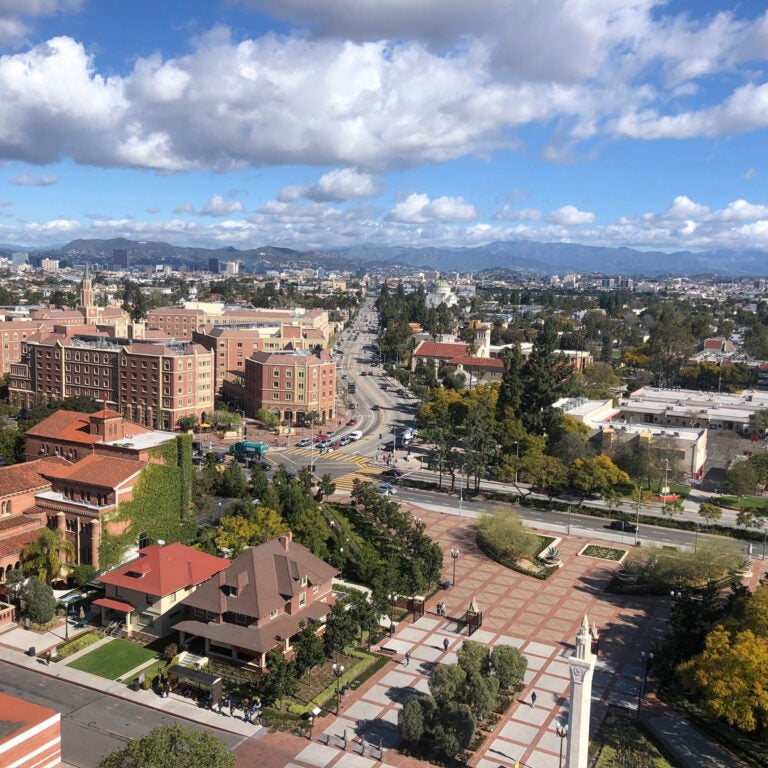

Public Exchange
If your organization had a dedicated research arm with experts in just about any subject you could imagine, what problems would you be able to solve?
As the centerpiece of the Academy in the Public Square, Public Exchange amplifies social impact by making academic expertise more easily accessible than ever before. The first-of-its-kind hub connects leaders in the public and private sectors with the right team of USC researchers and streamlines the collaborative process, providing project management from start to finish.
Shaping the Conversation
USC Dornsife experts provide insights that shape and expand public discourse on complex issues of the day.
USC Dornsife Research in the News

America’s revolution isn’t over
As America celebrates 250 years of independence, USC Dornsife historians offer a broader view of when the Revolution began, when it ended and what it still means today.

Great Salt Lake’s ancient past reveals how quickly fresh water can disappear
Research led by USC Dornsife Earth scientists traces 240,000 years of change, showing that vast freshwater lakes were fleeting as warming and drying reshaped the basin.
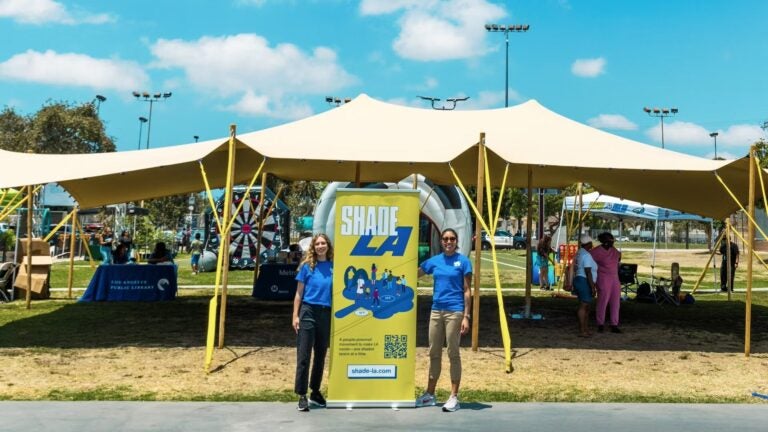
How USC research sparked a new vision for keeping Los Angeles cool
Researchers from USC Dornsife and USC Viterbi are helping ShadeLA bring temperatures down across the city.

USC researchers to develop AI-powered platform to predict depression, suicide risk, and resilience
Funded by ARPA-H, the research team will collect detailed data on brain activity, sleep, smartphone use and more to identify risks and protective factors among USC students with depression.

What to do if your vote is challenged: Practical advice for midterm elections
A civil rights attorney and USC Dornsife lecturer explains how to navigate problems at the polls.

Why you move — not just how often — could affect dementia risk
USC Dornsife research finds that physically strenuous work may not offer the same brain protection as voluntary leisure-time exercise and may even increase dementia risk.

After the Palisades and Eaton fires, USC research offers new answers for communities as they rebuild
USC researchers and USC Dornsife’s Public Exchange provide one of the most comprehensive pictures yet of how the fires affected environmental contamination.

What makes muscles contract? A physiologist explains how muscles move
As part of The Conversations’ “Curious Kids” series, USC Dornsife’s Kiki Crawford describes how an entire team of electricity, calcium, energy and proteins all work together to move your muscles.

What rising tensions with Mexico mean for the US
As the United States exerts growing pressure on Mexico, USC Dornsife political scientist Pamela Starr, author of The Making of Mexico, explains what Americans often misunderstand about the country next door and why the relationship matters.

The National Climate Assessment is broken – appointing Matthew Wielicki to lead it won’t help
What communities and businesses really need is information they can act on, with examples of what’s worked elsewhere and why — and what fails.
Dornsife Dialogues
Check out our series of stimulating online forums in which leading experts and distinguished alumni from USC Dornsife share new perspectives and research-based findings on timely topics. Now available in podcast form!

Complex Insights into Identity
USC Dornsife’s Viet Thanh Nguyen, the Pulitzer-winning author of The Sympathizer, contributes frequently to the public discourse about American culture — including pieces for The Atlantic, Time, The New York Times, and more. With his bestselling novel recently adapted into an HBO series, whole new audiences are engaging with his distinct voice.

The Guggenheim Fellow Shaping the Public Discourse
In any given year, Natalia Molina can be seen in dozens of national media outlets making her expertise accessible to a wide audience. The Distinguished Professor of American Studies and Ethnicity and Dean’s Professor of American Study and Ethnicity’s expertise explores current issues affecting communities representing many different backgrounds.
Molina’s work has earned her a prestigious Guggenheim Fellowship in 2026 and a MacArthur “genius” grant in 2020. The Los Angeles Times called her book, A Place at the Nayarit: How a Mexican Restaurant Nourished a Community — which chronicles how immigrant workers shaped the neighborhood of Echo Park — an “essential Los Angeles book.” She was also part of the L.A. Civic Memory Working Group, a group convened by the mayor of Los Angeles’s mayor to make recommendations on how to preserve the city’s history.
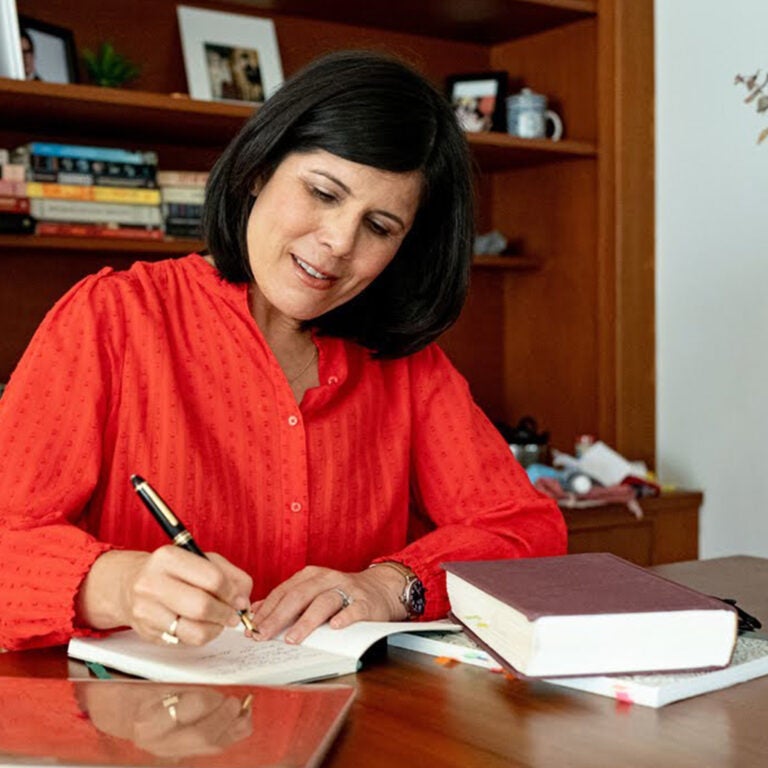

Sought-Out Source
In published news articles, Jackson Trager, a PhD candidate in psychology, helps audiences better understand both the promise and limitations of artificial intelligence in areas ranging from policing to moral reasoning. It’s work that earned him a USC Dornsife Communicator of the Year award.

Contact Us
USC Dornsife Office of Communication
1150 S. Olive St, 24th Floor
Los Angeles, CA 90015
Phone: (213) 821-6797
Fax: (213) 821-6057
communication@dornsife.usc.edu