Original story by Lila Seidman
Serina Diniega always wanted to plant an avocado tree at her Altadena home, but now she worries the creamy green fruit might pose a threat.
Her yard was scorched in the Eaton fire as her block went up in flames. The planetary scientist’s house survived, but unseen contaminants could be lurking in the soil.
“What can I do to keep that tree healthy, hopefully be able to eat the fruit a number of years down the line without worrying about whether or not I’m poisoning my family?” she wondered. The internet was full of opinions, but science was scarce.
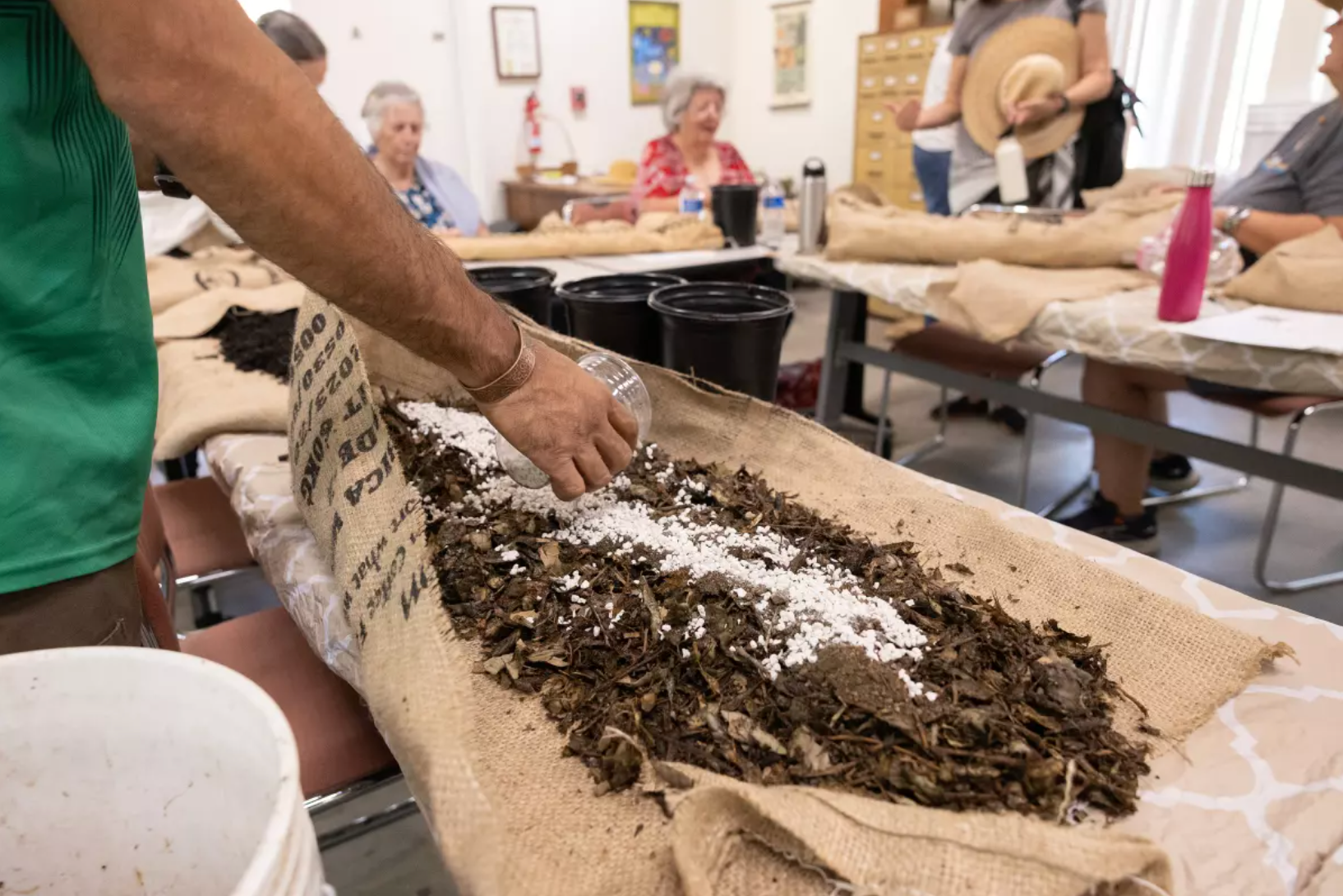
So when a DIY soil detoxification workshop came up at a local nursery, she jumped on it. Many others did too; roughly 40 people were waitlisted for the three-hour class led by SoilWise, a landscaping, education and consulting business. Once a niche subject, the firestorms of January have put a spotlight on soil health, as residents wonder if their yards are safe for their children to play or if their home-grown tomatoes are OK to eat.
Learning how plants, compost and other materials combat contamination can be a source of empowerment in the face of disasters that are beyond individual control, and proponents say the approach is more environmentally friendly than conventional alternatives. For some, the tools are also a backstop against inadequate government help.
After the Eaton and Palisades blazes, federal and state disaster agencies refused to pay to test soil for contaminants on scorched lots — a practice employed in virtually all wildfire recoveries in the recent past.
So researchers with USC in March began to offer the service to L.A. County residents. The free program has focused on screening for lead, a potent neurotoxin that’s especially dangerous for kids.
So far, most of the roughly 3,000 samples residents have submitted fall below California’s level of potential concern, 80 parts per million.
But a substantial proportion are above that. Some are even in 1,000s, which the state classifies as hazardous waste.
Lead poses a bigger problem in Altadena than in Pacific Palisades, largely because of the former’s overall older housing stock, built when homes were coated in leaded paint, said Josh West, a professor of earth sciences and environmental studies at USC.
Yet Palisades residents generally have more money to deal with cleanup.
“The burden that people in Altadena are facing is a much greater proportion of their average income,” West said.
Read the full story on the L.A. Times website >>
Related Stories
Empowering Resilience: Community science in the wake of the 2025 Los Angeles fires >>
Long Live the Fire Fish: USC Sea Grant helps save endangered fish during wildfires >>
From the Experts: Wrigley Institute faculty explain January 2025 wildfire issues >>