Wrigley Institute names 2025 Faculty Innovation Award winners
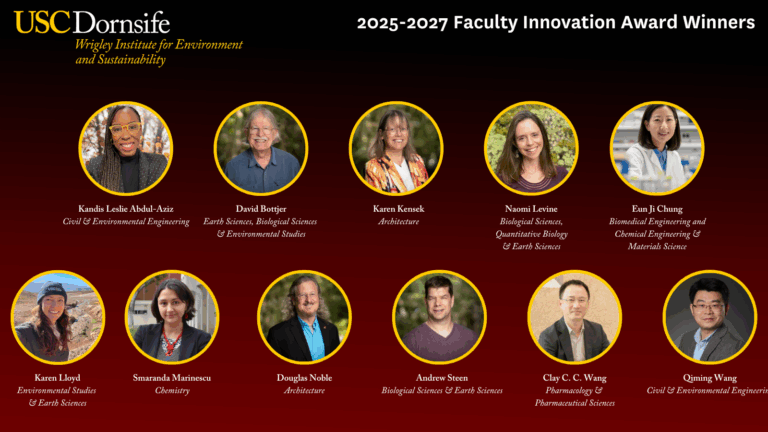
The Wrigley Institute for Environment and Sustainability (WIES) has named its 2025-2027 cohort of Faculty Innovation Award winners. The awards, worth up to $50,000 each, support original, solutions-focused environmental and sustainability research by USC faculty from any school.
This year’s awardees conduct research across a range of disciplines, including architecture; civil, environmental, and chemical engineering; computational biology, Earth sciences; environmental studies; paleontology; and pharmacology. Four of the researchers in the cohort are receiving grants under WIES’s Climate and Carbon Management Initiative, which focuses on tracking and reducing planet-warming greenhouse gas emissions. One is receiving a grant under the Future of Plastics Initiative, which explores ways to reduce plastic pollution in our environments.
“Research universities like USC are a crucial proving ground for novel solutions to environmental and sustainability challenges,” says Wrigley Institute Executive Director Jessica Dutton. “Our Faculty Innovation Awards are designed to help make early-stage investigations of these solutions possible.”
2025-2027 Faculty Innovation Award Winners

WiSE Gabilan Assistant Professor of Civil and Environmental Engineering
Project: “Redox-Active Materials for Solar Photothermal Water Splitting”*
Hydrogen is currently grabbing headlines as a possible alternative to planet-warming fossil fuels. Current methods for producing it at scale, however, use significant amounts of electricity – which is most often generated by burning fossil fuels. So while the use of hydrogen fuels generally does not contribute to climate change, their production does. Leslie Abdul-Aziz’s Faculty Innovation Award will fund a study into a more sustainable method for producing hydrogen fuel: splitting water atoms using concentrated sunlight. Abdul-Aziz’s research will test a unique splitting method that uses enhanced perovskite oxides, a type of material made from calcium and titanium. Her process has the potential to increase the efficiency of hydrogen-producing sunlight-water reactions, enabling hydrogen fuel production at scale.
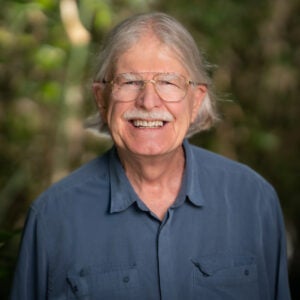
Professor of Earth Sciences, Biological Sciences, and Environmental Studies
Project: “EXIST: Extinction Insights for a Sustainable Tomorrow”
Climate change is devastating biodiversity around the globe, causing extinction of numerous species and threatening many others. This issue has received significant attention over the last 40 years, as scientists have attempted to stem the tide of biodiversity loss. Meanwhile, studies of ancient extinctions have focused mostly on verifying their scope and causes, without attempting to glean information that could help us cope with our current extinction event. David Bottjer’s Faculty Innovation Award-funded project aims to fill that gap. Bringing together collaborators from USC, the Natural History Museum of Los Angeles County, and the Huntington Library, EXIST will develop insights that can be used to manage the current extinction and guide modern-day climate and biodiversity research agendas.
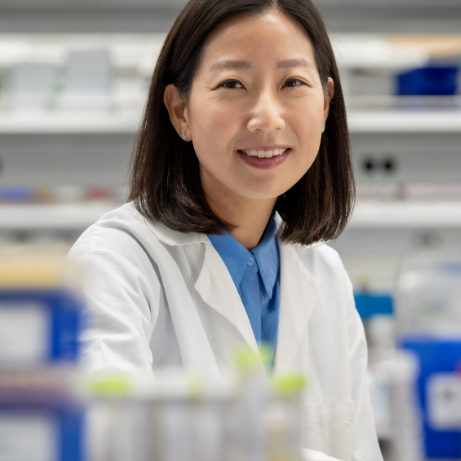
Dr. Karl Jacob Jr. and Karl Jacob III Early Career Chair and Associate Professor of Biomedical Engineering and Chemical Engineering and Materials Science
Project: “Developing next generation, biodegradable POC-CC as alternative plastics” (Funded by the Seaver Institute)
Much of today’s plastic pollution comes from polystyrene and polyethylene plastics, which don’t break down easily in the natural environment (low biodegradability) and can cause harmful effects when ingested by humans or animals (low biocompatibility). Inspired by her research on dissolvable and implantable medical products, Eun Ji Chung and her lab have developed a possible solution: a prototype plastic made from citric acid and calcium carbonate, biodegradable and biocompatible materials that come from citrus fruits and ground seashells. Chung’s Faculty Innovation Award will enable her to continue her research forward, getting closer to a commercially usable version of the discovery.

Gabilan Distinguished Professorship in Science and Engineering and Professor of Biological Sciences, Quantitative and Computational Biology, and Earth Sciences
Project: “Deciphering the role of microbe-carbohydrate interactions in maintaining healthy and resilient kelp forests” (Funded by the Mary Gard Jameson Foundation)
Kelp forests are crucial to the health of marine ecosystems, and some types of kelp show promise as farmed sources of biofuel, biodegradable plastics, nutritious food, and more. However, climate change and ocean pollution are constant sources of stress for kelp, threatening this important resource. Kelp organisms are covered in microbes (their microbiome) and mucilage, a carbohydrate-based, mucus-like protective coating. While recent research has illuminated the kelp microbiome and its effect on kelp’s resistance to climate change, we know little about how the microbiome and mucilage interact. This project will investigate those interactions, to help increase our understanding of the factors affecting kelp health and its potential as both an ecosystem support and sustainable crop.
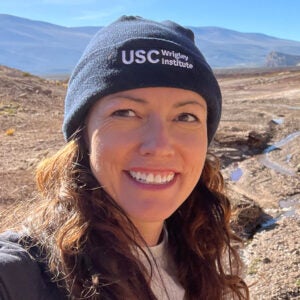
Wrigley Chair in Environmental Studies and Professor of Earth Sciences
Project: “Measuring microbial consumption of methane in natural urban-adjacent marine basins”*
Methane is one of the most powerful greenhouse gases in our atmosphere. The deep ocean plays a key role in absorbing and storing excess amounts of this gas, thanks to methane-eating microbes that live in the ocean floor. However, we know very little about how much methane these microbes are able to take in or how they do it – crucial questions to answer as human activity multiplies the amount of methane flowing into the ocean. This lack of information is due in part to the challenges of collecting data in the deep ocean, where extreme conditions limit research activity. With support from her Faculty Innovation Award, Karen Lloyd and a collaborator from the University of North Carolina will use equipment they’ve designed and built to collect this missing data. The study will help illuminate what happens to the methane in our ocean, including how much of this planet-warming gas may be escaping into our atmosphere.
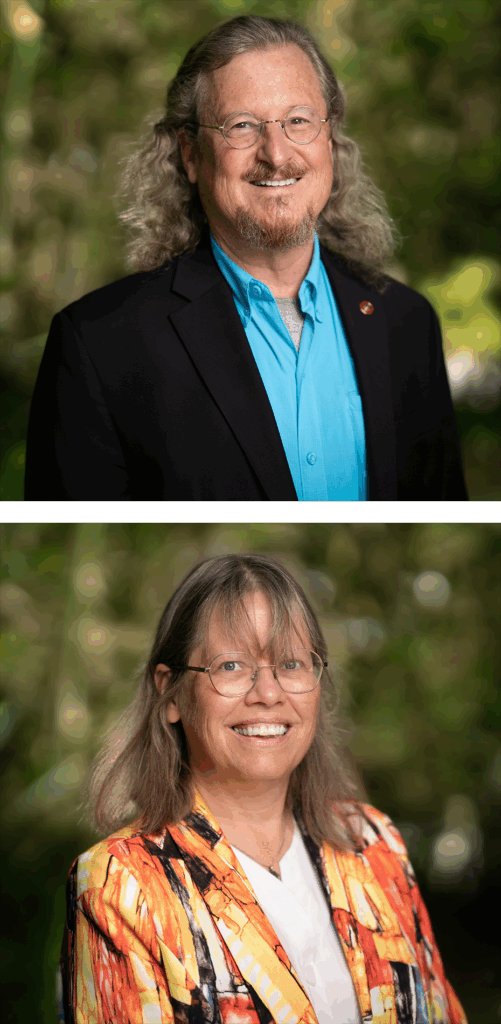
FTI Fellow Professor and ACSA Distinguished Professor of Architecture
Professor of the Practice and ACSA Distinguished Professor of Architecture
Project: “Pocket Lodge: Sustainable and Comfortable Tiny Homes in an Extreme Climate” (Supported by the Lott Foundation)
Southern California’s housing shortage doesn’t just affect traditional residential neighborhoods. It’s also an issue in the region’s national parks, where high costs, spartan infrastructure, and the need to protect sensitive ecosystems all limit housing options for park employees. Following on the heels of the experimental Carapace Pavilion, a sustainably-built shade structure created by Doug Noble and his students for Joshua Tree National Park, Noble and Karen Kensek will use their Faculty Innovation Award to design and build tiny homes for the park’s seasonal rangers. The project will help test materials, design elements, and process improvements that could guide the use of tiny homes as sustainable housing solutions around the region, including in extreme environments such as Joshua Tree.
Associate Professor of Biological Sciences and Earth Sciences
Project: “Capturing active enzymes to improve petroleum bioremediation”
Oil spills are environmental disasters, contaminating ecosystems for years or even decades after the initial event. And with demand for oil expected to stay roughly constant through 2050, oil spills will remain a risk even as green technologies become more common. Bioremediation – the use of microbes to break down oil into less-toxic compounds – is a promising method for effectively cleaning up oil spills. The first step in this process involves enzymes that break down the largest oil molecules so the microbes can digest them. However, researchers have not yet identified which enzymes do this work or how they do it. Drew Steen’s Faculty Innovation Award will fund a study to identify the enzymes and understand their characteristics, yielding insights that can help improve the process of cleaning up oil spills.
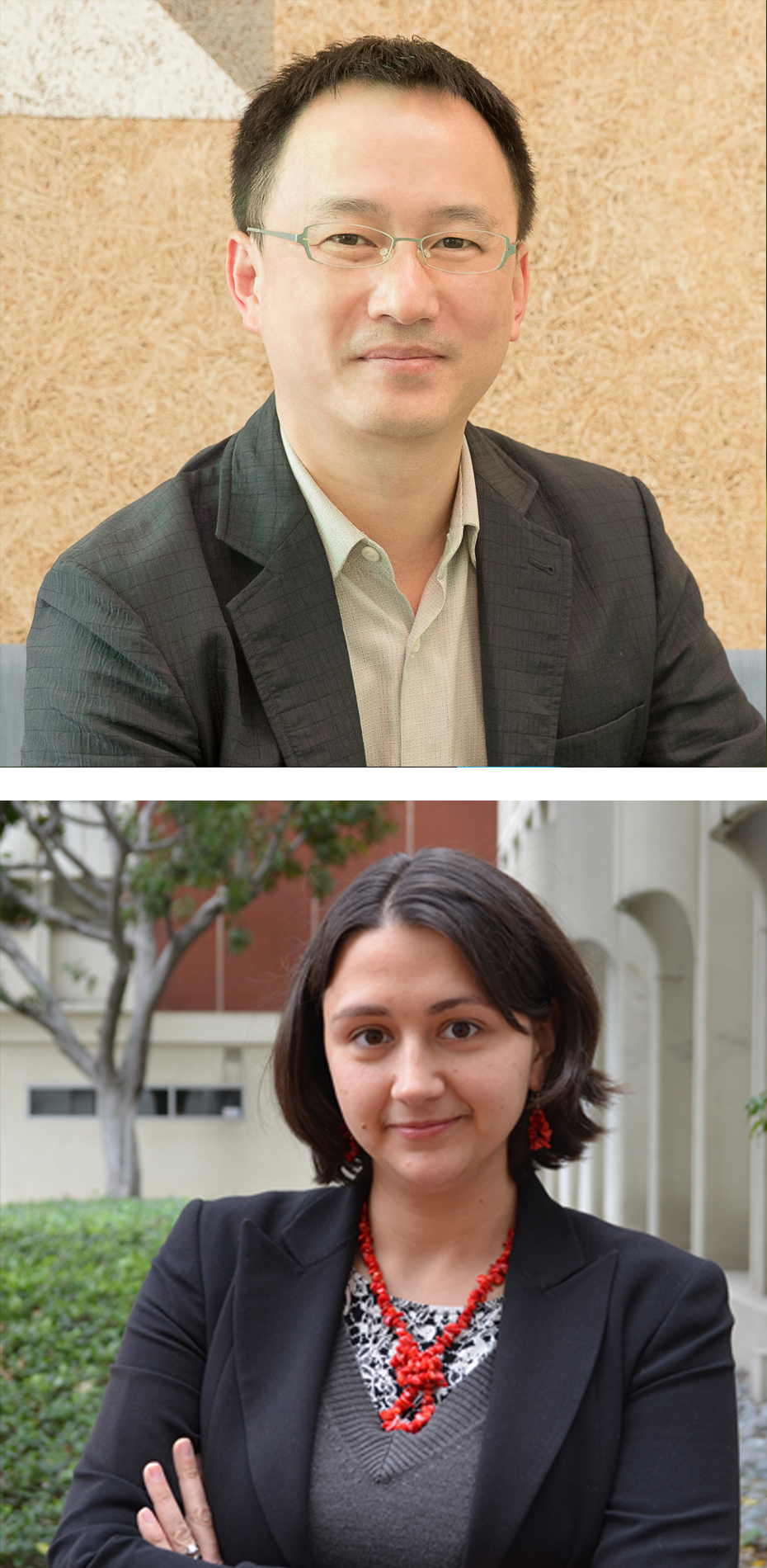
Professor of Pharmacology and Pharmaceutical Sciences
Associate Professor of Chemistry
Project: “Exploring Captured Carbon Dioxide as Novel Carbon Sources for Fungal Fermentation of High Value Compounds”*
Hailed as a miracle material when it was first created, plastic has provided tremendous convenience for people and helped increase safety in fields such as medicine and food transportation. It has also, however, become one of our planet’s largest sources of pollution. At USC, Clay Wang and his collaborators have found a novel way to deal with this pollution: feed it to fungi. Their research has uncovered ways to turn ocean plastics into building blocks for life-saving medicines, sustainable alternatives to toxic dyes, and more. Wang’s Faculty Innovation Award will fund new investigations to test whether these plastic-fueled processes can be adapted to run on captured carbon dioxide. If successful, the study holds potential for adding a tool to our kit for managing greenhouse gases and their damaging impact on our planet.
Stephen Schrank Early Career Chair and Associate Professor of Civil and Environmental Engineering
Project: “Seawater-Assisted Electrochemical Carbon Sequestration (SAECS)”*
Corals are engineering marvels. Working with just sunlight and seawater, they build huge reefs with high mechanical strength. In the process, they pull massive amounts of CO2 out of the ocean and lock it away from our atmosphere. Carbon that has been stored this way can remain sequestered for hundreds or even thousands of years, helping to reduce the amount of greenhouse gases fueling climate change. Inspired by this natural process, Qiming Wang has successfully tested the use of electrochemical reactions to capture and convert CO2 into a strong, mineral-based structure. His Faculty Innovation Award will fund the next-stage version of his prototype, investigating whether this technology can be implemented in the ocean at scale.
*Funded through the Wrigley Institute Climate and Carbon Management Initiative, which is generously supported by Ballmer Group.
Learn more about current Wrigley Institute research projects >>
Learn more about Faculty Innovation Awards >>
Learn more about the Climate and Carbon Management Initiative >>