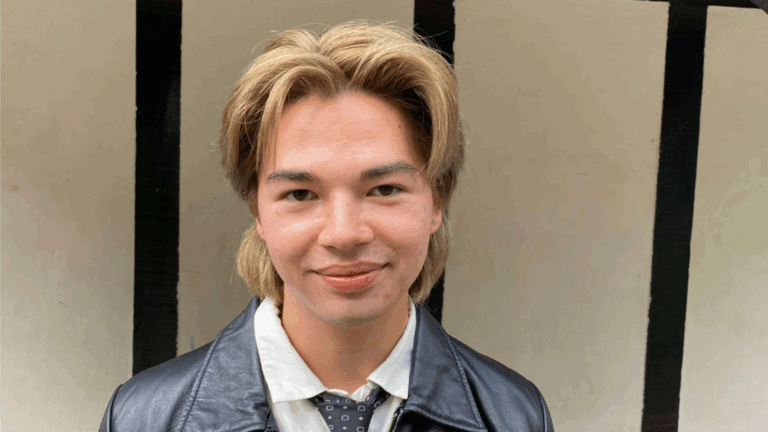
Alumni Spotlight: Jonathan Wong-Hayden, Class of ’25
What are you up to right now?
I’m currently interning at the ONE Archives doing curatorial and communications work, building off my curatorial experience at the Getty and at LACMA, and my archival and research experience working with a professor in the English department at USC. At the time of writing this, I am moving to Taiwan tomorrow to teach English to elementary schoolers through a Fulbright English Teaching Assistantship! I’m also currently working on my application for grad school.
Could you walk us through your journey from graduating USC to what you’re doing today? What were some key turning points or decisions?
I’m currently interning at the ONE Archives doing curatorial and communications work, building off my curatorial experience at the Getty and at LACMA, and my archival and research experience working with a professor in the English department at USC. At the time of writing this, I am moving to Taiwan tomorrow to teach English to elementary schoolers through a Fulbright English Teaching Assistantship! I’m also currently working on my application for grad school.
What sparked your decision to major in Creative Writing?
In high school I self-published an absolutely awful book of poetry and short stories (that I have since taken down), and the experience of seeing a writing project all the way through confirmed for me that writing was what I wanted to do. So I applied to USC as an English major, but ended up switching to a more “practical” major before I even left for California. After trying out that other major, I switched back to Creative Writing, and now know that I’m doing much better (and am much happier) with my English degree than I’d ever have been with that other major.
Thinking back to your student days, what’s one piece of advice that would have made the biggest difference in your college experience or career planning?
One piece of advice that would have made the biggest difference in my college experience would be taking full advantage of all the USC scholarships and opportunities from the very beginning. Especially at USC, there are so many amazing opportunities that often have very few applicants. While I was better about it later in college, there are a lot of scholarships and programs that are open only to first and second-years that I missed out on. So talk to upperclassmen and professors and keep an eye out for those opportunities from the very beginning. But at the same time, don’t be afraid to say no to things and focus on what you’re doing and want to do. One thing I was very glad I did throughout college was be mindful of burnout, so I would recommend being proactive about finding opportunities, but being selective in which ones you apply to.
Based on your experiences, what advice would you give to students feeling uncertain about their post-graduation path?
I would say be very open to everything that comes your way and follow each road to its end. I think that for majors that aren’t explicitly pre-professional (pre-law, pre-med, etc.) or tied to a specific profession, it’s really up to you to be flexible in how you use your degree. When I started as an English major, I wasn’t planning on going into the museum field or language instruction field, but when opportunities to do both came my way, I tried them out and found I really enjoyed them, and they’re opportunities I would not have been able to succeed in without my experiences with writing, literature, and language.
Are there any specific courses, professors, or resources within the English department or USC that you’d highly recommend to current students?
Honestly, every single class I’ve taken in the English department has really shaped me and my path, but ENGL 496, the Senior Honors Thesis, was an incredible experience that has been quite unlike anything else I’ve ever done. In addition, all the workshop classes I’ve taken have been great, including the intro poetry workshop with Professor Robin Coste Lewis, the intermediate poetry workshop with Professor Mark Irwin, and the intro fiction workshop with Professor Percival Everett. The intermediate workshop, in particular was great as it really built off the introductory one, and because everyone there has taken the introductory workshop, the baseline for the quality of work and feedback is high.