How climate finance to help poor countries became a global shell game
Original story by Shannon Gibson
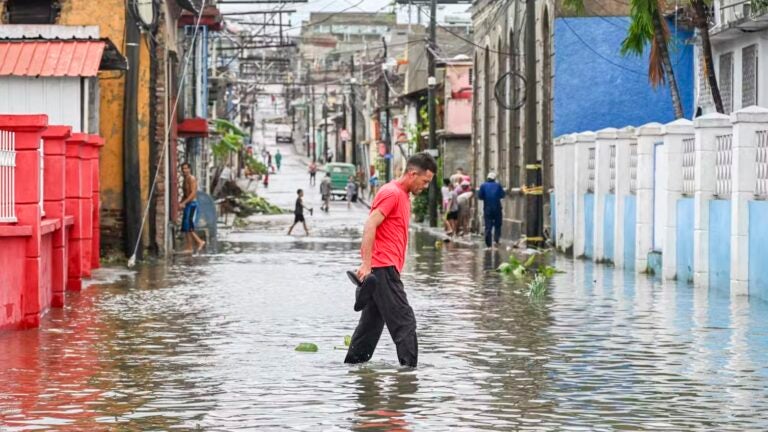
Developed countries that grew wealthy from burning fossil fuels, the leading driver of climate change, have pledged billions of dollars a year to help ecologically vulnerable nations like Jamaica, Cuba, and the Philippines adapt to rising seas and stronger storms and rebuild after disasters worsened by climate change.
In 2024, they committed to boost climate finance from $100 billion a year to at least $300 billion a year by 2035, and to work toward $1.3 trillion annually from a wide spectrum of public and private sources.
But if the world is pouring billions into climate finance, why are developing countries still struggling with recovery costs?
I study the dynamics of global environmental and climate politics, including the United Nations climate negotiations, and my lab has been following the climate money.
Governments at the U.N. climate conference in Brazil have been negotiating a plan to get closer to $1.3 trillion by 2035 and make it easier for developing countries to access funds. But the world’s climate finance so far has rested on a shaky foundation of fuzzy accounting, one where funding for airports, hotels and even ice cream stores is being counted as climate finance.
Cooking the climate finance books
Wealthy nations first promised in 2009 to raise $100 billion a year in climate finance for developing countries by 2020. Whether they hit that target in 2022, as claimed, is up for debate.
Researchers have found many cases where the reported numbers were inflated, largely due to relabeling of general aid that was already being provided and calling it “climate aid.”
The United Kingdom, for example, claims it is on track to meet its £11.6 billion (about $15.2 billion) pledge, but it is doing so in part by reclassifying existing humanitarian and development aid as “climate finance.”
This practice undermines the principle of additionality – the idea that climate finance should represent “new and additional” resources beyond traditional aid, and not simply be a new label on funds already planned for other purposes.
An analysis by the climate news site Carbon Brief suggests that to truly meet its target, the U.K. would need to provide 78% more than it currently does.
The U.K.’s “creative accounting” is not a one-off.
The Center for Global Development estimates that at least one-third of the new public climate funds in 2022 actually came from existing aid budgets. In some cases, the money had been shifted to climate adaptation projects, but often development projects were relabeled as “climate finance.”
What’s counted as climate finance comes from a mix of sources and is predominantly provided through loans and grants. Some funding is bilateral, flowing directly from one country to another. Some is multilateral and distributed through organizations, such as the World Bank or the Green Climate Fund, that are funded by the world’s governments. Money from private investors and corporations can also count in this growing but fragmented system.
Countries providing the assistance have been able to stretch the definition of climate finance so they can count almost any project, including some that have little to do with reducing emissions or helping communities adapt.
Shannon Gibson is a professor in the Wrigley Institute’s Environmental Studies Program.