Keira Jameson
What was the topic of your research project for the Global East Asia Tokyo course and why did you choose that topic?
During my time in Tokyo, I spent my time researching Japanese designer Yohji Yamamoto and his Global influence on the fashion industry. Being in Japan inspired me to focus on a designer that was dedicated to creating pieces that reflect the country’s history and traditions, but does so in a way that does not compromise craftsmanship. I focused on his commitment to minimalism and individualism, traits that allow his brand to resonate deeply and meaningfully with his consumers. His monochromatic approach reflected Japanese tradition and a dedication to still life, emphasizing texture before color. His garments might seem unassuming to the untrained, distant eye, but upon further inspection his garments hold an incredible intricacy which grants each piece its own story and distinctiveness.
What were the main findings and/or highlights of your research?
Much of the research I did revolved around contextualizing Yamamotos work with Japanese traditions. I decided to focus my thesis on traditional Japanese words which Yamamoto incorporates into his garments, including topics such as Shikake, behavior prompting response, Shibui, a balance between simplicity and complexity, and Ma, an “in between” space. Each of these themes were at the core of Yamamotos mission, and I was fascinated by his unique dedication to these traditional ideals. These phrases represent the pillars of his brand, with things like in between space and a subtle intricacy serving as his mission and brand identity.
Did you face any challenges when completing your research project or throughout the program in general? If so, how did you overcome them?
It was difficult at times to come up with ideas on what to write about, but being in Tokyo and immersing myself in the city inspired me and my research. Initially I thought about discussing the intersection between Japanese luxury brands and art, but ultimately when I arrived in Tokyo and spent the day in the Aoyama fashion district I was captivated by Yamamoto and his work. As soon as I found him, I never looked back.
In what ways did the Global East Asia Tokyo program impact or help your research?
Being in Tokyo was essential to the success of my research. Though Yamamoto has presence across the world, he is extremely prevalent and well respected in Japan. Because his brand is catered towards traditional Japanese ideals, his mission is extremely well received and widely distributed across the country. Being in Japan allowed me to visit each of his stores, of which he has many, and gave me the opportunity to interact with the clothes in real life. It was also imperative that I experience the customer service that exists within his stores, as it is one of the most impressive aspects of his entire business model. Upon stepping in one of his stores, you are immediately given priority. Each associate is extremely attentive but not overbearing, always ready to assist you with whatever you need. This is a large part of what sets Yamamotos brands apart — his dedication to high quality service and working with intention show that quality is never sacrificed.
Can you share any anecdotes about your Maymester experience?
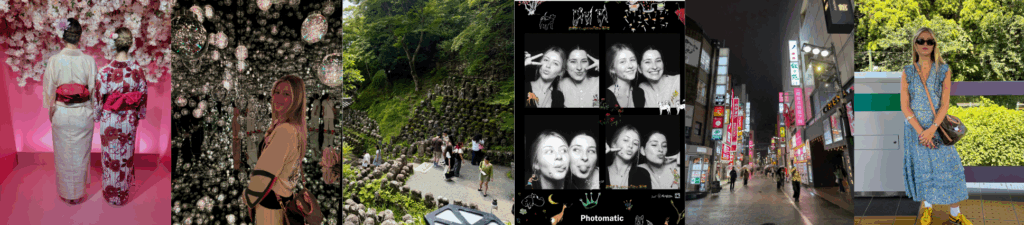
Being in Japan was one of the most rewarding experiences of my life. I was able to visit places that I otherwise might have never been able to explore, and met people I would likely never have been able to meet. One of my favorite memories of my time in Japan is when I visited Disney Sea, Tokyos version of Disneyland. It was an incredible place and really was magic, with food and theming that was unlike any other place I had been. Tokyo is an incredible place and made for an unbeatable setting for research on design and Japanese tradition.