
Upcoming Events
Fall 2026

First Forum Conference 2026
Friday, October 23 – Saturday, October 24 | SCA | RSVP
Please save the date for this year’s Cinema and Media Studies Graduate Student Conference.
Events will take place all day Friday Oct 23 – Saturday Oct 24 in SCA.
Schedule and details coming soon, and please RSVP for updates.
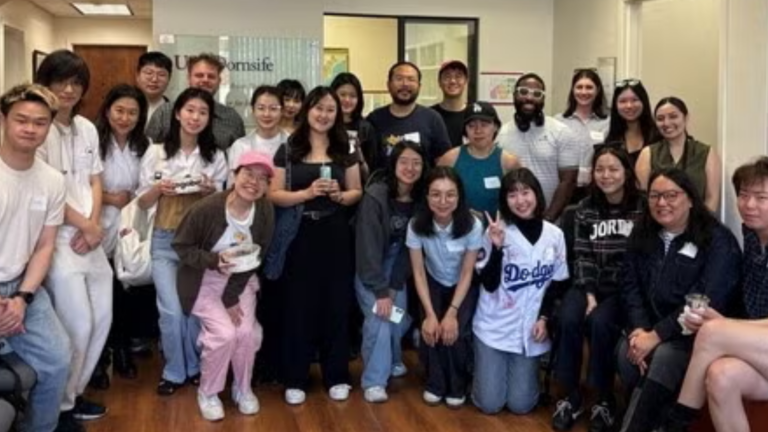
Fall 2026 EASC Grad Connect
Thursday, October 29 | 12:00PM-1:30PM | CAS 100 | RSVP
Please join us for the Fall 2026 EASC Grad Student Connect! Enjoy food, drink and conversation with fellow students across USC while learning about EASC’s academic programming and opportunities. Graduate students from any field are welcome to join, so this is a great opportunity to meet fellow students with Asian studies-related research topics and interests!
Please RSVP by Thursday, October 22, so we can order enough food and drinks for everyone!

EASC Guest Speaker Series: How Women of Color Built the Internet – Talk by Lisa Nakamura
How Women of Color Built the Internet
Thursday, November 5, 2026 | 2:00PM-3:20PM | Students only
EASC Guest Speaker Series: Talk by Prof. Lisa Nakamura (Univ. of Michigan) with Faculty Moderator Prof. Ketaki Pant (HIST 391: Feminist Histories of South Asia)
Lisa Nakamura “challenges the widespread myth that the internet was born from the labor of a handful of white male entrepreneurs, recovering the uncredited and unpaid contributions of women of color.”
For students in course only.

EASC Guest Speaker Series: Encountering Bajiao: Plants, Perception, and Meaning-Making in Premodern China – Talk by Prof. Meimei Zhang
Friday, November 6, 2026 | 12:30PM-2:00PM | LVL 16 | RSVP
EASC Guest Speaker Series: Talk by Prof. Meimei Zhang (Associate Professor of Asian Studies, Occidental College) with Faculty Moderator Wanmeng Li (EALC 110: East Asian Humanities: The Great Tradition)
Over the past decade, the emerging field of critical plant studies has challenged anthropocentric approaches to the humanities by asking how plants participate in shaping human perception, culture, and environments. Rather than treating plants merely as symbols or passive objects of representation, scholars have increasingly explored their materiality, agency, and ecological relationships with humans. This talk offers a brief overview of major theoretical approaches in plant humanities before turning to a case study of bajiao (Chinese banana) in premodern Chinese literature and visual culture, and how bajiao became an active participant in the formation of religious thought, sensory perception, regional imagination, literary expression, and garden aesthetics in premodern China.
This event is co-sponsored by the USC East Asian Library.

Levan Book Chat—Mengxiao Wang, Performing Enlightenment
Tuesday, November 10, 2026 | 11:00AM-12:00PM | DML 240 | RSVP
A discussion of Mengxiao Wang’s new book, Performing Enlightenment: Buddhism and Theater in Early Modern China (Harvard University Press, 2026). The author will be joined in conversation by Shih-shan Susan Huang (Rice University) and Wilt L. Idema (Harvard University), moderated by Lori Meeks (USC). Organized in partnership with the Department of East Asian Languages and Cultures and the East Asian Studies Center.
About the Book: In early modern China, a major revival of Buddhism coincided with a surging fascination with theater. Buddhist monastics and laypeople increasingly participated in viewing, discussing, and writing plays. Far from merely serving as a medium for conveying religious teachings and practices, drama became a source of deep concern for Buddhists due to the perceived tension between spiritual discipline and worldly entertainment.
In Performing Enlightenment, Mengxiao Wang examines how Buddhist clerics and laity engaged with and drove innovations in theater during the late Ming and early Qing dynasties. Drawing on an extensive range of sources—including clerical sermons, scriptural commentaries, temple gazetteers, morality books, literati prose, and dramatic texts and paratexts—Wang argues that Ming-Qing Buddhists resolved the conflict between religion and entertainment by transforming theater into a creative mode of devotional practice. Consequently, playwriting, stage performance, and theatergoing all emerged as legitimate pathways to spiritual enlightenment. This interdisciplinary work provides fresh insights into Chinese studies, Buddhist studies, and theater studies while offering a comparative perspective on the complex interplay between religion, literature, and performance across cultures.
About the Author: Mengxiao Wang is Assistant Professor of Chinese Literature at the University of Southern California.
Open to attendants outside of USC. An excerpt of the book will be made available to registered attendants. Registration before the event is required.
This event is part of the Levan Institute for the Humanities’ “Book Chats” series, conversations about new books published by USC scholars in the humanities and humanistic social sciences. To see more events in this series, including recordings of past events, visit https://dornsife.usc.edu/levan-institute/book-chats/.

EASC Guest Speaker Series: Caste and Engineering Education in South Asia – Talk by Ajantha Subramanian
Thursday, November 12, 2026 | 2:00PM-3:20PM | Students only
EASC Guest Speaker Series: Talk by Prof. Ajantha Subramanian (Harvard University) with Faculty Moderator Prof. Ketaki Pant (HIST 391: Feminist Histories of South Asia)
Ajantha Subramanian shows that the language of “merit” makes caste privilege invisible in engineering edcuation in contemporary India.
For students in course only.

EASC Manuscript Review for Graeme R. Reynolds
Friday, November 13, 2026 | 2:00PM-5:00PM | SOS 250 | RSVP
The EASC Manuscript Review is a professional development seminar for faculty and graduate students, from USC and the wider community.
Leading scholars in the fields of cultural, intellectual and literary history of Korea will discuss a new book manuscript by Graeme R. Reynolds, Assistant Professor of East Asian Languages and Cultures, entitled Material Historiography: The Official Histories of Koryŏ from the Fifteenth to Eighteenth Century. Discussants include Donald L. Baker, Professor Emeritus of Asian Studies at The University of British Columbia and Hwisang Cho, Associate Professor of East Asian Languages and Cultures at Emory College of Arts and Sciences. Faculty and graduate students from USC and the community are welcome to attend.
Attendees must read the entire manuscript and actively participate in the professional development review seminar. A copy of the manuscript will be provided after we receive your RSVP.
Please RSVP by October 13, 2026 to allow for adequate time to read through the manuscript.

Japan Society for the Promotion of Science (JSPS) Fellowships Information Session at USC
Thursday, March 4, 2027 | 12:00PM-1:30PM | DML | RSVP
Interested in conducting research in Japan? Join representatives from the Japan Society for the Promotion of Science (JSPS) to learn about fellowship opportunities for Ph.D. students, postdoctoral scholars, researchers, and faculty across all academic disciplines.
As Japan’s largest funding agency for academic research, JSPS offers a wide range of fellowships that support research and scholarly exchange at universities and research institutions throughout Japan. During this information session, JSPS representatives will provide an overview of available programs, eligibility requirements, the application process, and tips for preparing a competitive application. Attendees will also hear from JSPS alumni about their experiences conducting research in Japan and have an opportunity to ask questions.
Whether you are just beginning to explore research opportunities abroad or are preparing to apply for a fellowship, this session is an excellent opportunity to learn more about funding your research in Japan.
Lunch will be served. Please RSVP by Friday, February 18.
This event is co-sponsored by the USC East Asian Studies Center and the USC Shinso Ito Center for Japanese Religions and Culture

Japan in the Long 1980s
Thursday, April 8, 2027 | 10:00AM-5:00PM | TBA | RSVP
In this one-day workshop, six historians of modern Japan will present new scholarship on “the long 1980s,” conceptualized as a distinct, coherent historical period from the late 1970s to the mid-1990s. From 1985 to 1991, Japan seemed on the verge of taking over the world, buoyed by unstoppable growth in the real estate and stock markets, only to collapse once economic fundamentals brought to heel the popular euphoria driving all bubbles. Thereafter, Japan entered a prolonged period of economic, political, even demographic malaise known as the “Lost Decades” during the 1990s and well into the twenty-first century. While the bubble era has been studied by social scientists, mostly in economics and political science, there is a surprising dearth of historical scholarship that integrates the 1980s with the broader scholarship of modern Japanese history, both in its postwar and contemporary variants. This workshop brings together six historians of modern Japan who will present new research on the “long 1980s” that demonstrate how the peculiar economic conditions of 1980s Japan intersected in surprising ways with the social, cultural, and political histories of Japan.
Participants
Simon Avenell (Australian National University)
Nick Kapur (Rutgers-Camden)
Connor Mills (University of St. Thomas)
Kirsten Ziomek (Adelphi University)
Other speakers TBA
This workshop is co-sponsored by the USC East Asian Studies Center
Providing leadership, coordination and support for East Asian studies at the University of Southern California.
120
Affiliated Faculty in over 44 departments
405
Students sent to East Asia on Global East Asia
$3.1 M
Awarded in Student and Faculty Funding
EASC Signature Programs

Undergraduate
Global East Asia (GEA) is a four week upper-division Maymester research course with a study abroad component for USC undergraduate students, made possible by the East Asian Studies Center and USC Dornsife. This intensive program gives students the opportunity to travel and conduct research in China or Japan. Students from all majors, schools and language backgrounds are eligible to apply and experience East Asia in a unique way.

Graduate
EASC Graduate Fellowships provide summer stipends, typically between $1,000-$3,000, depending on the proposed course of study. The purpose of the award is to advance understanding of East Asia and/or US-Asia relations. The award may be used for research, language training or area studies, and can also be used for research including Asia in a comparative context or as a case study.

Research
A centerpiece of the East Asian Studies Center’s efforts to support all forms of research that deal with East Asia at USC is the manuscript review. Any USC faculty working on a book that deals with East Asia in some way are eligible for possible support. The program is designed to provide helpful and timely feedback to faculty preparing monographs or other similarly large academic works prior to submission for publication.

Student Journal of Asian Studies @ USC
The USC Student Journal for Asian Studies (SJAS @ USC) is a student-run journal that publishes undergraduate and graduate research across various disciplines in Asian studies. In its most recent issue, the featured topics span East to Southeast Asia, diasporic communities, and the intersections of domestic and foreign cultures, establishing an overall international and transnational theme.
Follow EASC!
 |
 |
 |
 |
 |
Subscribe to our weekly eNewsletter for information on events, funding, news and resources available to the EASC community. Additional events and funding opportunities can be found on our Events Around USC & LA Calendar and Other Funding Calendar. For more EASC news, follow us on Instagram and Facebook!
Contact Us
East Asian Studies Center
3454 Trousdale Parkway, CAS 100
Los Angeles, CA 90089-0154