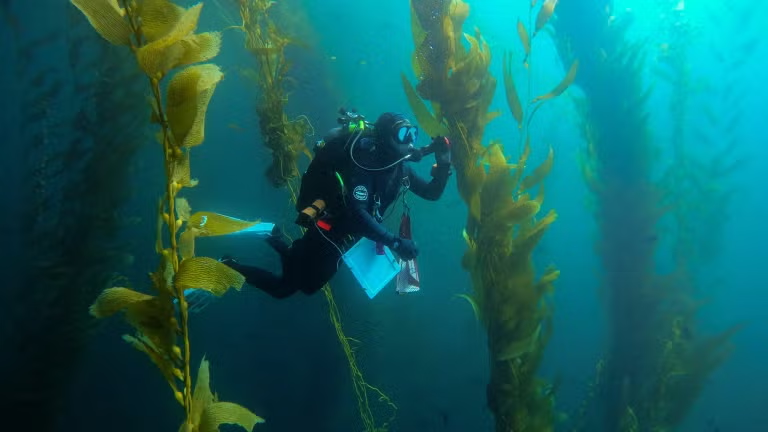
Environmental studies alum Sean Taylor ’22 checks the health of giant Pacific kelp in Santa Monica Bay. Through his job with The Bay Foundation, Taylor is helping to restore the vital kelp ecosystem along California’s coast. (Photo: The Bay Foundation)
“The forgotten forest”: How urchin-hunters help California’s kelp forests bounce back
Original story by Katharine Gammon
Pollution, warm oceans and hungry urchins devastated Pacific kelp. Now, thanks to divers with hammers, one of the world’s most successful rehabilitation projects has helped it rebound.
Giant Pacific kelp once thrived in the cold waters of the Santa Monica Bay. But over the past two decades, a combination of warm ocean temperatures, pollution, overfishing and the proliferation of hungry sea urchins that devour the kelp has led to an 80% decline in the forest along the southern California coast.
In recent years, scientists have staged a comeback for the bay’s kelp – mounting one of the largest and most successful restoration projects in the world. To do so, they’ve recruited an army of hammer-wielding divers to smash and clean up the voracious urchins.
Environmental studies alum Sean Taylor ’22 is part of these efforts through his role as an ocean resilience program coordinator with The Bay Foundation, which leads the project. Divers recruited by the foundation have spent 15,575 hours underwater over the past 13 years. To bring the kelp back, they focus on minimizing the impact of one voracious eater: the purple urchin. The effort has been successful, smashing 5.8 million purple urchins and clearing 80.7 acres, and allowing the kelp to return.
At the beginning of the project, the Bay Foundation did multiple tests to determine the optimal amount of urchins per square meter: two. Meanwhile, some kelp barrens had 70-80 urchins per meter. Since they didn’t have much to eat, these urchins were basically zombies – hungry, empty of their meat, just hanging on and preventing kelp from growing. There was a lot to do.
The Bay Foundation applied for grants from state and federal agencies and started hiring divers, gathering 75 volunteers, and even working with commercial fishers to help out. Bay Foundation CEO Tom Ford points out that the team was not smashing the healthy urchins that people depend on for their livelihood. “We were paying the fishermen to put back the forest, and then they could then go back in and fish from there again,” he says.
Taylor’s responsibilities include making regular visits to the bay to catalog progress. He counts urchins, assesses the health of regrown kelp, and helps identify areas that might need more attention. When the need arises, he also helps smash empty zombie urchins.
“You just tap, tap, and sometimes you have to reach into crevices to get the urchins out,” says Taylor. “Your forearms get super tired.”
But the payback is seeing how quickly the kelp returns when the urchins are under control – in some cases within a matter of months. That’s because the microscopic single-celled kelp spores are wafting in the water column all the time – much like seeds of a plant carried by the wind – waiting for the right conditions to attach to the reef and start growing.
Read the full story in The Guardian >>
Learn more about the Environmental Studies Program >>
Related Stories
Environmental Studies alums cultivate green careers >>
Alum Miguel Ordeñana shines a light on L.A.’s urban wildlife >>