
Making Waves with Iron-Clad Science at Norwood Elementary
On an engaging and memorable day at Norwood Elementary, 22 students from 4th grade, 5th grade, and Special Day Classes (SDC) embarked on a hands-on journey into the world of oceanography. This unique workshop was led by the USC Joint Educational Project (JEP) STEM staff in partnership with Jim Moffett’s research team from the University of Southern California (USC), whose work focuses on the role of iron in ocean ecosystems. Supported by funding from the National Science Foundation (NSF), the event brought together expertise, creativity, and passion for teaching the next generation of scientists.
PhD students Justin Gaffney and Phil Kong served as content experts, sharing their deep knowledge of how iron fuels marine life and impacts global carbon cycles. Alongside them, dedicated JEP STEM staff members Naomi, Laney, Lilian, Keira and Mia facilitated four interactive learning stations that captivated students’ imaginations and broadened their understanding of ocean science.

Learning Stations: Diving into Ocean Science
- Geotracing Instruments
Students explored how scientists use specialized tools to study water and sediment composition—key to understanding Earth’s climate and ecosystems. Using a Lego ship equipped with a 3D-printed CTD (Conductivity, Temperature, Depth sensor), students learned about oceanographic research methods. They also built tangram models of research vessels to visualize how these tools operate in real-world settings and the students played tetris to make all the instrument pieces fit. - Iron in the Ocean
This station focused on the vital role of iron in marine ecosystems. Students observed how iron sinks to the bottom of a cup, simulating nutrient cycling in the ocean. They discussed how iron supports phytoplankton growth—tiny organisms critical for primary production—and how this process influences marine food webs and carbon sequestration. - Glacier Melt
Through 3D models and origami activities, students simulated glacial melting and its impact on ocean ecosystems. They learned how melting glaciers release iron into oceans, boosting biological activity and illustrating interactions between Earth’s geosphere (land) and hydrosphere (water). - Iron Cores
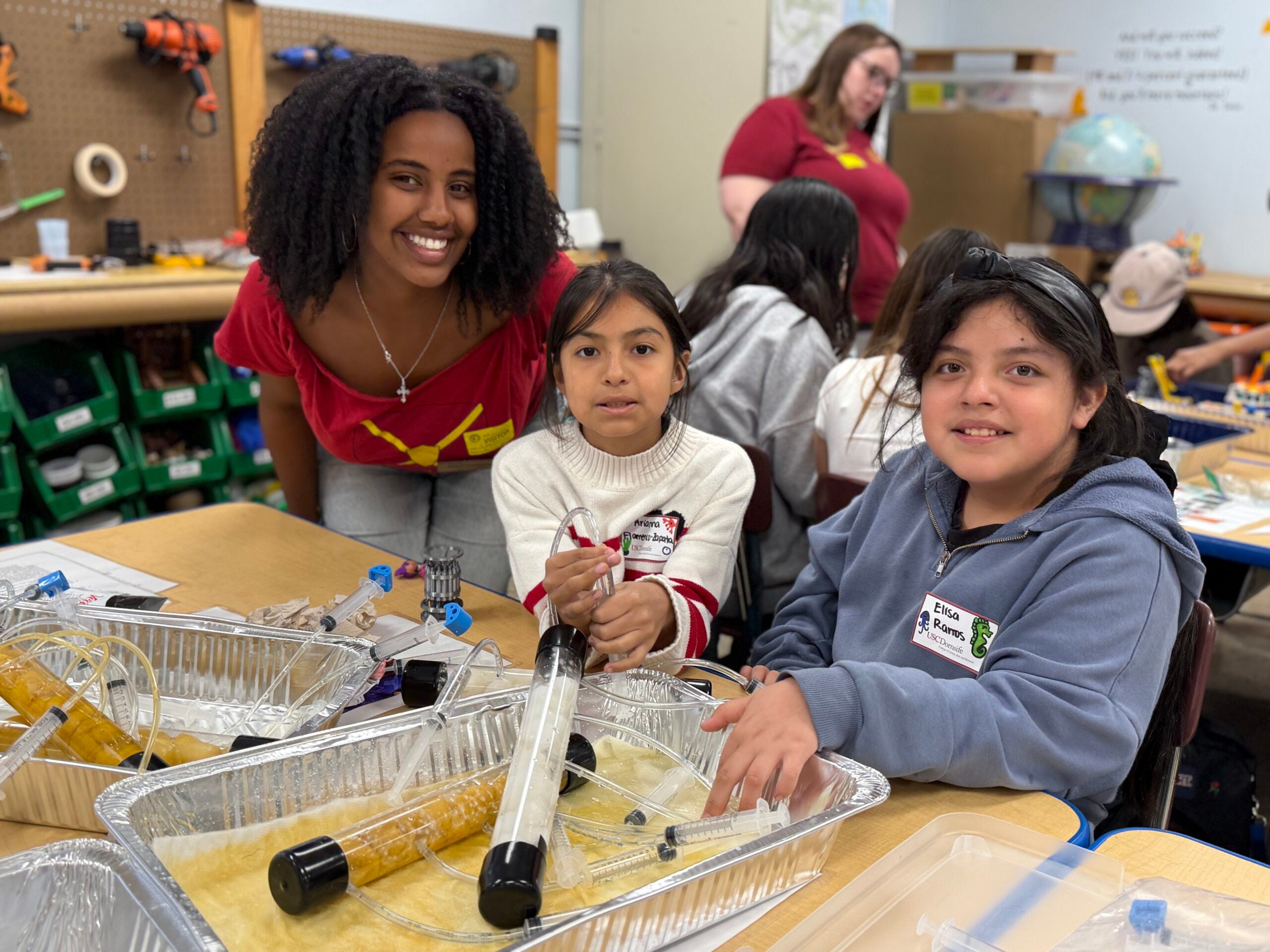
Students created sediment cores to model how primary production affects sedimentation over time. This hands-on activity demonstrated how organic material sinks to the seafloor, contributing to long-term nutrient cycling and carbon storage in marine environments.
This initiative exemplifies the NSF’s commitment to broadening participation in STEM fields by creating opportunities for young learners to engage with authentic scientific experiences. The collaboration between JEP STEM staff, USC researchers, and Norwood Elementary underscores the importance of making science accessible and inspiring future generations of innovators. As one student enthusiastically remarked, “my favorite thing was the iron cores. I loved how we got to suck up the water as if we were actually doing and building the thing.”
Acknowledgements: A Community Effort
This workshop would not have been possible without the incredible support of Norwood Elementary Principal Susana Melgoza and Site Coordinator Astrid Romero, who played a crucial role in hosting the event and managing much of the logistical planning required to make it a success. Their dedication to fostering educational opportunities for students truly exemplifies leadership in action.