Research Assistants
Listed in alphabetical order by last name
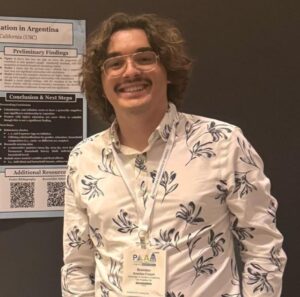
Brendan Frizzell
Research Assistant
Brendan Frizzell is a Sociology PhD student at the University of Southern California. His research interests include gender, sexuality, and family; economic sociology; social demography; and the Americas. His current research investigates how sustained increases in inflation impact family formation across education and gender.
Brendan earned his Bachelor’s of Arts in Sociology, Latin American Studies, and Spanish & Portuguese, with a certificate in Civic Leadership and two distinction in research awards. His undergraduate honors thesis, Mi casa es tu casa: Investigating Cohabitation and Inflation in Buenos Aires, stemmed from his work as a Loewenstern Fellow in Buenos Aires, Argentina. Brendan was also a Mellon Mays Undergraduate Research Fellow, Goliard Travel Fellow, and Gateway Scholar, which financially supported his research and professional experience in Argentina, Panama, Thailand, and beyond.
When taking a break from research, Brendan enjoys organizing social events for his graduate student peers in sociology, supporting high-achieving students through the USC Bovard Scholars program, and playing soccer in the OutLoud Sports League. At his leisure, Brendan enjoys cheering on Arsenal in the Premier League, playing with his cats, and trying new restaurants and cafes throughout LA!

Ximena Sanchez Martinez
Research Assistant
Ximena Sanchez Martinez is a PhD student in Sociology at the University of Southern California. Her research interests include immigration, medical inequity, access to higher education, and qualitative methods. Her current work focuses on how immigration and health policies shape the experiences of Latino communities in Los Angeles County.
Ximena earned her Bachelor’s degree with honors in Comparative Studies in Race and Ethnicity from Stanford University, with a minor in Biology. Her undergraduate honors thesis, The Next Step: Reframing the Vulnerability and Difficulties of Undocumented Students Through Higher Education Milestones, was one of ten projects selected for the Hume Honors Fellowship. Her research was supported by grants from the Vice Provost for Undergraduate Education and the Stanford Humanities Center, and recognized with the Award for Excellence in Honors Thesis Presentation and the Arturo Islas, Jr. Prize for Outstanding Academic Achievement.
Beyond her academic work, Ximena serves as a board member of the Stanford First-Generation and/or Low-Income Alumni Network, supporting first-generation alumni, and as a Dream Project mentor, guiding first-generation high school seniors through the college application process. In her free time, she enjoys spending time with her cat Luna, watching anime, scrapbooking, and listening to music.
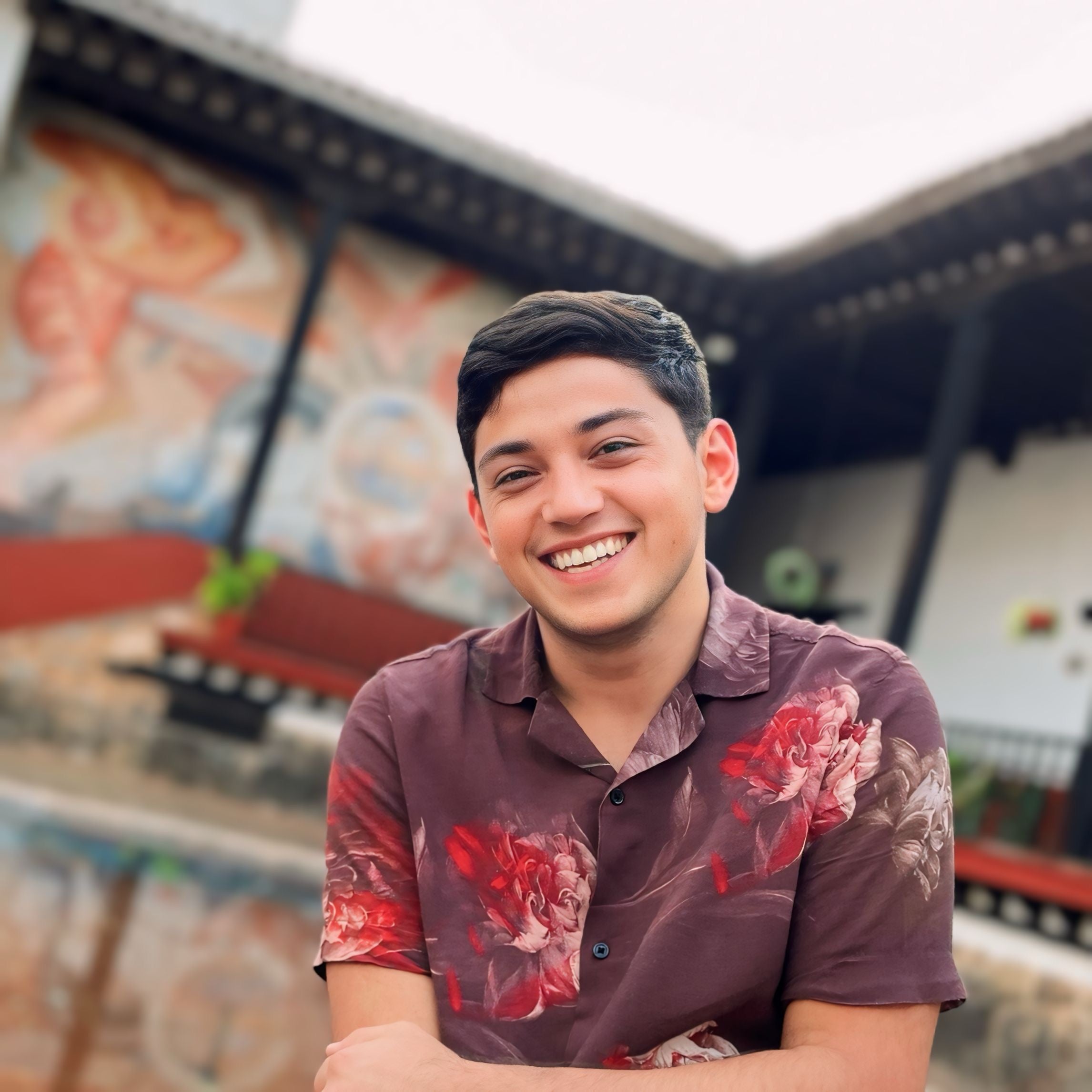
Brandon Saucedo Pita
Research Assistant
Brandon Saucedo Pita (he/him) is a PhD student in Sociology at the University of Southern California, with research interests in the intersections of expressive cultural practices, identity formation, and political struggles in Mexican American communities. Raised in the vibrant Brighton Park neighborhood on the Southwest side of Chicago, Brandon draws inspiration from his upbringing and ancestral roots in Michoacán, México.
A graduate of Haverford College, where he was a Mellon Mays Undergraduate Fellow, Brandon majored in Sociology and double-minored in Growth & Structure of Cities and Latin American, Iberian, and Latina/o Studies. He also completed a Thomas J. Watson Fellowship, traveling globally to study the development of Mexican immigrant communities through engagement with artists, cultural centers, and state-led initiatives focused on Mexican musical traditions and other expressive cultural practices.
Brandon’s research focuses on the Los Angeles-area Norteño music scenes, exploring their relationship to collective identity formations, transnationalism, and political expression. He has previously conducted research at Bryn Mawr College and Northwestern University on related topics, including Mexican Chicago’s underground Hip Hop movement. Outside of his academic pursuits, Brandon is an avid videographer and enjoys watching documentaries and sci-fi films, playing Rocket League, editing travel music videos, and producing melodic rap beats.
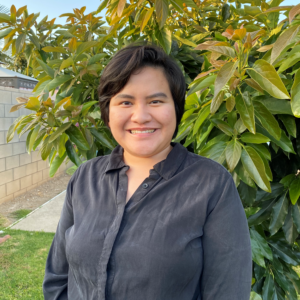 Dawy Rkasnuam
Research Assistant
Dawy Rkasnuam is a Ph.D student in Sociology at USC. Her research uses intersectionality and the reproductive justice framework to explore how social movements, medicine, and law mediate health and cultural outcomes in the realm of reproductive politics. Her current project examines how reproductive justice activists across different regions respond to changing political climates.
Prior to attending USC, she did research and advocacy work on immigration detention at Detention Watch Network in Washington, DC. She holds a Master of Public Policy from the University of Maryland, College Park, during which time she conducted immigration research as a research assistant at the UMD Center for International Policy Exchanges and as an intern at the Migration Policy Institute. She received her Bachelor of Arts in Political Science from California State University, Los Angeles. Dawy is originally from Bangkok, Thailand but grew up in the San Gabriel Valley in Southern California. Outside of work, she enjoys swimming, attending concerts, and cooking Thai food.
Undergraduate Interns
Verena Im
Undergraduate Research Assistant
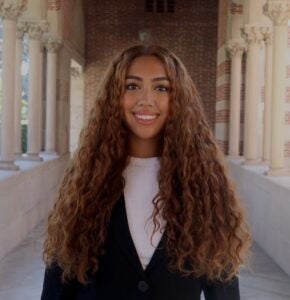
Verena Im is an Undergraduate Research Assistant at ERI. Pursuing a major in Law, History, and Culture. She passionately engages in social justice work with the goal of reimagining an equitable society that is rooted in community, joy, love, and justice– concepts she sees as inherently intertwined.
Originally from Kansas City, Missouri, Verena grew up in an immigrant household with a diverse cultural background—her mother from Egypt, and her father from Cambodia, all while living in the Midwest. This unique upbringing instilled in her a profound appreciation for community building in every space that she enters. Verena believes seeking genuine connections with others is the foundation for the social justice work we seek. Through collaboration with people from all walks of life, we resist oppressive, divisive systems while embracing a robust network of communion and support. Following this, collaboration breeds transformative thinking, harnessing wisdom and insight from a plethora of people. Having witnessed the impacts of global injustices, genocide, and oppression through her family’s history, she also witnesses the strength in resistance, the beauty of hope, and the value of love.
While Verena acknowledges the significant advancements in research and innovation today, she questions its scope. She asks, who will this research serve in our caste ridden society? We generously pour efforts into technical, medical, and other research, oftentimes, without harmonizing the efforts to promote equitable access to such things. Accordingly, Verena is so excited to contribute to the valuable work ERI does to engage with these critical issues.