-
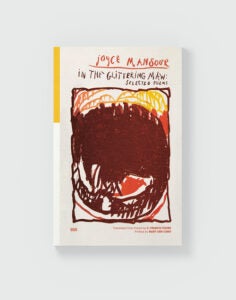
- Wednesday, September 11, 2024
- Sponsors: Campus Humanities, Comparative Literature (COLT), English, French and Italian, Levan Institute for the Humanities
- Description: Hosted by Molly Bendall (Department of English) and Olivia C. Harrison (Departments of French and Italian and Comparative Literature). This event uses the first English-language translation focused on the later works of Joyce Mansour as as a point for departure to discuss poetry and translation amongst scholars-translators yasser elhariry, C. Francis Fisher, Piotr Florczyk, Catherine Theis, and Teresa Villa-Ignacio. Their collective works span translation in French, Arabic, Polish, and Italian. The round table will be moderated by Olivia C. Harrison and followed by a Q&A with the audience. Later that day C. Francis Fisher will present her translation of Mansour’s poetry, and read from the collection. The reading will be followed by a discussion with Molly Bendall and yasser elhariry, and by a Q&A with the audience.
-
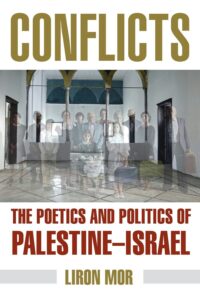
- Monday, September 16, 2024
- Sponsors: Comparative Literature (COLT), Department of Middle East Studies (MDES), Levan Institute for the Humanities
- Description: This talk begins with a deceptively simple question: what is conflict? Arguing that literature is not separate from but rather integral to conflict and violence, Liron Mor diagnoses the various conflictual mechanisms that not only reflect but also produce ideologies, identities and modes of oppression in Palestine-Israel, as well as forms of resisting them. Liron Mor is an Associate Professor of Comparative Literature and the Director of Critical Theory at the University of California, Irvine. The author of Conflicts: The Poetics and Politics of Palestine-Israel (2024), Mor is currently working on a second book project on Palestinians and Mizrahi Jews.
-
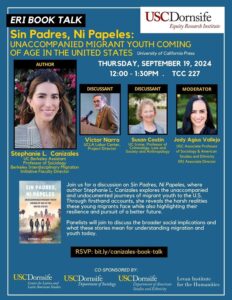
- Thursday, September 19, 2024
- Sponsors: American Studies and Ethnicity, Center for Latin American and Latinx Studies, Levan Institute for the Humanities, Sociology
- Description: Join us for a discussion on Sin Padres, Ni Papeles (University of California Press, 2024), where author Stephanie L. Canizales (Assistant Professor of Sociology at UC Berkeley and USC Sociology PhD Alum) explores the unaccompanied and undocumented journeys of migrant youth to the U.S Through firsthand accounts, she reveals the harsh realities these young migrants face while also highlighting their resilience and pursuit of a better future. Panelists Victor Narro (UCLA Labor Center) and Susan Coutin (UCI Professor of Crimonology, Law, and Society) will join to discuss the broader social implications and what these stories mean for understanding migration and youth today. The discussion is moderated by Jody Agius Vallejo, Associate Professor of Sociology and Associate Director, Equity Research Institute.
-
- Friday, September 27, 2024
- Sponsors: Division of Cinema and Media Studies, Levan Institute for the Humanities, the Center for Feminist Research, and the Media As SocioTechnical Systems Initiative
- Description: First Forum is the annual graduate student conference hosted by the Division of Cinema and Media Studies.
-

- Thursday, November 21, 2024
- Sponsors: School of Religion, Center for the Premodern World, Levan Institute for the Humanities
- Description: András Handl (Leuven / Bern): The world of early third-century Christians in Rome has traditionally been depicted as a battle (and victory) of orthodoxy over heretical groups. The most important written source of the era, an obscure heresiography called the Refutatio omnium haeresium, confirms this impression. It is well known that the anonymous author (formerly ‘Hippolytus’) invented connections between Greek philosophers and various heterodox Christian groups. He aimed to prove that these dissenting groups, most of them migrants, were more devoted to philosophical teachers than to Christ. While this list of ‘heretics’ is an obvious construction intended to separate, approaching the list as a network overcomes this separation and shed light on local interconnectedness beyond constructed reality. This talk has three aims. First, it tests this hypothesis by surveying evidence suggesting everyday encounters between heterodox Christian teachers. Second, it aims to map so far hidden connections among mainly migrant groups. Finally, it explores how network theory can help overcome the omnipresent but problematic orthodoxy-heresy dichotomy.
-
- Thursday, December 5, 2024
- Sponsors: Center for Artificial Intelligence in Society, Department of Classics, Levan Institute for the Humanities
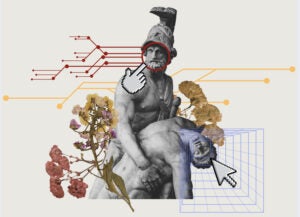
- Description: Artificial Intelligence (AI) is rapidly reshaping the landscape of education and research, challenging long-held ideas about what it means to be human. This talk will begin by exploring the cognitive, cultural, and biological reasons humans are drawn to creating and interacting with artificial agents—why we strive to replicate and enhance our own capabilities. Building on this, I will discuss how AI can be leveraged to enrich learning environments, opening new pathways to engage with complex ideas, foster critical thinking, and advance interdisciplinary approaches. I will then turn to a critical challenge: as AI becomes increasingly embedded in both research and education, it is not only transforming how we learn but also altering the very nature of the research that informs what we teach. I will invite the audience to reflect on the ethical implications of allowing artificial systems to reshape cognition and intelligence, and how this shift is redefining the fundamental study of human nature. Jennifer Devereaux Harvard University, Lecturer, Department of Human Evolutionary Biology, NEH postdoctoral fellow, and Visiting Postdoctoral Fellow, Department of Classics. Dr. Devereaux investigates the human needs met by AI and the historical ideas about human psychology and behavior that enable artificiality to play a significant role in our lives. She also integrates humanistic thought with advanced cognitive science, building upon her doctoral research to develop a philosophy of reading. Drawing on her background in Classics, she has developed a popular Human Evolutionary Biology course that explores friendship from neuroendocrinology to cultural evolution and human-AI companionship.
-
- Friday, January 17, 2025
- Sponsors: Office of the Provost, Information Technology Services, Annenberg School of Journalism, Viterbi School of Engineering & School of Advanced Computing, Center for Generative AI & Society, Dornsife College of Letters, Arts & Sciences, USC Marshall’s Neely Center for Ethical Leadership and Decision Making, The Graduate School, The Dornsife Writing Program, Viterbi Engineering in Society Program, Levan Institute for the Humanities, AI for Media & Storytelling (AIMS)
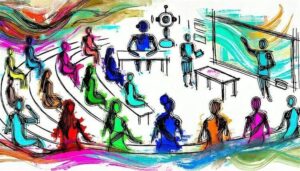
- Description: This is a one-day event that will bring together faculty and staff from across the university to brainstorm, understand, and problem solve our concerns, questions, and excitements regarding generative AI in the classroom. We plan to host 7-8 targeted discussion sessions covering pedagogy, academic integrity, prompt engineering, student perspectives, and more.
-
- Friday, March 7, 2025
- Sponsors: Early Modern Studies Institute, Visual Studies Research Institute, Levan Institute for the Humanities
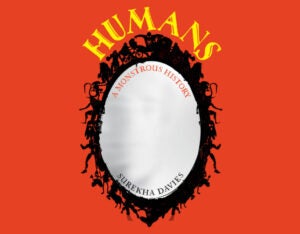
- Description: Please join the USC Levan Institute for the Humanities for a lecture with Dr. Surekha Davies at the Huntington Library about her new book, Humans: A Monstrous History. The event will take place 10–11.30am in the Munger Research Center, Seaver Classroom 1 & 2. About the speaker: Trained at the University of Cambridge and the Warburg Institute at the University of London, Surekha Davies is a writer, speaker, historian, and monster consultant for film and television. Her research focuses on the histories of science, art, and ideas, exploring connections between Europe and the wider world, especially during the early modern period. This event was organized by the USC-Huntington Early Modern Studies Institute’s seminar on the History of Science, Medicine & Technology and Material Culture.
-

- Monday, March 10, 2025
- Sponsors: USC Dornsife Divisional for the Humanities, USC Dornsife College Dean of Graduate and Professional Education, Center for Latinx and Latin American Studies, Levan Institute for the Humanities, Visual Studies Research Institute, German Studies Program, Experimental Humanities Lab, Center for Feminist Research, Francophone Research and Resource Center, and the Departments of Comparative Literature, French and Italian, and Latin American and Iberian Cultures
- Description: Thinking through/with Latin American Dancers and Choreographers explores the inextricable relationship and productive connections between critical theory and dance practice, critical interpretation and dance production, academic writing and understanding and embodied knowledge through the collaboration between dancers, choreographers, and scholars in Mexico, Brazil, and the USA.
- PROGRAM
- A Composition for Chantal: Embodiment and Temporality in Contemporary Dance
- Performer and Speaker: Monica Fagundes Dantas (UFRGS, Brazil)
- Respondent: Mlondi Zondi (USC)
- Bracha
- Choreography: Cinthia Renee Portes (Mexico)
- Performer: Eduardo Severino (Brazil)
- Dietrich, Cavani, and Holbein in Bracha
- Speaker: Julien Gutierrez-Albilla (USC)
- Roundtable
- Moderator: Benjamin Mayer Foulkes (17, Institute of Critical Studies, Mexico
- A Composition for Chantal: Embodiment and Temporality in Contemporary Dance
-
- Tuesday, March 25, 2025
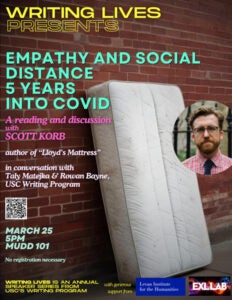
- Sponsors: The USC Writing Program, The Levan Institute for the Humanities, and the ExL Lab of the Dornsife Office of Experiential and Applied Learning
- Description: As we hit the five-year anniversary of Covid’s onset, please join us for an intimate reading and discussion on empathy and social distance — the ways we’ve navigated being vulnerable bodies in shared spaces in the pandemic’s wake. Drawing from his essay, “Lloyd’s Mattress,” author Scott Korb will reflect on how “social distancing” has amplified our collective shame and disgust, and become a wedge against empathy (towards ourselves and each other). Scott Korb will be joined by Taly Matejka and Rowan Bayne, of USC’s Writing Program, to position writing as a means of grappling with the social and political transformations of the last five years. This event is part of Writing Lives, an annual speaker series from The USC Writing Program that convenes public intellectuals working at the intersections of scholarship and the personal essay. Scott Korb is the director of the MFA in Writing at Pacific University, in Oregon. He’s the author of The Faith Between Us, Life in Year One, and Light without Fire, and is an editor of two academic collections: The Harriet Jacobs Family Papers and Gesturing Toward Reality: David Foster Wallace and Philosophy. Taly Matejka and Rowan Bayne, co-founders of Writing Lives, teach in the Writing Program at USC.
-
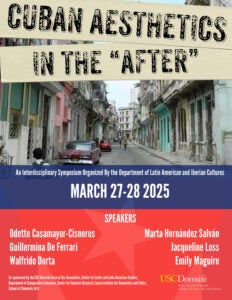
- Friday, March 28, 2025
- Sponsors: Latin American and Iberian Cultures, Levan Institute for the Humanities
- Description: Since the unofficial end of the economic crisis formally known as “The Special Period in Times of Peace,” Cuba has undergone marked social, economic, and structural transformations that have impacted the conditions of literary and artistic production on the island. On the one hand, while the Special Period witnessed what literary scholar Esther Whitfield has described as the new “Boom” of Cuban literature (especially the novel), there has been a discernible shift away from prose fiction (and the book form) and toward other counter-expressive forms such visual and audiovisual art, performance, and digital media. On the other hand, the rules of what counts as literature and “art” in Cuba have tightened under new laws. Moreover, in the last three years, the island has experienced mass migration of Cuban citizens—nearing 500,000, a number that exceeds the Mariel exodus of 1980. If Cuba’s social history is a strong indicator of its aesthetic currents, such a significant demographic shift will radically reshape the ecology of Cuban literary and artistic production. This two-day interdisciplinary symposium invites scholars in Cuban Studies to discuss and reflect on transformations and innovations in contemporary Cuban literature, culture, art, and media, from the period following the Cuban Revolution until the present. “Cuban Aesthetics in the After,” gestures to Cuba y el día después, a field-defining anthology of essays edited by Cuban writer Iván de la Nuez, who calls on Gen X and millennial Cuban writers and intellectuals to reimagine Cuban society in aftermath of a revolution that failed to birth the future promised to them. “Cuban Aesthetics in the ‘After’” is a provocation to think of the “after” as an aesthetic articulated and shaped by Cuban literature, visual culture, performance, and media within and beyond the space-time of the Cuban Revolution.
-
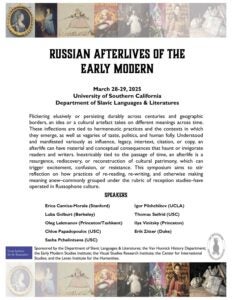
- Saturday, March 29, 2025
- Sponsors: Department of Slavic Languages & Literatures, Van Hunnick History Department, Early Modern Studies Institute, Visual Studies Research Institute, Center for International Studies, Levan Institute for the Humanities
- Description: This symposium aims to stir reflection on how practices of re-reading, re-writing, and otherwise making meaning anew–commonly grouped under the rubric of reception studies–have operated in Russophone culture.
-

- Friday, March 28, 2025
- Sponsors: Early Modern Studies Institute (EMSI) , History, Levan Institute for the Humanities, Slavic Languages & Literatures, USC Center for International Studies, Visual Studies Research Institute (VSRI)
- Description: This panel of USC faculty will discuss how cultural and scholarly practices tied to concepts such as reception, influence, legacy, intertext, and citation ramify in their respective fields. Roundtable Participants: David C. Albertson (USC Religion), Frederic Clark (USC Classics), Adam Knight Gilbert (USC Musicology), Kelsey Rubin-Detlev (USC Slavic). Moderated by Sally Pratt (USC Slavic & POIR). The event is free and open to the USC community.
-
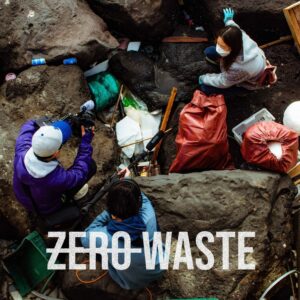
- Friday, April 18, 2025
- Sponsors: Korean Studies Institute, East Asian Studies Center, Levan Institute for the Humanities, Institute for Ecological Futures, and Environmental Humanities Working Group
- Description: Join KSI and filmmaker Danny Kim for an evening of discussion about recycling practices in South Korea, with a screening of the eco-documentary ZERO WASTE and a conversation to follow with experts in the field. Hosted in conjunction with environmental humanities scholars from across USC, this event aims to bring together all like-minded individuals who are concerned about the future of planet Earth and who want to know more about what human action can be taken to ensure a more sustainable future. Following the stories of artists, activists, and individuals in the South Korean context, ZERO WASTE provides a look into the way people are trying to address the waste problem in their national context, and it offers all viewers a chance to contemplate what actions they could be taking in their local communities to join the “zero waste” movement for a greener future.
-
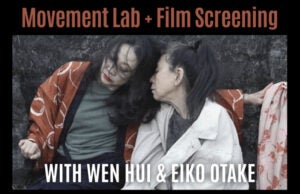
- Friday, April 18, 2025
- Sponsors: Levan Institute for the Humanities, USC East Asian Studies Center, USC Dornsife Department of Comparative Literature, and SCA Community Impact Council
- Description: This is a story of friendship between two independent female artists and the body memories they each carry with intention. In January 2020, New York-based interdisciplinary artist Eiko Otake traveled to Beijing to visit Wen Hui, a Chinese choreographer and filmmaker. Though born eight years apart, their lives were shaped by distinct histories: Eiko in postwar japan, Wen during the Cultural Revolution. Their month-long visit became a space for deep conversation, reflection, and artistic collaboration, eventually leading to the documentary No Rule Is Our Rule (2022). Marking another year of inspiring friendship and collaboration, Eiko and Wenhui come to USC to share their work. They invite the community to a full-day experimental workshop featuring a guided movement session (1:30-3:30 at SCA Gallery) and a screening of their collaborative documentary No Rule is Our Rule (4:00-6:00 at SCA 112). Together, they ask: What does it mean to forget, to remember, to mourn, or to pray? How do we move through violence and loss? What shifts when we become movers, dancers, witnesses of our own bodies? This immersive workshop day invites participants of all backgrounds to explore movement as a way of knowing —a method for accessing human experience, processing emotion, and engaging with space, memory, and creativity.
-

- Monday, April 21, 2025
- Sponsors: Anthropology, Levan Institute for the Humanities
- Description: The horticultural greenhouse is a built infrastructure that reproduces a climate-controlled environment for plant growth. Beyond their political role -they are spaces of ‘hope’, as they allow crops to be grown in otherwise hostile environments – greenhouses not only model different ways of growing food, but also different approaches to working with plants. In this paper I present a small ethnographic investigation in which I elaborate how greenhouse cultivation give rise to emergent toxic relationships between humans and plants. Dr. Rebeca Ibáñez Martín is an anthropologist specializing in critical food studies, environmental anthropology, and social studies of science (STS). She studied History and Anthropology at the Complutense University of Madrid and completed master’s degrees in Feminist Critical Theory (Complutense University) and Social Studies of Science (University of Oviedo). She received her PhD in Philosophy of Science with “cum laude” distinction from the University of Salamanca, Spain (2014), where her dissertation “Bad to eat? Empirical Explorations of Fat as Food” was awarded the university’s annual prize in Humanities and Arts.
-
- Thursday, April 24, 2025
- Sponsors: School of Architecture, Levan Institute for the Humanities
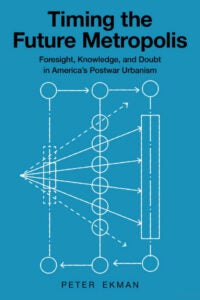
- Description: A book talk and discussion on Peter Ekman’s new book, Timing the Future Metropolis: Foresight, Knowledge, and Doubt in America’s Postwar Urbanism (Cornell University Press, 2024). As an intellectual history of planning, urbanism, design, and social science, this book explores the network of postwar institutions, formed amid specters of urban “crisis” and “renewal,” that set out to envision the future of the American city. Peter Ekman focuses on one decisive node in the network: the Joint Center for Urban Studies, founded in 1959 by scholars at Harvard and MIT.
-
- Saturday, May 3, 2025 – Sunday, May 4, 2025
- Sponsors: School of Cinematic Arts, Levan Institute for the Humanities
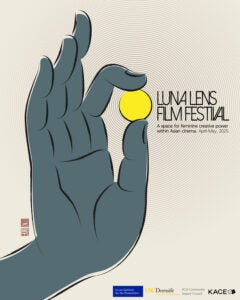
- Description: Showcasing independent feature and short films from Asian female filmmakers along with student short film submissions on May 3rd-4th, Luna Lens Film Festival aims to hold space for Asian female filmmakers to foster connections and share their stories—whether it be from the narratives in their films, their practices in the film industry, or their experiences in the world. The films touch on shared experiences of navigating life as women living in the contemporary world and under patriarchal societies, and explore common themes such as independent identity, personal aspirations, sexuality, motherhood, family dynamics, generational trauma, the immigrant experience, and more.
- Festival Program:
Saturady, May 3rd
• 1:00-4:00pm | Female Directors (2012) + The Cloud In Her Room (2020)
• 4:30-5:00pm | Dance with Third Grandma (2015) + Other Shorts• 5:00-6:00pm | The Feeling of Being Close to You (2022) + Full Month (2025) + Q&A with director Ash Goh Hua
Sunday, May 4th
• 1:00-2:40pm | Shirkers (2018)
• 3:00-4:00pm | Festival/Award Shorts Selection
• 5:00-6:00pm | Student Shorts Submissions
Header image: The North American Indian, vol. 11, Makah basketry, 1915, USC Libraries Special Collections
Contact Us
Office
3501 Trousdale Parkway
THH 348
Los Angeles, CA 90089
Staff
Director: Rebecca Lemon
Associate Director: Zachary M. Mann