
Welcome
The USC Korean Studies Institute (KSI) celebrates its 30th anniversary this year as a dynamic hub for interdisciplinary research and academic exchange in Korean studies at USC and beyond. The Institute supports research and teaching on globally relevant issues within the Korean context through its research-oriented initiatives and student-centered programs.
The KSI Event Calendar
Sign Up for Our Mailing List
K-Woolim Korean Speech Competition
 Saturday, October 24, 2026, 3:00 – 6:00 PM
 Seely G. Mudd (SGM) Building Room 123
K-Woolim Korean Speech Competition is open to middle school, high school and college students. Participating students will be recognized with medals, prizes, and certificates.*울림 – Woolim means a deep emotional resonance—a feeling or message that touches your heart and lingers in your mind, even after the moment has passed. Our contest title reflects the hope that students’ words and stories will create a lasting impact-moving listeners and sparking meaningful connections.
The event is organized by the Korean Language Program at the Department of East Asian Languages and Cultures at USC and the Korean language teachers at the Torrance Unified School District, and co-sponsored by the USC Korean Studies Institute, Korean Education Center in Los Angeles, the International Korean Educators Network and the Korean Language Teachers Association.

40th Anniversary of the Korean Heritage Library, USC Libraries
Friday, September 25, 2026, 10:00 AM – 2:00 PM
Friends Lecture Hall, Doheny Memorial Library
Hearty congratulations to the Korean Heritage Library at the USC Libraries for their 40th anniversary!
Over the past four decades, the Korean Heritage Library has served the USC community of scholars, students and educators with unique collections, archival resources and digital initiatives. Through preserving and providing access to these materials, the Library has advanced research, teaching and new scholarship on Korea and Korean diaspora. The celebration honored forty years of stewardship and celebrated partnerships to further build Korean Studies and Korean American community.
To celebrate its 40th anniversary, the USC Korean Heritage Library brought together scholars, community partners, alumni and supporters to commemorate and recognize the individuals and organizations whose support has shaped the Library as a distinctive resource for understanding the rich culture and history of the Korean diaspora.

5th Korean American Studies Conference
Saturday, October 17, 2026, 9:00 AM – 5:00 PM
Vineyard Room, Davidson Conference Center
KSI successfully hosted the 5th Korean American Studies Conference. The annual conference gathered scholars, educators and program administrators in the field of Korean and Korean American studies. The program included keynote remarks and panels on topics related to advancing Korean studies through K-12 and college education in language, culture, culture and history. The full agenda is available here Program Link.
Here are the slides from the keynote and closing remarks.
- Dan Davidson, President Emeritus of American Councils for International Education
- John Park, Professor at UC Santa Barbara
- Grace Cho, Professor at Cal State University, Fullerton.

Pacific Graduate Conference for Korean Studies at USC
The Annual Pacific Graduate Conference for Korean Studies at USC (PaCKS) 2026 was a success!
The conference fostered a multidisciplinary community of local and regional graduate students whose research projects significantly engage Korean society and culture across the periods. It offered a platform for emerging scholars to present their work-in-progress, receive feedback from faculty and peers, and participate in interdisciplinary discussions within a supportive environment.
Conference papers highlighted research projects from the humanities and social sciences related to Korea, East Asia, or Asian diasporas. In these works, Korea is situated within broader comparative or theoretical frameworks. Previous panels at the conference included a wide range of subjects such as gender issues in contemporary media, Sinitic influences in premodern Korea, South Korean immigration policy, and more.
Each panel will be moderated by a faculty discussant who will comment on and contribute to student presentations. This year’s conference took place on October 1-2, 2026. The full agenda of the conference is available here – Program Link.
For inquiries, contact the organizing committee at uscpacks@gmail.com.

Walking in Between: A Bae Doona Retrospective
Save the Date for this Visions and Voices Event! The series of featured screenings and conversations celebrate the filmography of Bae Doona, an internationally acclaimed South Korean actress. Bae Doona along with directors Kore-eda Hirokazu and Jeong Jae-eun will be joined by leading scholars in film and media studies at USC and beyond for meaningful discussions about Korean cinema, collaborative partnerships with global auteurs, themes of transnationalism and neoliberalism in contemporary society. Major kudos to Professor Sunyoung Park and a committee of USC graduate students the Department of East Asian Languages and Cultures and the School of Cinematic Arts for organizing this headline event.

Approaches for Korean and Korean-American Studies by Professor Jane Junn
Opening remarks by Professor Jane Junn, USC Associates Chair in Social Sciences, University of Southern California, at the Symposium on Korean America and the US-Korea Relations. The symposium was organized by the Korean Studies Institute under the Initiative on March 1st Symposium on History and Democracy. For more information, visit link here

“Korea and Korean America: Convergent and Divergent Paths” by Professor Shelley Lee, Brown University
Professor Lee spoke during the session on “New directions in Korean American Studies” at the symposium on Korean America and U.S.-Korea Relations. For more information, visit link here

“Memory, Identity, and Shared Transnational Heritage: Rehabilitating the Young Korean Academy (Hung Sa Dahn) Historic Site in Los Angeles” by Dr. Jong-Hyun Lim, Heritage Smart Consulting Group
Dr. Lim spoke during the session on “New directions in Korean American Studies” at the symposium on Korean America and U.S.-Korea Relations. For more information, visit link here

Korean Studies Programs at USC
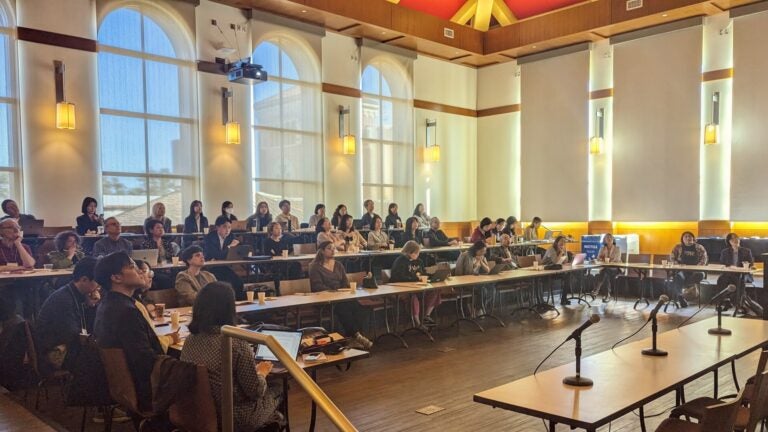
Our Community
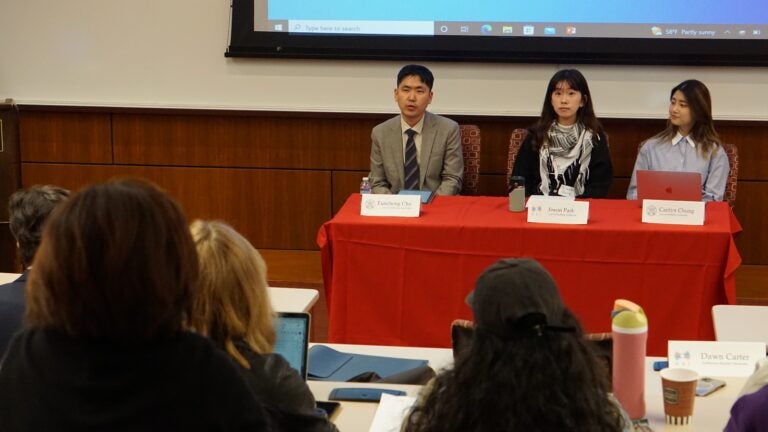
Graduate Students
Graduate Students can organize the annual USC Conference in Korean Studies, participate in the Bridging Asia Conference, and receive the Summer Fieldwork Grant.
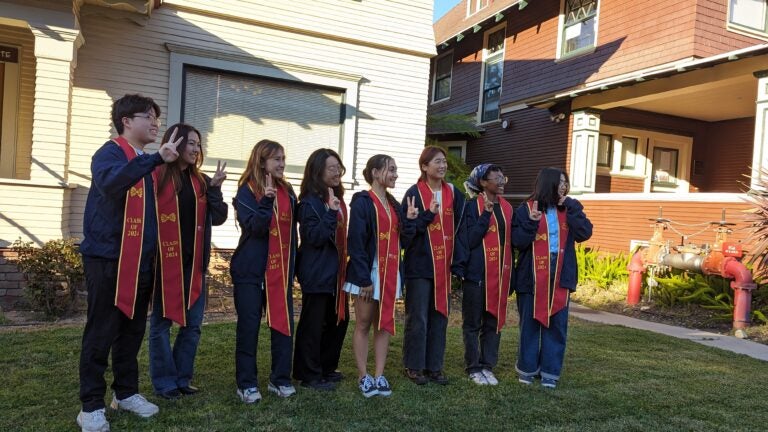
Undergraduate Students
Undergraduate Students are invited to join the KSI Fellows Program and participate in the Joint Conference with the Nam Center of Korean Studies at the University of Michigan.
Visiting Scholars
KSI annually hosts visiting scholars from academia, government, and private organizations. Visiting scholars are welcome to take active part in the institute’s activities.