Announcing the 2024-2026 Generations in Dialogue Cohort
Medical Ethics: Transhumanism and the Body
Transhumanism and the body — two topics long considered across the fields of literature, film, philosophy, the sciences and theology — have collided in our technocratic-culture that is increasingly being defined by consumerism and materialism.
Fueled by the rapid emergence of A.I. technology, Western society puts pressure on people primed to think in terms of “optimization” — “being the best they can be” – organic machines valued for their ability to produce, achieve and consume. Questions surrounding the creation of technology that interfaces with the body, including interbrain-computer interface implants, bioengineered organs for transplant, and artificial placentas and wombs, are igniting important debates on the nature of consciousness and what it means to be human.
Catholic approaches to these topics, though not new, are underrepresented in public discourse, and are essential for addressing challenges we collectively face as a society. By seeking to answer key questions surrounding transhumanism and the body, we can spark constructive dialogue and create meaningful solutions that guide ethical decision-making and empower humans to thrive in a complex, fast-changing world.
The Fr. James L. Heft, SM Generations in Dialogue Program brings together junior scholars and prominent researchers and thought leaders from various disciplines — including the fields of philosophy, theology, medicine and neuroscience. Together they will address different perspectives on the Catholic commitment to upholding the goodness and normative status of the body, without losing the spirit of the soul. Central to the Transhumanism and the Body project will be a Catholic commitment to seeing Christ’s face in the most vulnerable, the least among us, particularly those who are discarded or left behind in a technocratic, consumerist, throwaway culture.
Generations in Dialogue will advance and promote the scholarship and public profile of the participants, as well as elevate their ideas and voices in a world where they are increasingly needed.
Meet the 2024-26 Cohort
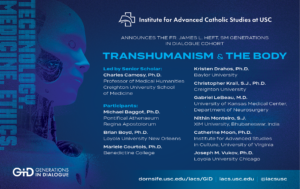
Gathering from Fall 2024 to Fall 2026, the cohort will be led by senior scholar and mentor Charles Camosy, Ph.D., professor of Medical Humanities at the Creighton University School of Medicine and holder of the Monsignor Curran Fellowship in Moral Theology at St. Joseph Seminary in New York.
The cohort will gather for four in-person meetings over the two years and a similar number of virtual meetings.
Charlie Camosy, Ph.D.
A noted thought leader in the fields of bioethics, policy and theology, Charles Camosy, Ph.D., is professor of medical humanities at the Creighton University School of Medicine and the Msgr. Michael J. Curran Fellow in Moral Theology at St. Joseph’s Seminary and College in New York.
He is the author of four books and dozens of articles that have appeared in a broad range of publications, including the American Journal of Bioethics, the Journal of Medicine and Philosophy, the Journal of the Catholic Health Association, the San Francisco Chronicle, the Washington Post, the Los Angeles Times, the New York Daily News and America magazine.
Though his work on ethics and policy, he finds common ground among those with different viewpoints by unpacking the complexities of today’s most pressing challenges.
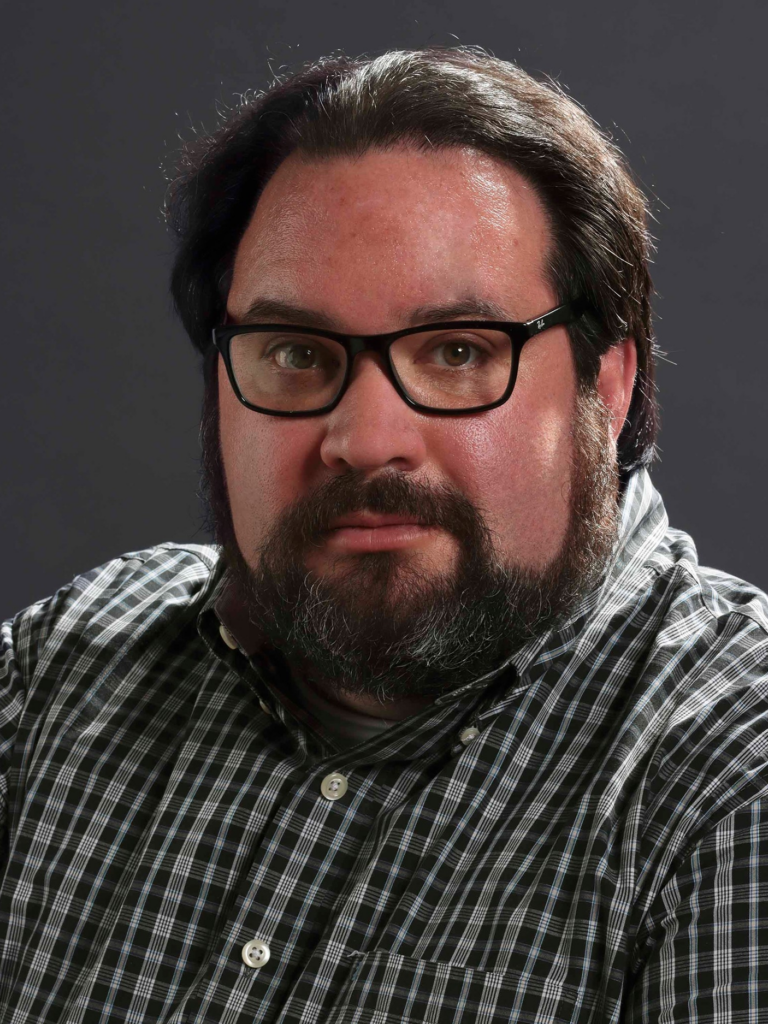
Michael Baggot, Ph.D.
Rev. Michael Baggot is a bioethicist who was written and spoken extensively on transhumanism and emerging technologies. He is an assistant professor of bioethics at the Pontifical Athenaeum Regina Apostolorum and an adjunct professor of theology at the Pontifical University of St. Thomas Aquinas — Angelicum in Rome, and holds the same position at the Catholic Institute of Technology.
Dr. Baggot is a research scholar at the UNESCO Chair in Bioethics and Human Rights, and a member of the Scholarly Advisory Board for Magisterium AI, a chatbot answering questions on Catholic theology, faith, and ethics.
Dr. Baggot is chief editor of — and a contributor to — the book Enhancement Fit for Humanity: Perspectives on Emerging Technologies (Routledge, 2022) and is currently writing a chapter in the upcoming book Religion and Human Enhancement that explores how Catholic theology can contribute to an evaluation of transhumanism and radical bodily enhancement.
His media work includes appearances on Pints with Aquinas, EWTN, and on his co-hosted YouTube channel Those Two Priests. Dr. Baggot grew up in Virginia and was ordained to the priesthood in 2017.
Through Generations in Dialogue, he looks forward to exchanging feedback on the cohort’s respective research projects and publishing together.
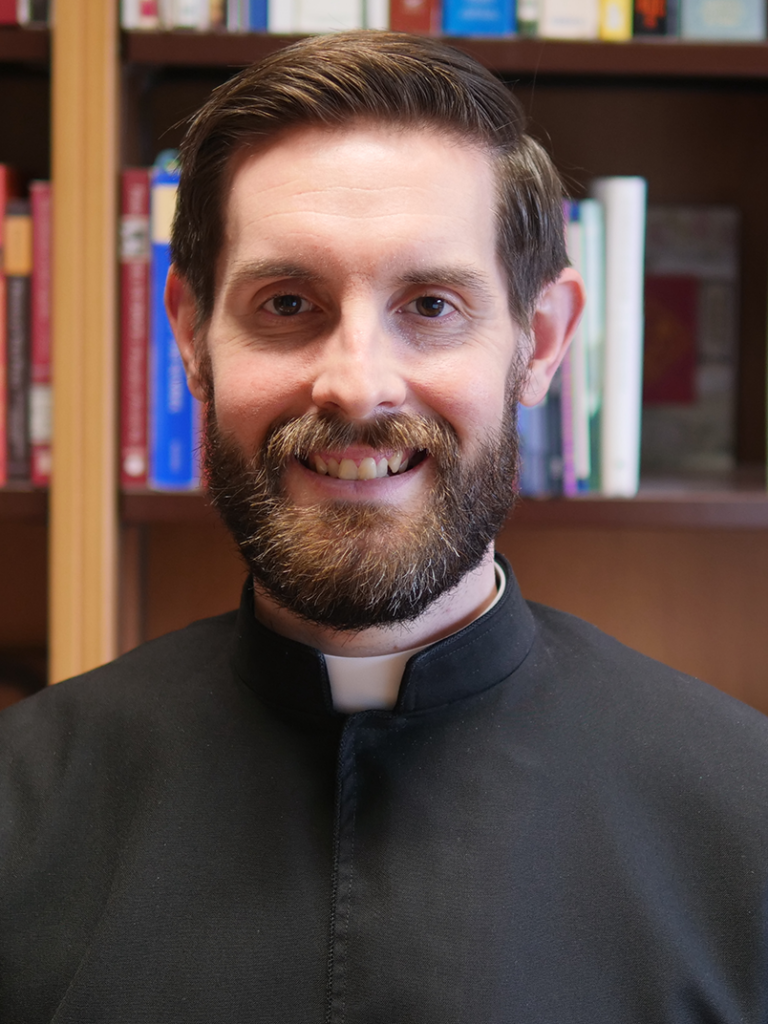
Brian Boyd, Ph.D.
Brian Boyd, Ph.D., is a moral theologian whose research focuses on economic justice, along with the ethics of science and technology. He earned his doctorate in moral theology in 2022 from the University of Notre Dame, where he earned bachelor’s and master’s degrees in theological studies, and was a postdoctoral teaching scholar. He earned a bachelor’s degree in philosophy from the University of Oxford, and has studied at Georgetown University and the Pontifical University of St. Thomas Aquinas — Angelicum.
He is a consultant and frequent contributor to The New Atlantis, a nonpartisan public journal featuring articles exploring new ideas in science and technology.
Dr. Boyd teaches undergraduate courses in business ethics at Loyola University New Orleans, where he is director of research at the Center for Ethics and Economic Justice. He is also an adjunct instructor at Notre Dame Seminary, where he teaches graduate courses in Catholic social teaching.
Through Generations in Dialogue, Dr. Boyd will further his work in biomedical ethics in an interdisciplinary Catholic setting.
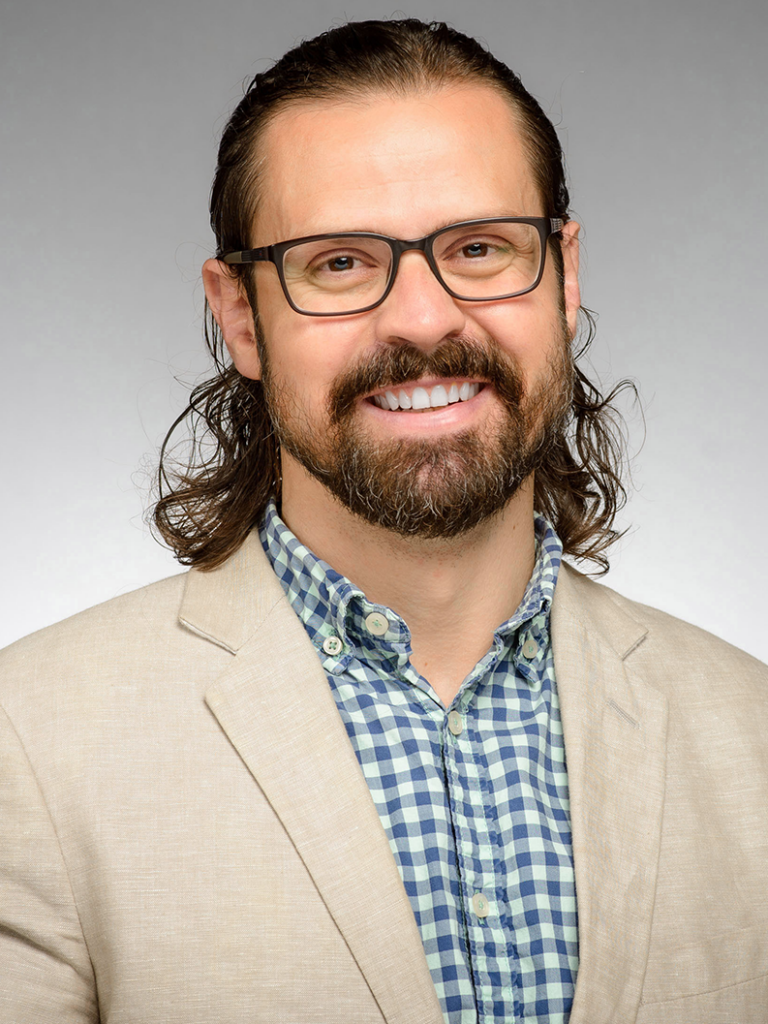
Mariele Courtois, Ph.D.
Mariele Courtois, Ph.D., is a theologian and ethicist whose work explores guiding ethical evaluations of genetic engineering technologies. Her research focuses on biomedical and genetic ethics, phenomenology, virtue theory, artificial intelligence and Catholic social teaching.
Dr. Courtois is an assistant professor of theology at Benedictine College, where she teaches courses on Christian moral life, bioethics, spirituality in health care, and AI. She is a member of the Artificial Intelligence Research Group at the Vatican’s Center for Digital Culture. She is a contributing author to Encountering Artificial Intelligence: Ethical and Anthropological Investigations, the research publication from the AI Research Group at the Vatican Center for Digital Culture.
She earned her doctorate in moral theology and ethics, and a master’s degree in theology and religious studies from The Catholic University of America, a master’s degree in theological studies from the University of Notre Dame and a bachelor’s degree in biology from Loyola Marymount University.
Through Generations in Dialogue, Dr. Courtois will further her research on the ethics of artificial intelligence, genetic engineering, and disability theology to engage questions about the dangers of transhumanism and its implicit alternative technocratic morality.
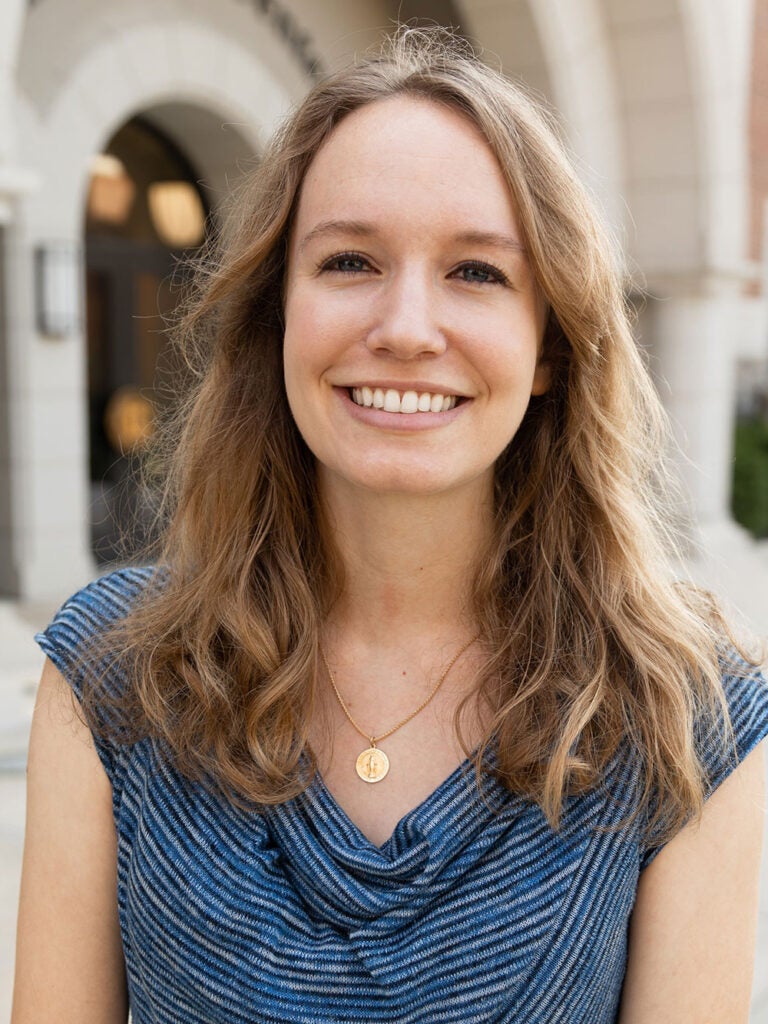
Kristen Drahos, Ph.D.
Kristen Drahos, Ph.D., specializes in systemic theology, Christianity and modern continental philosophy. Her areas of scholarly focus include various expressions of cruciform theology that relate to suffering, death, doubt, and faith.
Dr. Drahos is curretnly an assistant professor of great texts and theology at Baylor University. She earned her doctorate in theology, along with a master’s in theological studies and bachelor’s in philosophy and theology, from the University of Notre Dame, where she was a Presidential Fellow. Dr. Drahos has lectured extensively on Christian ethics and Catholic social teaching, and her own teaching inspires students to consider ethics and to critically link their beliefs to concrete practices.
She has taught English in Peru, served as a mentor to undergrad students across the U.S. and was a fellow in the Lilly Graduate Fellow Program at Valparaiso University.
By participating in the Generations in Dialogue program, Dr. Drahos will deepen her research on AI and technology ethics, and her work exploring how the Catholic intellectual tradition can contribute to addressing the pressing challenges of the present with the nascent ones emerging from advances in science and technology.
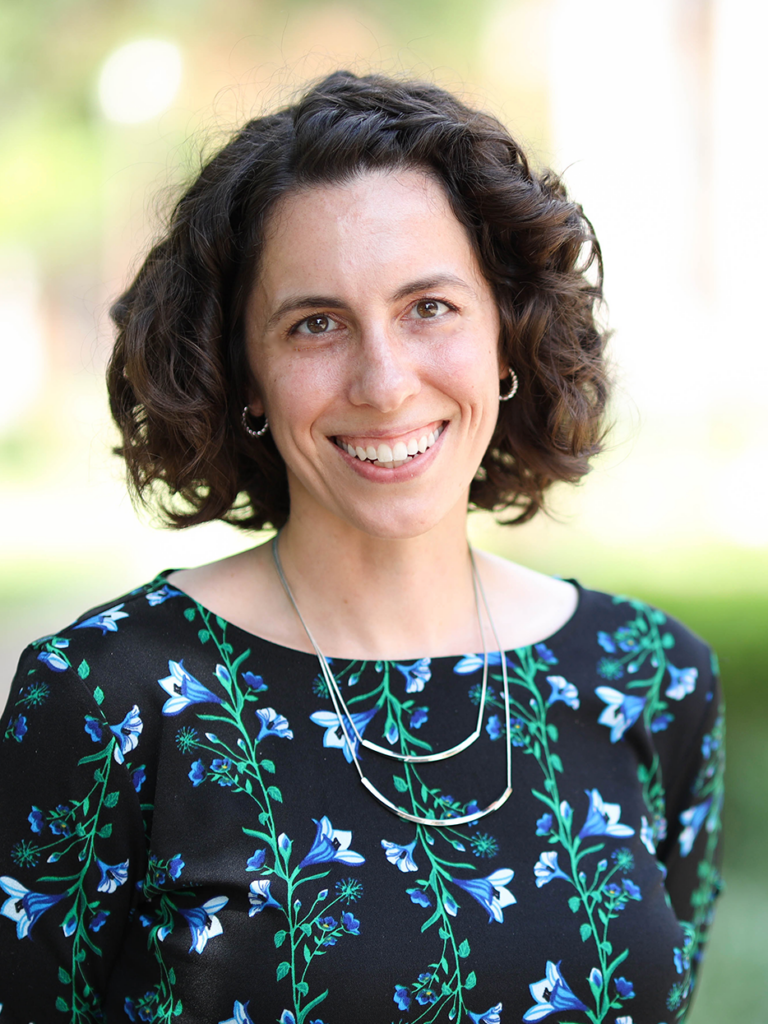
Christopher Krall, S.J., Ph.D.
Christopher Krall, S.J., Ph.D., is a theologian with a background in physics whose research focuses on neuroscience, personhood, prayer, the ethics of decision making, and the influence of divine grace.
He earned his doctorate in theology and neuroscience from Marquette University, master’s degrees in science and religion from Oxford, theology and divinity from Boston College, and history and philosophy of science and technology from the University of Toronto.
Dr. Krall is currently writing a book Neuroscience and The Theology of Prayer (University of Toronto Press, 2024) and co-editing Contesting the Darkness: Alternative Attitudes Toward Suicide and its Survivors, a manuscript that will be published by Lexington Books.
Dr. Krall is assistant professor of theology at Creighton, where he is a member of the university’s Biomedical Institute Review Board. He was a member of the U.S. Naval Reserve, where he was assigned as a chaplain to the III Marine Expeditionary Force Unit in Okinawa, Japan.
Through Generations in Dialogue, Dr. Krall will contribute to building a community of wisdom and collaboration, build on his research on neuroscience and theology.
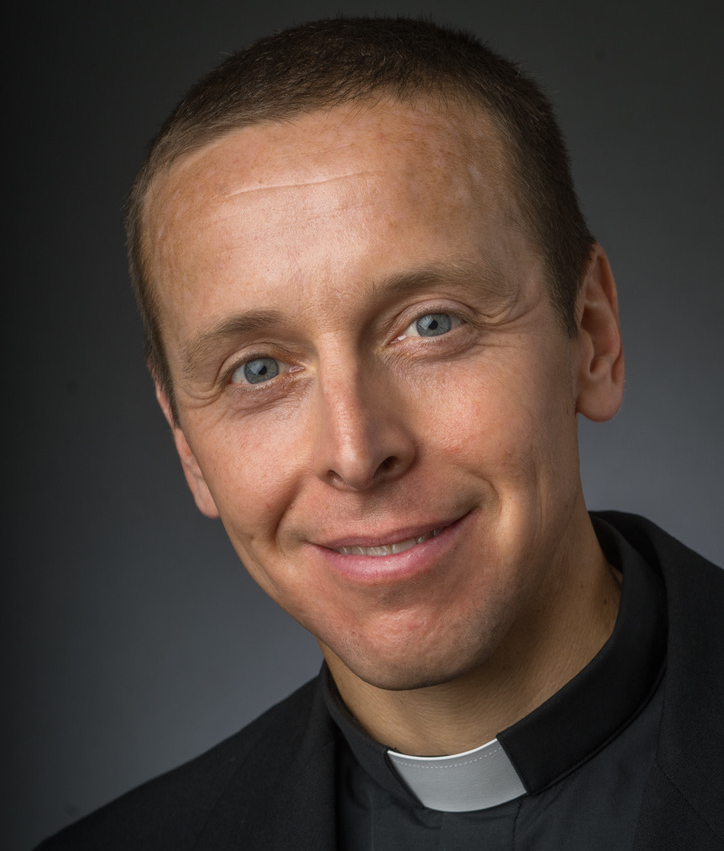
Gabriel LeBeau, M.D.
Gabriel LeBeau, M.D., earned his medical degree in May 2024 from the University of Kansas School of Medicine and will begin his residency in the Department of Neurosurgery at the University of Kansas Medical Center. He is interested in the intersection of medicine, ethics, history, neuroscience, the humanities, biology, and neurosurgery.
Dr. LeBeau earned his bachelor’s degree in philosophy and biology from Benedictine College, where he was recently named Young Alumni of the Year. His professional experience includes working as a research intern for the Bioethics Defense Fund, and he has served as president of the Catholic Medical Student Association at the University of Kansas Medical Center.
A native of Tempe, Arizona, he has volunteered as a youth soccer coach in Atchison, Kansas, taught English in Palestine and worked in Ghana, where he collected clinical medical data as a research intern for Global Health Outreach, an international Christian nonprofit.
Through Generations in Dialogue, Dr. LeBeau will work to better integrate philosophy and medical ethics into his professional practice, and seek to better understand the pressing ethical dilemmas facing neurosurgery, a field where the emergence of transhumanism stands as a pivotal concern.

Nithin Monteiro, S.J.
Nithin Monteiro, S.J., is a philosopher whose work focuses on the philosophy of technology and the ethics of AI.
Monteiro is working toward a doctorate in public policy, with a specialization in AI governance, from XIM University, the first Jesuit-founded university in India. He earned a master’s in philosophy from Boston College and Loyola College in India, a bachelor’s in physics, mathematics and electronics from Karnatak University, and a bachelor’s of theology from the Jnana Deepa Institute of Philosophy And Theology.
As a musician, he has composed and produced one album and five singles.
Through Generations in Dialogue, he hopes to better understand transhumanism and how issues of technology and innovation lead to polarization in his native India, an aspiring global superpower.
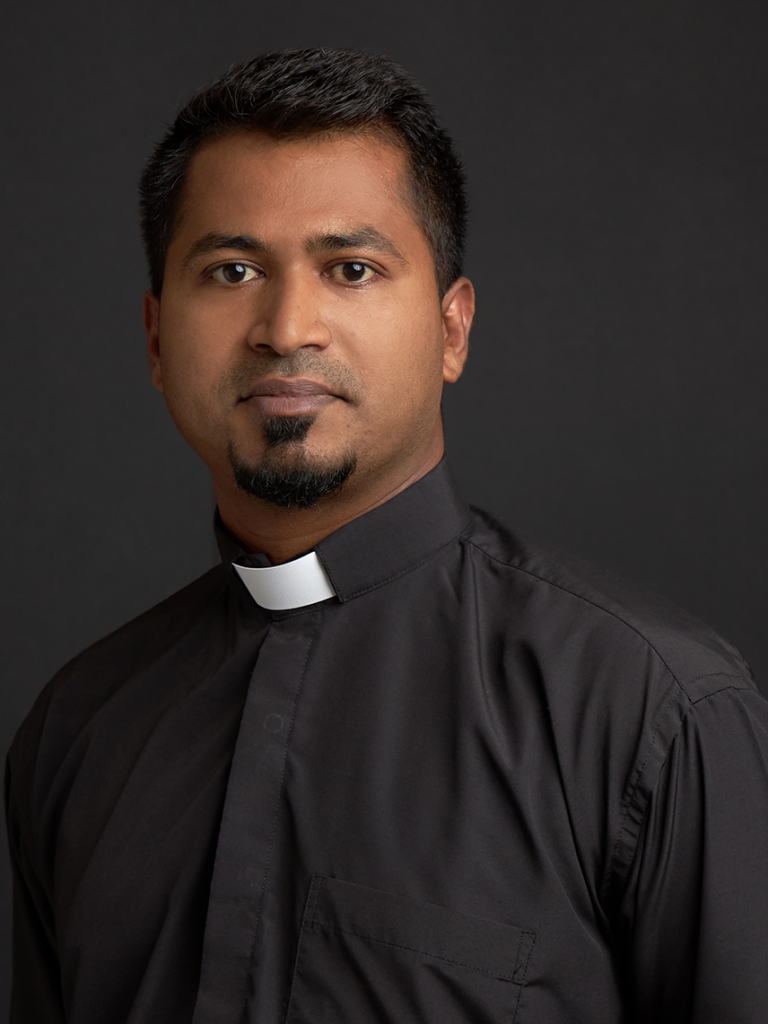
Catherine Moon, Ph.D.
A theologian with a background in researching the ethics of AI and emerging technology, Catherine Moon, Ph.D., earned her doctorate in moral theology and ethics from The Catholic University of America, where she was mentored by David Cloutier, Ph.D., a participant in the IACS True Wealth of Nations project.
Dr. Moon is currently a postdoctoral fellow at the Institute for Advanced Studies in Culture at the University of Virginia.
She earned her master’s degree in philosophy and religious studies from The Catholic University of America, along with a master’s degree in theological studies from Boston College. She earned a bachelor’s degree in liberal arts from St. John’s College, and has taught as an adjunct instructor at Georgetown and Mount St. Mary’s universities.
Dr. Moon is co-lead of the AI Research Group at the Vatican Center for Digital Culture, and a contributing author to the group’s upcoming research publication Encountering Artificial Intelligence: Ethical and Anthropological Investigations.
She has spoken extensively on ethics surrounding AI, and has worked as a teaching fellow in the School of Theology and Religious Studies at The Catholic University of America.
Through Generations in Dialogue, Dr. Moon will deepen her understanding of medical ethics, and further her research on the ethics of technology and artificial intelligence.
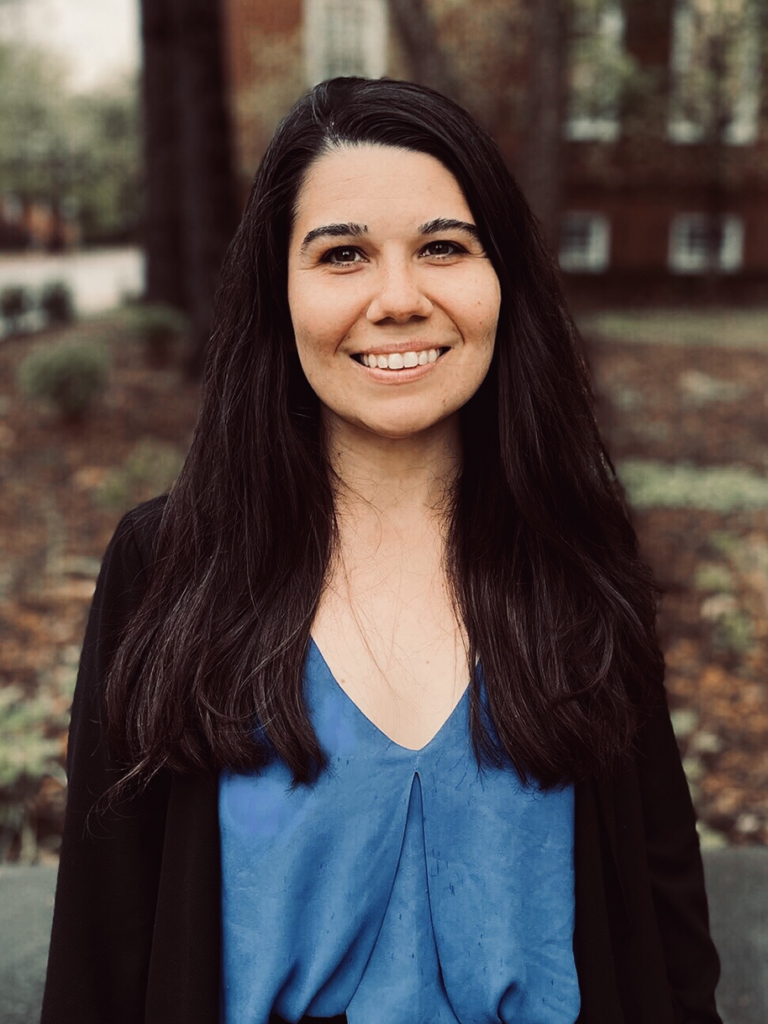
Joseph Vukov, Ph.D.
Joseph Vukov, Ph.D., is an associate professor of philosophy and the Associate Director of the Hank Center for the Catholic Intellectual Heritage at Loyola University Chicago, where he’s an affiliate faculty member in Catholic Studies and Psychology. His research explores questions at the intersection of ethics, neuroscience, philosophy, and religion.
He has written extensively on the ethics of neuroenhancement, and has explored the ethics of brain-computer interfaces, moral enhancement, memory modification, and other transhumanist technologies. His book The Perils of Perfection: The Limits and Possibilities of Human Enhancement (New City Press, 2023) introduced “transhumanist” and “luddite” perspectives, arguing for a middle way between the two that grows from Christian ethics and anthropology. He has also written Navigating Faith and Science (Eerdmans Publishing, 2022).
He is a member of the AI Research Group at the Vatican’s Center for Digital Culture, and has taught undergraduate courses in ethics and philosophy at Loyola University Chicago, Fordham, and Rochester Community and Technical College.
Through Generations in Dialogue, Dr. Vukov hopes to contribute to the building of a community of scholars across disciplines while making significant steps in his research on transhumanism and its influence on mainstream culture.