The Borner Lab
Tito Borner’s research focuses on how neurons control eating behavior. His overarching research goal is to investigate and identify the components and pathways within the central nervous system that mediate anorexia (loss of appetite), nausea, vomiting (emesis), and weight loss in pre-clinical models. This exploration focuses on understanding how these symptoms manifests after various diseases and, importantly, how they can be prevented, which special emphasis on chronic conditions such as cancer and diabetes.

Sophia Fischer
Ph.D. Student
Allison Pataro
Ph.D. Student
The Campbell Lab
The research in our lab combines field-based, experimental, and computational methods to: 1) reconstruct human demographic history; 2) identify DNA changes associated with distinct phenotypes; and 3) infer human adaptive evolution mainly in diverse African and Middle Eastern populations. In particular, we are interested in the past migration and admixture of anatomically modern humans in the Arabian Peninsula (AP) and the African continent. Furthermore, our research aims to identify variants that contribute to human normal variable traits (e.g., bitter taste, lactase persistence and skin pigmentation variation) and complex diseases (e.g., kidney and breast cancers). We also collaborate with top-notch scientists to investigate the dynamics of the gut microbiome in diverse populations in the AP.
Finally, while software development is not a major focus of my laboratory, we have collaborated with outstanding colleagues at the Yale University School of Public Health to produce a computational method that detects genetic signatures of positive selection within coding sequences (called MASS-PRF). These genetic signals are adaptive nucleotide changes (presumably impacting gene function) that arose in the human lineage and are fixed in our species. Additionally, in house, we have developed several methods to visual ancestry components in populations (AncestryGrapher toolkit) as well as methods to polarize alleles for selection inference (Polaris) and to date the onset of selection on derived alleles (CLUES2 Companion).

Marisol Fermin-Flores
Ph.D. Student
Marisol is a PhD student in Dr. Campbell’s Human Evolutionary Genomics Lab. She is interested in using field-based, molecular, and computational methods to investigate the role of genomic, epigenomic, and environmental factors in the development of Type 2 Diabetes and related traits in Mexican American populations. Marisol is also passionate about building her mentoring efforts with high school and undergraduate students to support the retention of young people in STEM.

Alexandria Koedel
Ph.D. Student
Alexandria’s focus is on the evolutionary genomics of complex traits, including disease susceptibility, in human populations. Specifically, using a combination of field-based, molecular, and computational methods, I endeavor to investigate how interactions among diet, the oral microbiome, and host genetics influence risk for Type 2 Diabetes Mellitus (T2DM) in rural and urban populations in Tunisia, North Africa. As part of her ongoing work on this project, she is also interested in expanding her mentoring of undergraduate students in genetics, bioinformatics and evolution.
The Kanoski Lab
The prevalence of obesity has exploded over the past 40 years. The biological systems that underlie the excessive eating behavior contributing to obesity onset remain poorly understood. Our research goal is to discover the neural systems and psychological processes that control energy balance, with a particular focus on understanding the neurobiological substrates that regulate obesity-promoting behaviors such as food impulsivity, environmental cue-induced eating, and excessive meal size.
Another primary focus of our lab is to study how the brain is negatively impacted by dietary and metabolic factors. Consumption of Western diets (high in saturated fatty acids, sugars, and processed foods) not only contributes to obesity development, but also produces deficits in learning and memory capabilities and can even increase the risk for developing dementia. We are currently examining the specific causal dietary factors, critical developmental periods, and neurobiological mechanisms underlying diet-induced cognitive decline. Ongoing research identifies the gut microbiome as a critical link between unhealthy junk food diets and neurocognition.
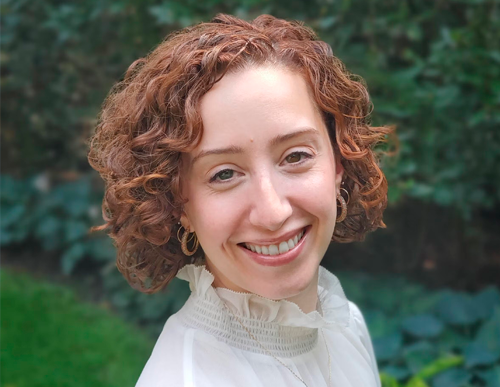
Molly Klug
Ph.D. Student

Logan Tierno Lauer
Ph.D. Student
The Raichlen Lab
Our lab is focused on understanding how humans’ unique evolutionary history explains modern human physiological variation and how we can use an evolutionary context to improve health and well-being today. Specifically, we argue that a shift towards high levels of physical activity during our transition to hunting and gathering in the past led to a physiological requirement for physical activity to maintain the health of organ systems from our brains, to our cardiovascular system, to our musculoskeletal system. While we explore the links between human evolution, physical activity, and health across the lifespan, we believe this perspective can play a major role in preventing and managing diseases that occur late in life. In the end, a full understanding of our evolutionary history will help explain how and why our current, more sedentary lifestyle impacts our physical and mental health, and how we can use this evolutionary context to improve well-being today.

Sarah Hourihan
Ph.D. Student
Sarah is a PhD student in David Raichlen’s lab. She is studying how sedentary behavior and other lifestyle factors impact chronic disease outcomes.
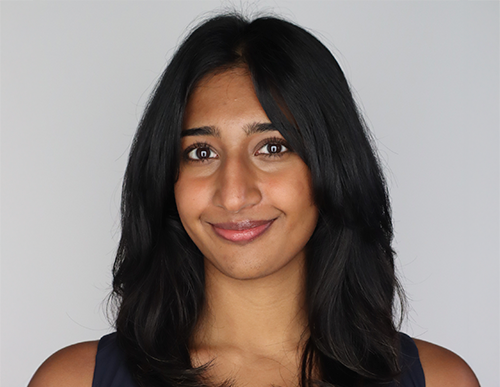
Anamika Nanda
Ph.D. Student
Anamika researches how physical activity influences cellular and biological mechanisms of aging from an evolutionary perspective. Currently she is studying how physical activity influences our neurological health across genetic mutations.
The Schier Lab
Nearly two-thirds of adults in the United States are overweight or obese. These conditions are oftentimes linked to the chronic overconsumption of highly palatable diets that despite being calorically rich, are nutritionally maladaptive. The integration of oral (i.e., taste) and postoral signals elicited by these foods and fluids as they are ingested, digested, and assimilated into the body is critical for the control of meal size and diet selection. The Schier Lab seeks to understand how the chemical constituents of foods and fluids are sensed, how these oral and postoral signals are processed in the brain and channeled into the behavioral outputs that subserve energy balance.
Leonard Tornes Martinez
Ph.D. Student

Dongpeng Yang
Ph.D. Student
The Stanford Research Group
DESCRIPTION OF RESEARCH
I continue to 1) direct field and captive projects on primate, especially great ape, behavior with my graduate students; 2) collaborate on long-term research on conservation biology of reptiles in northern Mexico, where the non-profit organization on whose board I serve has acquired a 2,200 acre plot of land to protect as habitat for critically endangered reptiles and is available for research by my graduate students, and 3) through my role as an IUCN Chair, I work with and mentor students and conservation biologists working in various countries on critically endangered reptiles.
RESEARCH SPECIALTIES
1. The ecology and social behavior of nonhuman primates, especially the great apes
2. The conservation biology of reptiles, especially critically endangered tortoises and turtles

Katie Beachem
Ph.D. Student
Multimodal communication in captive bonobos
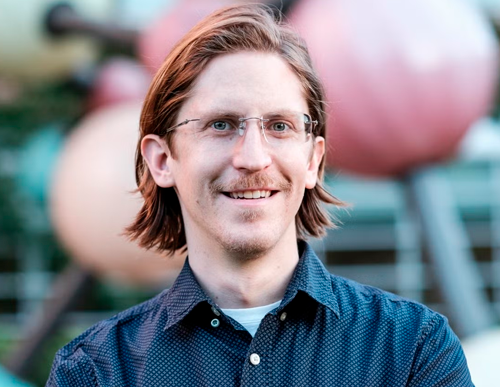
Charles Lehnen
Ph.D. Student
Rewilding and behavioral ecology of giant tortoises and iguanas in the Galapagos Islands.
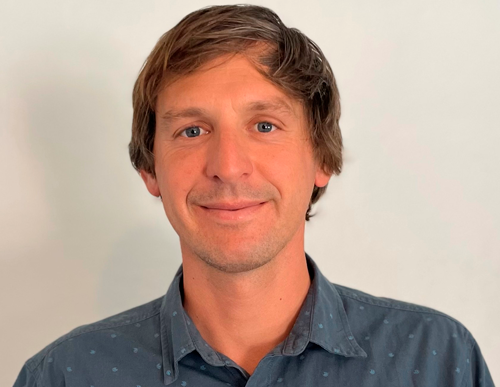
David Meszaros
Ph.D. Student
David is a cognitive behavioral ecologist studying wild chimpanzees in the Waibira community of the Budongo Forest, Uganda. His research investigates the cognitive mechanisms underlying navigation strategies and how the nutritional concentration and availability of fruit influence chimpanzees’ spatial foraging decisions.
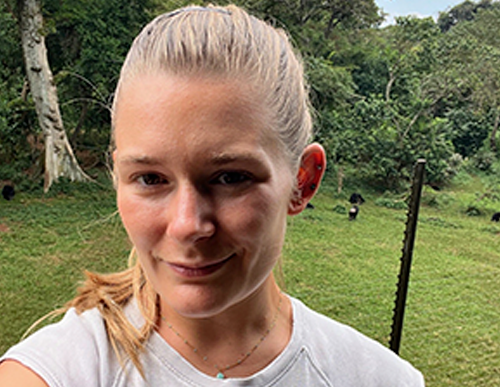
Eloise Pedersen
Ph.D. Student
Eloise is a fifth year PhD candidate on the IEB program. She specializes in chimpanzee social learning strategies and has undertaken research at Bugoma Forest Reserve and Ngamba Chimpanzee Sanctuary in Lake Victoria Uganda.
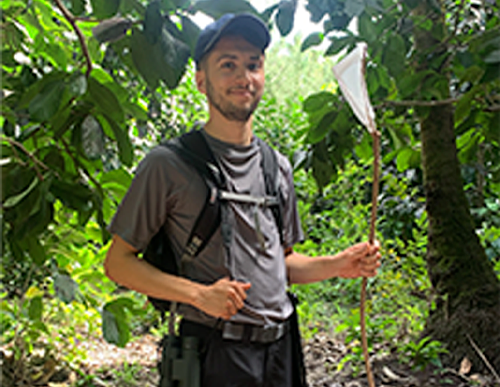
Koray Yilmaz
Ph.D. Student
Hormones and behavioral ecology in Zanzibar Red Colobus monkeys living in fragmented forest.
The Turcotte Lab
The Turcotte lab conducts research on the effects of nutrition and exercise on muscle metabolism, human performance and mitochondrial health and is best known for their work on delineating the cellular mechanisms by which stress and inflammation affect metabolic function and human performance in highly trained individuals.
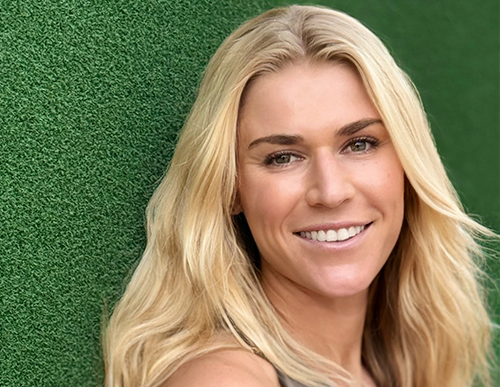
Lauren Visconti
Ph.D. Student
Lauren Visconti is a fourth year Ph.D. Candidate in the Integrative and Evolutionary Biology program at USC. Her research focuses on the physiological impacts of training in military populations, as well as the effects of female sex hormones on the exercise-induced stress response.
The USC Biomechanics Research Laboratory
The USC Biomechanics Research Laboratory is an interdisciplinary research and teaching facility located on the University Park Campus (UPC) of the University of Southern California in Los Angeles, California under the direction of Professor Jill L. McNitt-Gray, PhD. Our research team uses experimental and dynamic modeling approaches to advance our understanding of control and dynamics of movement under physically challenging and contextually relevant conditions. The BRL@USC is affiliated with the Department of Biological Sciences and Biomedical Engineering, the Los Angeles County Natural History Museum, and actively collaborates with the Rancho Los Amigos National Rehabilitation Center and the United States Olympic Committee.
Anshu Goyal
Ph.D. Student