The German Blues:
A Historian’s Perspective on the Rise of
Right-Wing Populism in Eastern Germany

March 4, 2026 at 4:00 PM Pacific Time
USC Max Kade Institute for Austrian-German-Swiss Studies
2714 S. Hoover St.
Los Angeles, CA 90007
A public lecture by Dorothee Wierling (University of Hamburg; Forschungsstelle für Zeitgeschichte)
Presented as part of the Gerda Henkel Lecture Tour (sponsored by the Pacific Office of the German Historical Institute, Washington)
Hosted and organized by the USC Max Kade Institute for Austrian-German-Swiss Studies
Cosponsored by the USC Dornsife Center for Advanced Genocide Research
The right-wing populist party Alternative for Germany (AfD), recognizable by its light-blue campaign color, has become a major force in German politics. In upcoming state elections in eastern and western Germany as well as in Berlin, the AfD is expected to gain further votes and may even become unavoidable in government formation in some regions, such as Saxony-Anhalt. While right-wing populism has grown across the country, its rise over the past decade has been especially pronounced in eastern Germany.
Historian Dorothee Wierling explores the deeper historical reasons for the AfD’s particular appeal in the East. She argues that current political discontent is rooted in a longer experience of perceived marginalization that began with Germany’s defeat in World War II and the division of the country during the Cold War, when West Germans came to see themselves largely as winners and many East Germans as lasting losers.
The analysis draws on two oral history projects: one conducted in 1987 in the former GDR with people born before 1930, and another carried out after reunification with members of the 1949 birth cohort. Planned interviews with AfD voters and party members in a village in Saxony-Anhalt will extend this perspective. Together, these sources offer a multi-generational view of eastern German experiences based on what cultural historian Jan Assmann calls communicative memory.
The title The German Blues also points to a broader sense of disillusionment in postwar German society, as expectations of steady liberal and social progress have increasingly been called into question.
RSVP to kade@usc.edu.
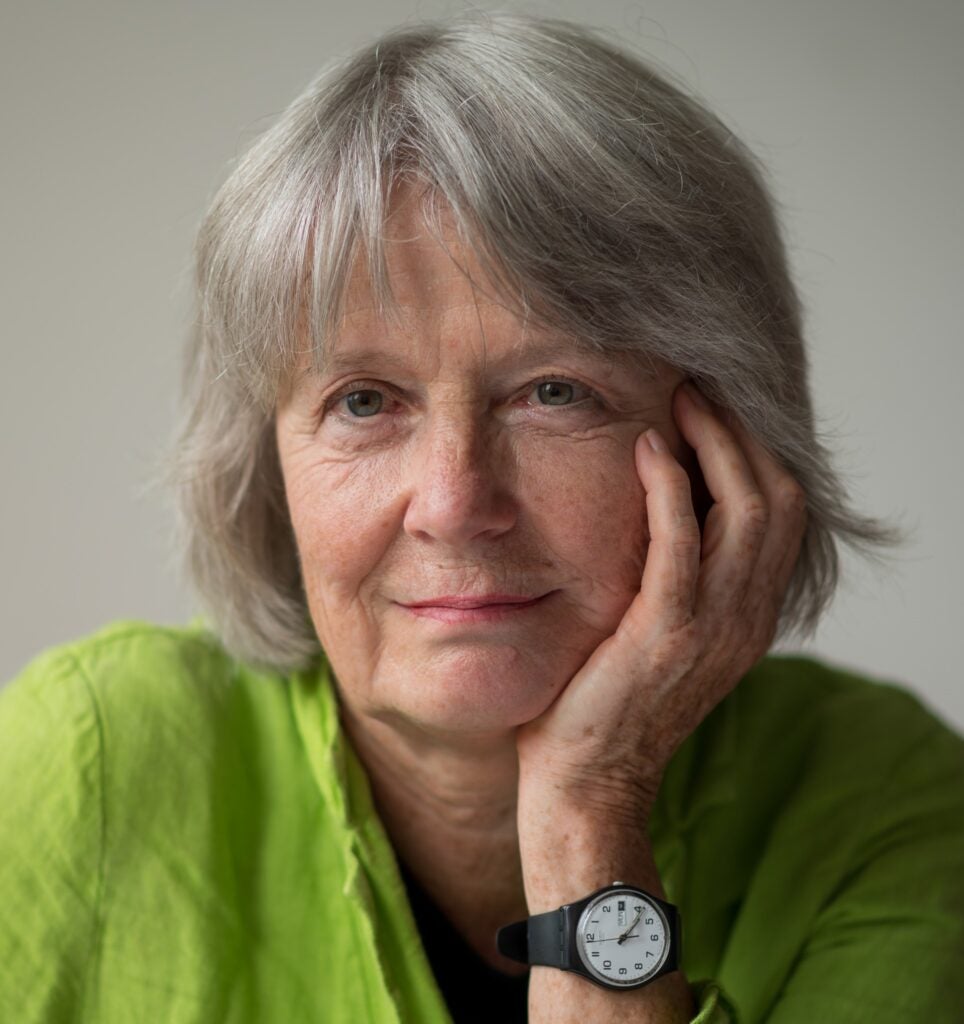
Dorothee Wierling was deputy director of the Forschungsstelle für Zeitgeschichte in Hamburg and professor of contemporary history at the University of Hamburg until 2015. Her focus is on social history of the 19th and 20th centuries, oral history and gender and generational history. She published Inside World War One? The First World War and Its Witnesses (with R. Bessel, 2018) and Eine Familie im Krieg: Leben, Sterben und Schreiben 1914-1918 (2013).
Lecture image: Percentage of AfD votes in the 2024 European Parliament election in Germany; © Costamiri
Discover more about the Center’s events here
Sign up for the Center’s newsletter to be notified about upcoming events
Visit the Center’s YouTube channel to explore our video library of events (and subscribe!)