Expand Your Horizons on Catalina Island
The Wrigley Institute’s Wrigley Marine Science Center, located at Big Fisherman Cove on Catalina Island, is your campus-away-from-campus for learning about the environment and sustainability. We offer courses and programs on a variety of topics, with a focus on interdisciplinary and hands-on learning for future environmental leaders.
Sound like you? Keep scrolling for details on our Catalina Residential College Maymesters, skill-building workshops for grad school and environmental careers, and more. Or fill out our interest form below, and we’ll notify you when Catalina Island programs are open for registration!
Charting a Sustainable Future at USC
Nicole Summerfield’s Catalina Residential College experience was so transformative that she enrolled in our Maymester courses not once, but twice. She used her visits to the island as stepping stones toward a more sustainable future, both for herself and for the planet.
“My fondest memories and most impactful learning experiences at USC were made possible by the Catalina Residential College. It was an experience like no other: it deeply ingrained in me the beauty and importance of preserving our natural world, and I would come back every year if I could.”

Choose Your Own (Island) Adventure
For a few days to a full month, enroll in a Wrigley Institute experiential learning program to see the environment and sustainability in a whole new way.
Located in pristine surroundings just 22 miles off the coast of Los Angeles, our campus provides a unique lens on how conservation, human activity, and a host of other factors affect our planet.
The Catalina Island Experience
See what it’s like to spend a few days or even a month with us!

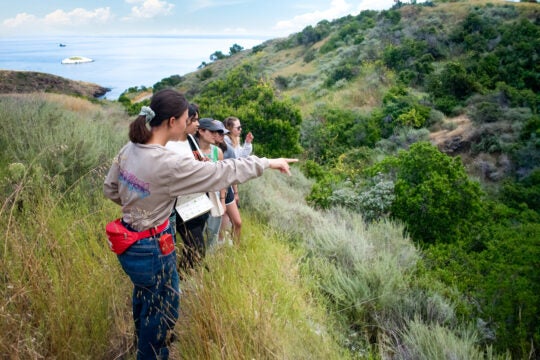

Our Maymester courses, offered as part of our Catalina Residential College, are generally capped at 15-20 people, so you get the chance to form strong connections with other students in the program.

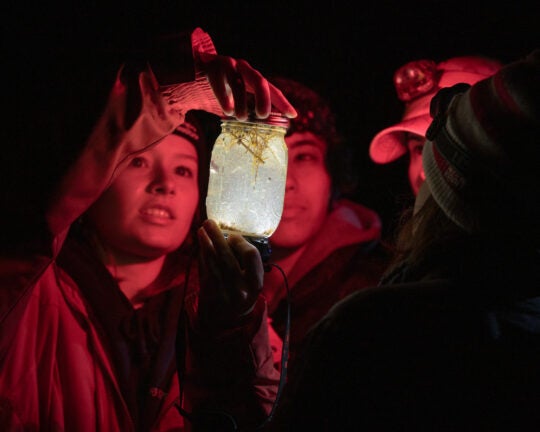
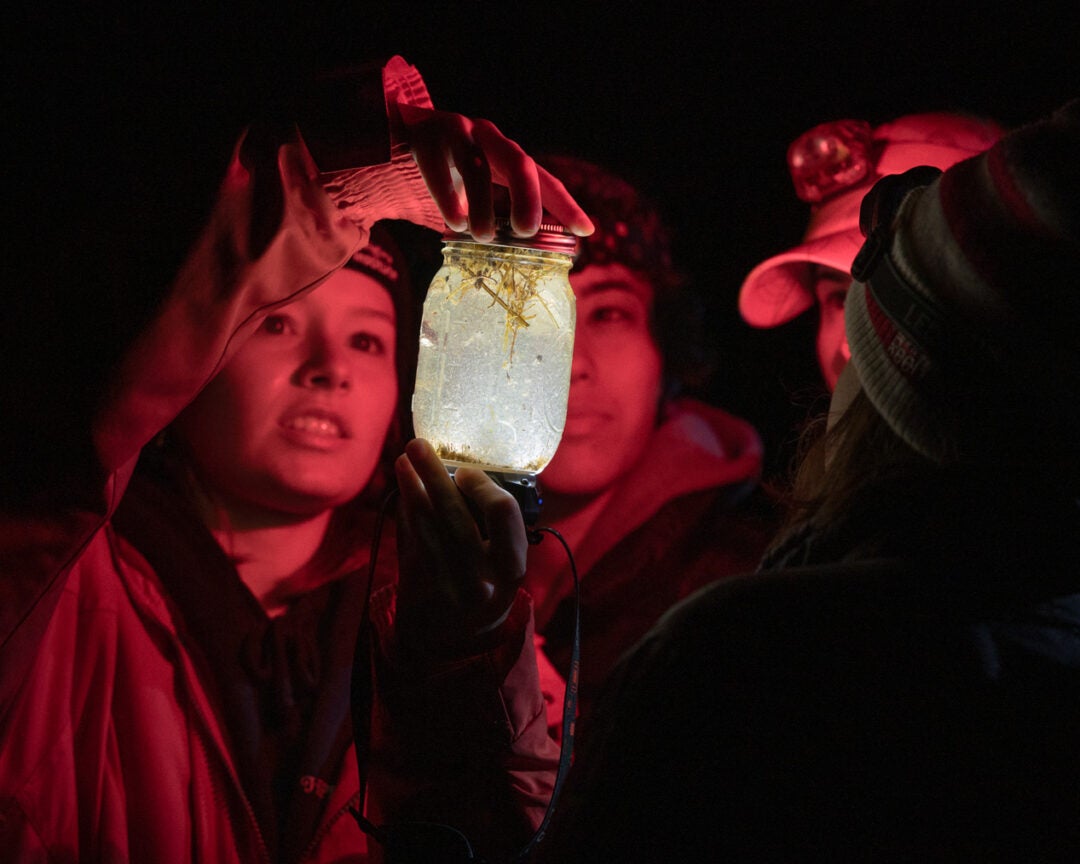
Our Weekend Workshops equip you for graduate school or environmental careers, with hands-on experience in field observations (like this night plankton lab), lab techniques, sample collection, geology basics, and more.
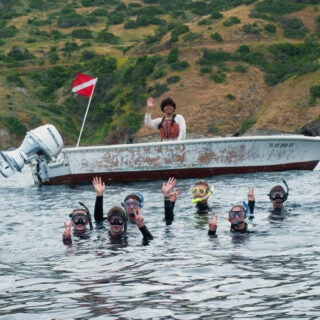
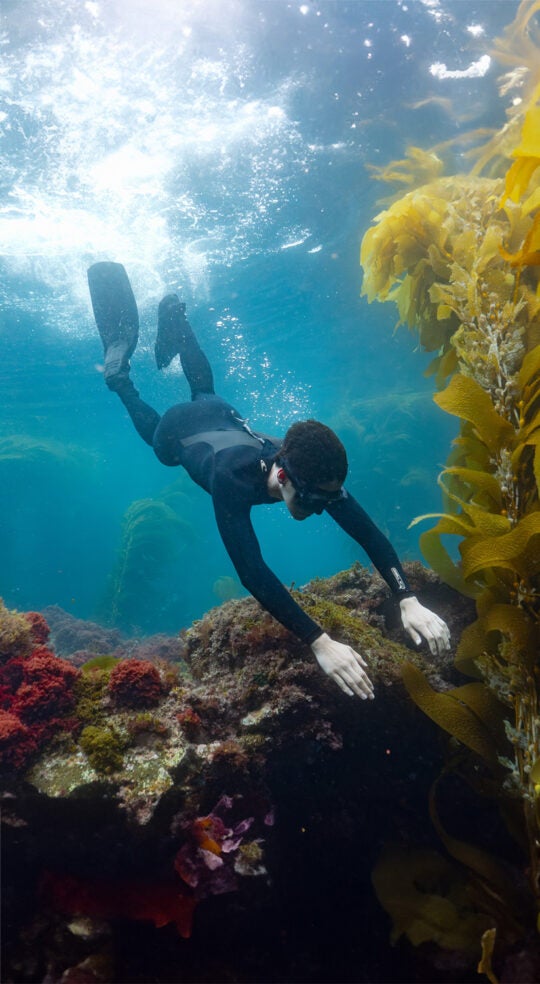
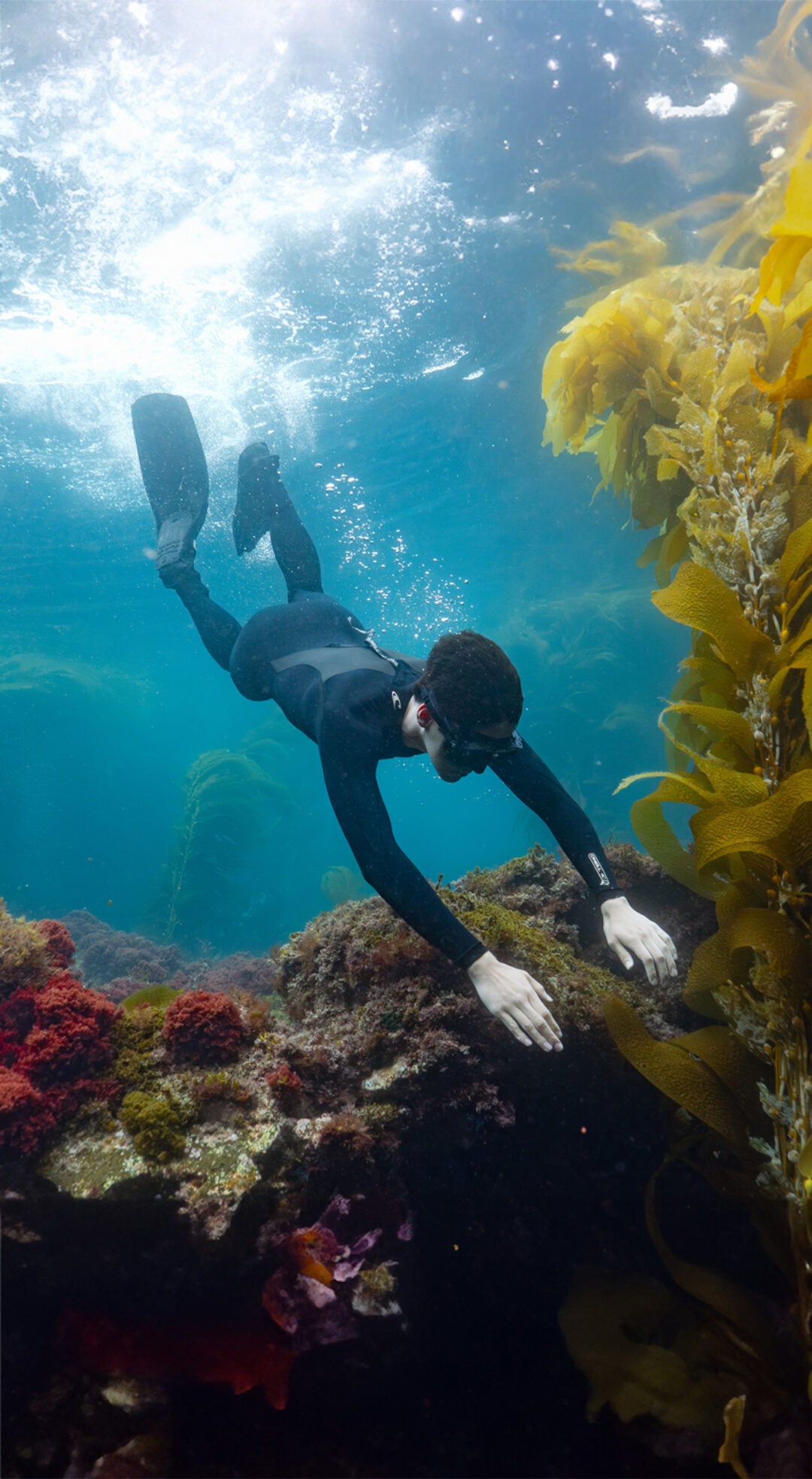
Many of our experiential learning programs include activities where you can learn a variety of fun and useful water skills, such as free diving, how to operate small boats, and more.
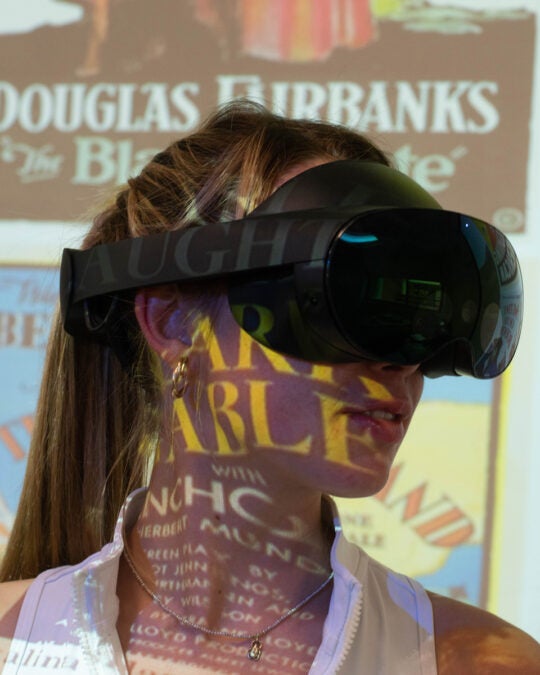
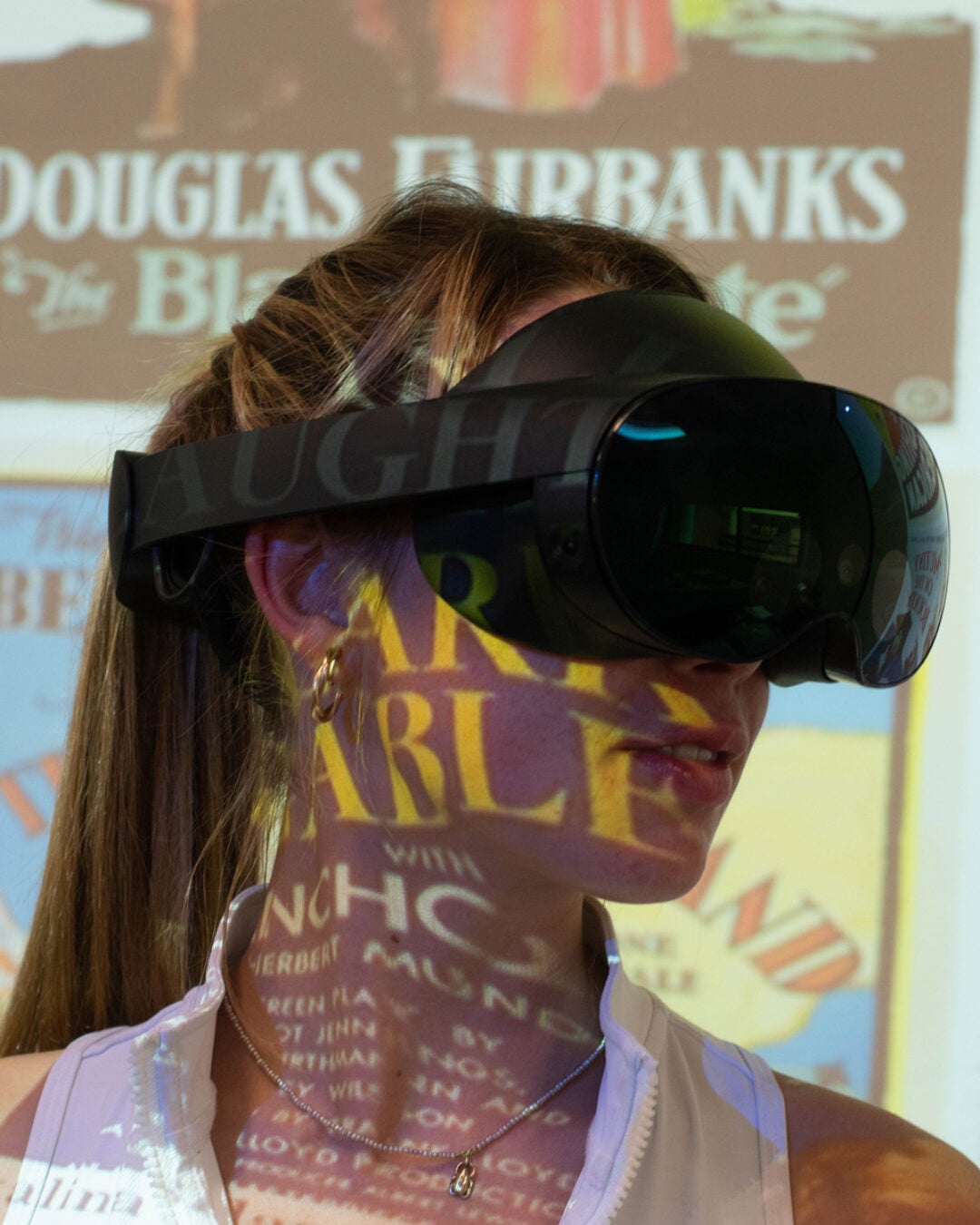
The Catalina Residential College Maymesters aren’t just about natural science: they also include learning opportunities in the social sciences and humanities. Here, a student uses VR goggles to view an immersive model of an underwater archaeological site.
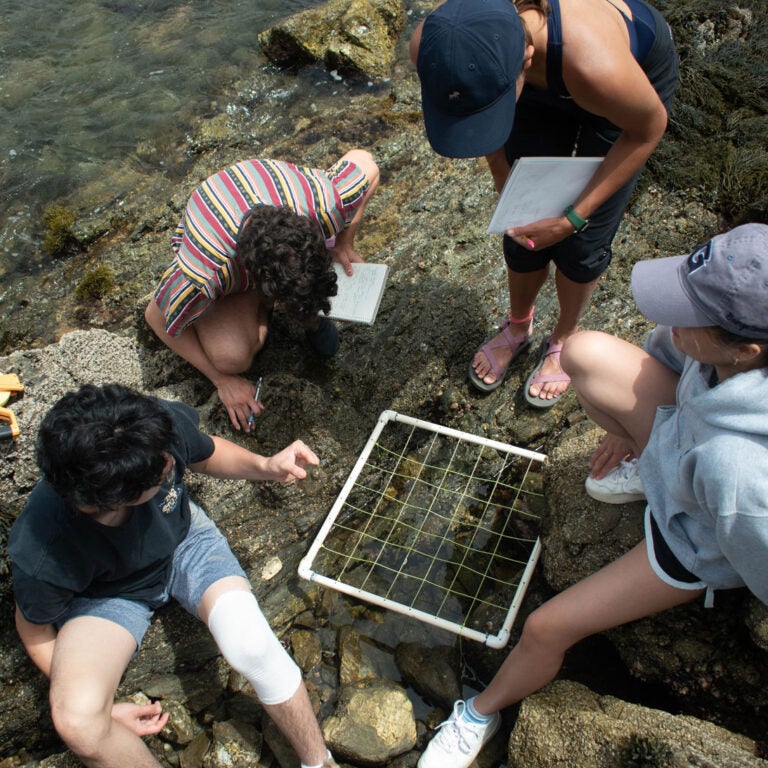
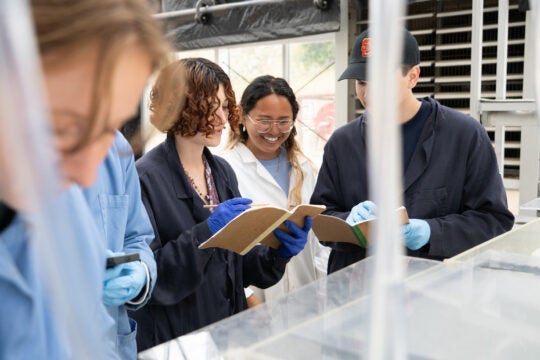
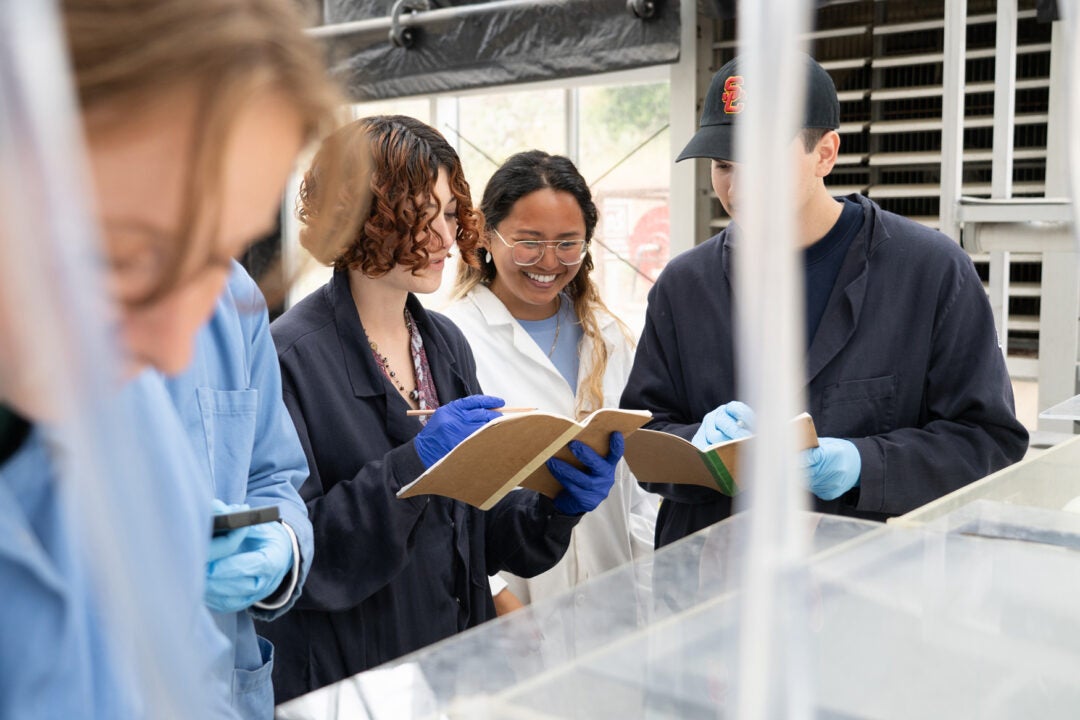
All Catalina Island programs incorporate some kind of immersive, hands-on learning or research. Here, students log data from an aquaculture experiment taking place in WMSC’s bluehouse, a large lab that is specially equipped for ocean science experiments.
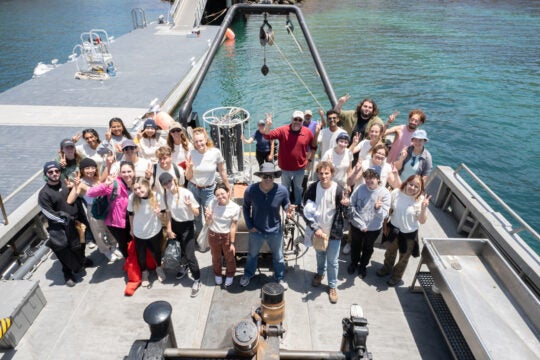
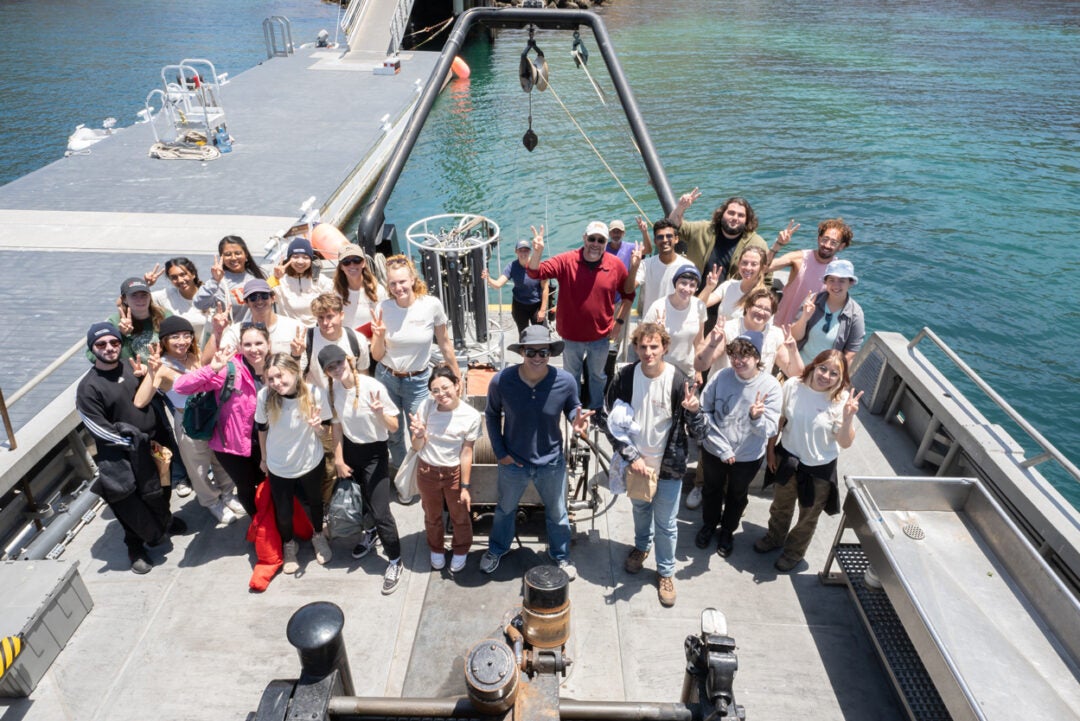
Oceanography students and their professor set off on a sampling trip aboard the research vessel Yellowfin. The Catalina Residential College provides numerous opportunities to engage in hands-on research, mentored by USC’s world-class faculty.
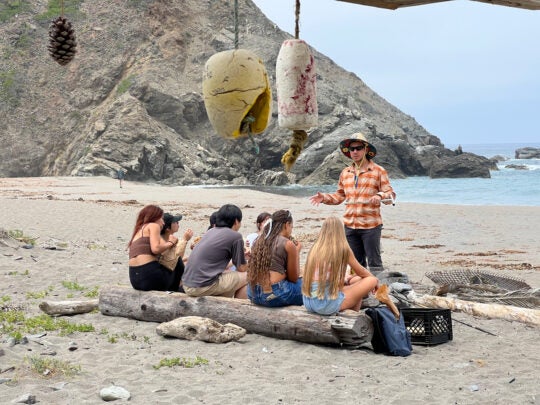
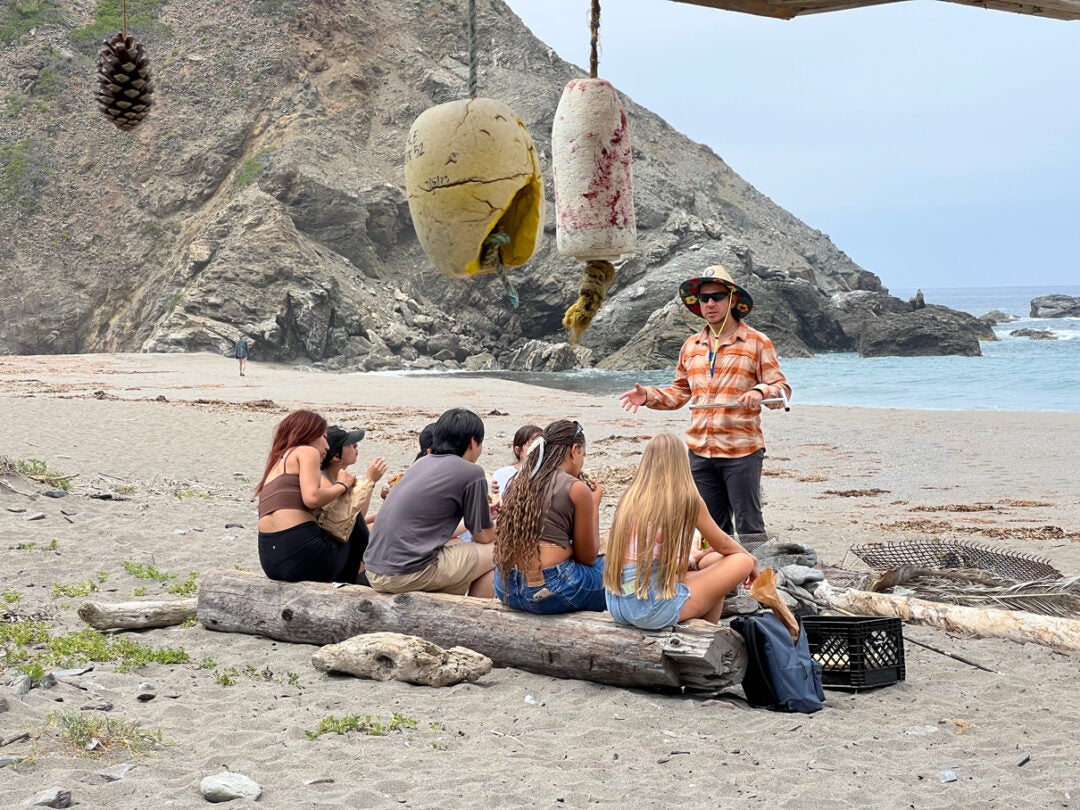
Thanks to the Catalina Residential College’s small class sizes, students learn directly from USC faculty and can easily obtain any extra support they need to be successful. (Plus, who doesn’t love lectures on the beach?)
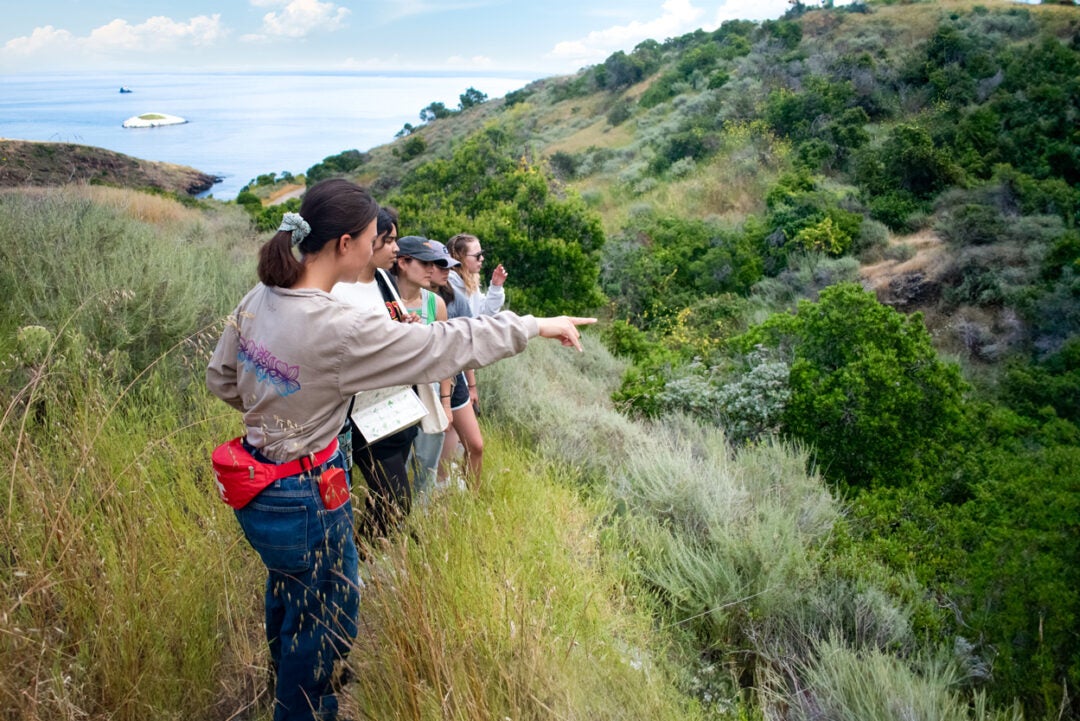
Outside class time, Catalina Residential College students have ample opportunity to explore the island through guided hikes, kayak excursions, snorkels, field trips, and more.
Spring break trips to WMSC, which are open to all USC students, provide an introduction to Catalina Island’s unique geology and ecology through kayak excursions and other activities with our expert educators.
