Coming back for in-person office hours, changes to campus and anticipating a fuller return in the fall
By Ben Pack – May 31, 2021
In the last week of class, I returned to campus to work with students in person. I made the reservation at one of the outdoor learning tents several weeks in advance, and I told my students where they could find me. It was exciting to be back with them in person – to see body language and the excitement in their eyes. They were the first students I’d seen live in over a year, and I was the first professor any of them had met in person.
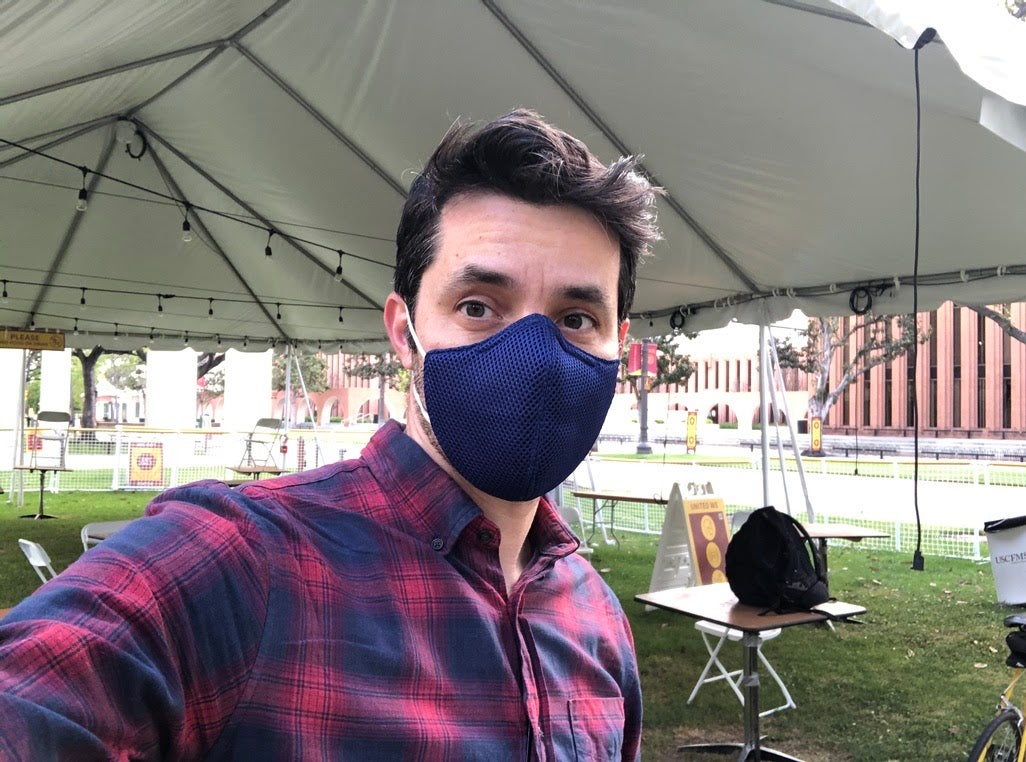
I’m sure much will change between now and the fall, and I am excited to return full-time to campus, but I know the transition won’t be seamless – this isn’t going to be like returning to work after the usual summer break. Based on my excursion to campus, here’s what I would tell colleagues:
Give yourself time to make sure all the little things work.
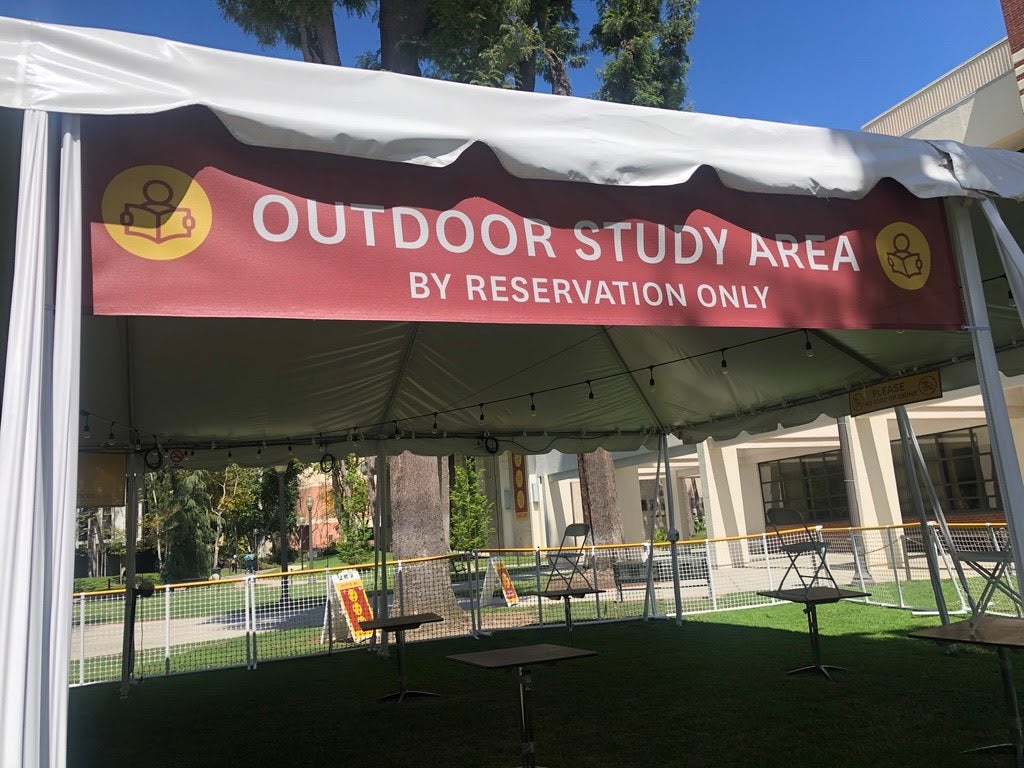
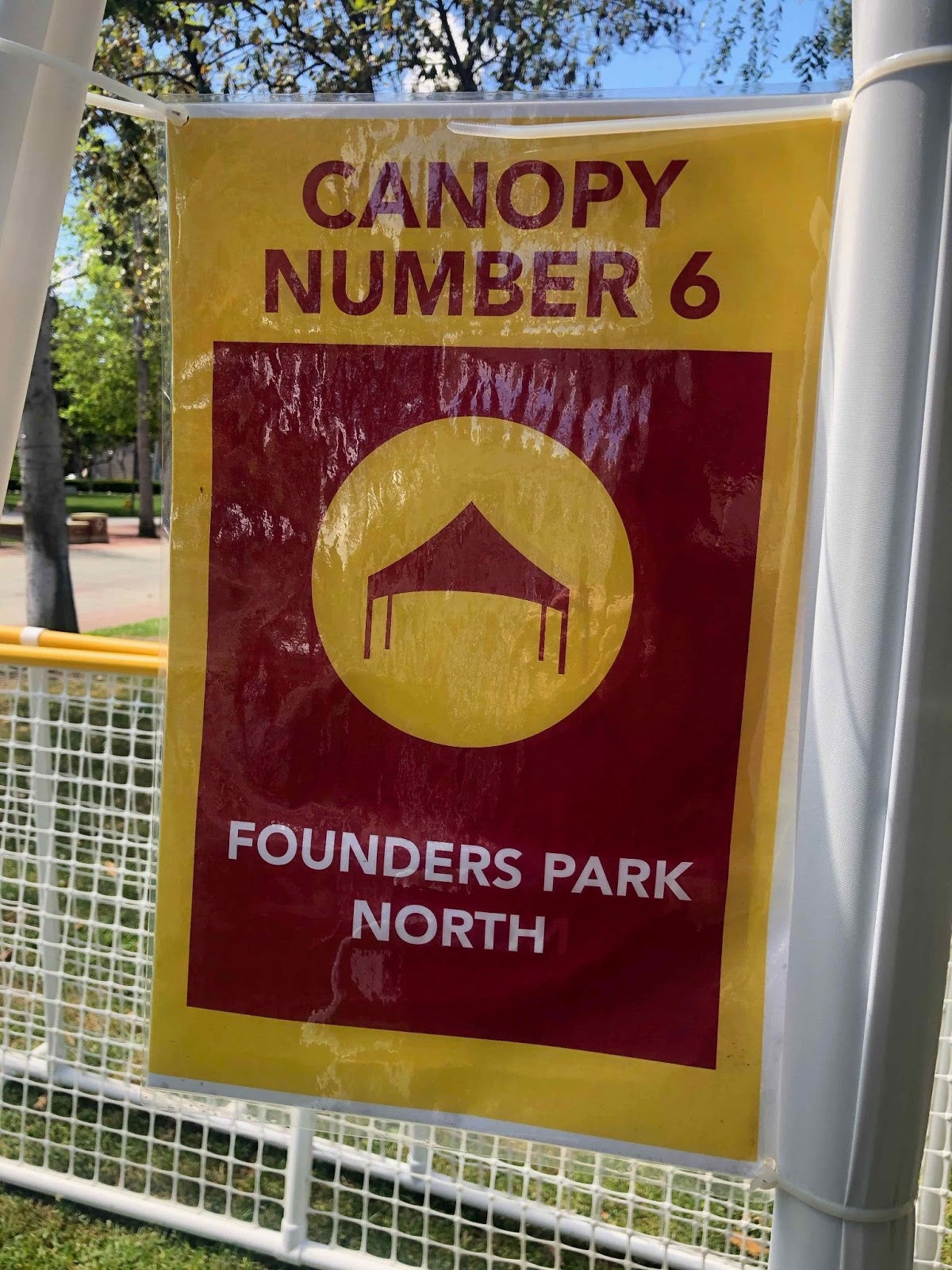
Many of the things I used to do without a second thought pre-pandemic no longer worked the same. Most notably, my wifi password and access to the secure network on campus failed over and over again. I thought I knew how to logon, but apparently not, and I hadn’t shown up to campus early enough to troubleshoot with IT. And while the guest wireless got me into my email, I wasn’t willing to risk that slower connection for Zoom meetings, so I had to return home to meet people digitally in the afternoon. There were other small hiccups: my usual gate closest to the Exposition/Vermont light rail station was closed, forcing me into a detour; the center of campus has a new roundabout in it – we’ll see how well that goes. All the buildings might be the same, but new tents have sprouted like mushrooms, and if we’re still using those in the fall someone has got to come up with a better naming system. I was in “6A,” which turned out to be in Founders Park between Taper Hall and Bovard. Except the sign was small and counterintuitively didn’t even face the main walkway. There was a huge sign that read “outdoor study area” but that felt about as helpful as labeling Taper Hall an “inside building space.” If we can rename all the parking structures on campus to reflect their cross street locations instead of letters, I think we can make these tent names clearer too.

Adjusting to new norms and rules is unsettling.
I constantly felt like I was doing something wrong. There were huge signs posted everywhere about social distancing and facemasks; the tent I sat in had a bunch of rules posted too, although I had to walk around to actually read them since the sign was at the opposite side of the space instead of at the entrance; the tables in the tent were all bolted into the ground, which is understandable, except they were more like 12 feet apart, which made conversations with students awkward — like we were shouting. The more natural thing was to pull up an extra chair to my table and sit six feet apart. But then everytime DPS drove by (which was often) I found myself getting nervous that I wasn’t doing it right – whatever “it” was. Later when I went to my office on a break, I noticed the doors had all been sealed with stickers, dating when the room was last cleaned and I had no idea if I was allowed to go in or not. Would I get in trouble? Should I carefully peel off the sticker and put it back? Maybe all this sounds neurotic, but with no one around to ask it was impossible to know – I felt like there were all these new rules but no instruction manual.
I imagine it’s a hard line to walk – public reminders keep people safe and set new expectations – when you’re trying to keep people healthy, that can be good. But when we return, I worry those norms will become barriers. Will we feel welcome back on campus or surveilled and alienated? Will DPS, with its history of racially profiling people coming onto campus, target black and indigenous people of color when it comes to enforcing rules? Who will make sure that they do not? Will the surrounding community (which relies on the university for green space, services and easier access between the different sides of campus) be allowed to return or will they continue to be pushed to the periphery at the expense of their health, safety and convenience?

Be Flexible
Not everything is going to go the way we expect. Campus might have been absent of students and teachers for the past year, but it hasn’t been completely empty either. This was evident when the groundskeeper came up to me and asked how long I’d be in the area? Apparently, he had never seen anyone use the tent I was in and this was when he’d normally cut the grass. We happily accommodated each other, but it reminded me that as much as I’ve adjusted to a new normal teaching from home, the people on campus must have adjusted to a life without me too. I’ve always been grateful to staff for keeping campus a well oiled machine – and I can’t imagine the stress of lay-offs and lost work (consider supporting them through mutual aid). In returning to campus though, I know there will be more adjustments and a need to be flexible as we all adapt to new routines with students, faculty and staff back together.
That adaptation will take time too. Literally. I forgot how long it takes to walk between places – no more logging onto Zoom one minute before class. Also all of my students were late to our meetings, which nopre-pandemic would have been a pet peeve for me, except I had anticipated this. After all, I didn’t think any of them would know where Tommy Trojan is located, let alone Tent 6A.