As evidenced by leap years, it may seem like humans have an odd way of measuring time, says USC Dornsife professor Vahe Peroomian. Sometimes, timekeepers even have to add extra seconds to clocks.
News Stories
A new study by USC Dornsife psychology researcher Wändi Bruine de Bruin finds that using unfamiliar terms results in less public concern and less willingness to support policies that could stave of the extinction of species.
Staying in school longer can protect against dementia, with particularly large benefits among people at higher genetic risk, according to a study by USC Dornsife economics scholars.
The shadow population of deceased relatives is more than three times as large as today’s living population, writes USC Dornsife Professor of Sociology and Spatial Sciences Emily Smith-Greenaway.
When conservation affects local people, the question of who pays and who has a voice in decisions can make or break species recovery, say USC Dornsife environmental scientists Shannon Gibson and David Ginsburg.
USC Dornsife Public Exchange and USC School of Architecture team up with Los Angeles County to again launch the student design competition aimed at tackling the growing threat of extreme heat.
Coordinated by USC Dornsife Public Exchange, a new study at Taylor Yard, a former rail yard along the Los Angeles River, explores new approaches that work with natural systems to provide flood protection and healthier public spaces.
These USC Gould scholars — six of whom hold joint appointments in USC Dornsife’s School of Philosophy — are exploring fundamental questions in legal thought. Their research goes beyond how to describe and interpret a law, examining what it ought to be and why.
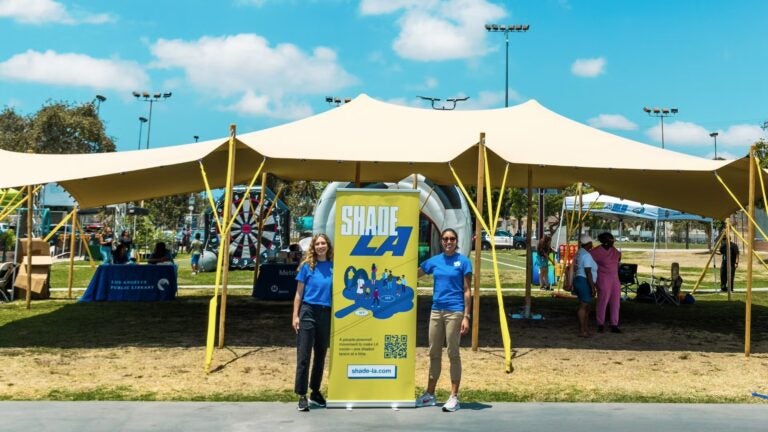
Researchers from USC Dornsife and USC Viterbi are helping ShadeLA bring temperatures down across the city.
After the Palisades and Eaton fires, USC research offers new answers for communities as they rebuild
USC researchers and USC Dornsife’s Public Exchange provide one of the most comprehensive pictures yet of how the fires affected environmental contamination.