Faculty
Professor of Biological Sciences
We are using novel recombinant probes, known as intrabodies, to visualize and manipulate synaptic connectivity in vivo. Areas being explored include development, learning and memory, sleep and neurodegenerative disease.

Lecturer
My research and teaching background spans across a breadth of neuroscience and biological science topics including the neurobiological mechanisms of reading and language in humans, statistical approaches in studying behavior and the homeostatic mechanisms of the mammalian autonomic nervous system. I have spent the last seven years cultivating my skillset in primary, secondary and higher STEM education and best practices in teaching diverse student populations. In my time as a graduate student teaching assistant, assistant lecturer and lecturer at USC, I have had the privilege of mentoring undergraduate and graduate students in their research and other academic endeavors, and have forged meaningful collaborations with the Joint Educational Project (JEP) and Neighborhood Academic Initiative (NAI) community educational programs.
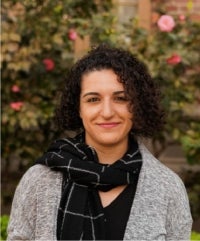
Professor of Biological Sciences and Psychology
Our lab studies how neural circuits that traverse the cortex and basal ganglia mediate motor skill learning during development. Skill learning entails the acquisition of a new behavior as trial and error of variable actions are refined into a stereotyped pattern. Acquisition of new motor skills depends on neural circuits that compare feedback of self-generated movements to a desired goal and reinforce “correct” movements that match that goal. We use multidisciplinary behavioral and systems neuroscience approaches to study the function of cortico-basal ganglia circuits during developmental skill learning. Understanding the normal function of these circuits is a necessary prerequisite to understanding the multiple diseases associated with disorders of the basal ganglia.

Associate Professor of Biological Sciences
Synapse development, function, and plasticity using a combination of Drosophila genetics, confocal imaging, and electrophysiological approaches.
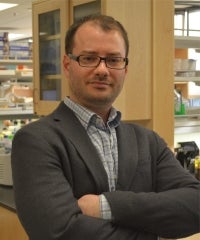
University Professor, ARCO/William F. Kieschnick Chair in the Neurobiology of Aging and Professor of Gerontology, Biology and Psychology
Finch’s main interests are the genomic regulation of aging processes. He has authored three books: Longevity, Senescence, and the Genome (1990); Aging: A Natural History (1995, with R. Ricklefs); Chance, Development, and Aging (2000, with TBL Kirkwood); and The Biology of Human Longevity (2007). In 450 reports and reviews since 1966, Finch has lead several developments in the fields of the neuroendocrinology and pharmacology of normal aging and Alzheimer disease, and in the biodemography of aging.

Assistant Professor (Research) of Biological Sciences
Within the broad field of systems neuroscience, my research interests encompass investigations into brain-wide neuronal network architecture, the structure and function of specific neuronal circuits (especially hypothalamic) involved in the control of physiological and behavioral processes that support survival and reproduction, and the development and application of informatics research tools.

Professor of Biological Sciences
I am interested in understanding the embryonic development of synapses in the vertebrate nervous system, using the neuromuscular junction as a model system. Current research focuses on synapse elimination, the process by which the abundant but labile connections formed early in development are reduced to a smaller but stable number. This process is largely determines the connectivity between neurons in adulthood.

Assistant Professor of Biological Sciences
We combine innovative genetic approaches with electrophysiology and super-resolution imaging techniques to gain insight into the molecular underpinnings of mammalian synaptic function. More specifically, my lab is interested in the molecular mechanisms governing synaptic plasticity and how dysregulation of these mechanisms gives rise to neuropsychiatric and neurodevelopmental disease.

Associate Professor of Biological Sciences
Our lab seeks to understand the role the cortex plays in the processing of tactile sensations and generation of perception. To do so, we record from cortical neurons during quantified behavior, correlate sensory input to neural activity and modify, delete or synthesize perceptions via patterned photostimulation of cortex. In other words, our work aims to provide read, translation and write access to cortical circuits. Ultimately, we seek to develop therapeutic interventions for neurological disorders of sensory processing and tactile feedback systems for prosthetics.

Judith Hirsch
Professor of Biological Sciences: Section Head
Our research explores the earliest stages of visual cortical processing. Specifically, we ask how thalamocortical connections and circuits within the striate cortex itself resolve basic features of the visual scene. Individual projects are designed to explore key aspects of cortical integration, such as interaction between synaptic input and intrinsic properties of the membrane, functional specializations of intracortical pathways and the synaptic basis and physiology of responses to visual pattern.
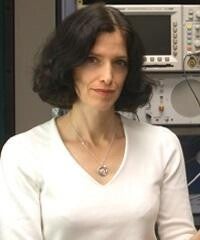
Harold W. Dornsife Chair in Neuroscience and Professor of Biological Sciences
Studies in the Liman lab are aimed at uncovering fundamental mechanisms by which animals detect and respond to sensory stimuli in their environment. Our studies in the taste system have led to the identification of a new family of ion channels, called the OTOPs, one of which serves as a sour receptor. Ongoing studies seeks to understand the contribution of these channels to physiological and pathophysiological processes within a variety of cellular contexts, including in the taste and vestibular systems, in adipose tissue and in the digestive tract. Other studies are aimed at understanding how the structure of channels, visualized by CryoEM, subserves its unusual function as one of the few proton-selective ion channels. We use a combination of mouse genetics, molecular biology (including RNAseq), cellular imaging, patch clamp recording and mouse behavior, and collaborate with experts in CryoEM to address these questions.

Assistant Professor of Biological Sciences
Our lab investigates the organization and function of motor circuits using multidisciplinary cellular and systems neuroscience approaches. We aim to identify how distinct brain regions and cell types interact to select and control movements. Our major focus is on the basal ganglia, a critical network in the motor system whose dysregulation underlies several common movement disorders.

Professor of Biological Sciences
Peripheral somatosensory neurons critically differentiate innocuous stimuli from those that cause tissue damage and pain (nociception). We use a combination of cellular, genetic, and behavioral approaches to understand how these cells transduce these discrete environmental stimuli, and their contribution to inflammatory and neuropathic pain.

Assistant Professor of Biological Sciences
The goal of my lab is to understand how networks of connected neurons interact to organize complex behaviors. To do this, we investigate how neuronal sensorimotor circuits in the brainstem control innate behaviors, and how higher order brain structures engage these circuits to appropriately regulate these behaviors. The laboratory uses a combination of molecular, systems, and theoretical neurobiological techniques to address these important topics

Milo Don and Lucille Appleman Professor of Biological Sciences and Professor of Biological Sciences, Neurology and Psychology; Provost Professor; Member National Academy of Sciences
We are interested in the organization of neural networks that control motivated behavior in mammals. The approach is mostly structural, and to display and model results we are developing computer graphics and database approaches.

Professor of Biological Sciences, Physiology and Biophysics
Our work is directed towards understanding the structure and function of the brain networks that contribute to the development, manifestation, and complications of diabetes and obesity. We are particularly interested in how these networks function to control blood glucose and the secretion of hormones from the pancreas and adrenal gland.
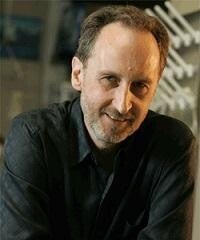
Adjunct Faculty
Associate Professor of Biological Sciences
My research focuses on the neurobiological control of food intake and body weight regulation. More specifically, our laboratory focuses on understanding how the brain processes peripherally- and centrally-derived hormonal signals to control learned and motivated aspects of feeding behavior, as well as to examine how these neuroendocrine signaling systems contribute to and are compromised by obesity and related metabolic disorders. At the center of this research is the hippocampus; a brain region traditionally linked with memory function, but more recently shown to control higher-order aspects of feeding behavior. Our research also explores the relationship between consuming saturated fatty acids and refined carbohydrates (i.e., “Western diets”) and the development of hippocampal dysfunction, cognitive impairment, and Alzheimer’s pathology.
Emeritus Faculty
Michael Arbib
University Professor, Fletcher Jones Chair in Computer Science, and Professor of Computer Science, Biological Sciences, and Psychology
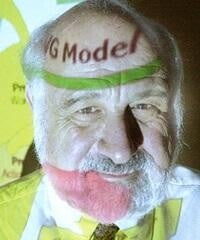
The thrust of Michael Arbib’s work is expressed in the title of his first book, Brains, Machines and Mathematics (McGraw-Hill, 1964). The brain is not a computer in the current technological sense, but he has based his career on the argument that we can learn much about machines from studying brains, and much about brains from studying machines. He has thus always worked for an interdisciplinary environment in which computer scientists and engineers can talk to neuroscientists and cognitive scientists.
Chien-Ping Ko
Professor Emeritus of Biological Sciences
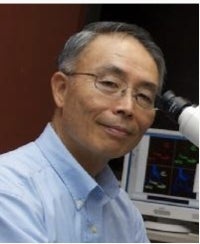
Our research work focused on synaptic structure, function, formation, repair, maintenance, and synapse-glia interactions, as well as diseases at the neuromuscular junction. Latterly, our focus shifted to the cellular and molecular mechanisms of the pathogenesis and translational research of Spinal Muscular Atrophy (SMA), the leading genetic cause of infant mortality characterized by the synaptic defects, loss of spinal motor neurons and widespread muscle atrophy.
Staff
Natalie Orozco
Administrative Assistant II
Contact Information
Office: HNB 115
Phone: (213)740-9176
E-mail: orozcon@usc.edu
Erin Russell
Office Manager
Contact Information
Office: HNB 120G
Phone: (213)740-6091
E-mail: erin.russell@usc.edu