ARNO ABRAHAMIAN
Associate Technical Consultant, Esri Professional Services
Arno Abrahamian is an Associate Technical Consultant with Esri Professional Services, specializing in advanced geospatial analytics for commercial clientele. He works primarily with retail and real estate organizations, leveraging Esri’s ArcGIS platform across web-based and enterprise environments to drive GIS solutions, build custom applications, and implement scalable geospatial workflows that support data-informed decision making.
His areas of expertise include GIS-based market analysis, territory design and redistricting, application configuration, and ArcGIS Business Analyst. In addition to the commercial sector, he has supported local and state government organizations on planning, operations, and policy-focused GIS initiatives.
Arno is a proud alumnus of the University of Southern California’s Spatial Sciences Institute, where he earned a M.S. in Spatial Data Science and a B.S. in Geodesign
 JOHNATHAN AGUILAR
Undergraduate Researcher, California State University, Northridge
Johnathan Aguilar is an undergraduate researcher at California State University, Northridge, where he is pursuing a B.S. in Computer Science with a minor in Data Science. His work focuses on geospatial analytics and remote sensing, with an emphasis on analyzing large-scale spatial and spatio-temporal datasets. He applies statistical modeling, machine learning, and data visualization techniques to extract meaningful patterns from complex geospatial data. Through his research, Johnathan develops structured, reproducible data pipelines for processing and interpreting remote sensing datasets, transforming raw spatial information into actionable insights. His technical background in programming and quantitative analysis supports the development of workflows for research-driven geospatial problem solving.
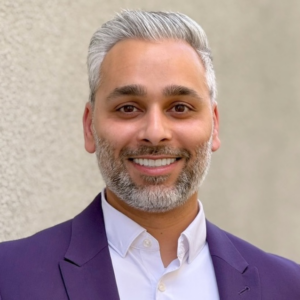 ISMAEEL BABUR
Senior Transportation Industry Strategy Manager, Autodesk
Ismaeel Babur is a Senior Transportation Industry Strategy Manager at Autodesk, and a civil engineer by training with over a decade of experience spanning the full lifecycle of civil infrastructure projects. His work bridges engineering practice with computational research applied to infrastructure systems. At UC Berkeley’s Institute of Transportation Studies Smart Cities Research Center, he combined large language models, structured domain-specific knowledge, and a regional-scale, high-performance transportation simulator to unlock spatial and temporal reasoning at metropolitan scales. He leveraged the simulator to model EV charging demand, natural disaster evacuation scenarios, and establish a generative design framework for greenfield city networks. He spent nearly seven years at Virgin Hyperloop leading computational design for smart infrastructure and developing civil engineering design criteria for ultra high-speed transportation systems. Earlier in his career, he worked in oil & gas, construction across multiple sectors, and architectural design of pre-fabricated building systems.
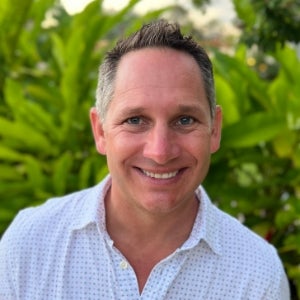
DAVE BERNSTEIN, CH, PLS GISP
Vice President of Hydrospatial Operations, NV5 Geospatial
Dave Bernstein is the Vice President of Hydrospatial Operations at NV5, with over 25 years of experience providing management, oversight and support to all aspects of hydrographic solutions. With formal education and training in Marine Geology, GIS and Hydrography, and a diverse record of practice, he manages the technical, operations, and strategy of hydrographic surveys from inland, nearshore and offshore waters. He holds a B.A. degree in Environmental Geoscience and GIS, and an M.S. in Marine Geology. Dave has a PLS license in North Carolina and is also a Certified GIS Professional (GISP), and an ACSM Certified Hydrographic Surveyor (CH). He is on the ACSM-THSOA Hydrographer Certification Board and is active in education, outreach, and career development of the hydrographic community.
 CORA CHONG
GIS Specialist, CBRE
Cora Chong is a GIS Specialist on the Innovation team within the Location Intelligence group at CBRE, a global real estate services company. Her work focuses on spatial consulting for high-value, high-profile commercial real estate projects, which may include adaptive reuse, mixed use, entertainment, and placemaking components.
She graduated from the University of Southern California Spatial Sciences Institute with a M.S. in Geographic Information Science and Technology and is also a GIS instructor at Cuesta College.
 COURTNEY FASSETT
Deloitte Consulting LLP
Courtney Fassett has been with Deloitte for four years, contributing her expertise to the Government & Public Services (GPS) practice within the Strategy and Analytics portfolio. Throughout her career, she has primarily served clients in the Federal Health and Defense sectors, focusing on developing strategic plans for digital transformation, and leveraging data analytics and visualization to drive impactful insights. Additionally, Courtney has facilitated strategy sessions aimed at ensuring customer success not only for her clients but internally as well. Currently, Courtney holds the position of Southern California’s Growth Leader. In this role, she oversees the internal Marketing, Business Development, Innovation, Culture, Financials, and Talent Experience teams, driving growth and fostering a collaborative and innovative environment for the SoCal Region. Courtney is a proud graduate of the Spatial Sciences Institute and is originally from Irvine, California.
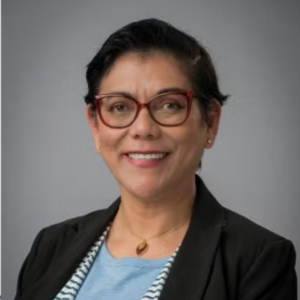 MIYOKI HOMMA GONZALEZ
Graduate Research Assistant & MSBA Candidate, University of Redlands
Miyoki Homma is a Graduate Research Assistant for the Geospatial Climate-Sustainability Initiative and an MSBA candidate at the University of Redlands. Her work sits at the critical intersection of GIS, Business Analytics, and Sustainability. With over 20 years of experience in IT Project Management at firms like Accenture, Miyoki bridges the gap between executive governance and hands-on geospatial science. A dedicated practitioner with 33 ESRI Academy certifications, she blends a B.S. in Computer Systems Engineering and an MBA to drive data-informed, sustainable business outcomes.
 SCOTT KELLEY, Ph.D.
Associate Professor, Department of Geography at the University of Nevada, Reno
Scott is an Associate Professor in the Department of Geography at the University of Nevada, Reno. He is a transportation geographer with a primary research focus on how GIS, geospatial technologies, and spatial analysis can better inform infrastructure planning decisions to advance sustainable transportation system development. He teaches introductory, intermediate, and advanced classes in geographic information systems (GIS) and spatial analysis, in addition to transportation geography and economic geography courses. Scott received his PhD in Geography from Arizona State University and a Bachelor of Science in Geography from the University of Wyoming.
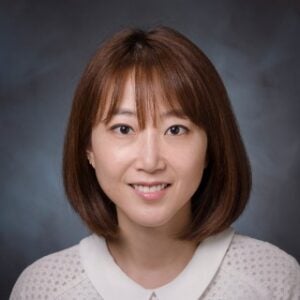 EVELYN KIM, Ph.D.
Senior Research Scientist, HRL Laboratories
Evelyn Kim, Ph.D., is a Senior Research Scientist and a Group Lead at Intelligent Systems Center at HRL Laboratories. She received her PhD degree in the Electrical and Computer Engineering Department from Carnegie Mellon University, MS in Computer Science from Yale, and BA in Computer Science from UC Berkeley.
Her research interests include human-machine teaming, human state sensing, and human factors in cybersecurity.
 HARRISON KNAPP
Remote Sensing Scientist, The Aerospace Corporation
Harrison Knapp is a remote sensing scientist at The Aerospace Corporation, where he leads mission planning, payload R&D, and data product development for hyperspectral imaging platforms. In his role, he collaborates with national security customers, vendors, and interdisciplinary engineering teams to transform complex remote sensing requirements into operational strategies. His work spans the full spectrum of remote sensing technologies, from image reconstruction and radiometric calibration to on-orbit performance assessments and edge-computing demonstrations. Harrison also spearheads R&D initiatives, modernizing legacy hyperspectral processing tools and developing enterprise-scale data solutions to manage Aerospace’s petabyte-level HSI imagery assets.
Before joining Aerospace, Harrison contributed to innovative projects at Windy, NASA JPL, and NOAA PMEL, applying machine learning and signal processing techniques to tackle remote sensing and environmental challenges. He earned a Master of Science in Spatial Data Science and dual bachelor’s degrees in GeoDesign and Earth Sciences from the University of Southern California.
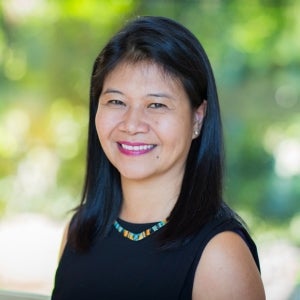 CANSERINA KURNIA
Senior Solution Engineer, Esri
In her role as Solution Engineer for Education at Esri, Canserina Kurnia provides technical advice and assistance in advancing GIS and Remote Sensing technology for teaching, research, and campus administration in higher education institutions. She has over 20 years of experience working in field of Geospatial technology (GIS) with extensive experience in location analytics, spatial thinking, desktop, enterprise and web GIS. She is passionate in communicating the latest advancement in Geospatial and Esri technology.

ELIZABETH LAFONTAINE
Director of Research, Placer
Elizabeth Lafontaine is a Director of Research at Placer.ai. Backed by a decade of retail experience, she uncovers emerging trends in consumer behavior to help retailers and brands tap into new insights and create winning strategies in the ever-evolving world of commerce. She most recently served as Chief Retail Analyst at EnsembleIQ, a B2B media, intelligence and events firm, where she helped to develop new thought leadership focused offerings and served as a presenter and author.
 ISHMAEL LEGASPI
Undergraduate Researcher, USC Spatial Sciences Institute
Ishmael is an undergraduate student in Human Security and Geospatial Intelligence at USC. He is currently applying his experience with GIS and spatial analysis to support research assessing foreign investment risks to U.S. critical infrastructure. As an Air Force veteran with experience as both an aircraft mechanic and intelligence analyst, Ishmael draws from a diverse professional background, from teamwork and leadership to intelligence research and risk assessment, to inform his geospatial work. His academic interests focus on environmental sustainability, coastal and marine systems, and disaster preparedness and response. He is particularly interested in leveraging GIS and remote sensing to model coastal vulnerability, support infrastructure protection, and inform resilience planning in vulnerable communities.
 KATHERINE A. LESTER
Assistant Professor and Director of Masters Programs
As a medical geographer, she investigates the spatial relationship between suicide, mental illness and race and ethnicity. With a National Science Foundation graduate research fellowship, she developed a novel framework to identify suicide risk among minority populations. Dr. Lester also explores GIS applications to spatial patterns of disease and health. She employs numerous spatial statistical programs to conduct her analysis.
Prior to joining the USC Spatial Sciences Institute, she was at the University of North Texas, where she was a research assistant, collaborating on the production of a book on world regional medical geography and on a project analyzing Uber data to identify changes in traffic and spending associated with the COVID-19 pandemic.
At the University of North Texas, Dr. Lester also was an adjunct faculty member and teaching assistant for courses in world regional geography, geohealth and environmental science.
 REGAN MAAS, Ph.D.
Professor and Chair of Geography and Environmental Studies;Associate Director of the Center for Geospatial Science and Technology, CSUN
 SAM MORRISSEY, MBA, PE, TE
Vice President, Transportation, LA28
Sam is the Vice President of Transportation for LA28, the private nonprofit organizing committee responsible for delivering the Los Angeles 2028 Olympic and Paralympic Games. In this role, Sam leads Transportation Operational Delivery for LA28.
Sam has nearly 30 years of experience across a wide spectrum of transportation elements, cultivated through increasing levels of responsibility in the public, private, and nonprofit sectors. He also served as a lecturer for two undergraduate courses in Transportation Engineering and Design at UCLA.
Sam holds a BS in Civil Engineering from Rensselaer Polytechnic Institute and an MBA from the University of Southern California.
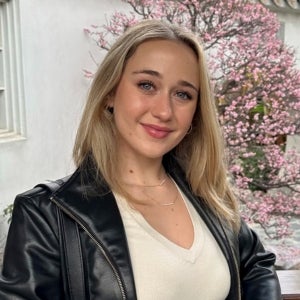 AMANDA RAGO
AI & Data Operations Analyst,
Deloitte Consulting LLP
Amanda Rago is an AI & Data Engineering Consultant at Deloitte Consulting and has been with the firm for over 2 years. Currently, she is working with LA28, the Organizing Committee for the 2028 Olympic and Paralympic Games, and utilizes GIS tools to create operational planning maps and products to enable informed decision-making for her client, assisting them with all logistical preparations for the Games.
Amanda graduated from the University of Southern California Spatial Sciences Institute with a M.S. in Spatial Economics and Data Analysis and received her B.S. from USC in Applied and Computational Mathematics.
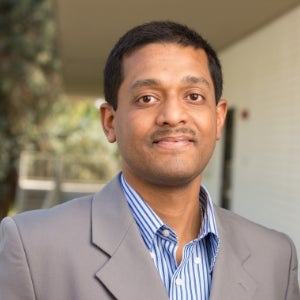
AVIJIT SARKAR, Ph.D.
Professor, Academic Director, Institute for Geospatial Impact, University of Redlands
Avijit Sarkar is Professor of Business Analytics and Director of the Institute for Geospatial Impact (IGI) at the University of Redlands. In his research, Dr. Sarkar studies the adoption and diffusion of information and communications technologies, especially the internet worldwide and their impacts on the creation of mature and inclusive digital societies. He also researches strategic adoption and innovation in the use of geographic information systems (GIS) and location-based technologies in various industries including the private sector. He has co-authored the books Global Digital Divides: Explaining Change (Springer) and Spatial Business: Competing and Leading with Location Analytics (Esri Press). His research has appeared in journals such as Decision Support Systems, Telecommunications Policy, and ISPRS International Journal of Geo-Information. His research has been supported by the University of Redlands Spatial Business Initiative, a unique partnership with Esri, and the U.S. Department of Commerce. He serves on the editorial board of the Journal of Global Information Technology Management. Dr. Sarkar received his Ph.D. and M.S. degrees in Industrial Engineering from The State University of New York (SUNY) at Buffalo. At Redlands, he teaches business analytics and data mining and collaborates with colleagues across disciplines to integrate GIS and spatial thinking across the curriculum.

BORIS SKOPLJAK
Vice President for the Geospatial Sector, Trimble
As vice president for the geospatial sector at Trimble, Boris Skopljak is responsible for innovation in the company’s surveying, mapping and building construction field solutions, contributing to Trimble’s market leadership in spatial data collection, processing, and analysis.
Boris’ background is in land surveying with over two decades of experience working for companies in both Europe and the US. Boris joined Trimble in 2011 serving in a variety of product management, strategic marketing and business leadership roles before assuming responsibility for leading Trimble’s geospatial sector in 2023. He is particularly focused on how emerging technologies like AI, IoT, sensor fusion, and cloud integration are transforming data collection and processing in the industry. Boris is a strong advocate for making high-precision geospatial technology more accessible to engineering and construction professionals across many industries globally.
Boris holds a Dipl. Eng. Degree in Geodesy and Geoinformatics from University of Zagreb, Croatia, a MSc. Degree in Geodesy from the Ohio State University, and an MBA from the Daniels College of Business, University of Denver.
 STEVEN J. STEINBERG, Ph.D., MPA, GISP
Geospatial Information Officer, Los Angeles County, CA
Dr. Steve Steinberg is the Geospatial Information Officer (GIO) for Los Angeles County, where he leads enterprise GIS strategy and innovation for a region serving almost 10 million residents and 40 departments. A passionate advocate for geospatial technology, he directs the Los Angeles Region Imagery Acquisition Consortium (LARIAC), advancing regional planning through aerial imagery and lidar.
With a career spanning public service, research, and academia, Dr. Steinberg previously served as Principal Scientist at the Southern California Coastal Water Research Project Authority and as a tenured Professor of Geospatial Science at Cal Poly Humboldt. He has been recognized as a Fulbright Distinguished Chair and Fulbright Senior Scholar and continues teaching and advising graduate students in the MS in Geographic Information Science programs at California State University Long Beach and California State University Northridge.
An active leader in the geospatial community, Dr. Steinberg is President Elect of the American Society for Photogrammetry and Remote Sensing (ASPRS), a former Geospatial Professional Network (GPN) Board Member, and has contributed to numerous state and regional data initiatives. His work focuses on leveraging geospatial technologies to solve real-world challenges and foster collaboration across sectors.
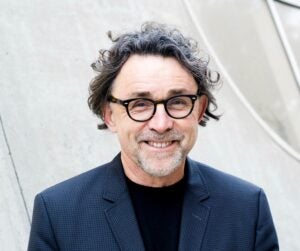
JOHN P. WILSON, Ph.D.
Founding Director and Professor, USC Spatial Sciences Institute
John P. Wilson, Ph.D., is Professor of Sociology and Spatial Sciences in the Dana and David Dornsife College of Letters, Arts and Sciences at the University of Southern California (USC) where he founded and directs the Spatial Sciences Institute. He also holds adjunct appointments as Professor in the USC School of Architecture, in the USC Viterbi School of Engineering’s Departments of Computer Science and Civil & Environmental Engineering, and the Keck School of Medicine of USC’s Department of Population and Public Health Sciences. He founded the journal Transactions in GIS in 1996 and has served as editor-in-chief since its inception. He has served on the editorial boards of numerous journals and publications, and also served on the board of directors and as president of the University Consortium for Geographic Information Science (UCGIS). He currently leads the UCGIS GIS&T Body of Knowledge 2.0 project and is an active participant in UNIGIS. His research focus is the modeling of environmental systems and makes extensive use of GIS software tools, fieldwork, spatial analysis techniques, and computer models.
 CAROLINE WU
Caroline Wu is a seasoned retail and shopping expert specializing in commercial real estate, entertainment, and tourism. She combines consumer insight with marketing acumen and location intelligence to drive growth. Roles have included senior leadership positions at Placer.ai, Unibail-Rodamco-Westfield, Omnicom, and Kantar. Earlier in her career, she worked at 20th Century Fox and National Geographic. She holds a BA in International Relations and an MA in Sociology, both from Stanford University. She serves on the USC Board of Governors and is active with student outreach and mentoring.

MARIS ZAMMATARO
Master candidate, California State University, Long Beach
Maris is completing her MA in Geography with an Urban Studies certificate at California State University, Long Beach. Her research focuses on urban thermal inequity and its impacts on unhoused populations in Long Beach, using mixed-methods approaches that combine GIS-based land-surface temperature, tree-canopy analysis, land-use overlays, and homeless Point-in-Time data with interviews from local service providers. She is actively building partnerships with municipal agencies and nonprofits to support applied, policy-relevant research. Maris’ work sits at the intersection of geospatial analytics, climate risk, and urban equity. She is particularly interested in translating these spatial insights into actionable strategies for cities and private-sector organizations navigating climate exposure and social risk. Her professional and academic work reflects a commitment to using geospatial science to advance environmental resilience, equity, and data-driven decision-making.