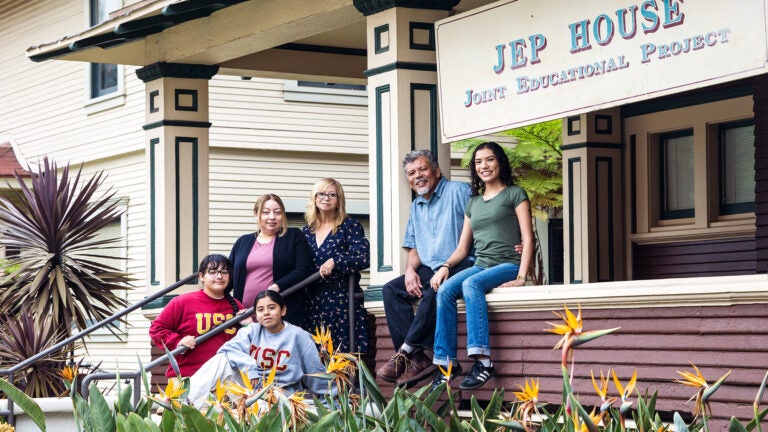
How a USC Dornsife service program shapes multiple generations of local families and Trojans
Patricia Perez grew up just down the street from USC in the 1990s. She fondly remembers being tutored in math and English by Trojan undergraduates through USC Dornsife’s Joint Educational Project (JEP). Now a special education assistant for students with behavioral issues, she recalls accompanying her mother — who worked at USC’s School of Early Childhood Education and is also named Patricia Perez — to campus for JEP-hosted potlucks as a child. “I would run around the JEP House,” she says with a smile.
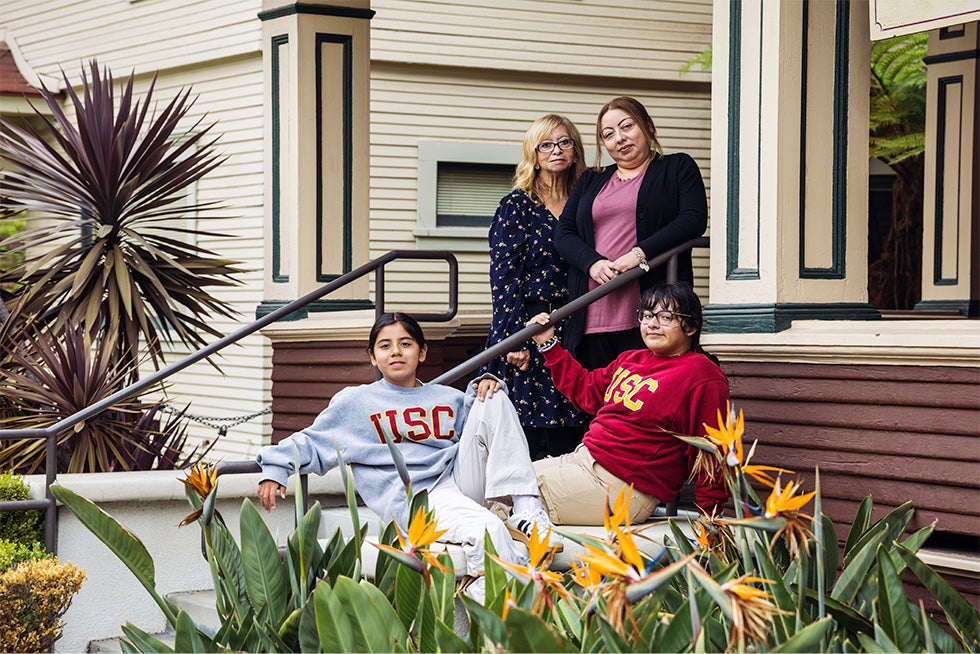
Decades later, Perez is watching history repeat itself. Her daughters, Nicole Plancarte, 14, and Sophia Plancarte, 11, have participated in JEP since preschool. They now benefit from several JEP initiatives at their school, the James A. Foshay Learning Center near USC. These included WonderKids, a hands-on STEM education program, and Little Yoginis, which teaches children the basics of yoga.
What began more than 50 years ago as a modest, community service program designed to serve USC’s surrounding neighborhoods, JEP has since evolved into one of the university’s most enduring initiatives — one whose impact spans generations. Today, some 2,000 USC students volunteer annually in nearly 120 K-12 classrooms.
The Plancarte-Perez family exemplifies JEP’s multigenerational influence. When her daughters first started WonderKids, both were shy and rarely spoke in class, Perez says. By the end of their WonderKids journey, they were asking questions and had much more confidence when speaking to adults. “JEP has instilled values in my girls and given them tools that they’ll use throughout their lives,” she says.
For some Trojan families, volunteering with JEP has also become a multigenerational legacy.
Juan Carlos Whyte-Lira ’94, an immigrant from Guatemala whose parents are of Jamaican and Latin American descent, served as a classroom tutor at the Foshay Learning Center in the early ’90s. Then majoring in music recording before later switching to sociology, he encouraged his students — many of whom were Black or Latino and came from working-class families — to see USC as a place they belonged. “I would talk to them and say, ‘Hey, you guys can make it too, like me,’” says Whyte-Lira, who is now an ownership services specialist at the Los Angeles County Office of the Assessor.
Three decades later, his daughter, Itzel Whyte-Aguayo ’25, is following in his footsteps. Also a sociology major, she became a JEP tutor while an undergraduate. Now pursuing a master’s in public policy at the USC Sol Price School of Public Policy, she says encouraging the young people she tutors to dream big and providing representation for them are also core motivations for her JEP service.
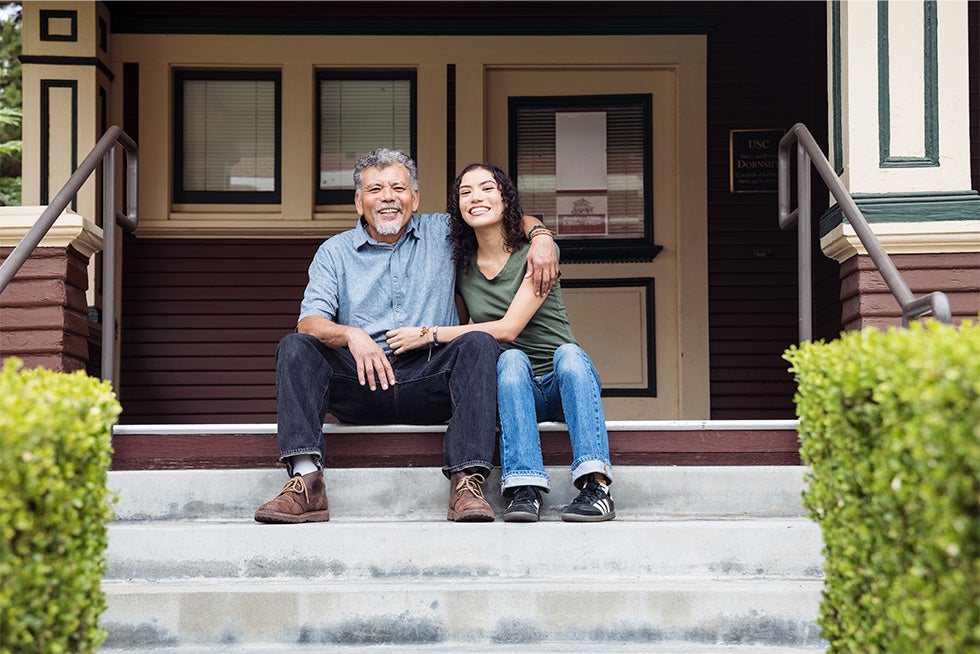
“As a Latina USC student, I hope my presence in these young students’ classrooms not only shows them that pursuing college is possible but also affirms that they belong in institutions like USC,” she says.
Meanwhile, her father, Whyte-Lira, says JEP provides more than just an opportunity for students to give back. It also offers them a chance to gain a deeper understanding of the neighborhoods that surround USC. Volunteering helps students — who often arrive on campus with little knowledge of South L.A. — build a sense of shared investment in the broader community.
“USC can feel like a bit of an island,” he says. “But when students step off campus and into local classrooms, a new world opens up.”
That kind of bridge building is central to JEP’s mission, says Susan Harris, executive director of JEP.
“When students form real relationships with the community around them, it changes how they see their education — and their responsibility to the world,” she says. “That’s what JEP is about.”