
Uncharted Pilgrimages
By Nick Street and Megan Sweas
October 24, 2019
Introduction: Mapping Contemporary Spiritual Journeys
As Gina Kirkland was telling the story about how she “came out” as an atheist when she was a teenager growing up in a Catholic family in Texas, her phone chimed. The sound of a slow, resonant meditation bell filled the room. It was a reminder for her to take a moment to be mindful of the present, explained Kirkland, an entertainers’ and speakers’ agent in Los Angeles.
I can go for the woo. I just can’t go for the woo‑woo,” she said when the researcher gave her a quizzical look.
Kirkland does not believe in gods or demons—the supernatural “woo-woo” of deistic religions. Yet, she keeps a mindfulness chime on her phone and meditates regularly. When we met her, she attended Sunday Assembly L.A., part of a global network of godless churches, and now is a humanist celebrant.
Kirkland was one of many seekers that we met in studying creative religious communities in Los Angeles. While CRCC’s Religious Competition and Creative Innovation Project largely focused on organizations, each community is shaped by the individuals who lead and join them.
We found that these individuals have been and continue to be on a journey, and even if they subscribe to a particular faith tradition, these journeys are not the well-worn paths of previous generations. These “uncharted pilgrimages” often led the people we met through traumatic, healing and transcendent experiences—and to a new sense of leadership and community.
“It’s great to spread the message that there’s just more than one right way to do things.”
The journeys of these individuals, while uniquely their own, help shape common characteristics of what we call “Reimagined Communities.” At a time when many traditional institutions are in sharp decline, the distinguishing themes of reimagined communities are the enfranchisement of individuals, whose embodied experience within the group is the locus of authority; empathetic embeddedness with the wider local community; openness to adaptation, even among groups that acknowledge a sense of boundedness within a larger tradition; and an eagerness to network with similar movements across religious and social boundaries.

The four stories in “Uncharted Pilgrimage” chronicle the ways that millions of seekers are forging community, identity and meaning beyond established ritual and doctrine. You can explore the stories in order or according to your interest.
Kirkland’s path led her from a Catholic upbringing to being a religious “none”—a category that encompasses tens of millions of Americans who check “none of the above” on religious identification surveys. Some of these “nones” are truly uninterested in religion, some embrace the “woo,” and others find themselves fully embracing spiritualties that are new to them. Some seekers have to change denominations to find the spiritual sustenance they need, while the journeys of others bring them back “home.” Many seek to find meaning by living out their faith in the public square.
Far from signaling the death of religion or the ascendance of secularism, these stories show that the decline of formal religious institutions may yield the raw materials for a future spiritual renaissance—the latest iteration of America’s perennial Great Awakening.
“I think community is really a primal need,” said Kirkland of Sunday Assembly. “To me, life is about fellowship. Who is going to bring you casseroles and who is going to celebrate the good things with you and be there in the bad? Any time we have an opportunity to create community it helps people individually.”
She added, “But it’s also great to spread the message that there’s just more than one right way to do things.”
A Skeptic's Psychedelic Trip
 Brianna* and I met to discuss her involvement with secularized meditation on a warm weekday afternoon. We agreed to meet on a shady patio at the Farmers Market, a popular destination in mid-town Los Angeles.
Brianna, a management consultant, had told me she would be coming from a workout, and that I should look for a woman in her late 20s with long auburn hair wearing a gray tank-top and running tights.
She was instantly recognizable, with the arms of someone who manages a handstand with aplomb, who can lob a medicine ball into next Tuesday.
Not surprisingly, self-discipline and a no-nonsense approach to life quickly emerged as two of Brianna’s strongest character traits.
“I started out very skeptical,” Brianna said of her initial experience with a university-based research center that has become a leader in teaching secularized mindfulness practice.
“It’s kind of like, you know, this is for hippies, and I’m not a hippie.”
Brianna said that as she deepened her level of participation in the mindfulness program and cultivated her own regular meditation practice, she noticed changes in herself that she liked.
“It’s definitely an effective tool,” she said. “Being able to distance yourself in a healthy way from emotions or experiences, you don’t have to rationalize everything. You just experience it and move on.”
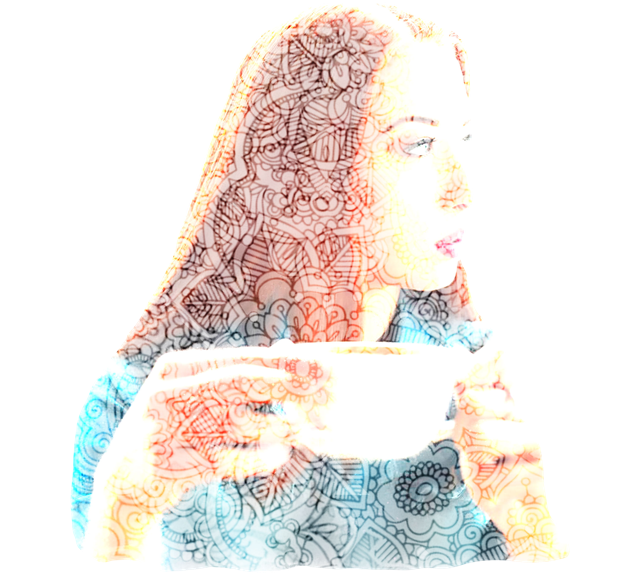
Another surprise for Brianna was the feeling of camaraderie that developed within the cohort of people who were participating in the weekly guided meditations that anchored the mindfulness training.
“Once you get there,” she said, “even if there’s traffic or trouble parking, you’re so relieved to be there, and I’ve never regretted showing up, at all.”
And though no one in the group has ever mentioned rules about cellphones or other distractions, Brianna said that a tacit understanding of the specialness of their time together eventually infused each gathering.
“You know, everyone is just so thankful and so like, in it,” she said. “Nobody checks their phones—it’s like, sacrilegious to have your phone anywhere where anyone can see it. Everyone is just completely fully present, and it’s so great.”
She added, “It’s such a loving atmosphere without being, like, you know, touchy-feely. It’s not like we’re all like, crying and giving hugs all the time. It’s just great energy.”

Brianna, a Southern California native, grew up nominally Catholic and still believes in what she calls “a higher power.” But rather than identifying that power as the God of traditional Christianity, she said she equates it with the sense of awe she feels when she is in nature or when she contemplates the infinite vastness of the night sky.
As we began to wrap things up, I asked Brianna whether there was anything important about her story that we’d not covered. “Yes,” she replied. Then she told me that over the past year and a half, she had participated in three ayahuasca rituals.
“I was super skeptical about that too,” she said. “But now I’m a believer.”

Ayahuasca is a hallucinogenic brew that is having a heyday in the United States. The thick, earthy tea is concocted from a complementary pair of plants that grow in the rain forests of the Western Hemisphere. Depending on whom you ask, ayahuasca—called “the mother” by devotees—opens the doors of perception, provides a window onto the soul, lures naïve Westerners into the heart of darkness or crams a decade of psychotherapy into a few hours. It often involves intense purgative vomiting, visions and out of body experiences.
The legal status of ayahuasca is ambiguous in the United States, though it has been used in shamanic rituals for centuries. Rolling Stone, Fusion, VICE and other trend-spotting news outlets have posted stories about spiritual adventurers tripping on the stuff during private rituals in hipster outposts like Brooklyn and Berkeley, as well as in remote jungle settings in Central and South America. A recent piece in The New Yorker framed the popularity of ayahuasca as just another wellness fetish in the current “Age of Kale.” Yet, even a veterans’ group has turned to ayahuasca to treat depression, addiction and post-traumatic stress disorder.
While Brianna did not share any trauma as part of her journey, her interest in having such an intense physical and emotional experience is exemplary of how many young adults who have dropped out of organized religions are still looking for experiences of self-transcendence.
While all three of Brianna’s forays into shamanic medicine were useful for her, she said that her most recent experience was life-altering.
It was one of the best experiences in my entire life. Perhaps the best.”
She described lying on a meditation mat in a state between consciousness and unconsciousness while the shaman chanted, drummed and made his way around the room to administer healings to Brianna and the other participants. During the last ritual she attended, she said experienced “pure joy” for several hours.
Ayahuasca, moreover, is compatible with the discipline and insights she’s developed through her meditation, Brianna said.
 “They’re definitely complementary,” she said. “The idea is that ayahuasca, the plant, she gives you what you need at the time. She can be harsh sometimes or she can be very loving. I’ve only had good experiences so far.”
Brianna said that the goal of life is the happiness that comes from being a good person—someone who works to create productive lives for herself and others. For her, spiritual experiences—but not formal, organized religions—are essential to this goal.
“I know that there’s some higher power,” Brianna said. “But do I think we have to follow any specific rules, and is there an afterlife? Like, no.”
* Nick Street, the author of this profile, uses a pseudonym to protect the identity of his interview subject.

Seeking a Way Out of Suffering

Alejandro Escoto always wanted to be a priest.
His Catholic mother instilled in the young altar boy reverence for Our Lady of Guadalupe.
So when Escoto was ordained as a pastor in the Metropolitan Community Church (MCC) on December 11, 2005, the day before the feast day of Our Lady of Guadalupe, he formally dedicated his spiritual life to her—as a Protestant minister.
A few years prior, Escoto could not have imagined having a relationship with Our Lady, let alone serving her. When Escoto came out as gay as a teenager, he lost his relationship with both his biological mother and the mother of God. While the trauma of these losses led him down a path of pain and addiction, church also gave himself a place to heal, lead and ultimately serve the LGBT community.
Even when Escoto began serving as an altar boy, he was aware of his feelings for the same sex. “I didn’t understand them, but…I felt them. And I knew it was wrong,” he said. In school, he was bullied for being overly effeminate, and the teasing continued at home.
“I remember my aunt telling my mom, ‘Your son’s going to grow up to be a faggot,’ and my mom telling my aunt, ‘Shut your mouth, don’t say that,’” he said. “So just hearing that and knowing…
Oh my God, I’m bad, I’m broken.”
Racked with guilt, Escoto decided to confess his feelings around age 15. One priest “basically condemned me to hell,” Escoto recalled. Another priest was gentler, but provided no answers.
 Escoto would have night terrors, and after a particularly disturbing episode, he decided to come out to his mom. His family took him to Catholic priests and psychologists to try to change him. He dated a girl to appease the family, but he ended up leaving her for a man. His girlfriend’s family even took him to Curanderos, Mexican folk healers, in Tijuana.
“All of that caused this slow destruction. When I left home to go to college, I sought acceptance any way, shape or form, and that led to addictions, alcohol, some drugs and obviously sex,” Escoto said.
While he was living in a college dorm, one of his boyfriends pimped him out to other men. He visited sex clubs looking for affection, bounced from one violent relationship to another, and became infected with HIV.

Consciously, you’re looking for love, but subconsciously I was looking for healing and just didn’t know how to get it.”

He was quick to fight if he thought somebody looked at him the wrong way. One night, in his early 20s, a fight went too far, and both he and his opponent wound up in jail for attempted murder. Luckily, Escoto was a good student with no record. The judge “slapped my hand” and let him go.
It was “the all-time low,” he said. “That was the spiritual awakening for me. I knew that if I needed—if I wanted—to change something, it was incumbent on me. I remember praying, ‘God, give me a path.’”
Escoto sought out a path through self-help books and therapy. Around this time, in the 1980s, he also started getting more involved in the Metropolitan Community Church (MCC), colloquially known as the Gay Church.
In 1992, a Spanish service started, and the Spanish-speaking group tried to get him involved. “But I had been hurt by my religion, by my family, by my culture—the last thing I wanted to do was get involved by the very people who hurt me,” he said. He even had stopped speaking Spanish.
But then he met his partner, who was in the Spanish choir. “I would speak Spanish so I could improve, and he’d speak English so he could improve,” he said.
As Escoto slowly found his community, others began to recognize his gifts, even suggesting to him that he should become a minister. Escoto, however, did not recognize those gifts in himself.
“I’d give excuses,” he said. “Who loves church politics, right? But the real reason was I didn’t feel worthy.”

It took Escoto another 15 years to accept and love himself as he is. During that time, his community was persistent, putting him into ministry positions, despite his lack of theological training. He began leading the Spanish service around 1999, and his community ordained him in 2005. He went back to school, but “sabotaged” himself, barely passing through a certificate program, because he didn’t believe in himself.
“I often say, ‘If you think you’re a sin, you will live out sinful ways. If you think you’re unworthy, you’ll make decisions that will continue to make you unworthy.’ And that was a good part of my life,” Escoto said. In 2011, he finally felt ready for seminary and enrolled at the Claremont School of Theology.
Today, Escoto’s struggles inform his ministry to others, he explained. “If I can help just one person to make a better decision, then perhaps my life would not be lived out in vain.”
Learning to accept and love oneself is essential to healing, Escoto has found, and for him, that journey has meant reconciling not only with his past, but also his culture.
Like his language, Escoto put his belief in Our Lady of Guadalupe aside during his dark years. As a Protestant denomination, MCC is devoid of the statues and icons that are common in Catholic communities. Shortly after Escoto started leading MCC’s Spanish service, though, congregants asked about celebrating Our Lady’s feast day.
It took three “signs” to convince Escoto to do so: turning the TV on to a program on Our Lady, a magazine falling open to a picture of her, and finally a gust of wind wrapping a newspaper—with an image of Our Lady—around his leg.
The celebration of Our Lady of Guadalupe has become an annual tradition at MCC. Repeating the ritual year after year, Escoto began to understand that his spiritual mother had never left him—she had always loved him, even when he had not loved himself.
“She is our Blessed Mother, and she knows who we are,” Escoto said. “She loves us just for who we are, just as God does. And as her spiritual children, we can hand her our worries.”
While MCC retains its Protestant roots, the denomination allows individual congregations to express religious and spiritual beliefs that are particular to the pastor and community. Founders MCC thus has allowed Escoto to bring ritualistic Catholic elements into the congregation’s Spanish service.

Escoto visited the Basilica of Our Lady of Guadalupe in Mexico and brought back an icon, which Founders MCC brings out just for the Spanish service. They also have statues of the Sacred Heart of Jesus and the Ascension of Mary, and celebrate the day of the Black Christ of Esquipulas, a Central American tradition, on January 15.
These traditions—and even God—were “kidnapped from us,” Escoto said, adding that gay Latino Christians should not have to give up any part of their unique expressions of faith.
In the process of reclaiming his spiritual identity, Escoto also was able to regain his family. He eventually reached out to his mother to tell her that he was HIV-positive. “The reconciliation on her part was based on guilt,” he said. She thought that she needed to care of him, he explained.
He ended up outliving her, but before she died, she came to accept Escoto and his partner. She even became a part of the Spanish-speaking congregation at MCC.
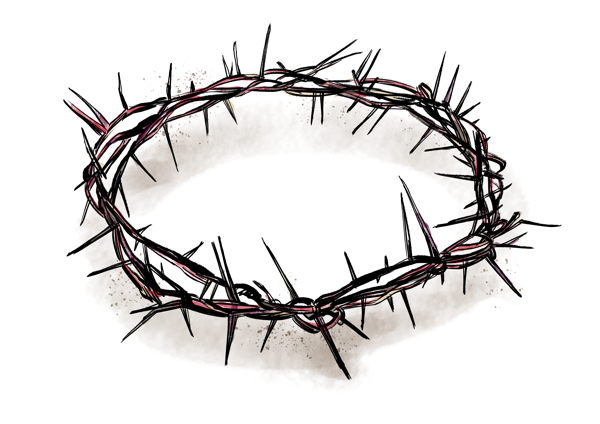
On Good Friday one year, the congregation put on the Passion of the Christ, the play telling the story of the crucifixion of Christ. As the biblical narrative tells it, when Jesus was hanging on the cross, he looked down at his mother Mary and his disciple and told them, “Woman, here is your son,” and “Here is your mother.”
At this point in the play, Escoto, playing Jesus, looked at his own mother, sitting in the front row, and adlibbed.
Mother, these are your children,” he said.

Knowing with the Heart

If you join Joanne Tolkoff for a Shabbat service at Nefesh, her spiritual home, you won’t be doing much sitting.
Tolkoff and roughly 100 other congregants are attracted to the twice-monthly Shabbat by its vibrant, often ecstatic spirit. While attendance at the Friday night Jewish services is declining in many synagogues, Rabbi Susan Goldberg brought new life to the Shabbat observance at Wilshire Boulevard Temple, where she incubated Nefesh before moving the group to Silverlake Independent Jewish Community Center. Nefesh’s Shabbat services have the music-driven feel of a tent revival. And Tolkoff wants to be as close to the action as possible, in the front row with her hands in the air as she grooves to the band.
“Any place probably thinks that they’re authentic, right?” Tolkoff said. “But I’m more of a devotional character type, where I need to feel a connection to the Divine. So, for me, when I experience that in a service, then I think it’s authentic.
I have touched that thing that’s beyond words for myself.”
Tolkoff’s story is about the search for an “authentic” religious experience, one that she has found in an embodied spiritual practice and a community—Nefesh—that supports it. Tolkoff, 60, works at as a PR person and digital learning designer for a Reform Jewish seminary in Los Angeles. Her involvement in Jewish life, both professionally and spiritually, is surprising considering her upbringing.
“We were Jewish culturally,” Tolkoff said, “but not religiously at all. My parents were both atheists, my mother militantly so.”
Her family was living in New York City when Tolkoff was born. When she was 10, they moved to a town on Long Island where there were no other Jewish families. Tolkoff had some exposure to the town’s Christian culture, but didn’t connect with it.
“I played guitar, and whoever was teaching me the guitar belonged to a church,” Tolkoff recalled. “I remember going to a church and helping them with their service, and just being relieved that I didn’t have to do that every Sunday.”

Tolkoff’s militantly atheist, culturally Jewish mother also liked celebrating Christmas.
“It was mostly for the gifts and all of that,” Tolkoff said. “We even had a fake tree! I really grew up extremely confused.”
As a teenager, Tolkoff started doing Tai Chi and learning meditation practices derived from Buddhism and Taoism. The innate sense of spiritual longing that led her to Eastern religion evolved into a career in experimental theater when she was a young adult.

“Tai Chi was kind of the gateway,” she said. “That’s where I first had that sense of timelessness and, you know, oneness and unity. And I experienced that on and off in theater, when I would have those experiences sometimes when I was acting or on the stage.”
Tolkoff settled in New York City, where she dabbled in shamanism and different styles of Buddhist practice. She eventually married an academic and moved with him to a university town in Kansas, where she joined a group that was studying Advaita Vedanta, a form of non-dual philosophy in Hinduism.
She had to travel far from her roots, both geographically and spiritually, before she felt the call to come home.
“I found after a while with non-duality that it was all in the head,” Tolkoff said. “And I started to naturally seek something that would actually get to my heart.”
After her marriage ended, she returned to New York and found her way to Romemu, a Jewish renewal congregation. She had been to a synagogue only once or twice before. But from the moment she arrived at Romemu, she knew her years of spiritual seeking were finally bearing fruit.
“I walked in and I had one of those like, incredible ah-ha moments which I’d never really had, religiously speaking,” Tolkoff said. “I was extremely emotional. I mean, the woman handed me the prayer book, the siddur, and I started to want to cry and I was like, wow, what is this?”
“I started to naturally seek something that would actually get to my heart.”
Tolkoff added, “I’d never walked in off the street to a Buddhist sitting or meditation and had my heart open up quite this way. It was the first time I realized that, like, this is what I need.”
Still, the renewal culture at Romemu included the exploration of “different spiritual modalities,” both Jewish and Dharma-based. This allowed Tolkoff to integrate the practices she had cultivated since her teenage years into a deeply heartfelt reclaiming of her Jewish identity.
Tolkoff said, “I still consider myself a Jew-Bu,” someone who interweaves elements of Jewish and Buddhist spiritual practice.
Tolkoff had to return to her roots to find authenticity, even as her experiences with other traditions continued to resonate with her. Ultimately, her own experience, not the authority of a rabbi or Dharma teacher, served as the arbitrator of what counted as “authentic.”
In 2012, after she had been attending services at Romemu for about six months, Tolkoff relocated to Los Angeles to care for her father, who had moved to California after her mother died. She explored several Jewish congregations and became a member of Nefesh in 2015.
“I feel like I belong for the first time in my life,” Tolkoff said. “The nice thing about Nefesh is that I feel like it’s my tribe. I look around the room and I see just a great mix of everything, from LGBTs to young families to artists to just everything. It feels very open compared to some other synagogues I’ve been in.”
An essential part of the community is the visionary leadership of Rabbi Goldberg. “The person leading the congregation – probably in this case it’s a rabbi – is actually experiencing [the Divine] as well,” Tolkoff said. “And I’m sort of tapping into that greater experience that we’re all having. So, I have to feel that my leader is also authentic—that they’re experiencing it and they’re helping me get there.”
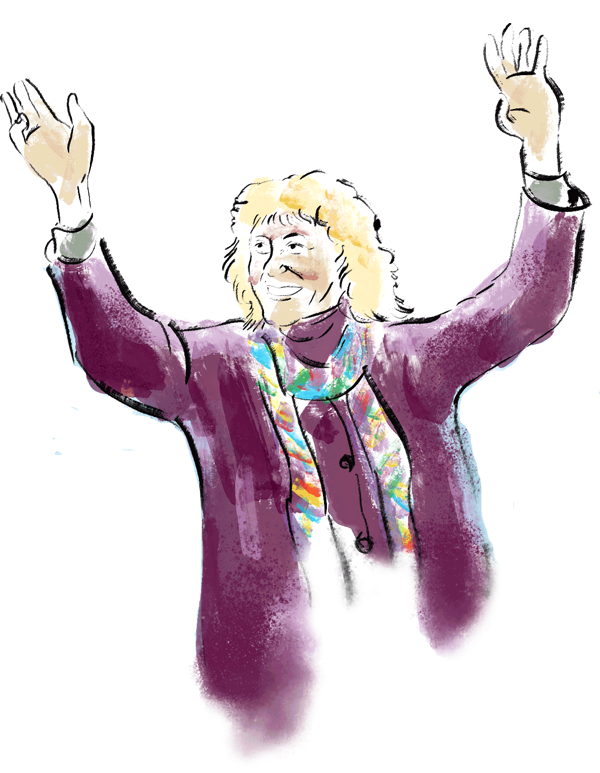
Goldberg, who is trained in dance and other forms of body-focused practice, tries to get the congregation to have an embodied spiritual experience. “It’s more heart than head for sure,” Tolkoff said, “But, you know, it’s hard to get some people to even stand up during service!”
For Tolkoff, the reward for being on her feet and rocking to the spiritual jam at Nefesh is nothing less than intimacy with the Divine.
“My return to devotional Judaism has allowed to feel like I was in love with God and with life,” Tolkoff said. “Which is something I never could have said before.”
Working Toward the Shalom of God

Civil unrest between communities of color and law enforcement officers was roiling Ferguson, Missouri in the fall of 2014.
Tensions were also building in the Skid Row section of downtown Los Angeles. News of violence in Gaza, and the Israeli Defense Forces’ disproportionate response to it, was also making headlines.
At New City Church, near Skid Row, a young African-American minister took the stage to offer a prayer. The cavernous auditorium held roughly 300 people, a mix of people from nearby Koreatown, hipsters from recently renovated downtown buildings and residents living on the economic margins of Skid Row. In a passionate and remarkably evenhanded entreaty, Delonte Gholston—then the church’s interim youth minister—prayed for God to bring peace to police as well as protestors in Ferguson, to LAPD officers as well as people living on the streets in downtown L.A., to Israelis as well as Palestinians.
“God’s asking, ‘Who will put their bodies in the breach on behalf of the oppressed?’”
“Man, I was just praying,” he later said about what was going through his mind during that benediction.
Pressed for more, Gholston related his perspective on the biblical meaning of covenant—the sacred pact between God and those who believe in Him. For believers, the covenant with God entails showing mercy and compassion toward the stranger as well as those who suffer from poverty and other afflictions. This honoring of neighbor-love, in turn, brings God’s favor and blessings. When human beings breach that covenant by oppressing the stranger or those who are less fortunate, blessings often give way to tumult and discord.
In such times, Gholston said, “God’s asking, ‘Who will put their bodies in the breach on behalf of the oppressed? Who will take responsibility for what’s been destroyed?’”
That skin-in-the-game notion of justice is the heart of Gholston’s identity as a Christian. It also enables him to critique and surmount the barriers of race, creed and privilege in order to serve those who suffer and to address the root causes of their suffering.

“When you say the word ‘justice’ it means 18 different things to every person that you say it to,” Gholston said. “But what I mean when I say justice is the mishpat of God, the shalom of God—that which brings about human flourishing and that which literally repairs and restores things that have been done wrong.”
Gholston, 39, grew up in Washington, D.C. He was raised in a church community that was part of the National Baptist Convention, an African-American denomination that emerged from 19th century Baptist schisms over slavery and race.
He studied political science at Swarthmore College near Philadelphia and felt the call to ministry a few years after he returned to D.C. New City Church appeared on his radar when he moved to Southern California to attend seminary and began to search for a congregation that reflected the sleeves-rolled-up theology that was guiding his call.
Gholston, who as a child listened to recordings of Martin Luther King, Jr’s speeches until he could recite them by heart, was primed at a young age to eschew orthodoxy in favor of activism in his developing faith as a Christian.
“You can’t look at Skid Row and just say, we’ll just love them.”
“I don’t know that it’s the call of a Christian church to look at a situation like Skid Row and say, yeah, we’re okay that that exists,” he said. “If you want to see human flourishing in Downtown, you can’t look at Skid Row and just say, we’ll just love them, you know?”
Gholston was looking for a church that engaged those living at the economic and social margins in new ways, and was pleasantly surprised by what he found at New City.
“When I walked into New City, I was just like, what is going on here?” Gholston recalled. “This Asian pastor is ministering to Skid Row folks that are primarily African-American males, and there are whites who are sort of the new loft dwellers,” he said, describing those who have moved into retrofitted buildings in downtown neighborhoods that middle-class and well-off folks used to avoid.
 “I’ve seen a lot of different kinds of diversity within white evangelicalism, places that call themselves diverse, and they are ethnically diverse. But I had never encountered that degree of class diversity without it being awkward or asymmetric in some way. And New City just didn’t feel that way at all.”
Yet while New City was creating a new type of community, the world outside its doors seemed stuck in old problems. When Trayvon Martin was killed in Florida in February 2012, Gholston saw it a part of an old and tragic story “of innocent black men being gunned down because people in authority were afraid of them,” he wrote later. As more names became hashtags, Gholston couldn’t help but ponder, “Am I next?” His immediate reaction was to write songs and prayers, but those creative expressions of his pain and frustration were not enough for him.
Instead, he started down a journey to develop the Trust Talks, a series of meetings with facilitated conversation about race and policing in downtown Los Angeles. With a team, he recruited facilitators, community activists, police officers, representatives of the city attorney office, business owners and those who live downtown—whether in lofts high above the bustle of the city or in tents on the sidewalks—to participate.
At the final Trust Talks meeting, Gholston stood on stage in a tunic with a bright orange African print and introduced the theme for the night: Trauma. At tables of 10 or so, participants shared their own stories of trauma for the first half of the evening, then concluded with a discussion about where they find healing.
Gholston sees this work as part of his ministry, though he avoided explicitly Christian language at the Trust Talks event. He opened, for instance, by asking people to say, “We remember,” after he read the names of victims of police violence as well as officers who lost their lives in active duty.
Holding the space between the police and the community is a challenge. He and his Trust Talks co-organizer are at once pastors and activists. Officers, therefore, aren’t always happy with what they say.
“We as clergy are here to be that bridge of healing,” Gholston added. “How can we restore the humanity to the people who have been traumatized over and over again by a system that seems to be fine with the erasure and demonization of black lives?”
Gholston knows as much as anyone that the Trust Talks aren’t going to magically solve Skid Row’s problems overnight. He hopes, though, that it’s the start of an internal transformation for each person in the room. For Gholston, that process is the realization of the shalom of God—an experience of divine grace that’s given freely to everyone in order to nurture individual as well as societal flourishing.
“Faith is not just an exercise in thought. If it’s not in my bones, what’s the point?”
“Faith is not just an exercise in thought,” Gholston said. “If it’s not in my bones, what’s the point? That’s why we say that the internal work is the external work.”
He added, “If God is to come now in a spiritual moment for healing and for wholeness–you know, for personal transformation–then wouldn’t that same God want for that healing and that wholeness to be a social transformation as well?”
That connection between personal and societal healing informs Gholston’s belief that working toward the Kingdom of God means addressing the structural roots of poverty and inequality.
Gholston recently moved back to D.C. to pastor a church of his own. That gig allows him to return to his roots, but also to nurture his growth as an activist in the city where broad structural change in the United States happens—or doesn’t. He continues to look for communities that reflect the kind of socially engaged faith that he sees himself continuing to grow into. “I’m always a sojourner, man,” he laughed. “I’m always a pilgrim.”

Credits
Written by Nick Street and Megan Sweas
Illustrations by Dan Carino
Design by Daniel Heller
Uncharted Pilgrimages was produced as part of the Religious Competition and Creative Innovation project, made possible through the support of a grant from the John Templeton Foundation. The opinions expressed do not necessarily reflect the views of the John Templeton Foundation.
Connect with CRCC
Building Knowledge, Strengthening Communities
Our mission is to advance the understanding of religion and society, and support faith and community leaders in becoming full partners in the work of positive social change.
Support Our Work
The USC Center for Religion and Civic Culture is independently funded by grants, contracts and gifts. We welcome your partnership and financial support.
Make a tax-deductible contribution to support our mission.
Contact Us
Center for Religion and Civic Culture
University of Southern California
Los Angeles, CA 90089-0520