
Exploring the A-Z of social cognitive neuroscience
The Center for the Neuroscience of Embodied Cognition (CeNEC), formerly known as the A-Z Lab, explores the idea that rudimentary sensory-motor areas may be intrinsically involved in processing aspects of higher cognition such as language, thought, emotions, empathy, and social communication.

Principal Investigator
Dr. Lisa Aziz-Zadeh is a Professor at the Brain and Creativity Institute, the Department of Psychology, and the Chan Division of Occupational Science and Occupational Therapy at the University of Southern California (USC). She is the director of the USC Center for the Neuroscience of Embodied Cognition.

Explore our current studies
Read about the various ongoing studies at the CeNEC lab
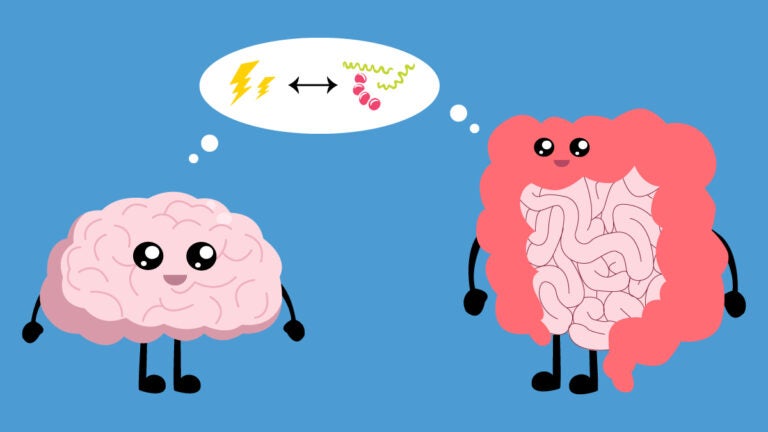
Relationship between the Gut Microbiome, the Brain, and Behavior
The gut has three times more neurons than the spinal cord, and most of those connections send information from the gut to the brain. However, the relationship between the gut microbiome, the brain, and behavior is poorly understood. Here we try to better understand this relationship in both typically developing individuals as well as individuals with autism. We also incorporate the oral microbiome in our projects.
AI Tropes and the Human Mind: A Neuroscience Perspective
While the advent of AI will undoubtedly result in numerous benefits, it also brings growing concerns. This project addresses a subset of concerns from the perspective of neurobiology in the form of experimental studies and analyses. Projects include the neuroscience of human-AI interactions and utilizing AI for positive behavioral change.

Otherness and Belonging
Belonging is a fundamental relationship grounded in the interaction between an organism and its world. For human beings, belonging is a critical factor both in the creation and in the perception of meaning in life. Belonging and meaning are fundamental human needs (Maslow, 1943) and a lack in either constitutes an existential break in one’s relationship to others and the environment. In a series of projects, we explore the neurobiology of otherness, belonging, and meaning in life.

Embodied Semantics and Communication
Most of our metaphors are embodied: we “handle” situations; we “kick-off” a new year; we “chew over” decisions. Using fMRI and behavioral studies we explore how literal and metaphorical language processing involves sensorimotor brain representations.

From Sensory-Motor to Social in Autism Spectrum Disorder (ASD)
Children with ASD often have both motor and sensory deficits in addition to the social deficits that are the hallmark of the phenotype. However, the neurological basis of how those sensorimotor difficulties relate to the core social phenotypes is poorly understood. Here we compare motor functioning in ASD to Developmental Coordination Disorder (DCD). In this way, we hope to better understand the relationship between sensory-motor and social processing in ASD.
Neuroimaging techniques
The CeNEC examines social cognitive neuroscience questions through the utilization of brain imaging techniques such as functional magnetic resonance imaging (fMRI), diffusion tensor imaging (DTI), transcranial magnetic stimulation (TMS), and electroencephalography (EEG)

Interested in being a Research Assistant at the lab?
Please fill out this form if you are interested as working as a volunteer at the CeNEC lab
Interested in being a participant at the lab?
If you are interested in taking part in both or either of our studies, we recruit in two ways: (1) You can sign up on the USC Sona System by using the links provided on the CeNEC website or (2) Reach out to us by email (ai.trope.study@gmail.com) by expressing your interest in any particular study. It should be noted that if you would like to participate in the AI and Human Interaction study, you cannot have completed or signed-up for AI and Social Reasoning From Neuroscience Part 1 and Part 2.

The Brain and Creativity Institute
The CeNEC operates at the Brain and Creativity Institute located at USC’s University Park Campus just 3 miles from downtown Los Angeles.
Learn more about the lab
Contact Us
Brain and Creativity Institute
3620A McClintock Avenue Los Angeles, CA 90089-2921
Center for the Neuroscience of Embodied Cognition
3620A McClintock Avenue Los Angeles, CA 90089-2921