CCLS 2024-25 Seed Funding Recipients: Where are they now?
In CCLS’ first year of programming, we awarded four outstanding teams of researchers seed funding to pursue bold interdisciplinary research at the intersection of language, computation, and cognitive science.
Below, they provide an update in their own words on the progress they have made, and the new and exciting directions their research has taken them in!
Detecting Reciprocity in Liking in Conversations using LLMs and Human Participant Perceptions
Team:
Kira Harris (PhD student and project lead, USC Department of Psychology, pictured right)
Begüm Babür (PhD student, USC Department of Psychology)
Elnaz Rahmati (PhD student, USC Department of Computer Science)
Efthymios Tsaprazlis (PhD student, Department of Computer Science )
Mingyu Zong (MA student, Department of Computer Science)
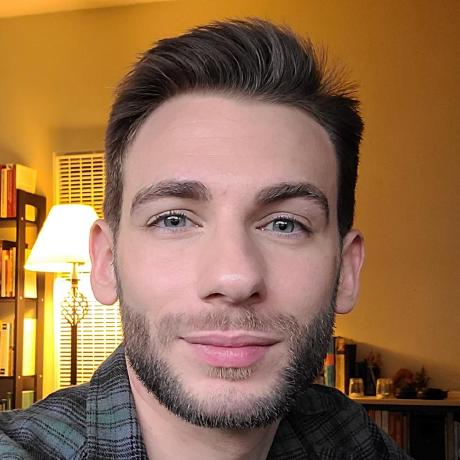
Kira writes: “Our project has evolved to focus on determining whether humans are able to detect reciprocity of liking through conversation. In our initial project we found that, when given transcripts of conversations between conversation partners who liked one another equally (reciprocated conversations) and transcripts of conversations in which one partner liked the other better (unreciprocated conversations), human participants did not distinguish between transcripts of conversations with reciprocated liking (63% rated reciprocated) from those with unreciprocated liking (62% rated reciprocated) (p = 0.88). We used the seed funding to conduct a follow-up study in which we showed participants videos of the conversations rather than transcripts. Participants were more likely to rate videos of reciprocated conversations as reciprocated (77% rated reciprocated) but still tended to rate unreciprocated conversation videos as reciprocated (62% rated reciprocated). Participants recognized that some features were more present in reciprocated conversations and were more likely to categorize conversations with these features as reciprocated. Nevertheless, people seem biased to perceive reciprocated liking, often failing to detect unreciprocated liking. This bias may reflect a broad tendency to assume mutual liking, highlighting an optimism that shapes how we perceive relationships. We are planning a follow-up study in the subject pool in which we use a different set of videos where participants reciprocate dislike for one another. We submitted an abstract to present a poster of our findings at the Society for Personality and Social Psychology (SPSP) this year.”

Exploring the neurophysiological foundations of speech production using multimodal biosignals
Team:
Jihwan Lee (PhD student and project lead, USC Electrical and Computer Engineering, pictured right)
Xuan Shi (PhD student, USC Electrical and Computer Engineering)
Kevin Huang (PhD student, USC Electrical and Computer Engineering)
Sean Foley (PhD student, USC Linguistics)
Louis Goldstein (Faculty, USC Linguistics)
Shrikanth Narayanan (Faculty, USC Electrical and Computer Engineering, Computer Science, Linguistics, Psychology, Pediatrics, and Otolaryngology)
Jihwan writes: “We have so far organized two retreat events, each focusing on engineering and linguistic aspects, respectively, to address technical challenges and research questions regarding the planned proposal. We also managed to run two pilot data recording sessions, one phantom scan and the other with an actual human subject, and we are currently refining and finalizing the experimental design. We have one paper published in [the Proceedings of] Interspeech 2025, ‘Articulatory feature prediction from surface EMG during speech production’, and two related papers submitted and under review.”
Check out the team’s paper:
Lee, J., Huang, K., Avramidis, K., Pistrosch, S., Gonzalez-Machorro, M., Lee, Y., Schuller, B.W., Goldstein, L., Narayanan, S. (2025) Articulatory Feature Prediction from Surface EMG during Speech Production. Proc. Interspeech 2025, 320-324, doi: 10.21437/Interspeech.2025-565

Enriching Vector Embeddings with Structural Information Using Graph Architecture
Team:
Mary “Katie” Kennedy (PhD student and project co-lead, USC Linguistics, pictured upper right)
Nelly Marutyan (PhD student and project co-lead, USC Linguistics, pictured lower right)
Mary writes: “[Our] project has actually undergone some changes in light of new publishing as well as new improvements to LLMs. In the course of our work, we’ve found that the core research question extends beyond merely syntactic ambiguities and brings into focus the broader issue of LLMs and compositionality. That is to say, LLMs struggling to disambiguate syntactic ambiguities is a symptom of their compositional limitations, which generates other difficulties such as: word sense disambiguation (the inability to leverage context, similar to our original proposal), textual similarity and paraphrasing, logic inference, and so on. Due to this, we have expanded our research aims and are currently developing a single method that should address the broader issue of LLMs and compositionality, allowing for system improvements in the aforementioned areas.[ … ]We are truly excited with this expansion of our project and its potential, and we look forward to updating you all with the results of this new direction. We are grateful for the opportunity the funding has provided to be able to tackle this broader and more impactful research scope.”

Using ML to Address Open Questions in Sign Language Phonology
Team:
Lee Kezar (project lead, USC Computer Science, pictured right)
Zed Sehyr (Faculty, Chapman University Communication Sciences and Disorders)
Jesse Thomason (Faculty, USC Computer Science)
Update: Project lead Lee Kezar successfully defended his PhD in Computer Science and is now a Postdoctoral Research Associate in the Action and Brain Lab at Gallaudet University in Washington DC, working with Prof. Lorna Quandt. His ongoing work is closely related to the theme of the seed project, focusing on building AI-powered learning tools for deaf and hard-of-hearing students in STEM classrooms. Check out his current work at https://leekezar.github.io/. Congratulations, Dr. Kezar!!
Latest News
USC CCSL Launch!
We are very excited to launch the new USC Center for Computational Language Sciences! We are a multidisciplinary group of USC affiliated faculty that are dedicated to revolutionizing our understanding of language through groundbreaking computational research.