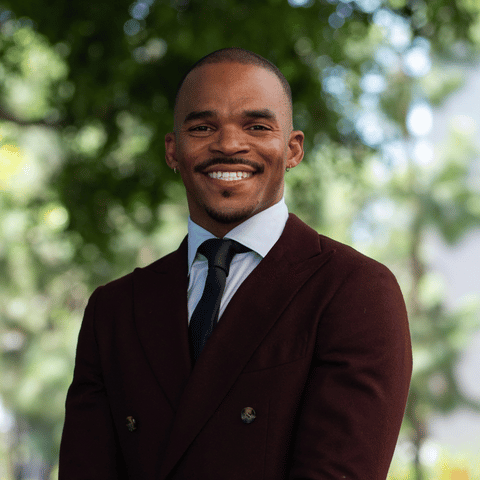
Terry Allen
Terry Allen is a public law scholar who researches and writes about the relationship between policing and constitutional law, particularly in the educational domain.
Allen received his BA in rhetoric from University of California, Berkeley; his MA in education policy from Columbia University; his PhD in education from University of California Los Angeles; and his law degree from UCLA School of Law, where he was editor-in-chief of UCLA Law Review. After law school, Allen worked as an associate at Baker McKenzie in Washington, D.C. and New York.
Allen teaches and writes in the areas of education law, constitutional law, and race and the law. His scholarship has appeared or is forthcoming in law journals including New York University Law Review, Michigan Law Review, Georgetown Law Journal, and UCLA Law Review.

Jody Armour
Jody David Armour is the Roy P. Crocker Professor of Law at the University of Southern California. A widely published scholar and popular lecturer, he studies the intersection of race, law, morality, psychology, politics, ordinary language philosophy, and the performing arts. His latest book, N*gga Theory: Race, Language, Unequal Justice, and the Law, looks at America’s criminal justice system – among the deadliest and most racist in the world – through deeply interdisciplinary lenses.
A widely published scholar and popular lecturer, Armour is a Soros Justice Senior Fellow of The Open Society Institute’s Center on Crime, Communities and Culture.
Armour earned his AB degree in Sociology at Harvard University and his JD degree with honors from Boalt Hall Law School at UC Berkeley.
Armour currently teaches students a diverse array of subjects, including Criminal Law, Torts, and Stereotypes and Prejudice: The Role of the Cognitive Unconscious in the Rule of Law.

Ricky Bluthenthal
Since 1991, Dr. Bluthenthal has conducted community-partnered research on risk behaviors, drug use related health problems (i.e., HIV, HCV, overdose) and harm reduction efforts to prevent these health outcomes among people who inject drugs, men who have sex with men, and other disadvantaged populations. His studies have been funded by NIDA, NIAAA, NIMHD, and the CDC among others. Dr. Bluthenthal has published over 200 manuscripts in peer-reviewed scientific journals and is on editorial board of the International Journal of Drug Policy and Drug and Alcohol Dependence. Dr. Bluthenthal has received numerous awards including the Senior Scholar Award from the Drugs and Society Section and the William Foote Whyte Distinguished Career Award from the Sociological Practice & Public Sociology section of the American Sociological Association. As a graduate student, Dr. Bluthenthal co-founded the syringe service program in Oakland, California and was a founding board member of the National Harm Reduction Coalition.

Ben Carrington
Ben Carrington is a writer and academic, widely regarded as one the world’s leading authorities on the sociology of race, politics and popular culture. He is an Associate Professor of Sociology and Journalism in the Annenberg School for Communication and Journalism at the University of Southern California. He has published numerous articles on race, culture and politics, as well as four books, including the critically-acclaimed Race, Sport and Politics: The Sporting Black Diaspora (Sage, 2010). In addition to his scholarly publications, Professor Carrington has written op-eds for publications such as The Guardian, The Washington Post and The Huffington Post. In 2024, Ben Carrington won the American Sociological Association’s “Stuart Hall Award for Advancing the Study of Racial or Ethnic Inequality”. He is currently working on two book projects; one on black cultural politics, cricket and the Caribbean diaspora and a second, a socio-political analysis on the state of contemporary America.
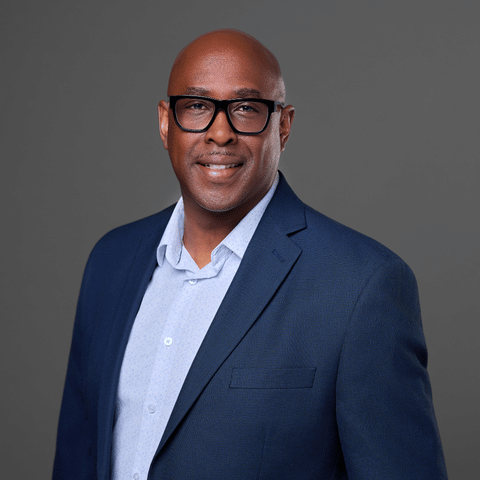
Darnell Cole
Darnell Cole is a nationally recognized scholar of race, identity, and educational equity, his research examines how race, ethnicity, diversity, student-faculty interactions, and institutional environments shape student learning, development, and success across K–12 and higher education. His scholarship has advanced understanding of Black students’ educational experiences, campus racial climate, identity development, and the factors that foster belonging and achievement among historically marginalized populations.
Cole’s work has appeared in leading higher education journals and has contributed to national conversations about educational access, equity, and social justice. He is also co-editor, with Shafiqa Ahmadi, of Islamophobia in Higher Education: Combating Discrimination and Creating Understanding. Through his research, teaching, mentorship, and academic leadership, Cole remains committed to advancing educational opportunity and creating more equitable and inclusive learning environments.

Christina C. Davidson
Christina Cecelia Davidson is Assistant Professor of History at the University of Southern California. She specializes in African diaspora history, religion, and US empire, with a focus on Dominican and Haitian history. She is the author of Dominican Crossroads: H.C.C. Astwood and the Moral Politics of Race-Making in the Age of Emancipation (2024). Her articles have appeared in edited collections and journals, including the Journal of Civil War Era, the Journal of African American History, and the New West Indian Guide. She has received funding from the Fulbright-Hayes DDRA fellowship, the New York Public Library, the Social Science Research Center, and African American Intellectual Historical Society in support of her research. At USC, she teaches classes on Atlantic History, Latin American and Caribbean History, and the Haitian Revolution.

Jessica DeCuir-Gunby
Jessica DeCuir-Gunby, a leading educational psychologist, holds the Robert A. Naslund Chair in Curriculum and Teaching at the University of Southern California (USC). She also serves as the executive director of the USC Race and Equity Center. Previously, she served as department head of the Department of Teacher Education and Learning Sciences at NC State University. Her scholarship focuses on the impact of racism on the educational experiences of African Americans, racism-related emotions and coping, and mixed methods research. DeCuir-Gunby is a fellow of the American Educational Research Association and the American Psychological Association (APA). She is past president of APA Division 15 (Educational Psychology) and currently serves on the editorial board of Educational Psychologist. She is co-editor of Understanding Critical Race Research Methods and Methodologies (Routledge, 2019) and the Handbook of Race, Equity, and Asset-Based Research in Educational Psychology (Routledge, 2026).

Joan Flores-Villalobos
Joan Flores-Villalobos is Associate Professor in the Department of History at USC. Her work focuses on histories of gender, race, and diaspora in Latin America and the Caribbean. Her first book, The Silver Women: How Black Women’s Labor Made the Panama Canal, was awarded the American Historical Association’s Wesley-Logan Prize for best book in African Diaspora history and the Organization of American Historians David Montgomery Prize for best book in labor history. Her work has garnered support from the Ford Foundation, the American Association of University Women, and the National Endowment for the Humanities, among others. At USC, Prof. Flores-Villalobos teaches courses on Afro-Latin America and the African Diaspora, U.S. empire, gender and migration, and the Caribbean.

Brittany Friedman
Brittany Friedman is an Assistant Professor of Sociology at the University of Southern California and co-founder of the Captive Money Lab. Recognized as an innovative thinker with respect to how people and institutions conceal harmful truths, her current work examines social control, racial violence, and the underside of government institutions, including prisons, courts, and treasuries. She is the author of Carceral Apartheid: How Lies and White Supremacists Run Our Prisons and has written for TIME Magazine, the Washington Post, and The Conversation. Friedman is a ’25-26 Policy Outreach Fellow of the American Sociological Association and an affiliated scholar of the American Bar Foundation.

Shaun Harper
Shaun Harper is an expert on race, gender, and Black people’s experiences and outcomes in educational, corporate, and policymaking contexts. He is a Provost Professor in the Rossier School of Education, Marshall School of Business, and Price School of Public Policy. In 2022, he was appointed University Professor, a distinction bestowed only to 30 of 4,700 full-time USC faculty members. Harper also is the Clifford and Betty Allen Chair in Urban Leadership, as well as the USC Race and Equity Center’s founder. He served as the 2020-21 American Educational Research Association president and the 2016-17 Association for the Study of Higher Education president. Harper has published 13 books and over 100 academic papers. His research has been cited in more than 26,000 published studies. He has interviewed on CNN, MSNBC, ESPN, PBS, and NPR. Harper has received dozens of top awards in his fields and six honorary degrees. He was inducted into the National Academy of Education in 2021.

Edwin Hill
His book Black Soundscapes White Stages appeared with Johns Hopkins University Press in 2013. Recent scholarship appears in the edited volumes: Sounds Senses (Liverpool UP, 2021), The New Modernist Studies (Cambridge UP, 2021), and Transpositions: Migration, Translation, Music (Liverpool UP, 2021). Public facing scholarship includes editorial pieces in 33 Carats, a limited-edition hip hop fanzine. He is also the creator, host, and executive producer of Dance Hubs, an audio docu-series about street dance and spaces of creative movement. https://dornsife.usc.edu/consortium/podcasts/dance-hubs/

Stanley Huey
Stan Huey is a Professor of Psychology at the University of Southern California (USC), with a joint appointment in American Studies and Ethnicity. His research focuses on reducing disparities in behavioral health by optimizing treatments for ethnic minority and high-risk populations, with a particular focus on the effects of culturally-tailored treatments. His research has been funded by the National Institute of Mental Health, the American Foundation for Suicide Prevention, and the William T. Grant Foundation. He also teaches classes addressing mental health and diversity, and recent courses include culture and mental health, the psychology of African Americans, race and crime, and the psychology of racial bias. www.stanhuey.com

Kara Keeling
Kara Keeling is Professor and the current Chair of Cinema and Media Studies in the School of Cinematic Arts at the University of Southern California. Keeling is author of Queer Times, Black Futures (New York University Press, 2019) and The Witch’s Flight: The Cinematic, the Black Femme, and the Image of Common Sense (Duke University Press, 2007) and coeditor (with Josh Kun) of a selection of writings about sound and American Studies entitled Sound Clash: Listening to American Studies (Johns Hopkins University Press, 2012), and (with Colin MacCabe and Cornel West) a selection of writings by the late James A. Snead entitled European Pedigrees/African Contagions: Racist Traces and Other Writing (Palgrave Macmillan, 2003). Keeling is currently a co-editor of boundary2: an international journal of literature and culture.

Oneka LaBennett
Oneka LaBennett is an anthropologist and a leading scholar of Black girlhood studies, the African Diaspora in the U.S., Caribbean migration and Afro-Asian intimacies, popular culture and hip hop studies, Black feminism, and gender and environmental catastrophe in the Caribbean. LaBennett is the author of Global Guyana: Shaping Race, Gender, and Environment in the Caribbean and Beyond (NYU Press 2024), She’s Mad Real: Popular Culture and West Indian Girls in Brooklyn (NYU Press 2011), and co-editor of Racial Formation in the Twenty-First Century (UC Press 2012). Her Op-eds and public commentary on figures such as Vice President Kamala Harris, Beyoncé and Jay-Z, Rihanna, and Nicki Minaj have appeared in platforms such as Ms. Magazine, Newsweek, The Guardian, Politico, and NBCNews.com. Elle Magazine ranked her course, “Women in Hip Hop,” among the top ten in a list of “College Classes that Give Us Hope for the Next Generation.

Jonathan Leal
Jonathan Leal is a scholar, educator, and musician born and raised in the Rio Grande Valley, the South Texas region at the border of the United States and Mexico. Now based in Los Angeles, Leal’s work focuses on creative resistances to the bordered world. He earned a PhD in Modern Thought & Literature from Stanford University and is an Assistant Professor of English at the University of Southern California. He is the author of Dreams in Double Time: On Race, Freedom, and Bebop (Duke University Press, 2023), co-editor of Cybermedia: Explorations in Science, Sound, and Vision (Bloomsbury, 2021), as well as co-editor of “Exercises in Joyful Improvisational Practice,” a special issue of liquid blackness. Additionally, he is also the co-creator of numerous musical projects, including releases featured in Pitchfork, Latino USA, and Democracy Now. Leal’s writing has appeared in the Boston Globe, Los Angeles Times, Journal of Popular Music Studies, and elsewhere, and he serves on the Board of Directors of the National Book Critics Circle.

Shawn McDaniel
Shawn McDaniel is Associate Professor of American Studies and Ethnicity and Director of Graduate Studies for ASE. Intersecting Caribbean, Latin American, Latinx, and Scottish Gaelic literary and cultural studies and intellectual history, his research and pedagogy explore subjectivity, power, aesthetics, modernism, race, gender, sexuality, and dissidence in print, visual, and sonic cultures of the Americas from the nineteenth century to the present. He is the author of Centenary Subjects: Race, Reason, and Rupture in the Americas (Vanderbilt University Press, 2021), and of a forthcoming book, Cuban Chic: Queer Deco and Diasporic Modernism in New York. Prior to joining the Department of American Studies and Ethnicity, he was Assistant Professor of Romance Studies and Latina/o Studies and the Emerson-Krapels Faculty Fellow at Cornell University.

Lydie Moudileno
Her research focuses on literary and cultural productions from the Francophone world, in particular the Caribbean, and West and Central Africa, as well as postcolonial France.

Admire Mseba
Admire Mseba is an assistant professor in the Van Hunnick Department of History at the University of Southern California. He is a historian of Africa with particular interests in the social, environmental and economic histories of Zimbabwe and the broader region of Southern Africa. He is the author of Society, Power and Land in Northeastern Zimbabwe, ca 1560-1960, (Athens: OH, Ohio University Press, 2024). His work has appeared in the African Studies Review, the Journal of Southern African Studies, the International Journal of African Historical Studies, African Economic History, the Journal of the History of Medicine and Allied Sciences and in several edited collections. He teaches courses in the deep and recent African past as well as in African environmental and economic history.

Melissa Rauterkus
Melissa Rauterkus is an associate professor in the Department of English. She writes about and teaches African American literature and literary history. She is the author of Afro-Realisms and the Romances of Race: Rethinking Blackness in the African American Novel (LSU Press, 2020), which won the SAMLA Studies Book Award and received Honorable Mention for the MLA’s William Sanders Scarborough Prize. She has published essays in African American Literature in Transition, 1990-2000, The Oxford Handbook of Twentieth-Century American Literature, and Callaloo: A Journal of African Diaspora Arts and Letters.
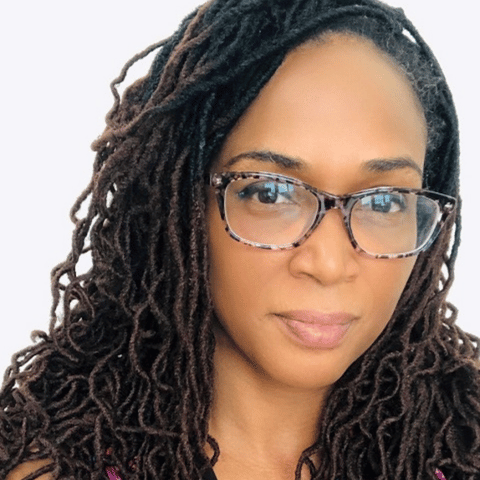
Camille Gear Rich
Camille Gear Rich is the Dorothy Nelson Chair of Law and Professor of Law and Sociology at USC Gould School of Law and previously served as the Associate Provost of Diversity and Inclusion. Her focus areas include the First Amendment, race and the law, and feminist legal theory. She is the founder and Director of PRYSM: The USC Initiative for the Study of Race, Gender, Sexuality, and the Law. She is also the founding director of Gould’s First Generation Legal Professionals program. Rich is widely known for her research on race and gender discrimination and identity-formation issues related to race, class, gender, and sexuality. Additionally, she explores issues related to the detection and prevention of implicit bias. She played a key role in the creation of the “Race, Racism & the Law” required course at Gould Law School.
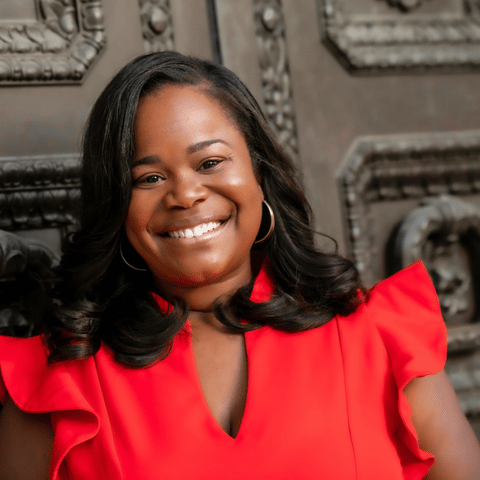
Allissa Richardson
Dr. Allissa V. Richardson is an award-winning journalist, scholar, author, and Associate Professor of Journalism and Communication at the University of Southern California’s Annenberg School. She founded the Charlotta Bass Journalism and Justice Lab there, and she studies Black witnessing, reparative journalism, public memory, and ethical AI. Her acclaimed book, Bearing Witness While Black, examines how smartphones reshaped journalism and social justice. Richardson has held three prestigious Harvard fellowships with the Nieman Foundation for Journalism, the Berkman Klein Center for Internet and Society, and the Carr Center for Human Rights Policy. She has received the Dr. Betty Shabazz Changemaker Award from Malcolm X’s family, and her work has appeared across ABC, BBC, CNN, NPR, PBS, The Guardian, The New York Times and The Washington Post.
Franita Tolson
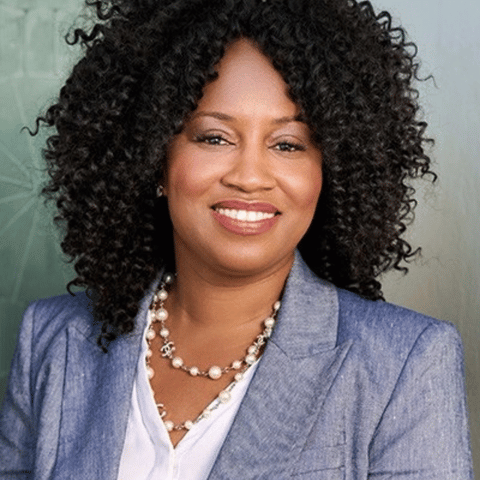
Franita Tolson’s scholarship and teaching focus on the areas of election law, constitutional law, legal history, and employment discrimination. She has written on a wide range of topics including partisan gerrymandering, political parties, the Elections Clause, the Voting Rights Act of 1965, and the Fourteenth and Fifteenth Amendments.
Her research has appeared in the nation’s leading law reviews. Dean Tolson also coauthored the election law casebook, The Law of Democracy (Foundation Press, 6th ed., 2022), and her newest book, In Congress We Trust?: Enforcing Voting Rights from the Founding to the Jim Crow Era, was recently published by Cambridge University Press.
A noted election law expert, Dean Tolson has testified before Congress numerous times on voting rights issues. She has written for or appeared as a commentator for various news media outlets including The New York Times, Los Angeles Times and Wall Street Journal. In addition, she worked as an election law analyst for CNN in 2020 and NBC in 2024.

Francille Rusan Wilson
Wilson is an intellectual and labor historian whose current research examines the intersections between black labor movements, black social scientists, and black women’s history during the Jim Crow era. Her book, The Segregated Scholars: Black Social Scientists and the Creation of Black Labor Studies, 1890-1950, was awarded the Letitia Woods Brown Memorial Prize for the best book in African American Women’s history by the Association of Black Women Historians. Wilson was the inaugural director of USC’s Black Studies Initiative/Emerging Center. In 2023, she was the recipient of the Carter Godwin Woodson Scholars Medallion from the Association for the Study of African American Life and History (ASALH).

Hajar Yazdiha
Hajar Yazdiha is an Associate Professor of Sociology at the University of Southern California and faculty affiliate of the USC Equity Research Institute and Rutgers Center for Security, Race, and Rights. She is currently an Andrew Carnegie Fellow and a former Racial Justice Fellow of the Harvard Kennedy School’s Carr Center for Human Rights, Global Scholar of the Canadian Institute for Advanced Research, and Ford Fellow. Hajar researches the politics of belonging, examining the forces that bring us together and keep us apart as we work to forge collective futures. In addition to award-winning articles, she is author of the book, The Struggle for the People’s King: How Politics Transforms the Memory of the Civil Rights Movement with Princeton University Press. She is also a public scholar whose writing and research has been featured in outlets including The LA Times, NPR, Time Magazine, BBC News, The Hill, and The Grio.

Mlondi Zondi
Mlondi Zondi (assistant professor, comparative literature) is a scholar, performance artist, and dramaturg. They are currently working on a first book that traces colonialism’s effects on bodily integrity in Africa and its Diaspora. Published essays by Mlondi appear in TDR: The Drama Review, ASAP Journal, Contemporary Literature, Espace Art Actuel, Liquid Blackness, Mortality, Performance Philosophy, and Safundi. Mlondi teaches courses in global Black thought, queer cinema and visual art, and performance theory.