Health Research and Scholarship Across USC Dornsife
At USC Dornsife, we don’t make hard distinctions between art and science. We explore the entire range of complexities that affect human health. Together with collaborators across the university, our experts explore everything from the fundamental molecular mechanisms underpinning biology to the ways that culture and traditions influence therapeutics.

New Discoveries, Groundbreaking Research
At USC Dornsife, experts work across disciplines to find new ways of thinking about health and human wellbeing.
Read the Health and Well-being Issue of USC Dornsife Magazine
Recent Health News

New, selective compounds target for Alzheimer’s-linked brain inflammation
Using highly advanced, large-scale computational screening methods developed by USC Dornsife’s Vsevolod “Seva” Katritch, USC researchers evaluate billions of potential compounds to find a promising new drug for Alzheimer’s disease.

Biologists discover neurons use physical signals — not electricity — to stabilize communication
A USC Dornsife team shows how synapses rapidly adjust when their receptors fail, revealing a new mechanism of neural resilience.

The Sponge Child Myth: How kids actively shape their own learning
How infants and young children come to understand the world and the role that others play in their cognitive growth is at the heart of Henrike Moll’s research.

Decoding the chemistry of life, not with test tubes or lab coats, but with the aid of AI
A study by USC Dornsife Nobel laureate Arieh Warshel attempts to predict evolution of viruses to evade drugs.

A path to safer painkillers – revealed by freezing opioids and their protein receptors in motion
With near-atomic precision, a USC Dornsife team of scientists visualized for the first time how opioids such as loperamide and the antidote naloxone engage a key brain receptor, offering insight that could lead to better pain treatments and improved overdose reversal.

Two brain scans are better than one in predicting teen anxiety, study finds
A USC Dornsife study shows that combining brain imaging methods may help forecast which adolescents are most at risk for developing anxiety disorders, years before symptoms appear.

What your DNA – and childhood – reveal about midlife decrease in IQ
A multi-university twin study led in part by USC Dornsife researchers finds that accelerated biological aging, amplified by early-life disadvantage, is linked to cognitive decline later in life.

How the brain learns to care
USC Dornsife psychologists show that empathy can be conditioned through emotional rewards — revealing a surprising path to compassion.


Unraveling the Building Blocks of Life
Think of a cell as a tremendously complicated little machine made up of many different biomolecules such as proteins, DNA, RNA, and metabolites. Until we can explore exactly what is happening deep inside the cell and from many angles, it is difficult to fix these little machines when they break. It’s no longer impossible. Today, USC Dornsife scientists are providing unprecedented access to the building blocks of life — their structures, how they interact, and how they influence our health.

Mental Health
Physical and mental health are inextricably connected. Yet, the public dialogue frequently casts mental health in the background, and those who suffer from disorders are often stigmatized. By not only developing treatments and interventions for mental health problems but also illuminating the profound benefits of robust mental health to the public good, experts at USC Dornsife are setting new standards for our collective approach to improving human wellbeing.

Healthcare Access Across Communities
A person’s background, geographic location, or income level often factors heavily into the quality of healthcare and healthy food options available. USC Dornsife experts are exploring ways to overcome the barriers to the very best treatments and interventions. With creativity and compassion, we can transform healthcare systems to support a more robust and productive future for all.

Cancer
While cancer “moonshots” offer tremendous hope for the future, a revolution in treatment and prevention is already improving the outlook for millions of cancer patients worldwide. From the development of personalized therapies and targeted drugs to noninvasive screening tools and early-detection methods that rely on prediction science, scientists at USC Dornsife are expanding the arsenal in the fight against cancer.

Expressions and Experiences of Human Health
All too often, the stories and cultural traditions that impact health are overlooked in favor of treating physical symptoms alone. At USC Dornsife, experts emphasize the need to integrate all the factors that make us human into our efforts to improve wellbeing. They investigate the history of medicine, the different ways that we frame illness, and the social norms that contribute more to our healthcare than we had ever known.
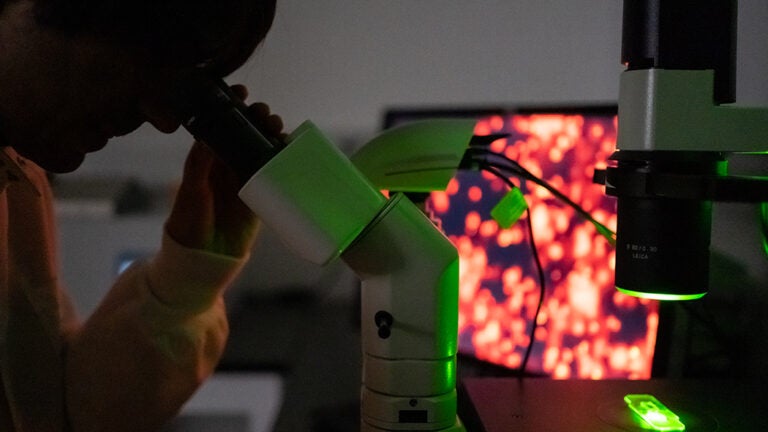
Advanced Imaging and Medical Technology
Home to some of the most advanced technology on the planet, USC Dornsife researchers are providing unprecedented ways of seeing molecules and cells, leveraging big data to create medicine, and partnering with industry to accelerate the future of human health.
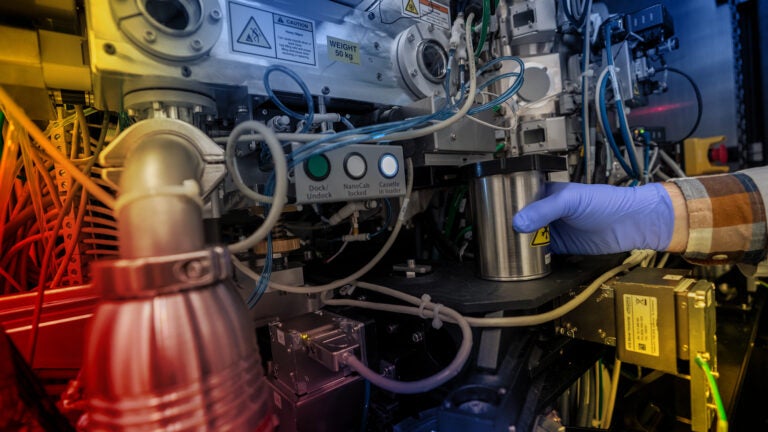
Cryo-electron Microscopes
To solve some of humanity’s greatest health challenges, scientists need to see small — so small, in fact, that they can see what is happening inside individual molecules. This once impossible feat is happening now at USC, where two of the world’s most advanced cryo-electron microscopes (Cryo-EMs) are housed on campus — the result of a partnership with biotech giant Amgen and instrument maker Thermo Fisher Scientific. These powerful microscopes allow scientists to take snapshots of biological molecules in three dimensions by freezing them in place. The tool also enables researchers to see how molecules act in the presence of other molecules, which is critical for the development and acceleration of new drug therapies.
Environmental economist Paulina Oliva studied what exposure to air pollution does to the mind and the economy. Using data from urban Chinese populations, she found that pollution spikes correspond to higher rates of mental illness and cost China $23 billion in unnecessary health expenditures. Oliva’s research, which focuses primarily on economics in the developing world, has also provided insights on the connection between rising temperatures and infant mortality as well as the inequitable distribution of environmental damages affecting the health of underserved populations.
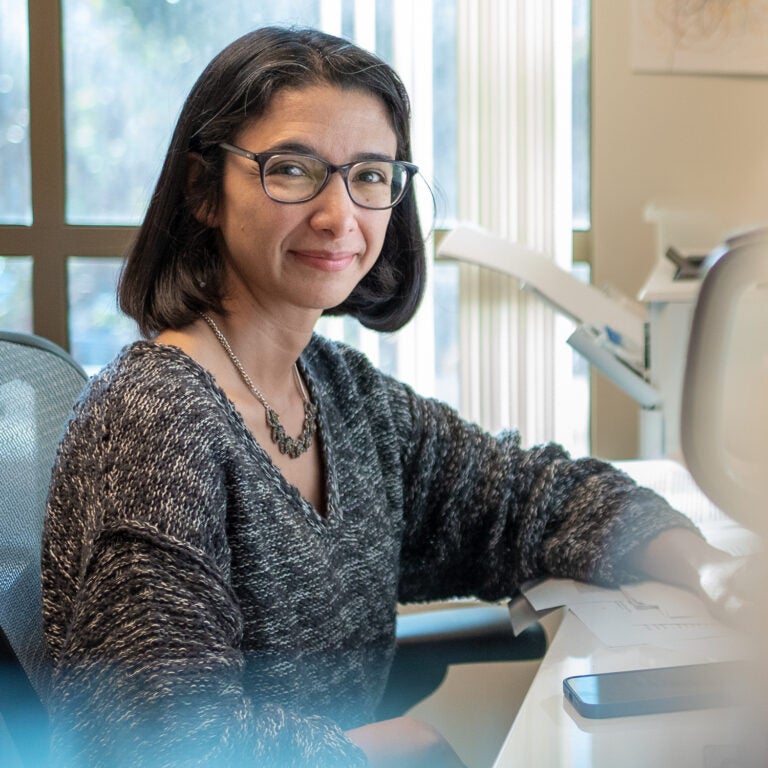
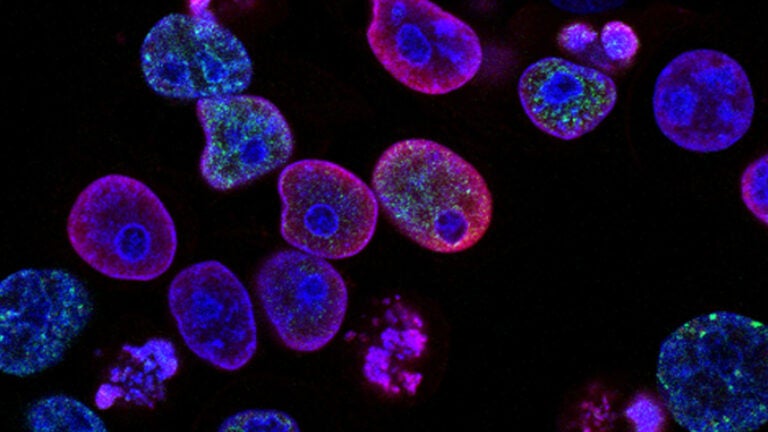
Decoding Cancer: One Cell At A Time
USC Dornsife Professor of molecular biology Susan Forsburg studies how chromosome duplication and maintenance contributes to overall genome stability in a model genetic system. Loss of genome integrity and deregulation of cell division is associated with cancer, so this is a fundamental form of cancer research.