-
About the major: Applied Math combines our love of math with the application of math to real-world problems. Students emerge from this program with strong analytical and problem-solving skills that are useful in a variety of fields.
Other majors in the Department of Mathematics: Mathematics, Economics/MathematicsDepartment of Mathematics Website
Students: Last Names A – L
Advisor: Logan McCraley
E-mail: mccraley@usc.edu
Office: KAP 357Education: B.A. Anthropology, UC Santa Cruz
Hometown: Los Angeles, CA
Fun fact: I have been sky diving twiceTo schedule an appointment with Logan, please visit:
Click HereStudents: Last Names M – Z
Advisor: Tiffany Chen
E-mail: tchen957@usc.edu
Office: KAP 357To schedule an appointment with Tiffany, please visit:
Click HereEducation: B.A. Education Sciences & B.A Criminology, UC Irvine; M.S. Higher Education, CSU Fullerton
Hometown: Orange, CA
Fun fact: I lived abroad for 15 years. -
About the major: Astronomy helps us understand how the universe works. Students emerge from this program with strong analytical and problem-solving skills that are useful in technical and non-technical careers.
Other majors in the Department of Physics and Astronomy: Biophysics, Physical Science, Physics, Physics/Computer ScienceDepartment of Physics and Astronomy Website
Advisor: Samantha Nava
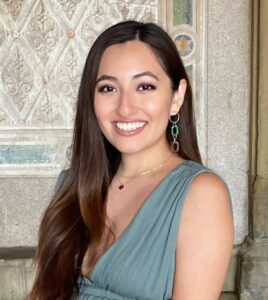
E-mail: navasama@usc.edu
Office: AHF 107Education: BA in Psychology and Minor in Health, Medicine, and Human Values from the University of New Mexico; MA in Social Work (MSW) from NYU
Hometown: Abilene, TX and Oxnard, CA
Fun fact: I don’t like coffeeTo schedule an appointment with Samantha, please visit:
Click Here -
About the major: Combines core foundational backgrounds from chemical, biological and molecular sciences to offer an integrated program focusing on the chemistry and molecular mechanisms of biology, with rigorous coursework and hands-on laboratory experiences. The biochemistry major prepares students to pursue professional careers in chemistry and/or biology or for advanced studies in the field of biochemistry and molecular biology.
Other majors in the Department of Chemistry: Chemistry, Chemistry (Chemical Biology), Chemistry (Chemical Nanoscience), Chemistry (Research)Department of Chemistry Website
Advisor: Jonathan Wood
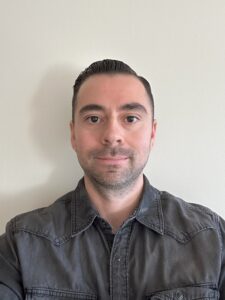
E-mail: jwood541@usc.edu
Office: SGM 455Education: B.A History & Kinesiology Minor, Cal State Fullerton; M.S. Education, Cal Baptist University
Hometown: Riverside, CA
Fun Fact: My favorite travel destination is Rome, Italy.To schedule an appointment with Jonathan, please visit:
Click Here -
About the major: It’s all about life; from bacteria to man.
Other majors in the Department of Biological Sciences: Human Biology, Quantitative Biology
Department of Biological Sciences Website
Students: Last Names A-M
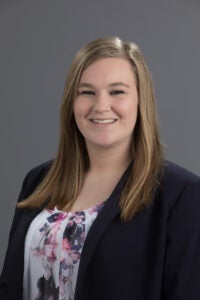
Advisor: Ashlyn Kirkpatrick
E-mail: adkirkpa@usc.edu
Office: AHF 107Education: B.A Management and Human Resources, University of Wisconsin-Madison; M.Ed Postsecondary Administration and Student Affairs, USC
Hometown: St. Louis, MO
Fun fact: I competed on Team USA as a synchronized figure skaterTo schedule an appointment with Ashlyn, please visit:
Click Here
Students: Last Names N-Z
Advisor: Chelsea Acevedo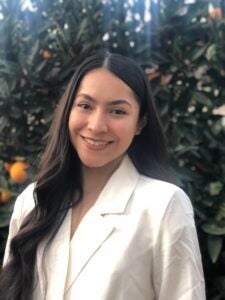
E-mail: ca23207@usc.edu
Office: AHF 107Education: B.A Criminology, Law, and Society, University of California Irvine
Hometown: Modesto, CA
Fun fact: I competitively danced for 12 years!To schedule an appointment with Chelsea, please visit:
Click Here -
About the major: Biophysics helps us understand living things through the principles of physics. Students in this program emerge prepared for medical school and careers in the biophysics industry.
Other majors in the Department of Physics and Astronomy: Biophysics, Physical Science, Physics, Physics/Computer ScienceDepartment of Physics and Astronomy Website
Advisor: Samantha Nava
E-mail: navasama@usc.edu
Office: AHF 107Education: BA in Psychology and Minor in Health, Medicine, and Human Values from the University of New Mexico; MA in Social Work (MSW) from NYU
Hometown: Abilene, TX and Oxnard, CA
Fun fact: I don’t like coffeeTo schedule an appointment with Samantha, please visit:
Click Here -
About the major: Combining rigorous coursework, hands-on training with the latest chemical instrumentations, as well as a rich independent research experience, our graduates pursue professional careers in the field of chemical and molecular sciences or continue their studies towards advanced degrees, usually the Ph.D., in chemistry or a related field in the molecular sciences.
Other majors in the Department of Chemistry: Chemistry, Chemistry (Chemical Biology), Chemistry (Chemical Nanoscience), Chemistry (Research)Department of Chemistry Website
Advisor: Jonathan Wood
E-mail: jwood541@usc.edu
Office: SGM 455Education: B.A History & Kinesiology Minor, Cal State Fullerton; M.S. Education, Cal Baptist University
Hometown: Riverside, CA
Fun Fact: My favorite travel destination is Rome, Italy.To schedule an appointment with Jonathan, please visit:
Click Here -
About the major: The study of small molecules as targets to effect, manipulate, or interrogate biological processes. The major builds on solid groundings in general, organic, analytical, and physical chemistry and integrates core knowledge contents from the interface between chemistry and biology, combined with practical laboratory experience and access to the latest chemical instrumentations.
Other majors in the Department of Chemistry: Chemistry, Chemistry (Chemical Biology), Chemistry (Chemical Nanoscience), Chemistry (Research)Department of Chemistry Website
Advisor: Jonathan Wood
E-mail: jwood541@usc.edu
Office: SGM 455Education: B.A History & Kinesiology Minor, Cal State Fullerton; M.S. Education, Cal Baptist University
Hometown: Riverside, CA
Fun Fact: My favorite travel destination is Rome, Italy.To schedule an appointment with Jonathan, please visit:
Click Here -
About the major: Focuses on the synthesis of nanoscale materials, as well as the understanding of their chemical, structural, and physical properties, and prepares students for a career in the rapidly growing field of nanoscience.
Other majors in the Department of Chemistry: Chemistry, Chemistry (Chemical Biology), Chemistry (Chemical Nanoscience), Chemistry (Research)
Department of Chemistry Website
Advisor: Jonathan Wood
E-mail: jwood541@usc.edu
Office: SGM 455Education: B.A History & Kinesiology Minor, Cal State Fullerton; M.S. Education, Cal Baptist University
Hometown: Riverside, CA
Fun Fact: My favorite travel destination is Rome, Italy.To schedule an appointment with Jonathan, please visit:
Click Here -
About the major: One of the first undergraduate programs in the country that offers a research-focused undergraduate degree in Chemistry. The major provides a rich research experience for those students whose goal is to pursue research careers in various fields of the chemical and molecular sciences.
Other majors in the Department of Chemistry: Chemistry, Chemistry (Chemical Biology), Chemistry (Chemical Nanoscience), Chemistry (Research)
Department of Chemistry Website
Advisor: Jonathan Wood
E-mail: jwood541@usc.edu
Office: SGM 455Education: B.A History & Kinesiology Minor, Cal State Fullerton; M.S. Education, Cal Baptist University
Hometown: Riverside, CA
Fun Fact: My favorite travel destination is Rome, Italy.To schedule an appointment with Jonathan, please visit:
Click Here -
About the major: The marriage of Computer Science and Natural Science with an emphasis on mimicking cognitive brain processes.
Other majors in the Undergraduate Neuroscience Program: Neuroscience
Undergraduate Neuroscience Program Website
Students: Last Names A-L
Advisor: Pablo Lopez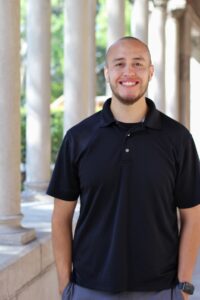
E-mail: pablol@usc.edu
Office: AHF 107Education: B.A. Chicana/o Studies and B.A. Spanish, UCSB; M.Ed. Postsecondary Administration and Student Affairs, USC
Hometown: Oxnard, CA
Fun fact: I am the youngest out of 11 brothers and sistersTo schedule an appointment with Pablo, please visit:
Click Here
Students: Last Names M-Z
Advisor: Mia Kirsten Santos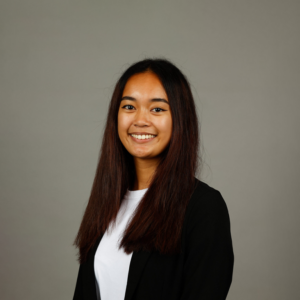
E-mail: mnsantos@usc.edu
Office: AHF 107Education: Sociology, UC Davis; M.Ed. Postsecondary Administration and Student Affairs, USC
Hometown: Lomita, CA
Fun fact:To schedule an appointment with Mia, please visit:
Click Here -
About the major: Data Sciences teaches students to understand, design, and implement effective solutions to meet organizational, societal, and management needs for information and decision support. Coursework focuses on computer programming, statistics/analytics, information systems and technology fundamentals, and web technologies.
Data Sciences Program Website
Advisor: Logan McCraley
E-mail: mccraley@usc.edu
Office: AHF 107Education: B.A. Anthropology, UC Santa Cruz
Hometown: Los Angeles, CA
Fun fact: I have been sky diving twiceTo schedule an appointment with Logan, please visit:
Click Here -
About the major: Earth Sciences unravels the layers of the earth, from the core to the crust. In this program, we make an effort to better understand the Earth so that we can better understand our impact on it.
Other majors in the Department of Earth Sciences: Geological Sciences
Department of Earth Sciences Website
Advisor: Darlene Garza
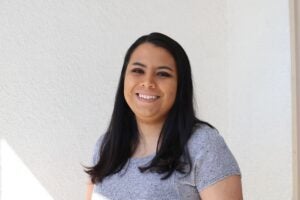
E-mail: garzadar@usc.edu
Office: ZHS 117Education: B.S. Business Administration, USC; M.A. Higher Education, University of Redlands
Hometown: Grand Terrace, CA
Fun fact: I love the smell of new booksFor advisement, Darlene is available on a walk-in basis or by Zoom, please email for an appointment.
-
About the major: A combination of interdisciplinary courses on sustainability and environmental social science with traditional biology and chemistry courses to provide options for students preparing for one of the health professions with an emphasis on environmental sustainability. The B.S. degree incorporates recommended preparation for medical schools. The B.A. degree may be appropriate for students preparing for other graduate or professional training, as well as students pursuing double majors.
Other majors in the Environmental Studies Program: Environmental Studies
Environmental Studies Program Website
Advisor: Natalie Inouye
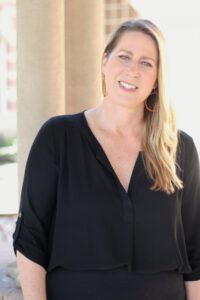
E-mail: natalie.inouye@dornsife.usc.edu
Office: AHF 107Education: B.A. Psychology, Chapman University; M.S. Counseling: Student Development in Higher Education, California State University, Long Beach
Hometown: La Palma and Laguna Hills, CA
Fun fact: I played on the women’s soccer team at Chapman UniversityTo schedule an appointment with Natalie, please visit:
Click Here -
About the major: The Environmental Studies Program offers a thoughtfully-designed, interdisciplinary curriculum, which emphasizes the complex nature of environmental problems. Semester long surveys of biology, earth science, and chemistry provide the background for advanced course work in environmental problems ranging from political, legal, economic, and international perspectives.
Other majors in the Environmental Studies Program: Environmental Science and Health
Environmental Studies Program Website
Advisor: Natalie Inouye
E-mail: natalie.inouye@dornsife.usc.edu
Office: AHF 107Education: B.A. Psychology, Chapman University; M.S. Counseling: Student Development in Higher Education, California State University, Long Beach
Hometown: La Palma and Laguna Hills, CA
Fun fact: I played on the women’s soccer team at Chapman UniversityTo schedule an appointment with Natalie, please visit:
Click Here -
About the major: Earth Sciences unravels the layers of the earth, from the core to the crust. In this program, we make an effort to better understand the Earth so that we can better understand our impact on it.
Other majors in the Department of Earth Sciences: Earth Sciences
Department of Earth Sciences Website
Advisor: Darlene Garza
E-mail: garzadar@usc.edu
Office: ZHS 117Education: B.S. Business Administration, USC; M.A. Higher Education, University of Redlands
Hometown: Grand Terrace, CA
Fun fact: I love the smell of new bookFor advisement, Darlene is available on a walk-in basis or by Zoom, please email for an appointment.
-
About the major: This major focuses on the study of physiology, metabolism, health and disease, human movement, and human evolution. It is a good fit for students pursuing pre-professional education in the fields of medicine, physical therapy, dentistry, physician assistant, nursing, nutrition, kinesiology, biomechanics, athletic training, human evolution, primatology, evolutionary biology, etc.
Other majors in the Department of Biological Sciences: Biology, Quantitative Biology
Department of Biological Sciences Website
Students: Last Names A – K
Advisor: Jiwoo Ann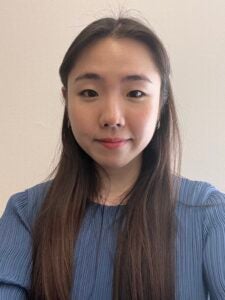
E-mail: jiwooann@usc.edu
Office: AHF 253BEducation: B.S. Early Childhood Education, Temple University; M.S.Ed. School Counseling, CUNY-Hunter College
Hometown: Seoul, South Korea
Fun fact: I was a tattoo studio receptionist in NYC for 3 years.To schedule an appointment with Jiwoo, please visit:
Click Here
Students: Last Names L – Z
Advisor: Ashley Grant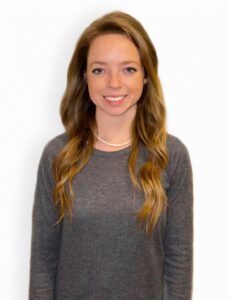
E-mail: ashleygr@usc.edu
Office: AHF 253BEducation: B.A. Human Biology and Cinematic Arts, USC
Hometown: Bellflower, CA
Fun fact: I was a first-gen college student and had always wanted to go to UCLA before I got my USC acceptance.To schedule an appointment with Ashley, please visit:
Click Here -
About the major: The basis for other sciences and ideal study for those interested in the theory of math. Students emerge from this program with strong analytical skills and are prepared for graduate school or a wide range of careers
Other majors in the Department of Mathematics: Applied and Computational Mathematics, Economics/MathematicsDepartment of Mathematics Website
Students: Last Names A – L
Advisor: Logan McCraley
E-mail: mccraley@usc.edu
Office: KAP 357Education: B.A. Anthropology, UC Santa Cruz
Hometown: Los Angeles, CA
Fun fact: I have been sky diving twiceTo schedule an appointment with Logan, please visit:
Click Here
Students: Last Names M – Z
Advisor: Tiffany Chen
E-mail: tchen957@usc.edu
Office:To schedule an appointment with Tiffany, please visit:
Click HereEducation: B.A. Education Sciences & B.A Criminology, UC Irvine; M.S. Higher Education, CSU Fullerton
Hometown: Orange, CA
Fun fact: I lived abroad for 15 years! -
About the B.A.: A taste of introductory natural science with a solid foundation of biological and psychology-based Neuroscience coursework. This major is ideal for students wanting to double major or add multiple minors.
About the B.S.: Solid foundation of natural science and biological/psychological-based Neuroscience coursework. This major is ideal for students intending to attend graduate school or pre-health focused programs such as pre-med, pre-PA, etc.Undergraduate Neuroscience Program Website
Students: Last Names A-L
Advisor: Pablo Lopez
E-mail: pablol@usc.edu
Office: AHF 107Education: B.A. Chicana/o Studies and B.A. Spanish, UCSB; M.Ed. Postsecondary Administration and Student Affairs, USC
Hometown: Oxnard, CA
Fun fact: I am the youngest out of 11 brothers and sistersTo schedule an appointment with Pablo, please visit:
Click Here
Students: Last Names M-Z
Advisor: Mia Kirsten Santos
E-mail: mnsantos@usc.edu
Office: AHF 107Education: Sociology, UC Davis; M.Ed. Postsecondary Administration and Student Affairs, USC
Hometown: Lomita, CA
Fun fact:To schedule an appointment with Mia, please visit:
Click Here -
About the major: Physical Sciences helps us understand the principles of astronomy, physics, chemistry, and geology. Students emerge from this program with a broad understanding of physical sciences.
Other majors in the Department of Physics and Astronomy: Astronomy, Biophysics, Physics, Physics/Computer Science
Department of Physics and Astronomy Website
Advisor: Samantha Nava
E-mail: navasama@usc.edu
Office: AHF 107Education: BA in Psychology and Minor in Health, Medicine, and Human Values from the University of New Mexico; MA in Social Work (MSW) from NYU
Hometown: Abilene, TX and Oxnard, CA
Fun fact: I don’t like coffeeTo schedule an appointment with Samantha, please visit:
Click Here -
About the major: Physics challenges our imagination while helping us understand the world around us. At the end of their studies, students have an in-depth understanding of physics and strong analytical skills that can be applied to both technical and non-technical careers.
Other majors in the Department of Physics and Astronomy: Astronomy, Biophysics, Physics, Physics/Computer Science
Department of Physics and Astronomy Website
Advisor: Samantha Nava
E-mail: navasama@usc.edu
Office: AHF 107Education: BA in Psychology and Minor in Health, Medicine, and Human Values from the University of New Mexico; MA in Social Work (MSW) from NYU
Hometown: Abilene, TX and Oxnard, CA
Fun fact: I don’t like coffeeTo schedule an appointment with Samantha, please visit:
Click Here -
About the major: Physics/Computer Science gives students a core understanding of both fields. Students emerge from this program equipped to apply the principles of computer science to physics and are prepared for careers in scientific research or fields related to computer science.
Other majors in the Department of Physics and Astronomy: Astronomy, Biophysics, Physics, Physics/Computer Science
Department of Physics and Astronomy Website
Advisor: Samantha Nava
E-mail: navasama@usc.edu
Office: AHF 107Education: BA in Psychology and Minor in Health, Medicine, and Human Values from the University of New Mexico; MA in Social Work (MSW) from NYU
Hometown: Abilene, TX and Oxnard, CA
Fun fact: I don’t like coffeeTo schedule an appointment with Samantha, please visit:
Click Here -
About the major: Where life and analytical skills meet.
Other majors in the Department of Biological Sciences: Biology, Human Biology
Department of Biological Sciences Website
Advisor: Chelsea Acevedo
E-mail: ca23207@usc.edu
Office: AHF 107Education: B.A Criminology, Law, and Society
Hometown: Modesto, CA
Fun fact: I competitively danced for 12 years!To schedule an appointment with Chelsea, please visit:
Click Here

Natural Sciences
Majors in the Natural Sciences utilize scientific methods, empirical data, and research to test hypotheses and propose theory to further an understanding of the natural world. The Natural Sciences provide a solid foundation for science practitioners as well as individuals seeking advanced degrees in related fields.