Division of Mathematical and Physical Sciences
Precision and Discovery
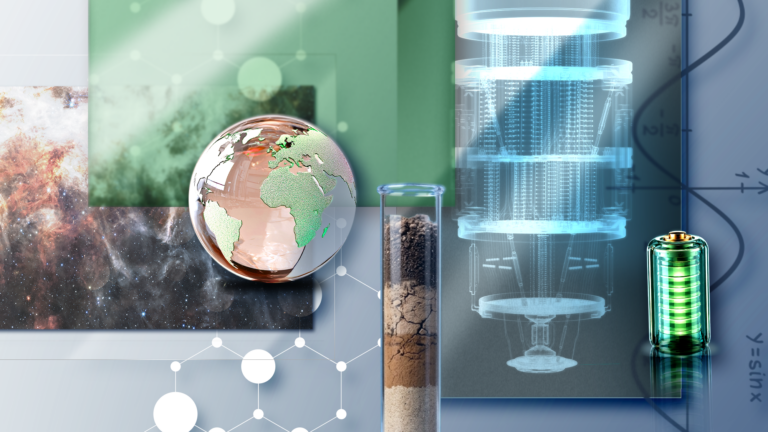
The Division of Mathematical and Physical Sciences brings together USC Dornsife’s departments of Chemistry, Earth Sciences, Mathematics, and Physics and Astronomy to study the physical universe at every scale, from the interior of the atom to the faults beneath California to the structure of the cosmos. Working alongside faculty, students develop the precision and reasoning to turn fundamental questions into discoveries that reshape what’s possible.

What Problems Do You Want to Solve?
This is a place where curiosity meets ambition, where fundamental questions often translate into research that meets the moment. Students train here as part of that process, learning to become the next generation of leaders taking on problems they care about most.
Research Making a Difference

Predicting the Next Big Earthquake
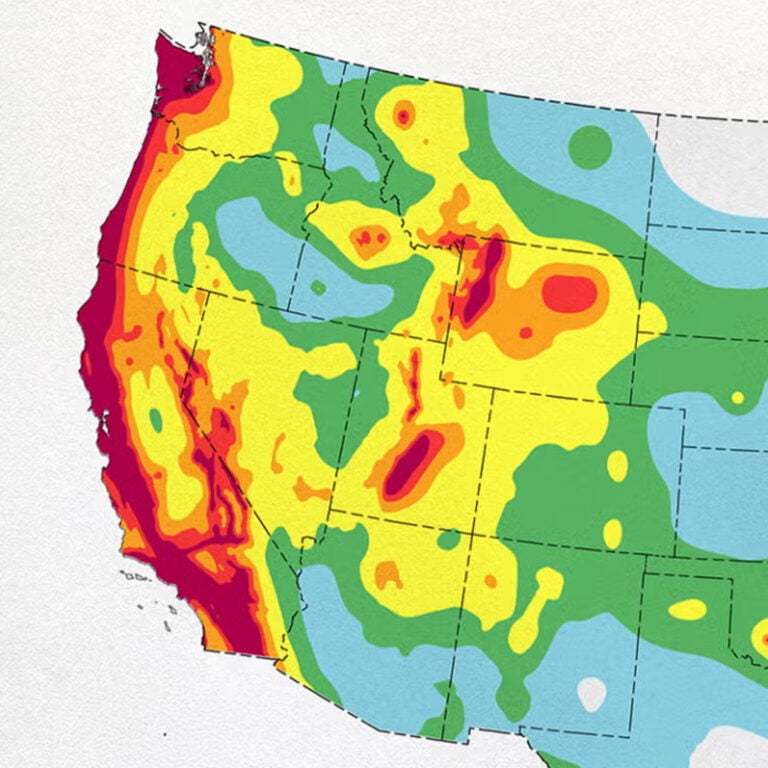
The devastating quakes in Myanmar and Venezuela over the past year raise an urgent question: what actually determines where and how a fault ruptures once stress starts to build? Dornsife geophysicist Sylvain Barbot combines satellite data, geological records and advanced simulations to model how fault systems evolve over time, work that recently revealed that structurally “simple” faults can still produce dangerously complex earthquakes.

Learning From the Past to Understand Climate Change
USC Dornsife researchers studying the history of Utah’s Great Salt Lake identified two brief, deep-lake phases when the water was much fresher than now. Their analysis of core samples spanning the past 240,000 years shows that the most recent freshwater phase, which formed Lake Bonneville, lasted longer and was fresher than the earlier Little Valley lake phase. They found that both lakes shrank and became salty as the regional climate warmed and dried, offering possible insights into Great Salt Lake’s future in the face of climate change.

Understanding the Composition of the Universe
Only about 5% of the universe is made of matter that physicists actually understand, which leaves an urgent question unanswered: what is everything else? Dornsife astrophysicist Vera Gluscevic leads a $4 million multi-institution collaboration building computer models of the early universe to reveal the nature of dark matter and neutrinos, the invisible particles that shape how galaxies form.

Maximizing the Potential of Quantum Computers
For a quantum computer to work correctly, qubits must typically operate at temperatures close to absolute zero and remain unaffected by minuscule changes to their environment. Figuring out how to maintain these “Goldilocks” conditions and preserve the qubits’ quantum properties is a tremendous challenge. But USC experts are taking the problem head-on. Learn about the innovative ways they are approaching error correction, quantum sensing, quantum algorithms, and more.

Cutting Computing’s Energy Appetite
As AI and data centers push electricity demand to record highs, an urgent question follows close behind: can computing get dramatically more efficient before it outgrows the power grid? Dornsife physicist Kelly Luo and collaborators built a microscopic device that can detect and electrically tune the “dance” of electron spins in antiferromagnetic materials, a discovery that could enable a new generation of electronics that run at blistering speeds while using a fraction of the power.
Departments
Centers and Institutes

Join the Dornsife Trojan Family
From the first year on, Dornsife students of math and the physical sciences work alongside faculty on developing new methods and solutions to complex problems. Your teachers aren’t just lecturers, they’re the ones making the breakthroughs that underpin drug discovery, AI algorithms, new energy materials, quantum computing, and our fundamental knowledge of the universe. You’ll learn to ask precise questions, test them rigorously, and connect ideas from multiple perspectives. That combination of curiosity and discipline travels well into research, industry, medicine or any field that rewards people who can reason clearly about how things work.
But the professional doors that open are only part of your Dornsife Way. That same Dornsife education, no matter what you study, nurtures a love of learning and gives it direction along the way. Your degree, over time, pays off in a richer understanding of the world — a meaningful life built around what you value and who you show up for.
As the tech industry shifts to AI, it’s increasingly turning to experts working in pure math and the foundational sciences.
For the young, 20-year-old Jensen, that’s graduated now, he probably would have chosen … more of the physical sciences than the software sciences.

If I were a student today, I’d want to learn as much as possible about [math, physics, and computer science]. They’re not just essential for understanding AI — they’re essential for thinking clearly and solving the world’s biggest challenges.

Excellence in Research and Teaching


The Power and Promise of Quantum Information Science
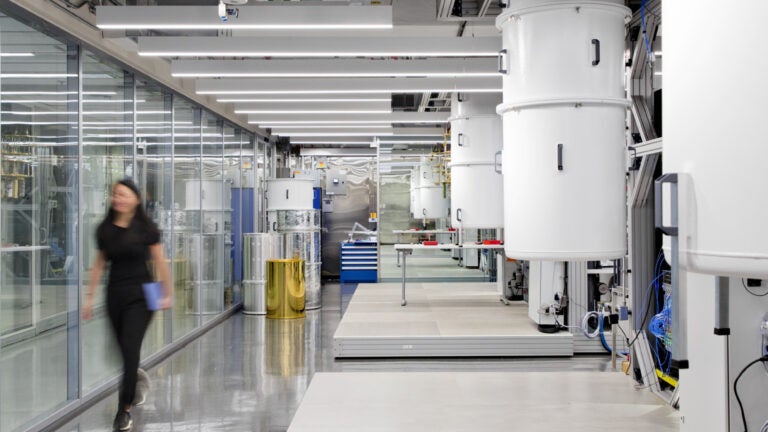
From discovering life-saving drugs, to fortifying cybersecurity, to revealing physical properties of the universe, quantum systems hold potential for solving tremendously complex problems. At USC Dornsife, researchers create insights and methods to overcome the challenging obstacle of quantum error correction — the primary obstacle that prevents us from unleashing quantum’s power at scale. As home of the West Coast’s first IBM Quantum Innovation Center, they have unmatched access to some of the world’s most sophisticated quantum computers that help accelerate breakthroughs and support collaboration with industry.
Two Nobel Laureates in Chemistry
Two USC Dornsife chemists have gone on to win science’s highest honor. Their discoveries changed the field enough that the Nobel committee took notice, and their influence still runs through the work happening in across academia today.
Arieh Warshel
Distinguished Professor of Chemistry Arieh Warshel has been on the USC Dornsife faculty since 1976. He earned the 2013 Nobel Prize in Chemistry for developing the key principles behind computer simulations that are now indispensable in the study of chemical reactions. His work essentially founded the field of computational enzymology, helping scientists model how biological molecules function at the protein level.

George Olah
Olah was a longtime USC Dornsife chemist who held the Loker Distinguished Chair in Organic Chemistry until his death in 2017. He received the 1994 Nobel Prize in Chemistry for groundbreaking work on superacids and his discovery of carbocations, a fleeting chemical species long theorized but never confirmed until Olah found a way to study them. His research helped establish USC as a leading center of advanced hydrocarbon chemistry and paved the way for cleaner gasoline and more efficient oil refining.
Loker Hydrocarbon Research Institute
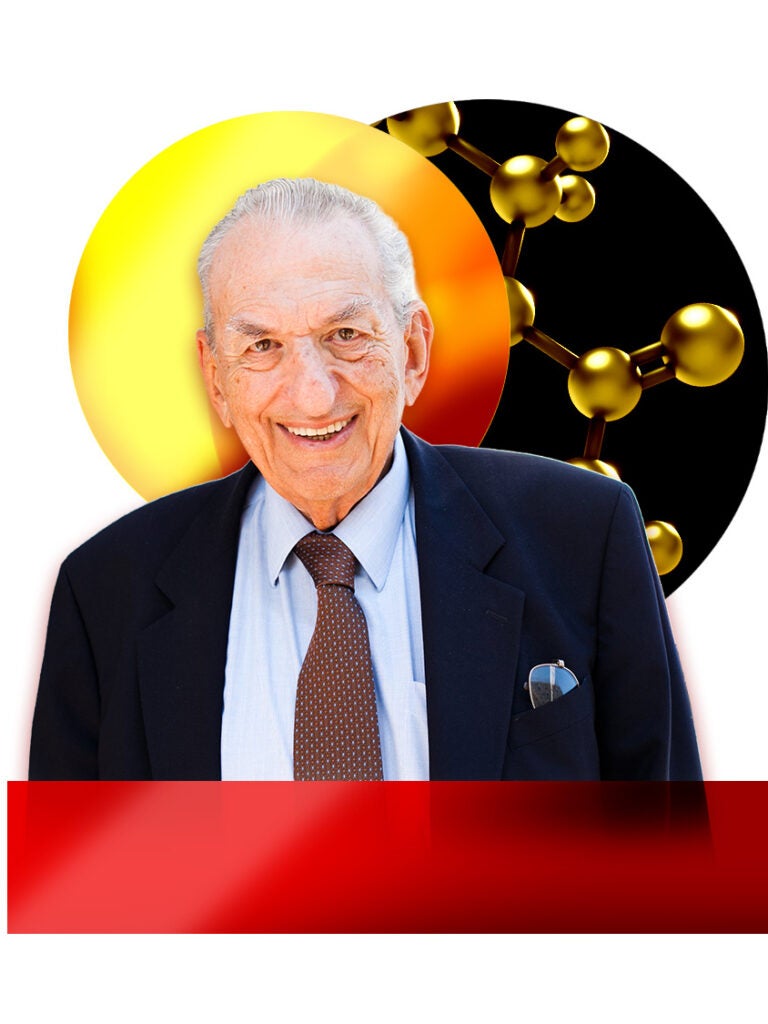
Since 1979, Loker researchers have studied alternative hydrocarbon sources and chemistry for renewable energy. Led by Distinguished Professor of Chemistry Surya Prakash, the team demonstrates innovative techniques for capturing and converting CO2 from the air into clean-burning and renewable methanol, which can be used in place of fossil fuels. The institute builds on the research of the late George Olah, USC chemist who won the 1994 Nobel Prize in Chemistry and champion of the “methanol economy.”

Statewide California Earthquake Center
A collaboration of more than 1,000 scientists across 100 research institutions, the Statewide California Earthquake Center (SCEC) produces earthquake system science to enhance California’s resilience and educate future scientists. With a focus on the San Andreas Fault System, researchers combine field data, physics-based modeling, and large-scale computer simulations of ground motion. Their work underpins tools like the ShakeAlert early warning system and the annual Great ShakeOut drill, which SCEC coordinates globally. Funded primarily by NSF and USGS, the center is headquartered at USC Dornsife, where experts in the Department of Earth Sciences (which counts two NAS members among its faculty) are central to its ongoing work.

Contact
Aaron Lauda
Professor of Mathematics
Divisional Dean for Mathematical and Physical Sciences