Division of Life Sciences
The Order of Life
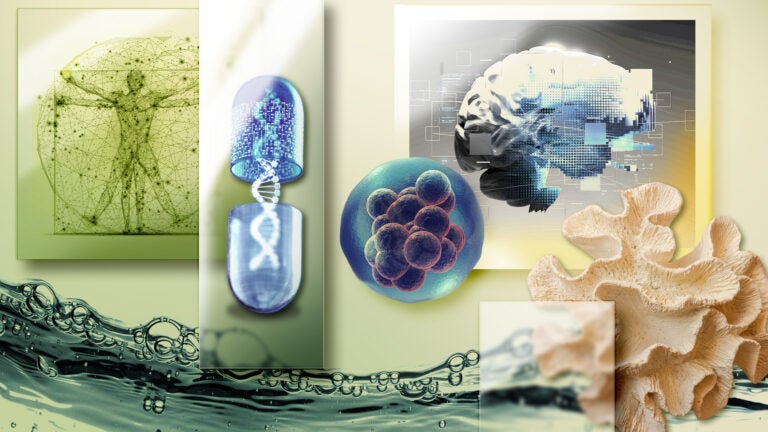
From the molecules that give rise to organisms to the complexities of ecosystems and the human mind, the Life Sciences investigate the architecture of life itself and the surprising ways it holds together.
At USC Dornsife, you’ll find world-leading experts studying the molecular mechanisms underpinning biology through computation and experiment, biotechnology, ocean systems, and human health across the lifespan. Others explore the brain and cognition, tracing how it develops, is disrupted by disease or injury, and gives rise to thought and creativity. Across the division, scholars turn scientific discovery into knowledge that can improve health, wellness, emerging technologies, and sustainability.

What Problems Do You Want to Solve?
This is a place where curiosity meets purpose. Faculty work at the leading edge of their fields, uncovering new knowledge and methods to break through the toughest challenges related to human health and the living world.
Research Making a Difference

Could Microbes Help Regulate the Climate?
Ocean microbes split into distinct metabolic “niches,” each with its own carbon-processing strategy. Using global metagenomic data, researchers including Dornsife’s Naomi Levine found that these microbial differences, not just phytoplankton, shape how efficiently carbon cycles through the ocean, a major control on global climate. Most existing models only account for phytoplankton. Sharper models of ocean microbes could mean sharper climate forecasts.

Recognizing Fathers’ Hidden Struggles
Psychologist Darby Saxbe’s new book, Dad Brain, tracks first-time fathers from pregnancy through early infancy. She found measurable changes in gray matter after their child’s birth, likely reflecting the brain becoming more efficient rather than declining. The more invested a father was in caregiving, the more his brain changed, challenging the assumption that nurturing is wired only into mothers. Saxbe also found paid paternity leave lowered stress for fathers and depression in mothers, tying the science directly to family policy.

Why Disease Hits Differently
Human immune genes still carry the marks of infectious diseases our ancestors faced thousands of years ago. That evolutionary history helps explain why COVID-19 hit some people harder than others. Biologist Michael Campbell and collaborators found signs of natural selection in four immune genes across global populations, then identified rare gene variants linked to severe COVID-19. The findings connect evolutionary biology and infectious disease research in a way that could eventually point toward new strategies for preventing and treating disease.

Protecting the Aging Mind
The gut talks to the brain during meals, and that conversation shapes memory. Biologist Scott Kanoski found that nutrient-rich food triggers signals through the vagus nerve that boost a memory-forming brain chemical, likely an evolutionary tool for remembering good food sources. But chronic junk food exposure weakens that same gut-brain connection over time. Since disrupted memory signaling is an early marker of Alzheimer’s, the findings point toward vagus nerve-based therapies as a possible way to protect cognitive health.

New Tech to Accelerate Drug Discovery
Computational biologist Remo Rohs developed a generative AI model called Deep Predictor of Binding Specificity (DeepPBS), which is designed to predict how different proteins may bind to DNA with accuracy across different types of protein. The tool may help to reduce the time required to develop new drugs and other medical treatments.

Catching Cancer Earlier
Dean’s Professor Peter Kuhn pioneered a “liquid biopsy” that detects cancer cells through a simple blood draw instead of invasive tissue sampling. Originally built for managing late-stage disease, the test can now catch early signs of cancer, sometimes detecting the earliest interaction between a tumor and surrounding tissue. Kuhn’s team is now working to make the test accessible enough to complement mammograms and screen for cancer across the lifespan.
Centers and Institutes

Join the Dornsife Trojan Family
Understanding how living systems work, from a single cell to the human brain, is one of the most consequential things you can study. USC Dornsife faculty across the life sciences are behind significant breakthroughs already reaching people, from new methods of detecting cancer and Alzheimer’s to neuroscience research that informs computational neural networks. Working alongside these leading experts, you’ll develop the reasoning skills to evaluate evidence, question assumptions, and make sense of complexity. Whether you end up in a lab, a clinic, a biotech startup, or a science policy office, you’ll have the tools to improve lives.
But the professional doors that open are only part of your Dornsife Way. That same Dornsife education, no matter what you study, nurtures a love of learning and gives it direction. Your degree, over time, pays off in a richer understanding of the world, a meaningful life built around what you value and who you show up for.

AI + Life Sciences
AI is no longer a tool life scientists borrow. It’s part of how much of the research gets done. Complex problems that used to take years to solve are being worked out exponentially faster. Questions that used to be impossible to address are now open to explore.
Dornsife has shaped this revolution for decades. Foundational work that underpins multiple sequence alignment, which is now at the core of LLMs. AI-assisted marine research that could improve climate resilience; computational biology using machine learning to produce high-dimensional views of genome organization. Psychological frameworks that inform how AI makes decisions in uncertain situations. What’s new isn’t just the speed. It’s the ability to see whole systems at once and test thousands of relationships in a single analysis.
AI for Molecular Biology Intensive
Through this 3-course series, students develop a methodological understanding of AI and the ability to apply these tools to questions in the field of molecular biology, including genomics, imaging, structural and systems biology. You’ll graduate with an official credential signaling specific expertise that gives you an edge in the workforce or graduate school/medical school.

Brain and Creativity Institute
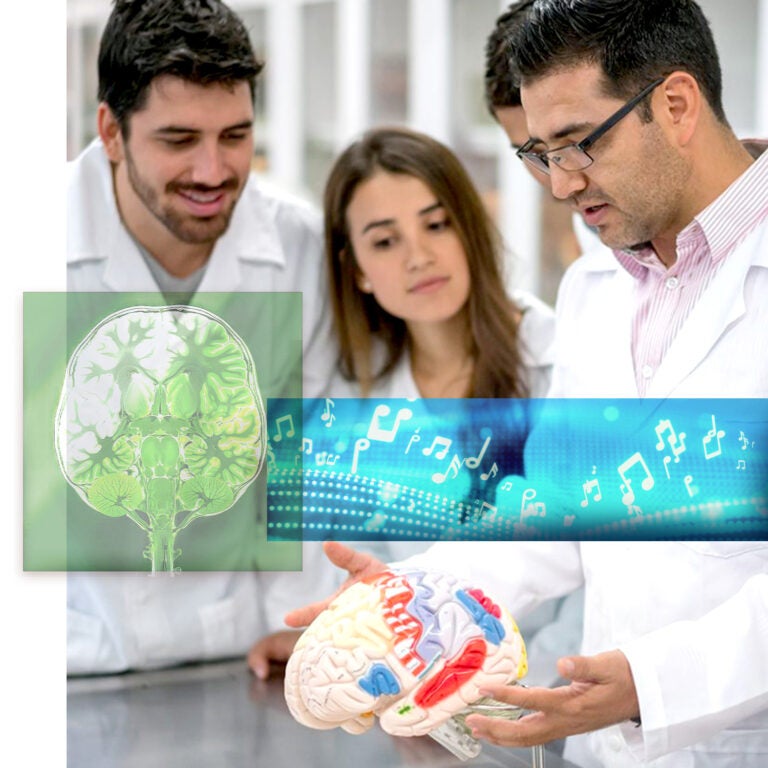
Why does an old song hit harder than a new one? What happens in the brain when a story pulls us in? At USC Dornsife’s Brain and Creativity Institute, teams lead by world-renowned neuroscientists Antonio and Hanna Damasio have spent two decades chasing answers. Their lab is unique, built for exactly these kinds of questions with neuroimaging suites beside a performance auditorium. Their research spans consciousness, AI, and human development, from how music affects a child’s brain to how a narrative reshapes an adult’s mind.
USC Bridge Institute
The Bridge Institute studies life at every scale, from molecule to cell to tissue to the whole human body, through team science and art. By combining insight across biology, engineering, medicine, and the arts, researchers are building a virtual, atomic-resolution model of the human body that expands our understanding of the ways biological systems function in health and disease — and how to change these functions for the better. Innovation at the Bridge is helping scientists test drug candidates virtually, accelerating the development of personalized treatments for diseases spanning Alzheimer’s, addiction, and cancer.

Center for the Changing Family
There is no connection more enduring or powerful than family. But the very notion of family is evolving, and we need new approaches to explore the way these relationships affect mental health. The USC Dornsife Center for the Changing Family conducts research that informs health interventions and policy reflecting the oversized impact that the modern family — in all its forms — can have on our wellbeing.

Life Sciences Research Spotlight

Cnidarian Evolutionary Ecology Lab
The CEE Lab, led by Prof. Carly Kenkel, investigates the ways that an organism’s physical traits – also known as its phenotype – are produced and modified by genetic and environmental effects. Researchers study how these ecological interactions mold and are molded by the evolutionary tracks of populations and species. The Lab also values translational ecology: turning scientific findings into tools for conservation management.

Liman Lab
How do we sense the world around us? This is the question that drives research in the lab. The first step in sensory processing is the transduction of the sensory stimulus into an electrical signal sent to the brain. For most sensory stimuli, the receptors have been discovered, yielding insights into signal transduction, behavior and evolution. Led by Prof. Emily Liman, research in the lab has focused on the taste system, and recent discoveries suggest that the tongue responds to a sixth basic taste (in addition to sweet, salty, sour, bitter, and umami) — ammonium chloride.

Rohs Lab
The Rohs lab, led by Prof. Remo Rohs, integrates the fields of structural biology and genomics, and research conducted in the lab pioneered the field of DNA shape analysis in protein-DNA binding and transcription factor binding specificity. The group has expanded their work on deciphering molecular mechanisms and interactions based on the three-dimensional shapes of molecules to proteins, RNA, and drug design. Researchers currently develop machine learning and AI methods and other computational approaches to reveal molecular mechanisms of binding.

Contact
Ian Ehrenreich
Professor of Biological Sciences
Divisional Dean for the Life Sciences