Thinking Ahead
Leveraging the most advanced methods and our uncommon agility, USC Dornsife researchers and students meet the future with extraordinary creativity. Working at the edge, they define new fields of study — bringing new ways of thinking to society’s most complex problems.
Research Frontiers
By thinking ahead in some of the most promising emerging areas of scholarship, USC Dornsife researchers are redefining how we optimize, heal, and sustain in a rapidly changing world.
Research News

From Sea to Shining Sea: Climate change is rewriting America’s landscapes
From California floods and wildfires to thawing Arctic permafrost and dying coral reefs, USC Dornsife researchers track a nation under environmental pressure.

Why fatherhood matters more than ever before
Dads today are spending dramatically more time with their kids than they did a generation ago. But there’s a less encouraging trend tucked into this development.

American scientific innovation still thrives on bold questions
As the nation marks its 250th anniversary, USC Dornsife scholars continue to advance a tradition central to both science and democracy: questioning assumptions, testing ideas and pushing beyond accepted limits.

New fellowship empowers future physicists to explore quantum frontier
A transformative gift from Changho Chong and Santec USA Corporation strengthens graduate education and bioelectronic discovery at USC Dornsife.

‘Dad brain’ is real. It’s reshaping our understanding of fatherhood.
We’ve known that having a child changes women’s brains. Now, research is finding it changes men’s brains, too.


How AI and advanced computing are accelerating Alzheimer’s research
Cutting-edge technologies developed by USC researchers, including USC Dornsife faculty, are changing the pace and nature of Alzheimer’s disease discoveries.

Eaton fire sent a pollution wave across Los Angeles
A USC Dornsife-led study found that the Eaton fire’s daily carbon monoxide emissions far exceeded L.A. County’s average daily emissions from all human activity.

New, selective compounds target for Alzheimer’s-linked brain inflammation
Using highly advanced, large-scale computational screening methods developed by USC Dornsife’s Vsevolod “Seva” Katritch, USC researchers evaluate billions of potential compounds to find a promising new drug for Alzheimer’s disease.

How hidden factors beneath Istanbul shape earthquake risk
Underground heat and sediment patterns control how earthquakes behave along one of the most dangerous faults in the eastern Mediterranean.

Biologists discover neurons use physical signals — not electricity — to stabilize communication
A USC Dornsife team shows how synapses rapidly adjust when their receptors fail, revealing a new mechanism of neural resilience.
The Power and Promise of Quantum Computing
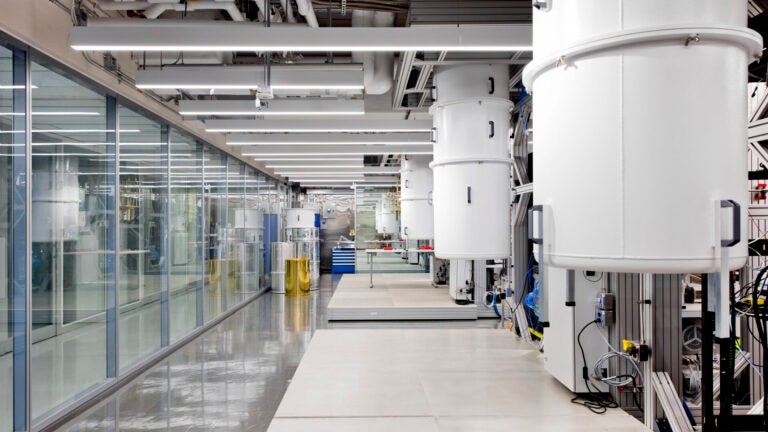
From discovering life-saving drugs, to fortifying cybersecurity, to revealing physical properties of the universe, quantum systems hold potential for solving tremendously complex problems. At USC Dornsife, researchers are creating insights and methods to overcome the challenging obstacle of quantum error correction — the primary obstacle that prevents us from unleashing quantum’s power at scale.
Prediction Science




Responsible Innovation in A.I.
The first question many people ask about artificial intelligence is, “Will it be good or bad?”
The answer is … yes.
While many experts across industry and academia focus on building increasingly sophisticated AI systems, USC Dornsife scholars also explore the ethical implications and safety concerns that are often overlooked in the race to the next big innovation.


USC researchers develop low-cost AI tool to help cities map urban tree canopy
Using free aerial imagery and artificial intelligence, the tool gives cities an affordable way to target tree planting, expand shade and make smarter investments in climate resilience.
AI may be making us think and write more alike
Large language models may be standardizing human expression — and subtly influencing how we think, say computer science and psychology researchers at USC Dornsife.

Can we prevent AI from acting like a sociopath?
Artificial intelligence often displays questionable moral instincts. USC Dornsife researchers are investigating how to keep them aligned with human values.
Narrative Medicine
At USC, experts are shaping the growing field of narrative medicine to reveal the many ways that an individual’s report of their illness can affect medical interventions. By understanding what a “closer reading” of a patient’s story might reveal — from the characters and cultural traditions they describe to the latent meaning in a moment of silence — clinicians might uncover ways to improve holistic patient care.

Climate Change Communication
Saving the planet isn’t just about technology—it’s also about people, politics, money — and the stories we tell. At USC Dornsife, researchers explore how the communication of climate change can be better leveraged to move the needle in driving sustainable policies, economics, and behaviors.


Repeating Aids Believing
As social media feeds fill up with AI-driven bots, sheer repetition of lies may erode the most essential resource for action on climate change — public support. Traditional media has a different problem — in their commitment to presenting both sides, journalists often platform climate skeptics whose untrue claims add to the repetition of misinformation.

Just Call It Climate Change
A new, Wrigley Institute-funded study on climate communications has found that Americas are not only more familiar with the term “climate change,” but it also generates more concern than newer terms such “climate emergency” or “climate crisis.”

Climate Visuals
Graphics are an important tool for communicating complicated climate information in a digestible way. But as climate science has become more nuanced, the graphics used to portray climate information have also become increasingly complicated. A study led by experts at USC Dornsife Public Exchange, in collaboration with the IPCC, explore what is confusing and how organizations can improve.

Center for the Changing Family
There is no connection more enduring or powerful than family. But the very notion of family is evolving, and we need new approaches to explore the way these relationships affect mental health. The Center for the Changing Family conducts research that informs health interventions and policy reflecting the oversized impact that the modern family — in all its forms — can have on our wellbeing.