
Home
Research interests
Neuroeconomics, experimental economics, game theory
 We study human behaviors emerging from the interplay of cognitive and emotional systems. Our research agenda includes two main projects. The first one concerns the role of emotions in decision making, and the second is aimed at investigating the relational complexity in social interaction. Our objective is to apply robust methods and findings from behavioral decision theory to study the brain structures that contribute to forming judgments and decisions, both in an individual and a social context.
We study (1) the role of counterfactual emotions, such as regret and envy, in decision making (fMRI, Orbitofrontal patients, and developmental studies); (2) the neural basis of bounded rational behavior: limit in depth of strategic reasoning (fMRI and eye-tracking studies on attention in games); (3) the neural correlates of individual and social uncertainty: disposition effect, aspiration level, strategic uncertainty; (4) how the brain encodes learning signals: regret/fictive learning, reputation building, transfer learning; (5) impaired decision making in schizophrenia and autism; (6) eating disorders.
We conduct our research using a fundamentally multidisciplinary approach (Neuroeconomics), drawing from behavioral and experimental economics, game theory, neuroimaging (fMRI), neuropsychology (patients studies), and cognitive neurosciences.
Selected publications
Camille, Coricelli et alii (2004) Science
Abstract Facing the consequence of a decision we made can trigger emotions like satisfaction, relief, or regret, which reflect our assessment of what was gained as compared to what would have been gained by making a different decision. These emotions are mediated by a cognitive process known as counterfactual thinking. By manipulating a simple gambling task, we characterized a subject’s choices in terms of their anticipated and actual emotional impact. Normal subjects reported emotional responses consistent with counterfactual thinking; they chose to minimize future regret and learned from their emotional experience. Patients with orbitofrontal cortical lesions, however, did not report regret or anticipate negative consequences of their choices. The orbitofrontal cortex has a fundamental role in mediating the experience of regret.

Coricelli et alii (2005) Nature Neuroscience
Abstract Human decisions can be shaped by predictions of emotions that ensue after choosing advantageously or disadvantageously. Indeed, anticipating regret is a powerful predictor of future choices. We measured brain activity using functional magnetic resonance imaging (fMRI) while subjects selected between two gambles wherein regret was induced by providing information about the outcome of the unchosen gamble. Increasing regret enhanced activity in the medial orbitofrontal region, the anterior cingulate cortex and the hippocampus. Notably, across the experiment, subjects became increasingly regret-aversive, a cumulative effect reflected in enhanced activity within medial orbitofrontal cortex and amygdala. This pattern of activity reoccurred just before making a choice, suggesting that the same neural circuitry mediates direct experience of regret and its anticipation. These results demonstrate that medial orbitofrontal cortex modulates the gain of adaptive emotions in a manner that may provide a substrate for the influence of high-level emotions on decision making.

Coricelli & Nagel (2009) PNAS
Abstract We used functional MRI (fMRI) to investigate human mental processes in a competitive interactive setting—the ‘‘beauty contest’’ game. This game is well-suited for investigating whether and how a player’s mental processing incorporates the thinking process of others in strategic reasoning. We apply a cognitive hierarchy model to classify subject’s choices in the experimental game according to the degree of strategic reasoning so that we can identify the neural substrates of different levels of strategizing. According to this model, high-level reasoners expect the others to behave strategically, whereas low-level reasoners choose based on the expectation that others will choose randomly. The data show that high-level reasoning and a measure of strategic IQ (related to winning in the game) correlate with the neural activity in the medial prefrontal cortex, demonstrating its crucial role in successful mentalizing. This supports a cognitive hierarchy model of human brain and behavior.

Abstract We compared private and social decision making to investigate the neural underpinnings of the effect of social comparison on risky choices. We measured brain activity using functional MRI while participants chose between two lotteries: in the private condition, they observed the outcome of the unchosen lottery, and in the social condition, the outcome of the lottery chosen by another person. The striatum, a reward-related brain structure, showed higher activity when participants won more than their counterpart (social gains) compared with winning in isolation and lower activity when they won less than their counterpart (social loss) compared with private loss. The medial prefrontal cortex, implicated in social reasoning, was more activated by social gains than all other events. Sensitivity to social gains influenced both brain activity and behavior during subsequent choices. Specifically, striatal activity associated with social gains predicted medial prefrontal cortex activity during social choices, and experienced social gains induced more risky and competitive behavior in later trials. These results show that interplay between reward and social reasoning networks mediates the influence of social comparison on the decision process.

Palminteri, Khamassi, Joffily and Coricelli (2015) Nature Communications
Abstract Compared with reward seeking, punishment avoidance learning is less clearly understood at both the computational and neurobiological levels. Here we demonstrate, using computational modelling and fMRI in humans, that learning option values in a relative—context-dependent—scale offers a simple computational solution for avoidance learning. The context (or state) value sets the reference point to which an outcome should be compared before updating the option value. Consequently, in contexts with an overall negative expected value, successful punishment avoidance acquires a positive value, thus reinforcing the response. As revealed by post-learning assessment of options values, contextual influences are enhanced when subjects are informed about the result of the forgone alternative (counterfactual information). This is mirrored at the neural level by a shift in negative outcome encoding from the anterior insula to the ventral striatum, suggesting that value contextualization also limits the need to mobilize an opponent punishment learning system.

Polonio, Di Guida, and Coricelli (2015) Games and Economic Behavior
Abstract We used eye-tracking to measure the dynamic patterns of visual information acquisition in two players normal form games. Participants played one-shot games in which either, neither, or only one of the players had a dominant strategy. First, we performed a mixture models cluster analysis to group participants into types according to the pattern of visual information acquisition observed in a single class of games. Then, we predicted agents’ choices in different classes of games, and observed that patterns of visual information acquisition were game invariant. Our method allowed us to predict whether the decision process would lead to equilibrium choices or not, and to attribute out-of-equilibrium responses to limited cognitive capacities or social motives. Our results suggest the existence of individually heterogeneous-but stable-patterns of visual information acquisition based on subjective levels of strategic sophistication and social preferences.
Michele Fioretti, Alexander Vostroknutov and Giorgio Coricelli (2022) AEJ: Micro
Abstract: In a stock market experiment, we examine how regret avoidance influences
the decision to sell an asset while its price changes over time. Participants know beforehand whether they will observe the future prices after they sell the asset or not. Without future prices, participants are affected only by regret about previously observed high prices (past regret), but when future prices are available, they also avoid regret about expected after-sale high prices (future regret). Moreover, as the relative sizes of past and future regret change, participants dynamically switch between them. This demonstrates how multiple reference points dynamically influence sales.

Recent publications
Adamo and Coricelli (2026). JEBO
Abstract Stochastic choice (SC)—the tendency to select different options across repeated presentations of the same choice set—is well documented, yet its cognitive mechanisms remain debated. We combine mouse-tracking with the experimental design of Agranov and Ortoleva (2017), comparing distant and sequential repetitions of lottery choices. We show that the Area Under the Curve (AUC) provides a more informative process-level measure of SC than response times (RT). RT decline after the first presentation in both repetition structures, but do not reliably predict trial-level switching. AUC remains stable across distant repetitions while drops sharply after the first sequential choice, suggesting that explicit repetitions allow participants to plan subsequent choices at first and execute them more directly thereafter. AUC also reveals heterogeneity hidden by aggregate choice data: among regular participants, SC does not increase AUC in distant repeats, but produces larger and more curved trajectories in sequential repeats, suggesting a signature of cautiousness under explicit randomization. Among dominance violators, SC is instead accompanied by larger and more erratic trajectories, suggesting error-driven variability. Overall, SC appears to combine a predominantly deliberate component with a smaller boundedly rational component.

Menghi, N., Balestrieri, E., Grignolio, D., Coricelli, G., Hickey, C. (2026). The Journal of Neuroscience
Abstract Effective motor control depends on the brain’s ability to monitor performance and make continuous corrections. While many studies focus on discrete errors, everyday actions often require ongoing feedback-based adjustments. Here, we used an isometric force control task with EEG to investigate the neural dynamics supporting real-time error correction. Participants maintained a constant grip force with or without continuous visual feedback. With feedback, behavior showed ∼6 Hz rhythmic fluctuations, consistent with active correction. These fluctuations were mirrored in EEG activity across theta, beta, and alpha bands—oscillations linked to performance monitoring, updating, and attentional control. Without feedback, performance decayed linearly, and the corresponding neural signatures were reduced. These findings suggest that continuous sensory feedback engages a dynamic feedback loop involving distinct neural processes that support adaptive behavior. Our results highlight the importance of oscillatory activity in tracking and correcting moment-to-moment fluctuations in force, offering insight into the neural basis of feedback-loop force control.

Menghi, N., Coricelli, G. Hickey, C. (2025). Attention, Perception, & Psychophysics
Abstract This paper investigates the relationship between motor precision, visual feedback, and monetary incentives in two experiments. In both, participants exerted force via a hand dynamometer to maintain force production at identified levels while we manipulated the quality of visual feedback regarding their performance. In Experiment 1, monetary incentives improved motor performance only when visual feedback was provided. In Experiment 2, we simplified target representation by reducing the number of targets, making them easier to distinguish via proprioception and somatosensation. Under these conditions, incentives enhanced performance even without visual feedback. These findings suggest that while visual feedback is key to mediating motivational effects on fine motor control, incentives can also directly enhance performance when targets are easily represented through proprioceptive cues.
Pischedda, Palminteri & Coricelli (2020) The Journal of Neuroscience
Abstract Adaptive coding of stimuli in visual cortex is well documented in perception, where it supports efficient encoding over a broad range of possible percepts. Recently, a similar neural mechanism has been reported also in value-based decision, where it allows optimal encoding of vast ranges of values in PFC: neuronal response to value depends on the choice context (relative coding), rather than being invariant across contexts (absolute coding). Additionally, value learning is sensitive to the amount of feedback information: providing complete feedback (both obtained and forgone outcomes) instead of partial feedback (only obtained outcome) improves learning. However, it is unclear whether relative coding occurs in all PFC regions and how it is affected by feedback information. We systematically investigated univariate and multivariate feedback encoding in various PFC regions and compared three modes of neural coding: absolute, partially-adaptive and fully-adaptive.Twenty-eight human participants (both sexes) performed a learning task while undergoing fMRI scanning. On each trial, they chose between two symbols associated with a certain outcome. Then, the decision outcome was revealed. Notably, in half of the trials participants received partial feedback, while in the other half they got complete feedback. We used univariate and multivariate analysis to explore value encoding in different feedback conditions.We found that both obtained and forgone outcomes were encoded in mPFC, but with opposite sign in ventral and dorsal subdivisions. Moreover, we showed that increasing feedback information induced a switch from absolute to relative coding. Our results suggest that complete feedback information promotes context-dependent outcome encoding.

Guerini, FitzGibbon, and Coricelli (2020) JEBO
Abstract The emotions of regret and relief are mediated by the counterfactual comparison between the obtained and foregone outcomes of our decisions. Regret is strongly associated with a feeling of responsibility for a decision when the outcome might have been better. This may be contrasted with disappointment, which is experienced when the outcome occurs independently of the agent’s decisions. The same contrast may be made between these emotions’ positive counterparts of relief and elation. The current studies seek to make im- portant distinctions between children’s experience of regret and disappointment, and relief and elation. Children aged between 3 and 10 years ( N = 225) chose between two gambles with different levels of risk under differing conditions of feedback and agency. There was a significant effect of agency for children aged 6 years and older following regret eliciting tri- als. A significant effect of agency was found only for children aged 10 years for relief trials. There was no effect of agency for elation and disappointment trials. These findings suggest that children as young as 6 are sensitive to manipulations of agency, and that responsibil- ity for a decision is crucial for children to feel a negative emotion upon discovering that acting otherwise would have turned out better. These findings suggest a more nuanced developmental trajectory for the counterfactual emotions than was previously considered.

Zonca, Coricelli and Polonio (2020) Journal of Experimental Psychology
Abstract In our everyday life, we often need to anticipate the potential occurrence of events and their consequences. In this context, the way we represent contingencies can determine our ability to adapt to the environment. However, it is not clear how agents encode and organize available knowledge about the future to react to possible states of the world. In the present study, we investigated the process of contingency representation with three eye-tracking experiments. In Experiment 1, we introduced a novel relational-inference task in which participants had to learn and represent conditional rules regulating the occurrence of interdependent future events. A cluster analysis on early gaze data revealed the existence of 2 distinct types of encoders. A group of (sophisticated) participants built exhaustive contingency models that explicitly linked states with each of their potential consequences. Another group of (unsophisticated) participants simply learned binary conditional rules without exploring the underlying relational complexity. Analyses of individual cognitive measures revealed that cognitive reflection is associated with the emergence of either sophisticated or unsophisticated representation behavior. In Experiment 2, we observed that unsophisticated participants switched toward the sophisticated strategy after having received information about its existence, suggesting that representation behavior was modulated by strategy generation mechanisms. In Experiment 3, we showed that the heterogeneity in representation strategy emerges also in conditional reasoning with verbal sequences, indicating the existence of a general disposition in building either sophisticated or unsophisticated models of contingencies
Polonio and Coricelli (2019) Games and Economic Behavior
Abstract We use eye-tracking to identify possible causes of inconsistency between choices and beliefs in games. Participants play a series of two-player 3×3 one-shot games (choice task) and state their beliefs about which actions they expect their counterpart to play (belief elicitation task). We use a model-based clustering methodto group participants according to the pattern of visual analysis they use to make their decisions in the two tasks. We find that heterogeneity in the lookup patterns reflects the adoption of different models of choice. Our results suggest that there are two main reasons why participants do not best respond to their beliefs in games. First, many of them take into account the incentives of the counterpart when stating their beliefs, but not when choosing their actions. Second, some participants have other-regarding preferences and attempt to find a cooperative solution of the game.
Bault et alii (2019) Journal of Cognitive Neuroscience
Abstract Individuals learn by comparing the outcome of chosen and unchosen actions. A negative counterfactual value signal is generated when this comparison is unfavorable. This can happen in private as well as in social settings—where the foregone outcome results from the choice of another person. We hypothesized that, despite sharing similar features such as supporting learning, these two counterfactual signals might implicate distinct brain networks. We conducted a neuropsychological study on the role of private and social counterfactual value signals in risky decision-making. Patients with lesions in the ventromedial prefrontal cortex (vmPFC), lesion controls, and healthy controls repeatedly chose between lotteries. In private trials, participants could observe the outcomes of their choices and the outcomes of the unselected lotteries. In social trials, participants could also see the other player’s choices and outcome. At the time of outcome, vmPFC patients were insensitive to private counterfactual value signals, whereas their responses to social comparison were similar to those of control participants. At the time of choice, intact vmPFC was necessary to integrate counterfactual signals in decisions, although amelioration was observed during the course of the task, possibly driven by social trials. We conclude that if the vmPFC is critical in processing private counterfactual signals and in integrating those signals in decisionmaking, then distinct brain areas might support the processing of social counterfactual signals.

Bavard et alii (2018) Nature Communications
Abstract In economics and perceptual decision-making contextual effects are well documented, where decision weights are adjusted as a function of the distribution of stimuli. Yet, in reinforcement learning literature whether and how contextual information pertaining to decision states is integrated in learning algorithms has received comparably little attention. Here, we investigate reinforcement learning behavior and its computational substrates in a task where we orthogonally manipulate outcome valence and magnitude, resulting in systematic variations in state-values. Model comparison indicates that subjects’ behavior is best accounted for by an algorithm which includes both reference point-dependence and range-adaptation—two crucial features of state-dependent valuation. In addition, we find that state-dependent outcome valuation progressively emerges, is favored by increasing outcome information and correlated with explicit understanding of the task structure. Finally, our data clearly show that, while being locally adaptive (for instance in negative valence and small magnitude contexts), state-dependent valuation comes at the cost of seemingly irrational choices, when options are extrapolated out from their original contexts.

Neveu et alii (2018) EBioMedicine
Abstract Background: Binge eating is apparently the opposite of the strict control over food intake typically set by “maladaptive dieters”. Using functional magnetic resonance imaging (fMRI),we investigated the role of goal-directed behaviors, and the related use of self-control, in binge-related food choices in patients with Bulimia Nervosa(BN). Method: While undergoing fMRI, women aged 18–35 with BN (N = 35) and healthy control women (N = 26) rated foods for healthiness and tastiness and then made food choices on a 5 points Likert scale between two conflicting options: one food with lower healthiness and higher tastiness (defined as uncontrolled choice) than the other food (defined as controlled choice). Results: BN and healthy participants mademore uncontrolled than controlled choices (63% vs 24% and 65% vs 18% respectively). While healthy participants used only food tastiness (chose tastier foods more often) to make food choices (p b .001), BN patients used both food healthiness (chose unhealthy food more often, p b .001) and food tastiness (p b .001) to make binge-related food choices. Activity in the ventromedial prefrontal cortex (vmPFC), which correlatedwith food choices (pFWE=0.02), reflected this difference in the integration of food healthiness and food tastiness into a decision value. Functional connectivity analysis showed that the activity in the dorsolateral prefrontal cortex was coupled with vmPFC activity in uncontrolled food choices (pFWE=0.03). Interpretation: Contrary to what might be expected, not only food tastiness but also unhealthiness (a more abstract cognitive-based attribute than food tastiness) plays a role in uncontrolled choices in BN. These choices are likely goal-directed behaviors and recruit self-control.

Vostroknutov, Polonio and Coricelli (2018) Scientific Report
Abstract Studies in cultural evolution have uncovered many types of social learning strategies that are adaptive in certain environments. The efficiency of these strategies also depends on the individual characteristics of both the observer and the demonstrator. We investigate the relationship between intelligence and the ways social and individual information is utilised to make decisions in an uncertain environment. We measure fluid intelligence and study experimentally how individuals learn from observing the choices of a demonstrator in a 2-armed bandit problem with changing probabilities of a reward. Participants observe a demonstrator with high or low fluid intelligence. In some treatments they are aware of the intelligence score of the demonstrator and in others they are not. Low fluid intelligence individuals imitate the demonstrator more when her fluid intelligence is known than when it is not. Conversely, individuals with high fluid intelligence adjust their use of social information, as the observed behaviour changes, independently of the knowledge of the intelligence of the demonstrator. We provide evidence that intelligence determines how social and individual information is integrated in order to make choices in a changing uncertain environment.

“Evidence for multiple strategies in choice under risk”
Coricelli, Diecidue, Zaffuto (2018) Journal of Risk and Uncertainty
Abstract This paper describes an experimental study that yields evidence for the coexistence of two decision strategies of choice under risk. Under the first strategy, choices are made based on aspiration levels – a heuristic that simplifies risky decisions. Under the second strategy, which can be used when aspiration levels are not determinative, choices are made based on preferences for positive skewness. Our model fitting confirms the efficacy of a two-pronged approach that can marshal either strategy depending on specific features of the risky prospects under consideration.

Nagel, Brovelli, Heinemann and Coricelli (2018) Social Cognitive and Affective Neuroscience
Abstract In social interactions, strategic uncertainty arises when the outcome of one’s choice depends on the choices of others. An important question is whether strategic uncertainty can be resolved by assessing subjective probabilities to the counterparts’ behavior, as if playing against nature, and thus transforming the strategic interaction into a risky (individual) situation. By means of fMRI with human participants we tested the hypothesis that choices under strategic uncertainty are supported by the neural circuits mediating choices under individual risk and deliberation in social settings (i.e., strategic thinking). Participants were confronted with risky lotteries and two types of coordination games requiring different degrees of strategic thinking of the kind “I think that you think that I think etc.” We found that the brain network mediating risk during lotteries (anterior insula, dorsomedial prefrontal cortex and parietal cortex) is also engaged in the processing of strategic uncertainty in games. In social settings, activity in this network is modulated by the level of strategic thinking that is reflected in the activity of the dorsomedial and dorsolateral prefrontal cortex. These results suggest that strategic uncertainty is resolved by the interplay between the neural circuits mediating risk and higher order beliefs (i.e. beliefs about others’ beliefs).

Chierchia, Nagel and Coricelli (2018) Scientific Report
Abstract Uncertainty in the form of risk or ambiguity can arise from the interaction with nature and other players, while strategic uncertainty arises only in interactions with others. Here, we systematically compare binary decisions between a safe option and a potentially higher paying but uncertain option in four experimental conditions with the same potential monetary outcomes: coordination vs. anti coordination games, as well as risky and ambiguous lotteries. In each condition, we progressively increase the value of the safe option and measure subjects’ certainty equivalents (i.e., the specific safe payoff-threshold that makes a subject indifferent between the two options). We find that anti- coordination games and ambiguous lotteries elicit equally high aversion to uncertainty, relative to the other domains. In spite of this similarity, we find that subjects alternate between the safe and uncertain options much more frequently, thus displaying higher entropy, under anti-coordination relative to any of the other environments. These differences are predicted by theories of recursive reasoning in strategic games (e.g., thinking what others think we think etc.). Indeed, this can occur when interacting with intentional counterparts, but not with nature.

Additional Publications
Pischedda, Palminteri & Coricelli (2020) The Journal of Neuroscience
Abstract Adaptive coding of stimuli in visual cortex is well documented in perception, where it supports efficient encoding over a broad range of possible percepts. Recently, a similar neural mechanism has been reported also in value-based decision, where it allows optimal encoding of vast ranges of values in PFC: neuronal response to value depends on the choice context (relative coding), rather than being invariant across contexts (absolute coding). Additionally, value learning is sensitive to the amount of feedback information: providing complete feedback (both obtained and forgone outcomes) instead of partial feedback (only obtained outcome) improves learning. However, it is unclear whether relative coding occurs in all PFC regions and how it is affected by feedback information. We systematically investigated univariate and multivariate feedback encoding in various PFC regions and compared three modes of neural coding: absolute, partially-adaptive and fully-adaptive.Twenty-eight human participants (both sexes) performed a learning task while undergoing fMRI scanning. On each trial, they chose between two symbols associated with a certain outcome. Then, the decision outcome was revealed. Notably, in half of the trials participants received partial feedback, while in the other half they got complete feedback. We used univariate and multivariate analysis to explore value encoding in different feedback conditions.We found that both obtained and forgone outcomes were encoded in mPFC, but with opposite sign in ventral and dorsal subdivisions. Moreover, we showed that increasing feedback information induced a switch from absolute to relative coding. Our results suggest that complete feedback information promotes context-dependent outcome encoding.

“Emotional valence and the free-energy principle”
Mateus Joffily and Giorgio Coricelli, PLoS Computational Biology (2013)
Abstract The free-energy principle has recently been proposed as a unified Bayesian account of perception, learning and action. Despite the inextricable link between emotion and cognition, emotion has not yet been formulated under this framework. A core concept that permeates many perspectives on emotion is valence, which broadly refers to the positive and negative character of emotion or some of its aspects. In the present paper, we propose a definition of emotional valence in terms of the negative rate of change of free-energy over time. If the second time-derivative of free-energy is taken into account, the dynamics of basic forms of emotion such as happiness, unhappiness, hope, fear, disappointment and relief can be explained. In this formulation, an important function of emotional valence turns out to regulate the learning rate of the causes of sensory inputs. When sensations increasingly violate the agent’s expectations, valence is negative and increases the learning rate. Conversely, when sensations increasingly fulfill the agent’s expectations, valence is positive and decreases the learning rate. This dynamic interaction between emotional valence and learning rate highlights the crucial role played by emotions in biological agents’ adaptation to unexpected changes in their world.

Coricelli, Dolan & Sirigu (2007) TICS
Abstract Human decisions cannot be explained solely by rational imperatives but are strongly influenced by emotion. Theoretical and behavioral studies provide a sound empirical basis to the impact of the emotion of regret in guiding choice behavior. Recent neuropsychological and neuroimaging data have stressed the fundamental role of the orbitofrontal cortex in mediating the experience of regret. Functional magnetic resonance imaging data indicate that reactivation of activity within the orbitofrontal cortex and amygdala occurring during the phase of choice, when the brain is anticipating possible future consequences of decisions, characterizes the anticipation of regret. In turn, these patterns reflect learning based on cumulative emotional experience. Moreover, affective consequences can induce specific mechanisms of cognitive control of the choice processes, involving reinforcement or avoidance of the experienced behavior.
Coricelli, Fehr, Fellner (2004) Journal of Conflict Resolution
Abstract The effect of introducing costly partner selection for the voluntary contribution to a public good is examined. Participants are in six sequences of five rounds of a two-person public good game in partner design. At the end of each sequence, they can select a new partner out of six group members. Unidirectional and bidirectional partner selection mechanisms are introduced and compared to controls with random partner rematching. Results demonstrate significantly higher cooperation in correspondence to unidirectional partner selection than to bidirectional selection and random rematching. Average monetary effort for being able to choose a partner is substantially high and remains stable.

Coricelli (2005) Neuropsychologia
Abstract In this paper, I introduce the hypothesis that there are two levels of mindreading. The first level refers to automatic preconceptual phenomena that specify a primitive understanding of another person’s mind. It is based on early imitation, action and emotion recognition. The second level of mindreading is conceptual and voluntary. It is based on intentionality, empathy, and higher depths of reasoning. The activities in both levels are generated by internal simulative mechanisms. This hypothesis is based on human and nonhuman neuroscientific evidence.

Buchner, Coricelli, Greiner (2007) JEBO
Abstract This paper revisits the experiment on the solidarity game by Selten and Ockenfels [Selten, R., Ockenfels, A., 1998. An experimental solidarity game. Journal of Economic Behavior and Organization 34, 517–539]. We replicate the basic design and extend it to test the robustness of the ‘fixed total sacrifice’ effect and the applied strategy method. Our results only partially confirm the validity of the fixed total sacrifice effect. In a treatment with constant group endowment rather than constant winner endowment, the predominance of ‘fixed total sacrifice’ behavior is replaced by ‘fixed relative gift’ behavior. We do not find correlations between actual gift behavior and measures of empathy-driven pro-social behavior used in social science.
Bault, Coricelli & Rustichini (2008) PLoSOne
Abstract Organization in hierarchical dominance structures is prevalent in animal societies, so a strong preference for higher positions in social ranking is likely to be an important motivation of human social and economic behavior. This preference is also likely to influence the way in which we evaluate our outcome and the outcome of others, and finally the way we choose. In our experiment participants choose among lotteries with different levels of risk, and can observe the choice that others have made. Results show that the relative weight of gains and losses is the opposite in the private and social domain. For private outcomes, experience and anticipation of losses loom larger than gains, whereas in the social domain, gains loom larger than losses, as indexed by subjective emotional evaluations and physiological responses. We propose a theoretical model (interdependent utilities), predicting the implication of this effect for choice behavior. The relatively larger weight assigned to social gains strongly affects choices, inducing complementary behavior: faced with a weaker competitor, participants adopt a more risky and dominant behavior.

“Counterfactual Thinking and Emotions: Regret and Envy Learning”
Coricelli & Rustichini (2010) Philosophical Transactions of the Royal Society B
Abstract Emotions like regret and envy share a common origin: they are motivated by the counterfactual thinking of what would have happened had we made a different choice. When we contemplate the outcome of a choice we made, we may use the information on the outcome of a choice we did not make. Regret is the purely private comparison between two choices that we could have taken, envy adds to this the information on outcome of choices of others. However, envy has a distinct social component, in that it adds the change in the social ranking that follows a difference in the outcomes. We study the theoretical foundation and the experimental test of this view.

Larquet, M., Coricelli, G., Opolczynski, G., Thibaut, F. (2010). Schizophrenia Research
Abstract Background: The aim of this study was to examine impaired decision making in patients with schizophrenia and in patients with orbitofrontal cortex lesions.Methods: Schizophrenia patients (N=21), healthy controls (N=20) and an independent group of orbitofrontal patients (N=10) underwent a computerized version of the “Regret Gambling Task”. Participants chose between two gambles, each having different probabilities and different expected monetary outcomes, and rated their emotional states after seeing the obtained outcome. Regret was induced by providing information about the outcome of the unchosen gamble.Results: Healthy controls reported emotional responses consistent with counterfactual reasoning between obtained and unobtained outcomes; they chose minimizing future regret and were able to learn from their emotional experience. In contrast, orbitofrontal patients and schizophrenia patients with prominent positive symptoms did not report any regret and did not anticipate any negative consequences of their choices. Our results demonstrate the presence of very different behaviouraldefcits within the spectrum of schizophrenia patients which may have contributed to the discrepancies observed in previous studies. Second, theresults suggest that a subgroup of schizophrenia patients might have an orbitofrontal dysfunction, in fact, schizophrenia patients with positive symptoms have a behavioural dysfunction analogous to that of the orbitofrontal patients.Conclusion: Schizophrenia patients with prominent positive symptoms were unable to integrate cognitive and emotional components of decision making which may contribute to their inability to generate adaptive behaviours in social and individual environments.

Coricelli et al. (2010) Experimental Economics
Abstract The economics-of-crime approach usually ignores the emotional cost and benefit of cheating. In this paper, we investigate the relationships between emotions, deception, and rational decision-making by means of an experiment on tax evasion. Emotions are measured by skin conductance responses and self-reports. We show that the intensity of anticipated and anticipatory emotions before reporting income positively correlates with both the decision to cheat and the proportion of evaded income. The experienced emotional arousal after an audit increases with the monetary sanctions and the arousal is even stronger when the evader’s picture is publicly displayed. We also find that the risk of a public exposure of deception deters evasion whereas the amount of fines encourages evasion. These results suggest that an audit policy that strengthens the emotional dimension of cheating favors compliance.

Burnett, S., Bault, N., Coricelli, G., Blakemore S.J. (2010). Cognitive Development
Abstract This study investigated adolescent males’ decision-making underrisk, and the emotional response to decision outcomes, usinga probabilistic gambling task designed to evoke counterfactuallymediated emotions (relief and regret). Participants were 20adolescents (aged 9–11), 26 young adolescents (aged 12–15), 20mid-adolescents (aged 15–18) and 17 adults (aged 25–35). All weremale. The ability to maximize expected value improved with age.However, there was an inverted U-shaped developmental patternfor risk-seeking. The age at which risk-taking was highest was 14.38years. Although emotion ratings overall did not differ across age,there was an increase between childhood and young adolescencein the strength of counterfactually mediated emotions (relief andregret) reported after receiving feedback about the gamble outcome.We suggest that continuing development of the emotionalresponse to outcomes may be a factor contributing to adolescents’risky behaviour.

Coricelli, G., Rusconi, E., Villeval M-C. (2014). Journal of Economic Psychology.
Abatract Shaming can be either of two types, shaming that becomes stigmatization of the offender and favors his exclusion from the community, or shaming that is followed by forgiveness and reintegration of the deviant. Here we test experimentally these aspects of shaming theory with a repeated tax-payment game, in which the shaming ‘‘ritual’’ consisted of displaying the evader’s picture in addition to charging monetary sanctions. Results show that when cheating is made public and the contravener is not successively reintegrated, the total amount of cheating is significantly increased compared to when cheating is made public but publicity is immediately followed by reintegration. The former condition is associated with more intense negative emotions related to cheating. This suggests that the employment of a social shaming mechanism may be an effective, albeit very sensitive, tool in the hands of policy makers.

Feelings of Regret and Disappointment in Adults with High-Functioning Autism
Tiziana Zalla, Angela Sirigu, Suzanne Robic, Pauline Chaste, MarionLeboyer, and Giorgio Coricelli (Cortex, 2014)
Abstract Impairments in emotional processing in Autism Spectrum Disorders (ASDs) can be characterised by failure to generate and recognize self-reflective, cognitive-based emotions, such as pride, embarrassment and shame. Among this type of emotions, regret and disappointment, as well as their positive counterparts, result from a counterfactual comparison, that is the comparison between an actual value (“what is”) and a fictive value (“what might have been”). However, while disappointment is experienced when the obtained outcome is worse than the expected outcome that might have occurred from the same choice, regret occurs when one experiences an outcome that is worse than the outcome of foregone choices. By manipulating a simple gambling task, we examined subjective reports on the intensity of negative and positive emotions in a group of adults with High Functioning Autism or Asperger syndrome (HFA/AS), and a control group matched for age, gender and educational level. Participants were asked to choose between two lotteries with different levels of risk under two conditions: (i) Partial, in which only the outcome of the chosen lottery was visible, (ii) Complete, in which the outcomes of the two lotteries were simultaneously visible. By comparing partial and complete conditions, we aimed to investigate the differential effect between disappointment and regret, as well as between their positive counterparts. Relative to the control participants, the group with HFA/AS reported reduced regret and no difference between regret and disappointment, along with a preserved ability to use counterfactual thinking and similar choice behavior. Difficulties to distinguish the feeling of regret in participants with HFA/AS can be explained by diminished emotional awareness, likely associated with an abnormal fronto-limbic connectivity.

Rémi Neveu, Dorine Neveu, Franck Barsumian, Elsa Fouragnan, Edouard Carrier, Massimo Lai, Jocelyne Sultan, Alain Nicolas and Giorgio Coricelli (PLoS One, 2014)
Abstract The role of planning in binge eating episodes is unknown. We investigated the characteristics of planning associated with food cues in binging patients. We studied planning based on backward reasoning, reasoning that determines a sequence of actions back to front from the final outcome. A cross-sectional study was conducted with 20 healthy participants, 20 bulimia nervosa (BN), 22 restrictive (ANR) and 23 binging anorexia nervosa (ANB), without any concomitant impulsive disorder. In neutral/relaxing, binge food and stressful conditions, backward reasoning was assessed with the Race game, promotion of delayed large rewards with an intertemporal discounting task, attention with the Simon task, and repeating a dominant behavior with the Go/No-go task. BN and to a lower extent ANB patients succeeded more at the Race game in food than in neutral condition. This difference discriminated binging from non-binging participants. Backward reasoning in food condition was associated with lower approach behavior toward food in BN patients, and higher food avoidance in ANB patients. Enhanced backward reasoning in food condition related to preferences for delayed large rewards in BN patients. In BN and ANB patients the enhanced success rate at the Race game in food condition was associated with higher attention paid to binge food. These findings introduce a novel process underlying binges: planning based on backward reasoning is associated with binges. It likely aims to reduce craving for binge foods and extend binge refractory period in BN patients, and avoid binging in ANB patients. Shifts between these goals might explain shifts between eating disorder subtypes.

Bault, Wydoot & Coricelli (2016)
Abstract The unfavorable comparison between the obtained and expected outcomes of our choices may elicit disappointment. When the comparison is made with the outcome of alternative actions, emotions like regret can serve as a learning signal. Previous work showed that both anticipated disappointment and regret influence decisions. In addition, experienced regret is associated with higher emotional responses than disappointment. Yet it is not clear whether this amplification is due to additive effects of disappointment and regret when the outcomes of alternative actions are available, or whether it reflects the learning feature of regret signals. In this perspective, we used eye-tracking to measure the visual pattern of information acquisition in a probabilistic lottery task. In the partial feedback condition, only the outcome of the chosen lottery was revealed, while in the complete feedback condition, participants could compare their outcome with that of the non-chosen lottery, giving them the opportunity to experience regret. During the decision phase, visual patterns of information acquisition were consistent with the assessment of anticipated regret, in addition to a clear assessment of lotteries’ expected values. During the feedback phase, subjective ratings and eyetracking results confirmed that participants compared their outcome with the outcome of the non-chosen lottery in the complete feedback condition, particularly after a loss, and ignored the non-realized outcome of the chosen option. Moreover, participants who made more visual saccades consistent with counterfactual comparisons during the feedback period anticipated regret more in their decisions. These results are consistent with the proposed adaptive function of regret.
Stefano Palminteri, Emma J. Kilford, Giorgio Coricelli, Sarah-Jayne Blakemore PLoS Computational Biology (2016)
Abstract Adolescence is a period of life characterised by changes in learning and decision-making. Learning and decision-making do not rely on a unitary system, but instead require the coor- dination of different cognitive processes that can be mathematically formalised as dissocia- ble computational modules. Here, we aimed to trace the developmental time-course of the computational modules responsible for learning from reward or punishment, and learning from counterfactual feedback. Adolescents and adults carried out a novel reinforcement learning paradigm in which participants learned the association between cues and probabi- listic outcomes, where the outcomes differed in valence (reward versus punishment) and feedback was either partial or complete (either the outcome of the chosen option only, or the outcomes of both the chosen and unchosen option, were displayed). Computational strategies changed during development: whereas adolescents’ behaviour was better explained by a basic reinforcement learning algorithm, adults’ behaviour integrated increas- ingly complex computational features, namely a counterfactual learning module (enabling enhanced performance in the presence of complete feedback) and a value contextualisa- tion module (enabling symmetrical reward and punishment learning). Unlike adults, adoles- cent performance did not benefit from counterfactual (complete) feedback. In addition, while adults learned symmetrically from both reward and punishment, adolescents learned from reward but were less likely to learn from punishment. This tendency to rely on rewards and not to consider alternative consequences of actions might contribute to our understanding of decision-making in adolescence.

“The impact of perceived similarity on tacit coordination: propensity for matching and aversion to decoupling choices”
Gabriele Chierchia and Giorgio Coricelli (2015 Front Behav Neurosci)
Abstract Homophily, or “love for similar others,” has been shown to play a fundamental role in the formation of interpersonal ties and social networks. Yet no study has investigated whether perceived similarities can affect tacit coordination. We had 68 participants attempt to maximize real monetary earnings by choosing between a safe but low paying option (that could be obtained with certainty) and a potentially higher paying but “risky” one, which depended on the choice of a matched counterpart. While making their choices participants were mutually informed of whether their counterparts similarly or dissimilarly identified with three person-descriptive words as themselves. We found that similarity increased the rate of “risky” choices only when the game required counterparts to match their choices (stag hunt games). Conversely, similarity led to decreased risk rates when they were to tacitly decouple their choices (entry games). Notably, though similarity increased coordination in the matching environment, it did not did not increase it in the decoupling game. In spite of this, similarity increased (expected) payoffs across both coordination environments. This could shed light on why homophily is so successful as a social attractor. Finally, this propensity for matching and aversion to decoupling choices was not observed when participants “liked” their counterparts but were dissimilar to them. We thus conclude that the impact of similarity of coordination should not be reduced to “liking” others (i.e., social preferences) but it is also about predicting them.

WORKING PAPERS
“Meta-Context and Choice-Set Effects in Mini-Dictator Games“
Folco Panizza, Alexander Vostroknutov and Giorgio Coricelli
Abstract: Knowing that some action is possible in principle, even if not available, could affect be- haviour. This may happen because a game is perceived as part of a larger game or ‘meta- context’ that includes its outcomes as a proper subset. In an experiment we test the effects of meta-context and specific choice sets on pro-social behaviour in a series of binary mini- Dictator games by eliciting participants’ normative evaluations, fitting a norm-dependent utility, and analysing the residuals. We find that participants’ normative evaluations in mini- Dictator games derive from the meta-context (a standard Dictator game) and explain a size- able portion of variance in choices. Restricted choice sets of mini-Dictator games also in- fluence participants’ decisions: they take into account dictator’s losses and recipient’s gains from choosing the prosocial action as fractions of their respective maximum payoffs. This choice-set effect correlates with individual measures of rule-following propensity support- ing the idea that it is also normative. Thus, there are two types of normative reasoning that contribute to pro-social behaviour: a meta-context and a choice-set effect.
“Incentives or Persuasion? An Experimental Investigation”
Andreas Aristidou, Giorgio Coricelli and Alexander Vostroknutov
Abstract:There are two theoretically parallel ways in which principals can manipulate agents’ choices: with monetary incentives (mechanism design) or Bayesian persuasion (information design). We are interested in whether incentives or persuasion is a better strategy for principals. We con- duct an experiment that investigates the behavioral side of the theoretical parallelism between these approaches. We find that principals are more successful when persuading than when incentivizing. Agents appear to be more demanding in mechanism design than in informa- tion design. Our analysis also identifies many features that make mechanism and information design behaviorally distinct in practice.
Complete list of publications (and downloads)
New Book on Neurofinance (in Italian). You can find the book at EGEA_BookShop

Talks and lectures

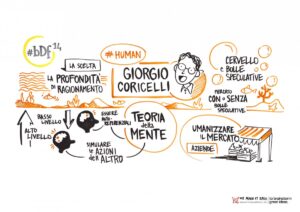
Biennale Democrazia 2015 – Dibattiti – “Stormi. La contrazione del tempo”. With Luigi Bobbio, Giorgio Coricelli and Stefano Levi Della Torre. PODCAST

EPS SCIENCE OF REGRET WORKSHOP University of Birmingham 2016
With Vernon Smith (Nobel Price in Economics “for having established laboratory experiments as a tool in empirical analysis, especially in the study of alternative market mechanisms”) during his recent visit at USC (see interview).

Cooming soon: The documentary webseries Think(ers). With: Daniel Dennet, Bob Doyle, Michael Gazzaniga, Robert Kane, Alfred Mele, Barry Schwartz, Galen Strawston, Max Tegmark
The State of Mind in Economics, OECD, Paris 2017
Media coverage about our research
SCIENTIFIC AMERICAN. Brain Region Tied to Regret Identified
NEW SCIENTIST. Pinpointing regret in the brain
THE NEW YORK TIMES. VITAL SIGNS: EMOTIONS; Winning, Losing and Regretting
SCIENTIFIC AMERICAN. Even better than a personal best
LE MONDE. LE ROLE DU REGRET DANS LA PRISE DE DECISION MESURE PAR DES NEUROLOGUES
Il CORRIERE DELLA SERA. Nella testa di chi non conosce il rimpianto
Il Sole 24 ORE. Successi e Sconfitte: ecco perche` gioiamo delle “cadute” altrui
FOX NEWS. Where Regret Roosts in the Brain
Il CORRIERE DELLA SERA. Il gioco che promuove il broker
CERVEAU & PSYCHO. Les bones raisons d’avoir des regret
LA REPUBBLICA. Il rimpianto e` l’anima del commercio
NATURE Highlight. A life of regret
NATIONAL SCIENCE FOUNDATION (NSF) NEWS. Peer Pressure? It’s Hardwired Into Our Brains
Il Sole 24 ORE. Felici di essere invidiosi
Le Scienze. La reputazione e l'(in)capacita` di imparare dall’esperienza
RAI Scuola Brivido Celebrale
Le Scienze. Vedere una perdita come un guadagno (Nature Communications)
Il Sole 24 ORE. Perche’ sono un economista con il prefisso “neuro”

Links (with reality): an example of 800 years of inequality
The “inequality basket” (Italian: “Minella”)

This is a “reversible basket” commonly used during the “Mezzadria” (a type of sharecropping, theoretically equal sharing of the crop between a tenant and a landowner) in Italy (from the 12th until the 20th Century).
The two sides of the wicker basket are two measures suitable for any type of agricultural harvest. The small one represented the proportion for the farmer (i.e. sharecropper, “mezzadro”) and the large one the part for the landowner.


Courtesy of my great friend Carmelo Parente (Spoleto, Italy)