Tips Sheets on Engaging Faith Communities in Disasters
Introduction
People of faith, congregations and faith-based organization provide essential relief and recovery functions after disasters. It is essential for government personnel and institutions, therefore, to understand the potential contributions and unique needs of America’s faith communities.
The following tip sheets cover foundational information to help emergency management professionals interact with a variety of religious groups. Much of the information also can help students, researchers, government agencies, non-profits and businesses learn about and develop relationships with communities.
The tip sheets cover how to interact with leaders of the following communities:
- Buddhist
- Christian
- Black Church
- Church of Jesus Christ of Latter-day Saints (Mormon)
- Evangelical Megachurch
- Latino Protestant
- Orthodox Christian
- Protestant
- Roman Catholic
- Hindu
- Jewish
- Muslim
- Sikh
The tip sheets also include engagement best practices:
- Creating an Engagement Plan
- Cultural Competency Tips
- Resources and Tools
You can navigate these tips sheets using the menu to the right (on a computer browser) or below (on a mobile device).
The DHS Center for Faith-based and Neighborhood Partnerships works to form partnerships between the federal government and faith-based and neighborhood organizations to more effectively serve Americans in need. As part of this effort, the University of Southern California Center for Religion and Civic Culture and the National Disaster Interfaiths Network developed a web-based course and its companion tip sheets (referenced above), in partnership with the USC Center for Risk and Economic Analysis of Terrorist Events (CREATE). FEMA personnel assisted the development of the course by providing their relevant expertise responding to disasters.
The course and these tip sheets provide emergency management professionals and faith and community leaders active in disaster with the religious literacy and competency tools needed to learn how to effectively engage religious and cultural groups and their leaders throughout the disaster lifecycle.
Read more about the development of these tips sheets and their accompanying courses.
For further training, please see EMI course IS-505, which was also developed by this partnership, and the Engaging Faith Communities in Disasters curriculum.
Engaging Buddhist Leaders
Click here to download the PDF version of this tip sheet.
 Religion called: Buddhism
Adherents Consider Themselves: Buddhist and are called Buddhists
House of Worship: Temple or community center
First Point of Contact: Temple board of directors or community center executive director
Religious Leader: Abbot, monk, nun, or priest
Spoken Direct Address: Use “Venerable,” “Your Eminence,” or “Rinpoche” depending on branch
Physical Interaction: Do not touch monks/nuns
HOUSE OF WORSHIP
Places of worship or practice may be called (depending on school of Buddhism):
- Temple (worship facility) or community center
- Monastery (residence for monks and nuns, a center for religious work and meditation and a center of Buddhist learning)
- Vihara (Theravada monastery/temple)
- Zendo (Zen meditation hall)
- Gompa or ling (Tibetan monastic college)
- Stupa (a votive containing relics)
RELIGIOUS LEADERS
Ordained/Commissioned/Licensed Leaders
- Ordained clergy in all major branches. Ordination of women as nuns practiced in some countries including the U.S.
- Ordained clergy have varying titles depending on the school of Buddhism. Some in wide use include:
- “Venerable”, “Your Eminence”, or “Rinpoche” is often used for ordained nuns and monks (written: “Venerable”)
- Bhikku/Bhikkuni (Theravada monks/nuns); Bhante (honorific for Theravada monk)
- Geshe/Lama (Tibetan)
- Sensei (Japanese schools of practice generally), Roshi (Japanese Zen Buddhism), Ajari (Japanese Shingon Buddhism)
- Minister (Won leaders)
- Reverend (used by many reform movements as both noun and adjective to designate ordained leader)
Lay Leaders
Temple Board of Directors: Typically responsible for temple operations including meetings and finances. Many lay Buddhists in the U.S. practice at a community center and not a temple. Some movements such as Soka Gakkai International (SGI) also do not have monks/nuns or temples.
POINTS OF CONTACT
- Local: Temple via its board of directors or a local Buddhist Council. Community centers will usually have an Executive Director and/or governing council.
- Regional: Regional Buddhist Council (Check to see if one exists in the disaster area).
- National: None or a national office (i.e., Tibet House, Buddhist Churches of America).
NVOAD MEMBERSHIP AND CORE CAPABILITIES IN DISASTER
National Voluntary Organizations Active in Disaster (NVOAD) is a nonprofit, nonpartisan, membership based organization that serves as the forum where organizations share knowledge and resources throughout the disaster cycle. FEMA DSA team members should check with their VAL to determine whether local or regional VOADs exist in their operational area. National VOAD members include:
- The Buddhist Tzu Chi Foundation USA is the U.S. office of a international humanitarian aid NGO founded in Taiwan, China in 1966 but the Mahayana Buddhist Master Cheng Yen.
ETIQUETTE QUICK TIPS
Greeting
When introducing yourself to a religious leader, use formal religious titles unless instructed otherwise (see above).
Putting the palms together in anjali (the gesture of prayer) and bowing the head is a greeting common to all Buddhist traditions. Bowing means paying homage, respect, and honor to monks, nuns, and other spiritual leaders.
Physical Interaction
Buddhist monks and nuns should typically not be touched by laypersons. As a general rule, avoid initiating physical contact when meeting or greeting religious leaders from religious traditions that differ from your own, especially those of the opposite sex. Initiating gestures common in the U.S. such as shaking hands or hugging/embracing may be considered inappropriate or offensive. Be prepared with an alternate gesture, such as anjali/bowing the head.
Most Buddhists do welcome handshakes with an embrace, but preferably between same sexes. When in doubt, ask before making assumptions or wait for a leader to initiate. Monks in certain traditions may initiate, for example, by holding someone’s hand while escorting them through a building or to a speaking position.
When offering food or anything edible to a monk/nun there is a formal method usually involving moving, sliding, or placing food on the table towards the monk/nun so that it does not require the monk/nun to reach out for it first. Monks/nuns may prefer to look down and eat quietly and attentively as opposed to engaging in conversation.
Other
Remove hats and shoes when entering a Buddhist temple’s shrine room. Some Buddhists use the swastika symbol, representing samsara, the endless cycle of birth, death, and rebirth which may be seen at temples or other religious sites. Because Buddhists are not monotheists (many are nontheists), references to God or saying “God bless you” are not appropriate. Ask before participating in worship services.
GOVERNANCE / JUDICATORY
- No single governing structure has overarching authority over all U.S. Buddhists.
- Some American temples, practice groups, and organizations are autonomous. Others acknowledge authority of an umbrella organization (e.g. Buddhist Churches of America; Won Buddhism; BLIA; Shinnyo-en, SGI.
- Priests, monks, or nuns may acknowledge association with a specific monastic lineage; they may be under the authority of a spiritual leader within their denomination, movement, or stream of thought.
- Buddhist movements may have a governing structure and national or world headquarters.
- In many U.S. urban regions, Buddhist leaders from varying traditions have formed a Buddhist Council which facilitates collaborative celebration (especially of Wesak—the Buddha’s Birthday) and social action.
MEETING LOGISTICS AND SCHEDULING
Scheduling and Holidays
There is no weekly Sabbath to account for when scheduling meetings with Buddhist religious leaders. However, there are many Buddhist holy days held throughout the year. Many celebrate the birthdays of Bodhisattvas (deities) or other significant dates in the Buddhist calendar. The most significant celebration happens every May on the night of the full moon: Buddha Day, a celebration of the birth, enlightenment and death of the historical Buddha over 2,500 years ago.
Food
Buddhist dietary restrictions are structured very differently than those of the Abrahamic (Christian, Jewish and Muslim) religions. There is no such clear distinction between permitted and forbidden foods in Buddhism. Therefore, there is a great deal of diversity in traditional Buddhist practice. It is always best for responders to ask a local Buddhist community about their dietary needs, rather than assume they are vegetarians or that they eat meat. Traditionally, many Buddhists are vegetarians.
Some Buddhists observe a fast on full-moon and new-moon days. On fasting or festival days, a Buddhist might wish to abstain from eating after noon. Theravada nuns and monks, and sometimes other Buddhist monastics, do not eat at all after noon.
Logistics
Generally, Buddhists will be comfortable sharing space with others without requiring much in the way of specific items. Some practitioners may be more comfortable sitting on cushions on the floor rather than Western-style in chairs. Depending on ethnic and cultural origin, it is not uncommon for men and women to congregate by gender for conversation, eating, and socializing.
DRESS
Buddhist dress is usually a combination of culture and ethnicity, not religious requirement. Typically, Buddhists conform to the clothing styles of country where they live. Lay Buddhists usually do not wear distinctive clothing or haircuts, but sometimes may have stoles, pins, or vestments to denote lay leadership responsibilities within their respective communities. In postdisaster response and recovery settings, a Buddhist person may or may not choose to self-identify. However, recent immigrants as well as Buddhist monks and nuns may wear ethnic clothing or robes, respectively, which will look different depending on region and tradition (may be maroon, saffron, grey, brown, yellow, or black). In addition, in certain traditions, their heads are shaved. Given the geographic origins of Buddhism many adherents are Asian or South Asian. However, Asian or South Asian garb does not necessarily indicate religious observance. For example, Christians, Shinto, Taoists and members of other faith communities from Asia and South Asia may also wear the same/similar ethnic clothing. Buddhist dress does not indicate a person’s level of education or reflect on a particular conservative (or liberal) religious or political orientation.

Tibetan Buddhist Monks in traditional robes make a mandala.
ABOUT BUDDHISM
Buddhism is one of the five major world religions, with at least 500 million adherents worldwide. There are 3–4 million Buddhists in the United States (two-thirds of whom are Asian American). Adherents follow the teachings of Siddhārtha Gautama, the historical Buddha (“Awakened One”) who lived in India around the fifth century BCE. He taught four “noble truths”: (1) the truth that life is suffering/anxiety/dissatisfaction/stress; (2) the truth of its cause; (3) the truth of its cessation; and (4) the truth of the path toward its cessation. Typically, three schools of Buddhism are spoken of: the Theravada of South and Southeast Asia, the Mahayana of East Asia, and the Vajrayana of Central Asia—each having many traditions, variations, and communities. The religion is called Buddhism in English, and adherents are Buddhists.
Click here to download the PDF version of this tip sheet.
Engaging Black Church Protestant Leaders
Click here for the PDF version of this tip sheet.
Religion Called: Protestantism (or by denominational name, e.g. African Methodist Episcopal (A.M.E.)
Adherents Consider Themselves: Christian and are called Christians (or denomination’s name, e.g. Baptist)
House of Worship: Church (or Cathedral, Tabernacle, or Temple)
First Point of Contact: Pastor and governing committee
Religious Leader: Minister/pastor (or honorific title such as Archbishop, Prophet, Prophetess)
Spoken Direct Address: Use “Reverend” or “Pastor” depending on denomination
Physical Interaction: Handshake and/or hugging generally O.K. across genders

HOUSE OF WORSHIP
Many denominations of the Black Church call their worship site a “church.” It is common for some church buildings to have a steeple topped with a cross. Some Protestants meet in borrowed space (e.g. a school auditorium) or use a commercial space. Congregations can be small storefront churches or large-scale campuses with multiple buildings. Avoid assumptions based on church size and location as these may not correlate to the level of influence of the congregation’s religious leader.
RELIGIOUS LEADERS
Ordained/Commissioned/Licensed Leaders
- Common terms for leaders include: minister or pastor. The Methodist Episcopal denominations and Church of God in Christ also have deacons, elders, and bishops.
- Honorific titles, designated by seniority, are used by some denominations (e.g. Archbishop, Minister, Prophet, Prophetess).
- Levels of responsibility and authority conferred by these titles may not equate to similar titles used in other denominations.
- Some Black Churches use the term “the Reverend” as a noun meaning “clergyperson”; some use it only as an adjective.
- In some traditions, deacons are clergy; in others, it is a temporary elected office.
- Some Black Church denominations have no gender qualifications for leadership roles or participation in worship. A few limit leadership roles to men while women may be clergy in others.
Lay Leaders
- Includes lay governing bodies such as a board of deacons, elders, mothers of the church, parish council, or vestry.
- In some denominations, the influential “First Lady” is the wife of the Senior Pastor and may be called “Lady [Last Name]”.
POINTS OF CONTACT
- Local: Local congregations are usually led by a pastor. Many local congregations (even those of denominations with a robust regional or national governing structure) are self-governing. Often, local governance is in the hands of an elected committee (see “Lay Leaders”). First point of contact at local level should be both pastor and governing committee.
- Regional: Varies by denomination (usually a Bishop or judicatory body).
- National: Varies by denomination (usually a national judicatory body).
NVOAD MEMBERSHIP AND CORE CAPABILITIES IN DISASTER
National Voluntary Organizations Active in Disaster (NVOAD) is a nonprofit, nonpartisan, membership based organization that serves as the forum where organizations share knowledge and resources throughout the disaster cycle. FEMA DSA team members should check with their VAL to determine whether local or regional VOADs exist in their operational area. National VOAD members include:
- Church World Service—includes membership from Black Church denominations
- Episcopal Relief and Development (ERD)
- National Baptist Convention U.S.A.
- United Methodist Committee on Relief (UMCOR)
- The Church of God in Christ also has a disaster relief arm known as COGIC Charities (not a NVOAD member)
Also consider whether megachurches (over 2000 members) are located in the affected area as they are likely to be active in disaster response/recovery efforts. They may have significant capabilities and/or disaster-related needs.
ETIQUETTE QUICK TIPS
Greeting
When introducing yourself to a religious leader, use formal religious or honorific titles unless instructed otherwise. Avoid assumptions based on a religious leader’s title or the name of a house of worship. Significance of these may vary from similar titles used in other denominations. Congregations members of baptized age may greet each other as “brother” or “sister.”
Physical Interaction
Shaking hands and/or hugging is common in most Black Church denominations. In certain conservative denominations it may not be readily accepted for members of the opposite sex to shake hands or embrace.
Other
When entering a Black Church, shoes are generally left on but men should remove hats or caps. Other than this general practice, traditions around dress codes for both sanctuary spaces and office spaces vary dramatically according to culture and geographical region of the country. In many historically Black Church congregations, visitors would be expected to use formal “Sunday best” dress for worship services. This may include business suits for men and dresses or skirts for women.
Ask before participating in worship services. If not a member, do not participate in an altar call, taking communion, or in a healing. Ushers can help with customs, dress, and etiquette.

GOVERNANCE / JUDICATORY
Denominations generally fall into two categories: 1) Denominational with hierarchical authority (African Methodist Episcopal Church, Church of God in Christ) and 2) Part of a national association or network (e.g. Baptist). Many are fully independent. It may be difficult to determine—if unsure, ask.
MEETING LOGISTICS AND SCHEDULING
Scheduling and Holidays
Avoid meetings on Sundays as it is the Sabbath for most Protestants. Some denominations may schedule a full day of activities on this day. Be aware that many Protestant religious leaders take Monday as their day off. Holidays include:
- Christmas: a celebration of the birth of Jesus as God incarnate.
- Holy Week: leads up to Easter; begins with Palm Sunday (recalling Jesus’ return to Jerusalem); includes Maundy Thursday (recalling Jesus’ institution of the practice of Holy Communion during his last meal with his disciples) and Good Friday (recalling Jesus’ crucifixion).
- Easter Season: the most important season in the Christian year celebrating the resurrection of Jesus from the dead.
- Pentecost: commemorating the receipt of the Holy Spirit by the nascent Christian community, fifty days after Jesus’ Resurrection. This holiday is recognized by many and is a major celebration for some.
- All Protestants follow the same liturgical calendar, with varying levels of observance for the seasons of Advent and Lent.
- Some congregations celebrate “Homecoming” (in late summer, usually).
- Some Protestants also observe other days related to their denominational history.
- Thanksgiving Day (a U.S. national holiday) is celebrated as a religious holiday by some Protestant churches.
Food
Few general restrictions or requirements; check with individual leaders. Some denominations do take very seriously laws of fasting and abstinence, refraining from eating meat on certain days and limiting the quantity of food on other days. During the season of Lent, some denominations are required to abstain from eating meat on Fridays, but may eat fish.
Logistics
Many Black Church congregations are becoming “commuter congregations,” meaning that congregants may not necessarily live in the neighborhoods surrounding their church. While this should be taken into consideration when scheduling meetings, it can also be a useful characteristic for expanding post-disaster outreach into the additional neighborhoods where congregants
live. Immigration of Latinos, primarily from Central America and Mexico, has also meant some houses of worship serve both African-American and Spanish-speaking congregations.
DRESS
- Generally, leaders wear clothing prescribed by their denomination or a variety of other ecclesiastical clothes based on personal choice or understanding of their denomination’s historical preferences. This may include clothing as varied as a black shirt and white clerical collar, a suit and tie, a purple cassock, or clothes similar to lay members.
- Lay congregation members often dress formally or semi-formally for worship services.
ABOUT HISTORICALLY BLACK PROTESTANT DENOMINATIONS
Historically, the Black Church in the United States has been composed of seven denominations: the African Methodist Episcopal Church; the African Methodist Episcopal Zion Church; the Christian Methodist Episcopal Church; the Church of God in Christ; and three National Baptist Conventions which convene Black Baptist congregations: the National Baptist Convention of America, the National Baptist Convention, USA, Inc., and the Progressive National Baptist Convention, Inc. Black denominations also include Southern Missionary Baptists and non-denominational churches. Most denominations originated as
a result of racial segregation in Protestant denominations, but have since grown and evolved exponentially. Today, it is increasingly problematic to classify the Black Church as a single entity composed primarily of African-American congregants.
Ongoing immigration from East and West Africa, Central America, and the Caribbean has transformed many congregations that were traditionally African-American into mixed congregations including first and second generation immigrants. Basic tenets are similar to white evangelical denominations:
- Protestantism is characterized by assertion of a personal relationship with God through Christ, study of the Bible by laypersons, freedom of conscience on many matters, and a variety in worship styles.
- Jesus of Nazareth is considered (by many) God Incarnate. The birth, ministry, death, and resurrection of Jesus are definitive.
- Protestants are Trinitarian in their understanding of the nature of God.
- The Holy Spirit is important to all Protestants, but receives more emphasis from some than from others.
Engaging Church of Jesus Christ of Latter-Day Saints (Mormon) Leaders
Click here for the PDF version of this tip sheet.
Religion Called: The Church of Jesus Christ of Latter-day Saints (LDS) or Mormonism
Adherents Consider Themselves: Christian and are called Mormons/Latter-day Saints/Saints
House of Worship: Meetinghouse (or, church/chapel)
First Point of Contact: Branches: Branch President or Wards: Ward Bishop
Religious Leader: No ordained leaders; Branch President or Ward Bishop
Spoken Direct Address: Males: use “Elder” (“Bishop” for bishops); Females: use “Sister”
Physical Interaction: Handshake O.K. across genders
HOUSE OF WORSHIP
- Meetinghouse: Place where congregations attend regular Sunday worship services (also called a chapel or church).
- Temple: The Church of Jesus Christ of Latter-day Saints operates approximately 138 temples worldwide. Open only to church members in good standing for marriages and other sacred ceremonies (closed Sundays).

RELIGIOUS LEADERS
Ordained/Commissioned/Licensed Leaders
No formal clergy; designated leaders play specific roles; priesthood and the role of bishop is limited to men. Women’s leadership takes other forms.
Lay Leaders
Local churches are led and staffed by unpaid lay leaders. Branch presidents and Bishops have similar roles including both spiritual and administrative duties. Both are assisted by two counselors.
Melchizedek Priesthood: Worthy adult males who have received authority from God to perform sacred ordinances and to lead in the Church. Men who hold this priesthood belong either to the elders quorum or high priests group within a ward.
POINTS OF CONTACT
- Local: Branch (smaller congregation), led by branch president and two counselors or Ward (large congregation of 300 or more members), led by Bishop and two counselors (called bishopric). Branch/ward councils may have Welfare Committees which coordinate welfare of members including during disaster. Some wards maintain a Bishops Storehouse
with food and supplies for congregation members in need. - Regional: Stake (composed of 5-12 wards and/or branches), led by stake president and two counselors. There are also public affairs directors worldwide who work within the geographical area served by a temple.
- National: The First Presidency & Quorum of the Twelve Apostles.
NVOAD MEMBERSHIP AND CORE CAPABILITIES IN DISASTER
National Voluntary Organizations Active in Disaster (NVOAD) is a nonprofit, nonpartisan, membership based organization that serves as the forum where organizations share knowledge and resources throughout the disaster cycle. FEMA DSA team members should check with their VAL to determine whether local or regional VOADs exist in their operational area.
LDS Charities provides humanitarian assistance worldwide and its Mormon Helping Hands volunteer organization provides community service and disaster relief volunteer teams. Mormon Helping Hands have led post-disaster recovery activities such as muck-outs and home rebuilds.
The Church of Jesus Christ of Latter-day Saints also promotes emergency preparedness and has a network of HAM radio operators in each ward to maintain communications in post-disaster or emergency settings.
ETIQUETTE QUICK TIPS
Greeting
When introducing yourself to a religious leader, use formal religious titles unless instructed otherwise.
Male missionaries should be addressed as “Elder” while female missionaries should be addressed as “Sister”. Bishops may be addressed as “Bishop”.
Physical Interaction
In approaching Mormon leaders, gestures common in the U.S. such as shaking hands are generally acceptable. It is also acceptable for men and women to shake hands.
Other
Ask before participating in worship services. Ushers can help with customs, dress, and etiquette.
GOVERNANCE / JUDICATORY
Church of Jesus Christ of Latter-day Saints (LDS) is the main denomination. Smaller breakaway and reform denominations (which differ in governance and some points of belief and practice) do exist, both to the right and the left of the mainstream.
The Latter-Day Saints’ leadership has a hierarchical male priesthood and is organized as follows:
- First Presidency: Highest governing body in the Church. Is made up of the prophet and his two counselors. Presides over areas in the United States and Canada. Pronouncements are authoritative.
- Quorum of Twelve Apostles (also considered prophets): Second-highest governing body in the Church. Quorums of the Seventy: Work under direction of the Quorum of Twelve Apostles and Presidency of the Seventy to proclaim the gospel and build up the Church. Currently eight Quorums of the Seventy with up to 70 members each.
- Presidency of the Seventy: Seven members of the First or Second Quorum of the Seventy called by the First Presidency.
- Presiding Bishopric: President of the Aaronic priesthood throughout the Church; serves under the First President to administer the temporal affairs of the Church.
MEETING LOGISTICS AND SCHEDULING
Scheduling and Holidays
Christmas (commemoration of the birth of Jesus) and Easter (feast marking the resurrection of Jesus) are important celebrations in the Church as well as national holidays.
Other Church-specific holidays include:
- July 24: Pioneer Day (commemorates the arrival of Mormon pioneers in the Salt Lake Valley in Utah).
- April 6: Date the Church of Jesus Christ of Latter-day Saints was reorganized by the Prophet Joseph Smith.
Mormons refrain from work on Sundays and scheduling meetings on Sundays should be avoided. Many Mormon families observe a family home evening weekly (often on Monday).
Food
- Observant LDS members abstain from alcoholic, caffeinated beverages, and tobacco; they are encouraged to consume wholesome herbs, fruits within season, and grains; consumption of meat should be moderate.
- Fasting (no food or drink for 24 hours) is required once each month; ill people are not required to fast.
Logistics
- Local churches are encouraged to prepare detailed emergency preparedness and response plans, based on principles contained in Providing in the Lord’s Way. Branch Welfare Committees are identified as the coordinators if disaster strikes. Individual families are encouraged to prepare three months of food and financial resources to sustain themselves during
difficult times or in emergency circumstances.
DRESS
Dress for most Mormons and Mormon leadership is professional, conservative clothing consistent with western-style business attire. Church leaders typically wear ties and white dress shirts. Mormon missionaries can be identified by their black nametags worn on outer garments. Observant Mormons wear a sacred undergarment (temple garment) with short sleeves and kneelength legs, which is kept out of sight.
Responders and disaster recovery personnel should wear conservative clothing if attending services at a Mormon chapel. While there is no specific dress code required by Mormons for worship, Church members are generally counseled to wear their “Sunday best”.
ABOUT MORMONISM
Most adherents consider themselves Christian and are called Mormons or Latter-day Saints or Saints. The religion is called the Church of Jesus Christ of Latter-day Saints (also known as Mormonism). It derives from revelations received by the Prophet Joseph Smith in upstate New York, and set out in The Book of Mormon. It embraces many distinctive beliefs and practices.
- It sees itself as restoring the primitive Church of the New Testament, and teaches a form of apostolic succession.
- It teaches that God (often called Heavenly Father), who is omniscient, has a material body.
- It is centered on Jesus Christ as the firstborn of God, and teaches substitutionary atonement through Christ. It teaches as well about the Holy Ghost (or Holy Spirit). Its explanation of the nature and interrelationship of Heavenly Father, Jesus Christ, and the Holy Ghost differs significantly from Trinitarian Christianity. Mormons believe God the Father, Jesus and the Holy Spirit are separate beings.
- Members are believed to be literal spiritual sons and daughters of a living Father in Heaven.
- Mortality is a probationary period in which people are to obey the Lord’s commandments given through ancient and current prophets, including presidents of the church.
Click here for the PDF version of this tip sheet.
The Engaging Faith Communities tip sheets were created through a collaboration between the DHS Center for Faith-based and Neighborhood Partnerships, the USC Center for Religion and Civic Culture, USC CREATE and the National Disaster Interfaiths Network. For further training, please see EMI course IS-505, which was also developed by this partnership.
Engaging Evangelical Megachurch Leaders
Click here for the PDF version of this tip sheet.
Religion Called: Evangelical Christianity/Evangelicalism or Pentecostalism
Adherents Consider Themselves: Christian and are called Christians, Evangelical Christians or Evangelicals
House of Worship: Church
First Point of Contact: Senior Pastor and governing committee (associate ministers and/or staff)
Religious Leader: Minister/pastor
Spoken Direct Address: Use “Reverend” or “Pastor”
Physical Interaction: Handshakes and hugs generally O.K. across genders

HOUSE OF WORSHIP
Megachurches are large Protestant Christian congregations with an average of 2,000 or more members in attendance for weekly worship. While megachurches are sometimes located in urban areas, many are in high-traffic suburban spaces and often have large-scale campuses with multiple buildings on dozens or hundreds of acres of land. Some have multiple sites.
RELIGIOUS LEADERS
Ordained/Commissioned/Licensed Leaders
- Common terms for megachurch leaders include minister, pastor or reverend.
- Teams of associate ministers usually support the senior minister/pastor.
- Almost all megachurch pastors are male. Some denominations, including most Pentecostal churches, allow for leadership roles for women, although few have assumed leadership of megachurches.
Lay Leaders
- Depending on their size, megachurches may have dozens of full-time staff and/or hundreds or thousands of volunteers.
POINTS OF CONTACT
- Local: Congregations are usually led by a full-time pastor. Some may have an elected governing committee. First point of contact at local level should be both pastor and governing committee.
- Regional: Network, fellowship, association of churches, or denomination (e.g. Calvary Chapel, Southern Baptist, Vineyard).
- National: Network, fellowship, association of churches, or denomination (e.g. Nat’l Assoc. of Evangelicals).
NVOAD MEMBERSHIP AND CORE CAPABILITIES IN DISASTER
Megachurches are likely to have significant financial and human resources including multiple social service programs and ministries (e.g. cash assistance, financial counseling, food pantries). They often have enormous facilities such as parking lots, kitchens, communal spaces, and vehicles. Also common are contemporary audio/visual equipment, a robust online presence (via blogs, podcasts, webcasts), and social media capabilities. These may serve a significant assets during disaster response.
National Voluntary Organizations Active in Disaster (NVOAD) is a nonprofit, nonpartisan, membership based organization that serves as the forum where organizations share knowledge and resources throughout the disaster cycle. FEMA DSA team members should check with their VAL to determine whether local or regional VOADs exist in their operational area. Each organization has distinct capabilities. Responders should check with an organization’s local affiliate or with its national office to confirm capacity and activities specific to each disaster situation.
Evangelical Christian National VOAD members include: ACTS World Relief, Adventist Community Services/Adventist Disaster Response, Billy Graham Rapid Response Team, Convoy of Hope, Cooperative Baptist Fellowship, Feed the Children, HOPE Worldwide, Nazarene Disaster Response, Operation Blessing, Samaritan’s Purse, Southern Baptist Convention Disaster Relief, The Salvation Army, World Renew.
ETIQUETTE QUICK TIPS
Greeting
When introducing yourself to a religious leader, use formal religious titles unless instructed otherwise (Reverend, Pastor, Dr.).
Physical Interaction
Shaking hands and hugging is common in most Evangelical Christian denominations.
Other
- When entering any Protestant house of worship (including a megachurch), shoes are generally left on but men should remove hats or caps. Other than this general practice, traditions around dress codes for both sanctuary spaces and office spaces vary dramatically according to culture and geographical region of the country. In general, there are no rules about what one may wear or not wear, and dress is often casual in many megachurches.
- Ask before participating in worship services. Guests may be invited to participate in some worship activities. If not a member, limit participation in these activities (e.g. taking communion or healings) unless invited. Ushers can help with customs, dress, and etiquette.
- Many Evangelicals believe that Bible study and prayer alone instead of professional medical intervention can overcome mental health concerns. Use discretion when making referrals to mental health service providers.

GOVERNANCE / JUDICATORY
Approximately half of megachurches are non-denominational and half are denominational. Southern Baptist Convention churches make up about 16% of megachurches. When taking into account other networks, fellowships, or associations of churches, the percentage of affiliated megachurches grows to 70%. The remaining 30% are completely free-standing and independent and operate autonomously.
MEETING LOGISTICS AND SCHEDULING
Scheduling and Holidays
Most Evangelicals gather weekly for communal worship involving singing, Bible readings, and a sermon. Many do this on Sunday mornings; a few (e.g. Seventh Day Adventists) meet on Saturday. Many hold mid-week bible study, Saturday and Sunday evening services, and host other events and services throughout the week. Be aware that many pastors take Monday as their day off. Holidays include:
- Christmas: a celebration of the birth of Jesus as God incarnate.
- Holy Week: leads up to Easter; begins with Palm Sunday (recalling Jesus’ return to Jerusalem); includes Maundy Thursday (recalling Jesus’ institution of the practice of Holy Communion during his last meal with his disciples) and Good Friday (recalling Jesus’ crucifixion).
- Easter Season: the most important season in the Christian year celebrating the resurrection of Jesus from the dead.
- Pentecost: commemorating the receipt of the Holy Spirit by the nascent Christian community, fifty days after Jesus’ Resurrection. This holiday is recognized by many and is a major celebration for some.
- All Protestants follow the same liturgical calendar, with varying levels of observance for the seasons of Advent and Lent.
- Some congregations celebrate “Homecoming” (usually late summer; when those who have been away from church return). Some Protestants also observe other days related to their own congregation’s history.
- Thanksgiving Day (a U.S. national holiday) is celebrated as a religious holiday by some Protestant churches.
Food
Few general restrictions or requirements; check with individual leaders. Many Evangelicals choose to avoid alcohol.
Logistics
The scope of many megachurches’ social media followings and contact lists can be helpful in reaching a large number of disaster survivors spread over a wide geographical area.
DRESS
- Many pastors wear attire similar to that of lay members—varies from casual to business casual to “Sunday best” attire.
- Religious leaders with a denominational affiliation may wear clothing prescribed by their denomination or a variety of other ecclesiastical clothes based on personal choice or understanding of their denomination’s historical preferences.
ABOUT EVANGELICAL CHRISTIANITY AND MEGACHURCHES
A megachurch is defined as a church having a large Protestant Christian congregation with an average of 2,000 or more members in attendance for worship each week. Other characteristics often include a charismatic, authoritative senior minister, multiple social and outreach ministries, and a very active congregational community. Eighty-two percent have a majority Caucasian congregation. There are more than 1,600 megachurches in the U.S., with the largest concentrations in California, Texas, and Florida (the largest is Lakewood Church in Houston with an average weekly attendance of 43,500 and annual budget of $70 million).
While approximately 71% of megachurches are Evangelical, as an umbrella term, Evangelicalism covers an enormous diversity of denominations and independent churches. The majority of Evangelicals believe:
- In an assertion of a personal relationship with God through Christ, study of the Bible by laypersons, freedom of conscience on many matters, and a variety in worship styles.
- That Jesus of Nazareth is considered God Incarnate. The birth, ministry, death, and resurrection of Jesus are definitive.
- In a Trinitarian understanding of the nature of God.
- That the Holy Spirit is important to all Evangelicals, but receives more emphasis from Pentecostals who believe in its spiritually renewing gifts such as divine healing, prophesying, and speaking in tongues.
- Many Evangelical churches reserve baptism for adults (or children who are old enough to choose their religion), and may characterize themselves as “Born-Again Christians.”
Click here for the PDF version of this tip sheet.
Engaging Latino Protestant Leaders
Click here for the PDF version for the tip sheet.
Religion Called: Protestantism, Evangelical Christianity/Evangelicalism, Pentecostalism, or denomination name
Adherents Consider Themselves: Cristiano, Protestante and are called Cristianos, Evangélicos, or Pentecostales
House of Worship: Church (iglesia in Spanish)
First Point of Contact: Pastor and governing committee
Religious Leader: Minister/pastor
Spoken Direct Address: Use “Reverend” or “Pastor” depending on denomination
Physical Interaction: Handshakes, hugs, kisses on cheek generally O.K. across genders

HOUSE OF WORSHIP
Most Latino Protestant congregations call their place of worship a church. Churches can be small storefront locations, traditional, or large-scale campuses with multiple buildings. Some Latino churches serve both English-speaking and Spanish-speaking congregations in the same building with separate services for each congregation. Some congregations may worship in members’ homes. Many congregations, especially those in urban areas, have had to move locations frequently due to expiration of leases or increasing costs of rent. Some may have limited signage or temporary signs posted only on Sundays.
RELIGIOUS LEADERS
Ordained/Commissioned/Licensed Leaders
- Common terms for Protestant leaders include pastor or reverend.
- Many Latino Protestant denominations have no gender qualifications for leadership roles or participation in worship. A few limit leadership roles to men while most Pentecostal churches and some other denominations affirm women in leadership.
Lay Leaders
- In many Latino churches the pastor is a layperson.
- Includes lay governing bodies such as a board of directors, parish council, elders, or vestry.
POINTS OF CONTACT
- Local: Local congregations are often unaffiliated and led by a part-time pastor. Some may have an elected governing
committee. First point of contact at local level should be both pastor and governing committee. - Regional: Unaffiliated congregations may be associated with a local network or association (sometimes difficult to identify).
- National: Varies by denomination (usually a national judicatory body or association e.g. La Red).
NVOAD MEMBERSHIP AND CORE CAPABILITIES IN DISASTER
National Voluntary Organizations Active in Disaster (NVOAD) is a nonprofit, nonpartisan, membership based organization that serves as the forum where organizations share knowledge and resources throughout the disaster cycle. FEMA DSA team members should check with their VAL to determine whether local or regional VOADs exist in their operational area. While there
are no Latino-specific National VOAD members, many Protestant denominations with significant numbers of Latino congregations do have NVOAD affiliates. See the Protestant Leaders Tip Sheet for more information.
Also consider whether megachurches (over 2000 members) are located in the affected area as they are likely to have social service programs. Many smaller Latino congregations are also involved in day-to-day social needs of their members such as clothing, food, health care, and housing.
ETIQUETTE QUICK TIPS
Greeting
When introducing yourself to a religious leader, use formal religious titles unless instructed otherwise. Congregations members of baptized age may greet each other as “hermano” (brother) or “hermana” (sister).
Physical Interaction
Shaking hands, hugging, and kissing on the cheek is common in most Latino Protestant denominations. In certain conservative denominations it may not be readily accepted for members of the opposite sex to shake hands or embrace.
Other
- Some Latino Protestant leaders may not speak English or be more comfortable conversing in Spanish. Dialects vary.
- When entering a Protestant house of worship, shoes are generally left on but men should remove hats or caps. Other than this practice, traditions around dress codes for both sanctuary spaces and office spaces vary dramatically according to culture and geographical region of the country. In general, there are no rules about what one may wear or not wear, however, “Sunday best” attire is expected in many churches.
- Ask before participating in worship services. Guests may be invited to participate in some worship activities. If not a member, limit participation in these activities (e.g. taking communion or healings) unless invited. Ushers can help with customs, dress, and etiquette.

GOVERNANCE / JUDICATORY
Governance structures range from small congregations that are completely self-governing to networks of small churches that affiliate themselves with one of the larger megachurches. The single largest denomination among Latino Protestants is the Assemblies of God. It has 14 “Hispanic Districts” served by the liaison Office of Hispanic Relations to the national office. Other Latino Pentecostal denominations include: Apostolic Assembly, Concilio Latino Americano de Iglesias Cristianas (CLADIC), El Concilio Latinoamericano Internacional de la Iglesia de Dios Pentecostal de Nueva York (CLANY) and the Asamblea de Iglesias Cristianas. Some Latino churches are linked to denominations from the charismatic renewal movement, e.g. Vineyard and Calvary Chapel. Other denominations such as the Adventists, American Baptists, Methodists, Nazarenes, and Southern Baptists have a substantial number of Latino churches.
MEETING LOGISTICS AND SCHEDULING
Scheduling and Holidays
Sunday is the Sabbath for most Latino Protestants (Saturdays for Seventh Day Adventists). On this day, members of particular Latino communities gather from all parts of a given city. With good relationship building and communication, pastors and their leadership may accommodate hosting a public agency if it is significant to the well-being of the community. Holidays include:
- Semana Santa (Holy Week): leads up to Easter; begins with Palm Sunday (recalling Jesus’ return to Jerusalem); includes Maundy Thursday (recalling Jesus’ institution of the practice of Holy Communion during his last meal with his disciples) and Good Friday (recalling Jesus’ crucifixion).
- Pascua (Easter): the most important season in the Christian year celebrating the resurrection of Jesus from the dead.
- Pentecostés (Pentecost): commemorating the receipt of the Holy Spirit by the nascent Christian community, fifty days after Jesus’ Resurrection. This holiday is recognized by many and is a major celebration for some.
- Navidad (Christmas): a celebration of the birth of Jesus as God incarnate.
- All Protestants follow the same liturgical calendar, with varying levels of observance for the seasons of Advent and Lent.
- Some congregations celebrate “Homecoming” (in late summer, usually).
- Thanksgiving Day (a U.S. national holiday) is celebrated as a religious holiday by some Protestant churches.
Food
Few general restrictions or requirements; check with individual leaders. Some denominations do take very seriously laws of fasting and abstinence, refraining from eating meat on certain days and limiting the quantity of food on other days. During the season of Lent, some denominations are required to abstain from eating meat on Fridays, but may eat fish. Most Latino Evangelicals choose not to drink alcohol.
Logistics
- Be aware that many Latino Protestant leaders are bi-vocational and may have jobs outside of their pastoral duties.
- Some congregations serve undocumented immigrants or mixed-documentation households—help to explain FEMA’s role and limitations of program eligibility and provide referrals to whole community partners as needed.
DRESS
- Many pastors wear attire similar to that of lay members—varies from casual to business casual to “Sunday best” attire.
- Religious leaders with a denominational affiliation may wear clothing prescribed by their denomination or a variety of other ecclesiastical clothes based on personal choice or understanding of their denomination’s historical preferences.
- In some Latino Protestant churches, lay females may choose to wear a head covering (“Velo” or “Mantilla”) as part of a more conservative style of dress. In some churches that use velos, women can take leadership roles if wearing velos.
ABOUT LATINO PROTESTANT CONGREGATIONS
Note on usage of “Latino”: The term “Latino” is used in this Tip Sheet as a term inclusive of both female and male disaster survivors of Latin American origin or ancestry residing in the U.S. While this term is used here, it is preferable to refer to each disaster survivor as he/she refers to himself/herself, whether it be through the word Latino/Latina, Hispanic, or a term specific to the survivor’s country of origin (e.g. Boriqua – Puerto Rico, Chicano/a – Mexico, Cubano/a – Cuba, Dominicano/a – Dominican Republic, etc.).
In the United States, about 68% of Latinos identify as Roman Catholic and 20% identify as Protestant. The percentage of Latinos that are Protestant is growing. Congregants’ countries of origin may include those from Central or South America, Mexico, and the Caribbean (Cuba, Dominican Republic, and Puerto Rico). More than half of Latino Protestants (57%) identify as charismatic or Pentecostal. While many continue to worship in Spanish, others attend non-Latino Protestant churches.
Many Latino Protestants also continue to place importance on indigenous traditions such as Santería (Cuban Americans and other groups) and Guadelupism (Mexican American Roman Catholics and some Protestant converts). Basic tenets vary between mainline protestant and evangelical protestant denominations, but generally include the following:
- Assertion of a personal relationship with God through Christ, study of the Bible by laypersons, freedom of conscience on many matters, and a variety in worship styles.
- The belief that Jesus of Nazareth is God Incarnate. The birth, ministry, death, and resurrection of Jesus are definitive.
- That the nature of God is Trinitarian (Father, Son, Holy Spirit).
- The Holy Spirit is important to all Protestants, but receives more emphasis from Pentecostals who believe in its spiritually renewing gifts such as divine healing, prophesying, and speaking in tongues.
Click here for the PDF version for the tip sheet.
Engaging Orthodox Christian Leaders
Click here for the PDF version of this tip sheet.

Religion Called: Orthodox Christianity
Adherents Consider Themselves: Christian and are called Orthodox Christians
House of Worship: Church or Cathedral
First Point of Contact: Senior parish priest a.k.a. pastor
Religious Leader: Priest or Deacon
Spoken Direct Address: Use “Father”
Physical Interaction: Handshake O.K. across genders
HOUSE OF WORSHIP
- Churches are local houses of worship. A parish refers to the congregation of a particular church.
- Parishes often have non-sacred spaces such as multipurpose rooms, schools, gyms, or offices.
- Cathedrals are large centers of worship for an entire regional area run by a Diocese or Archdiocese.
- Monasteries and convents house monks and nuns (respectively), and may include a chapel and areas for instruction/work.
RELIGIOUS LEADERS
Ordained/Commissioned/Licensed Leaders
- Orthodox Christian leadership is hierarchical with each national/ethnic branch having its own structure and leadership.
- Regional leadership generally falls to bishops (or archbishops, catholicos, or metropolitans).
- Priests and deacons provide sacramental and spiritual leadership; priests often are in charge of a local parish.
- Both priests and deacons are permitted to marry.
Holy Orders and Lay Leaders
- Monks and nuns are non-ordained (lay) leaders (except for hiermonks who are ordained priests or deacons) who have usually taken a vow of poverty, celibacy, and obedience and often live an active vocation of both prayer and service. Many monks, nuns, and laypersons have important leadership positions —avoid assumptions based on title.
- Some U.S. parishes have lay administrators who take on many of the roles once the exclusive domain of clergy.
POINTS OF CONTACT
- Local: Parish, led by a priest and staff. Oversight may fall entirely to the pastor and his staff; or in many cases a pastor will consult with an elected parish council of lay community members. First point of contact should be with the senior parish priest who has ultimate authority over parish resources.
- Regional: Diocese/Archdiocese, led by a bishop, archbishop or metropolitan.
- National: For the Orthodox Church in America, the Metropolitan. For Greek Orthodox Archdiocese of America, the Archbishop (Other Orthodox churches have their own U.S. heads consisting of an archbishop, metropolitan, or bishop).
NVOAD MEMBERSHIP AND CORE CAPABILITIES IN DISASTER
National Voluntary Organizations Active in Disaster (NVOAD) is a nonprofit, nonpartisan, membership based organization that serves as the forum where organizations share knowledge and resources throughout the disaster cycle. FEMA DSA team members should check with their VAL to determine whether local or regional VOADs exist in their operational area. National VOAD members include:
- International Orthodox Christian Charities (IOCC)
ETIQUETTE QUICK TIPS
Greeting
When introducing yourself to a religious leader, use formal religious titles unless instructed otherwise. Deacons and Priests: Father. Bishops: Your Grace. Archbishops/Metropolitans: Your Eminence (Your Beatitude for heads of independent Churches, and Your Excellency for Titular Metropolitans).
Physical Interaction
Many Orthodox Christians exchange a “kiss of peace” when greeting those of the same or opposite gender (not expected of non-Orthodox). In Greek and Arab churches a kiss on both cheeks is customary. In Russian churches there are three kisses.
Other
When entering an Orthodox Christian church, cathedral, or other sacred space, shoes are generally left on but men should remove hats or caps. These spaces are considered sacred 24 hours a day – not only when they are being used. Responders should treat sacred spaces with respect and deference and refrain from certain behaviors such as eating, drinking, talking loudly, touching objects, or entering certain areas without permission. Visitors should wear conservative clothing covering the shoulders and knees. Stand when a priest enters the room and remove hats or caps. Ask before participating in worship services and do not take communion unless you are Orthodox Christian. Ushers can help with customs, dress, and etiquette.

GOVERNANCE / JUDICATORY
“Orthodox Christianity” includes the Eastern Orthodox Church and Oriental Orthodoxy. In general, governance is hierarchical and Archdioceses, Metropolises, Dioceses are administrative districts led by a bishop who oversees the jurisdiction’s churches.
- The Eastern Orthodox Church is composed of 15 autocephalous (administratively independent) branches (each organized primarily along ethnic or national lines) that share the same beliefs, sacraments, and canonical discipline. Each has its own structure, titles, and maintains the right to elect its head (Catholicos or Patriarch) and its bishops.
- There are also churches using “Orthodox” in their name but not in communion with the 15 autocephalous churches, as well as Eastern Catholic Churches with Orthodox roots and practices but in communion with the Holy See in Rome.
- The ecumenical patriarch of Constantinople (Istanbul) is the international head of Eastern Orthodoxy (while also overseeing the Greek Archdiocese of America and certain other Orthodox churches); recognized as the “first among equal” Orthodox bishops. Most Eastern Orthodox Christians acknowledge his spiritual leadership.
- The Orthodox Church in America (OCA) is governed by the Holy Synod of Bishops (all diocesan bishops). The head of the synod is the Metropolitan of All-America and Canada.
- The Oriental Orthodox communion is distinct from the Eastern Orthodox Church and is composed of six churches: Coptic, Ethiopian, Eritrean, Syriac, Malankara Syrian (Indian Orthodox Church), and the Armenian Apostolic churches.
MEETING LOGISTICS AND SCHEDULING
Scheduling and Holidays
Orthodox Christian churches observe the Lord’s Day (Sunday) with the Divine Liturgy (similar to the Roman Catholic Mass). While all Orthodox Christians celebrate Pascha at the same time, some use the Old Julian calendar (currently 13 days behind).
- The Nativity of Christ (Christmas), Dec 25 (New Calendar), Jan 7 (Old Cal): celebration of birth of Jesus as God Incarnate.
- Epiphany, Jan 6 (New Calendar), Jan 19 (Old Cal): time of blessing of homes with holy water to recall Jesus’ baptism.
- The entry of Jesus into Jerusalem (Palm Sunday): one week before Pascha.
- Great and Holy Friday: commemoration of the death of Christ on the Cross, beginning with worship on Thursday evening and concluding with Vespers on Friday afternoon.
- Pascha (Easter): ritual preceded by a vigil on Sat. evening through Sun. dawn which celebrates the resurrection of Jesus.
- Pentecost: commemorates receipt of the Holy Spirit by the nascent Christian community 50 days after Jesus’ resurrection.
Food
Many Orthodox Christians fast on Wednesdays and Fridays, plus four extended periods:
- Great Lent (the seven weeks before Pascha).
- Nativity Fast (40 days, November 15th through December 24th).
- Fast of the Apostles (from the Monday eight days after Pentecost until June 28th —the Feast of Saints Peter and Paul).
- Dormition Fast (August 1st-14th, in honor of death of the Virgin Mary).
- Fasting involves abstinence from red meat, poultry, meat products, eggs, dairy products, fish, oil, and wine—with provision for eating some of these items on certain days during the long fasting periods. December 24th is a strict fast.
Logistics
The senior priest/Pastor of a parish has ultimate authority within the parish on spiritual, financial, and administrative decisions. They may be assisted by a business manager or parish associate who oversees the day-to-day operation of the parish and answers to the Pastor. It is important to foster a relationship and buy-in with the manager, as they often know the inner workings of the parish even if they do not hold the title of authority and power.
DRESS
Orthodox Christian dress is usually a combination of culture and ethnicity, not religious requirement. While head covering at worship for women is the norm in Orthodox Christianity, it is often dispensed within U.S. parishes. Clergy, monks, and nuns usually wear identifying garb. For clergy: a traditional long black robe (cassock) or a black suit with a black shirt and white circular collar. For monks and nuns: a habit. Clergy don ceremonial clothing when conducting services. Male leaders often wear beards. Clergy sometimes appear in secular settings in street clothes.
ABOUT CHRISTIANITY: ORTHODOX
“Orthodox” means “correct teaching” or “correct worship.” In the US, adherents originate from dozens of countries including Armenia, Egypt, Eritrea, Ethiopia, Greece, India, Lebanon, Romania, Russia, Serbia, Syria, and Ukraine. Approximately two-thirds of Arab-Americans are Orthodox Christians. The Greek Orthodox Church, the Orthodox Church in America, and the Antiochian Orthodox Church have the most adherents of Orthodox churches in the US. Basic tenets include beliefs in:
- God as Trinity—Father, Son, and Holy Spirit and the divinity of Jesus Christ (the anointed one).
- Veneration of Mary as Theotokos (God-bearer).
- God founding a Church that is one, holy, catholic, and apostolic. That is, it is in unity with God, shares the holiness of the Trinity, is filled with the truth that embraces all Christians in all times and places, and through apostolic succession is a direct descendant in authority, doctrine, and tradition of the Apostle Peter.
- All of life can be sacramental—filled with God’s Holy Spirit by God’s grace—but that this divine action is made clear through the Holy Mysteries of baptism, chrismation (anointing with oil after baptism), Eucharist, penance, marriage, holy unction (anointing for healing and forgiveness), and holy orders (ordination of clergy).
- The Holy Tradition of the Church is continued through the Bible, the Nicene Creed, icons (stylized paintings of Jesus, Mary, saints), decrees of the Ecumenical Councils, Liturgy (patterns of worship), and writings of early Christian scholars.
Engaging Protestant Christian Leaders
Click here for the PDF version for this tip sheet.
Religion Called: Protestantism (or denominational name such as Methodism)
Adherents Consider Themselves: Christian and are called Christians (or denomination’s name, e.g. Baptists)
House of Worship: Church
First Point of Contact: Pastor and governing committee (parish council/elders/vestry)
Religious Leader: Minister/pastor/priest
Spoken Direct Address: Use “Reverend,” “Pastor,” or “Father” depending on denomination
Physical Interaction: Handshake generally O.K. across genders
HOUSE OF WORSHIP
 Many Protestants call their worship site a “church.” Some call it a meetinghouse; a few call it a cathedral (but may not use it in the same way as Catholics and Anglicans do). It is common for church buildings to have a steeple topped with a cross. Some Protestants meet in borrowed space (e.g. a school auditorium) or use a commercial space. Congregations can be small storefront churches or large-scale campuses with multiple buildings.
RELIGIOUS LEADERS
 Ordained/Commissioned/Licensed Leaders
- Common terms for Protestant leaders include: minister, pastor, priest (Anglican/Episcopal tradition), deacon, elder, bishop.
- In some traditions, deacons are clergy; in others, it is a temporary elected office.
- Women may be clergy in some Protestant denominations.
- Some Protestant denominations have no gender qualifications for leadership roles or participation in worship. A few limit leadership roles to men.
Lay Leaders
- Includes lay governing bodies such as a parish council, elders, or vestry.
POINTS OF CONTACT
- Local: Local congregations are usually led by a pastor. Many local congregations (even those of denominations with a robust regional or national governing structure) are self-governing. Often, local governance is in the hands of an elected committee (e.g. a parish council, elders, or vestry). First point of contact at local level should be both pastor and governing committee.
- Regional: Varies by denomination (usually a Bishop or judicatory body).
- National: Varies by denomination (usually a national judicatory body).
NVOAD MEMBERSHIP AND CORE CAPABILITIES IN DISASTER
National Voluntary Organizations Active in Disaster (NVOAD) is a nonprofit, nonpartisan, membership based organization that serves as the forum where organizations share knowledge and resources throughout the disaster cycle. FEMA DSA team members should check with their VAL to determine whether local or regional VOADs exist in their operational area. National VOAD members include:
ACTS World Relief, Adventist Community Services/Adventist Disaster Response, Billy Graham Rapid Response Team, Brethren Disaster Ministries/Children Disaster Services, Church World Service, Convoy of Hope, Cooperative Baptist Fellowship, Episcopal Relief and Development, Feed the Children, HOPE Worldwide, Lutheran Disaster Response, Mennonite Disaster Services, National Baptist Convention U.S.A., Nazarene Disaster Response, Operation Blessing, Presbyterian Church in America – Mission North America, Presbyterian Disaster Assistance, Samaritan’s Purse, Southern Baptist Convention Disaster Relief, The Salvation Army, United Church of Christ, United Methodist Committee on Relief, World Renew.
Each organization has distinct capabilities. Responders should check with an organization’s local affiliate or with its national office to confirm capacity and activities specific to each disaster situation.
Also consider whether megachurches (over 2000 members) are located in the affected area as they are likely to have social service programs. They may also have significant capabilities and/or disaster-related needs.
ETIQUETTE QUICK TIPS
Greeting
When introducing yourself to a religious leader, use formal religious titles unless instructed otherwise (Father, Pastor, Reverend).
Physical Interaction
Shaking hands is common in most Protestant denominations. In certain conservative denominations it may not be readily accepted for members of the opposite sex to shake hands or embrace.
Other
When entering a Protestant house of worship, shoes are generally left on but men should remove hats or caps. Other than this general practice, traditions around dress codes for both sanctuary spaces and office spaces vary dramatically according to culture and geographical region of the country. In general, there are no rules about what one may wear or not wear. However, in some protestant denominations, sometimes based on ethnicity or tradition, visitors would be expected to dress semi-formally for worship services. This is true for example in many black Protestant congregations.
For some protestant denominations, e.g. Anglican/Episcopal, the sanctity of certain space/objects is taken very seriously. Ask before touching objects in the church or entering certain areas. Also ask before participating in worship services. In sacramental Protestant churches, do not take communion, unless you are a baptized Christian and an invitation is offered. Ushers can help with customs, dress, and etiquette.

GOVERNANCE / JUDICATORY
Some Protestant churches are part of a hierarchical governing structure (e.g. the Evangelical Lutheran Church in America; Southern Baptist Convention; United Methodist Church); others are part of a loose federation; still others are completely freestanding and independent.
MEETING LOGISTICS AND SCHEDULING
Scheduling and Holidays
- Christmas: a celebration of the birth of Jesus as God incarnate.
- Holy Week: leads up to Easter; begins with Palm Sunday (recalling Jesus’ return to Jerusalem); includes Maundy Thursday (recalling Jesus’ institution of the practice of Holy Communion during his last meal with his disciples) and Good Friday (recalling Jesus’ crucifixion).
- Easter Season: the most important season in the Christian year celebrating the resurrection of Jesus from the dead.
- Pentecost: commemorating the receipt of the Holy Spirit by the nascent Christian community, fifty days after Jesus’ Resurrection. This holiday is recognized by many and is a major celebration for some.
- All Protestants follow the same liturgical calendar, with varying levels of observance for the seasons of Advent and Lent.
- Some congregations celebrate “Homecoming” (in late summer, usually).
- Some Protestants also observe other days related to their denominational history.
- Thanksgiving Day (a U.S. national holiday) is celebrated as a religious holiday by some Protestant churches.
Food
Few general restrictions or requirements; check with individual leaders. Some denominations do take very seriously laws of fasting and abstinence, refraining from eating meat on certain days and limiting the quantity of food on other days. During the season of Lent, some denominations abstain from eating meat on Fridays, but are permitted to eat fish.
Logistics
Avoid meetings on Sundays as it is the Sabbath for most Protestants. Some denominations may schedule a full day of activities on this day. Seventh Day Adventists observe the Sabbath on Saturdays. Be aware that many Protestant religious leaders take Monday as their day off.
DRESS
- Some leaders wear a special black or colored “clerical” shirt with an affixed white clerical collar or white tab insert like those worn by Catholic or Orthodox priests; others dress in the same manner as their lay members.
- When conducing worship, some Protestant clergy wear elaborate robes similar to what is worn by Catholic priests during Mass; others wear a black academic robe; still others wear a business suit or more casual street clothing.
ABOUT PROTESTANTISM
As an umbrella term, Protestant Christianity covers an enormous diversity of denominations and sects. The list is long, and includes groups whose views and practices differ sharply with each other. Many Protestant churches are autonomous in their operation. Beliefs and practices can vary even within the same denomination. Meaningful generalization is difficult, but the following tenets are foundational and relatively consistent throughout denominations.
- Protestantism is characterized by the assertion of a personal relationship with God through Christ, study of the Bible by laypersons, freedom of conscience on many matters, and a wide variety in worship styles.
- Jesus is considered (by many) God Incarnate. The birth, ministry, death, and resurrection of Jesus are definitive.
- Protestants are Trinitarian in their understanding of the nature of God.
- The Holy Spirit is important to all Protestants, but receives more emphasis from some than from others.
Click here for the PDF version for this tip sheet.
Engaging Roman Catholic Christian Leaders
Click here for the PDF version for this tip sheet.
Religion Called: Roman Catholicism or Catholicism
Adherents Consider Themselves: Christian and are called Roman Catholics or Catholics
House of Worship: Church, Cathedral, or Basilica
First Point of Contact: Senior parish priest a.k.a. pastor
Religious Leader: Priest or Deacon
Spoken Direct Address: Use “Father” or “Deacon” or “Brother”/”Sister” for monks/nuns
Physical Interaction: Handshake O.K. across genders

HOUSE OF WORSHIP
- Churches are local houses of worship. A parish refers to the congregation of a particular church.
- Parishes often have non-sacred spaces such as multipurpose rooms, schools, gyms, or offices.
- Cathedrals and Basilicas are large centers of worship for an entire regional area run by a Diocese or Archdiocese.
- Monasteries and convents house monks and nuns (respectively), and may include a chapel and areas for instruction/work.
RELIGIOUS LEADERS
Ordained/Commissioned/Licensed Leaders
- Roman Catholic leadership is hierarchical. Ordained leadership roles are limited to men. Women can serve as nuns, sisters, or have other leadership opportunities.
- A Pope is the international head; under certain circumstances, his pronouncements are considered infallible.
- Regional leadership falls to archbishops and bishops who lead the Archdiocese or Diocese.
- Priests and deacons provide sacramental and spiritual leadership at all levels; many are in charge of a local parish.
- Cardinals are priests (usually bishops) specially designated to become part of an advisory council (“college”) to the Pope.
- Monsignor is an honorific title conferred upon some priests.
- Catholic leadership also includes many monks and nuns.
Holy Orders and Lay Leaders
- Brothers and Sisters are non-ordained (lay) leaders who have usually taken a vow of poverty, celibacy, and obedience and often live an active vocation of both prayer and service.
- Some U.S. parishes have lay administrators who perform many of the duties and take on many of the roles that once were the exclusive domain of clergy.
POINTS OF CONTACT
- Local: Parish, led by a priest and staff. Oversight may fall entirely to the pastor and his staff; or in many cases a pastor will consult with an elected parish council of lay community members. Approximately 75% of U.S. parishes have a parish council. First point of contact should be with the senior parish priest who has ultimate authority over parish resources.
- Regional: Diocese/Archdiocese, led by a Bishop, Archbishop or Cardinal.
- National: U.S. Conference of Catholic Bishops under the jurisdiction of the Pope.
NVOAD MEMBERSHIP AND CORE CAPABILITIES IN DISASTER
National Voluntary Organizations Active in Disaster (NVOAD) is a nonprofit, nonpartisan, membership-based organization that serves as the forum where organizations share knowledge and resources throughout the disaster cycle. FEMA DSA team members should check with their VAL to determine whether local or regional VOADs exist in their operational area. National VOAD members include:
- Catholic Charities USA
- Society of St. Vincent DePaul
ETIQUETTE QUICK TIPS
Greeting
When introducing yourself to a religious leader, use formal religious titles unless instructed otherwise. Brother/Sister [Last Name], Deacon [Last Name], Father [Last Name] OR Father. (Or Monsignor, Bishop/Your Excellency, Archbishop/Your Grace, Cardinal/Your Eminence).
Physical Interaction
In approaching Roman Catholic leaders, gestures common in the U.S. such as shaking hands are generally acceptable. It is also acceptable for men and women to shake hands. Hugging/embracing are much less common and should be avoided.
Other
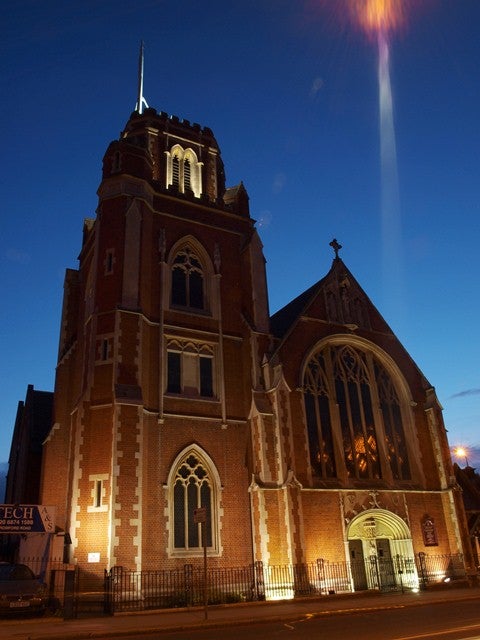
When entering a Roman Catholic church, cathedral, basilica or other sacred space, shoes are generally left on but men should remove hats or caps. These spaces are considered sacred 24 hours a day – not only when they are being used. Responders should treat sacred spaces with respect and deference and refrain from certain behaviors such as eating, drinking, talking loudly, touching objects, or entering certain areas without permission. Visitors should wear conservative clothing covering the shoulders and knees. Stand when a priest enters the room and remove hats or caps. Ask before participating in worship services and do not take communion unless you are Roman
Catholic. Ushers can help with customs, dress, and etiquette.
GOVERNANCE / JUDICATORY
- Holy See/Vatican: Global headquarters for Roman Catholicism, with leadership centralized in the Roman Curia (College of Cardinals) headed by a supreme pontiff, commonly called the pope. Located in Rome, Italy.
- U.S. Conference of Catholic Bishops: Seat of administration for U.S. Catholics nationally. Its offices are in Washington, D.C., and it is accountable to Rome.
- Archdioceses and Dioceses: Administrative districts led by a bishop, who oversees local parishes in a geographical area.
- Some Roman Catholic institutions and orders fall outside the supervision of these bodies of governance, such as monastics who answer to a monastic order that in turn answers to Rome.
MEETING LOGISTICS AND SCHEDULING
Scheduling and Holidays
Catholic churches observe the Sabbath each week with Masses on Sundays and often on Saturday nights. Avoid scheduling meetings Saturday evenings, Sundays and around the following holidays:
- Christmas: a celebration of birth of Jesus as God Incarnate.Ash Wednesday: the beginning of the Lenten season, a 40-day period before Easter focused on self-examination, fasting
and penance in preparation for Easter Day observance. - Ash Wednesday: the beginning of the Lenten season, a 40-day period before Easter focused on self-examination, fasting and penance in preparation for Easter Day observance.
- Holy Week: week before Easter; begins with Palm/Passion Sunday (recalling Jesus’ return to Jerusalem); includes Holy Thursday (recalling Jesus’ institution of the practice of Holy Communion during his last meal with his disciples) and Good Friday (recalling Jesus’ crucifixion).
- Easter Sunday: the most important point in the Christian year celebrating the resurrection of Jesus from the dead.
- Pentecost: commemorating the receipt of the Holy Spirit by the nascent Christian community, fifty days after Jesus’ Resurrection; considered the birthday of the Church.
Food
In general, there are few dietary restrictions for Roman Catholics. Many Roman Catholics do take very seriously laws of fasting and abstinence, refraining from eating meat on certain days and limiting the quantity of food on other days. During the season of Lent, many Roman Catholics abstain from eating meat on Fridays, but may eat fish.
Logistics
The senior priest/Pastor of a parish has ultimate authority within the parish on spiritual, financial, and administrative decisions. They may be assisted by a business manager or parish associate who oversees the day-to-day operation of the parish and answers to the Pastor. It is important to foster a relationship and buy-in with the manager, as they often know the inner workings of the parish even if they do not hold the title of authority and power. The parish secretary is often a key contact.
DRESS
Roman Catholic dress is usually a combination of culture and ethnicity, not religious requirement. Lay Roman Catholics do not wear distinctive clothing but may wear religious medals or a crucifix on necklaces. When not engaged in a Mass or formal event, Roman Catholic priests, including Bishops and Archbishops, usually wear black pants and dress shirts, with a distinctive white tab collar and sometimes a black suit jacket. During religious events, parish priests normally wear robes called albs, Ushaped sashes worn around the neck called stoles, and sometimes a decorative robe-like outer layer called a chasuble. However, it is not uncommon in some places and situations to see priests in regular street clothing. Some monks and nuns wear distinctive identifying garments (robes and habits).
ABOUT CHRISTIANITY: ROMAN CATHOLICISM
In the U.S., Roman Catholics make up about 25 percent of the entire population and number about 78.4 million. Although U.S. Roman Catholics come from varying backgrounds, the group increasingly identifies as Latino or Hispanic. As a whole, the Church is experiencing growth in many regions, predominately in the Southwest and West Coast.
Roman Catholicism is a monotheistic Christian religion that believes Jesus Christ – who was both human and God – died to save all people from their sins. Central to the religion is the belief in the Holy Trinity, or the fact that God is omnipresent in three beings – the Father, the Son (Jesus Christ), and the Holy Spirit. Catholics believe that Jesus is the Son of God, conceived by
the power of the Holy Spirit and born to a virgin human mother named Mary. Other key beliefs include:
- Belief in apostolic succession (direct, continuous descent of leadership from Jesus’ apostles to the present), in the headship of the Pope in Rome, and in the threefold ministry of bishops, priests, and deacons.
- Emphasis on the necessity and efficacy of seven Holy Sacraments, including baptism, Eucharist, prayers for the sick, marriage, confirmation, confession/penance, and holy orders/ordination.
- Belief in transubstantiation, the notion that during the ritual of the Eucharist, the elements of bread and wine become the actual body and blood of Christ.
- Emphasis on the veneration of Mary, the Mother of Jesus, and of the saints.
Click here for the PDF version for this tip sheet.
Engaging Jewish Leaders
Click here for the PDF version of this tip sheet.
Religion Called: Judaism
Adherents Consider Themselves: Jewish and are called Jews
House of Worship: Synagogue (or Temple for many liberal congregations)
First Point of Contact: Temple or community center board of directors and/or Rabbi
Religious Leader: Rabbi
Spoken Direct Address:Use “Rabbi”
Physical Interaction: Avoid physical contact with Orthodox Jews of opposite gender

HOUSE OF WORSHIP
- Synagogue (Greek for “House of Assembly”), Shul (Yiddish), Beth Knesset (Hebrew), and Beth Midrash (Hebrew).
- Many Liberal Congregations use the term “Temple.” This term should not be used for Orthodox synagogues.
RELIGIOUS LEADERS
Ordained/Commissioned/Licensed Leaders
- Rabbi: Means “teacher.” Many Rabbis are employed by a synagogue’s congregation to lead worship and provide spiritual guidance. In Liberal Jewish Congregations, the Rabbi may be female.
- Rebbe: Spiritual leader of a Chasidic community who governs the entire community and junior Rabbis.
- Rosh Yeshiva: Title given to the dean of a Talmudic academy (Yeshiva or Mesivta).
Lay Leaders
- Synagogue Board of Directors: Hires Rabbis and governs/approves use of congregational resources.
- Rebbetzin: Wife of a rabbi, typically from the Orthodox or Chasidic congregations (Very influential in community).
- Jewish Day School Principal: Most senior teacher, leader and manager of a Jewish Day School.
- Jewish Community Center (JCC) Executive Director: Responsible for managing the general recreational, social and fraternal needs of the local the Jewish community.
POINTS OF CONTACT
- Local: Synagogues via Rabbi and/or Executive Director/Board of Directors. Some Jews may not attend synagogue but could be reached through a JCC. In Orthodox and Conservative Judaism, a Vaad is a council of local Rabbis. In Chasidic Judaism, contact the Rebbe’s staff.
- Regional: The Jewish Federations of North America represents 153 Jewish Federations and 300+ network communities. Jewish Community Relations Councils are the central coordinating/resource body for a region.
- National: Many synagogues are affiliated with one of the major movements which provide standards, vision, leadership, and programmatic support; while some are completely independent. Of the approximately 3,700 synagogues in the U.S., 40 percent are Orthodox, 26 percent are Reform (largest movement in the U.S. by adherants) and 23 percent Conservative. Chabad/Lubavitch-Chasidic congregations are the most widespread across the U.S. Synagogue Organizations: Union of Orthodox Jewish Congregations of America (Modern Orthodox); Agudath Israel of America (Centrist); National Council of Young Israel (Orthodox); Chabad-Lubavitch (Chasidic); United Synagogue of Conservative Judaism (Conservative); Union for Reform Judaism (Reform); Jewish Reconstructionist Communities (Reconstructionist).
NVOAD MEMBERSHIP AND CORE CAPABILITIES IN DISASTER
National Voluntary Organizations Active in Disaster (NVOAD) is a nonprofit, nonpartisan, membership based organization that serves as the forum where organizations share knowledge and resources throughout the disaster cycle. FEMA DSA team members should check with their VAL to determine whether local or regional VOADs exist in their operational area.
- National VOAD members include: Jewish Disaster Response Corps, National Association of Jewish Chaplains (NAJC), NECHAMA – Jewish Response to Disaster
- The Jewish Federations of North America (JFNA) – umbrella organization which coordinates Jewish Voluntary Organizations Active in Disaster (JVOAD)
ETIQUETTE QUICK TIPS
Greeting
When introducing yourself to a religious leader, use formal religious titles unless instructed otherwise (e.g. Rabbi).
Physical Interaction
As a general rule, avoid initiating physical contact when meeting or greeting Orthodox religious leaders. Most Orthodox Jews do not exchange handshakes with or embrace people of the opposite gender, as a gesture of respect and modesty. When greeting a Jewish person of the opposite gender, one should wait until to see if they extend their hand to shake, rather than first extending one’s own. In the Reform, Conservative and Reconstructionist movements a handshake introduction would welcomed. When in doubt, ask before making assumptions or wait for the other person to initiate the greeting. Male disaster response personnel should also never be alone with an Orthodox woman (have other women present).
Other
Male visitors to a synagogue or religious home may be offered or choose to wear a skull cap (yarmulke or kippah), or when visiting religious homes, wear a hat or baseball cap. Ask before participating in worship services. Ushers can help with customs, dress, and etiquette. Jewish homes should not be visited on the Sabbath and the major Jewish Holidays. A Mezuzah on the right side of the front door is the simplest indicator that a Jewish family lives in the house.

GOVERNANCE / JUDICATORY
U.S. Judaism is non-hierarchical. There is no Chief Rabbi or in any city within the U.S.
MEETING LOGISTICS AND SCHEDULING
Scheduling and Holidays
Saturday is the Jewish Sabbath (Shabbat in Hebrew and Shabbos in Yiddish), the day of rest. Shabbat is observed from 18 minutes before sunset on Friday evening until approximately 48 minutes after sundown on Saturday or after the last day of one of the holidays listed below. Observance includes attending Services, visiting family and friends, refraining from a range of activities including: using electricity, driving, cooking, carrying objects outside of the home or community boundary if established, showering, traveling, writing, working, and tearing objects. Disaster staff should avoid non-emergency meetings on Saturdays, but note that rabbinic law actually requires people to violate Shabbat to save human lives. Yom Kippur, Rosh Hashanah, Sukkot, Simchat Torah, Passover, and Shavuot are holidays when business activities are prohibited and meetings should be avoided on these days.
Food
Orthodox and many Conservative Jews follow Kosher dietary rules in accordance with Halakha (Jewish law). Most Reform and Reconstructionist Jews do not keep kosher but may choose to avoid eating pork products. Food that is acceptable meets the standards of kashrut (kosher). In Kashrut, meat and dairy products are not served at the same meal. Kosher animals include cows, sheep, goats, chickens, turkeys, ducks and most fish. Reasons for food not being kosher include the presence of ingredients derived from non-kosher animals (pigs, horses, carnivores, shellfish, scavenger fish and birds, etc.) or of kosher animals that were not slaughtered in the ritually proper manner. Other reasons include mixing meat and milk, producing wine or grape juice (or their derivatives) without rabbinic supervision, or cooking with non-Kosher cooking utensils/machinery. Orthodox Jews and many Conservative Jews will only eat food that has been certified by a Nationally recognized Kosher Certification Organization. The four nationally recognized Hechsher (Kosher approval) symbols are:

Logistics
Respecting the Sabbath, major Jewish holidays, and keeping the congregation facilities kosher are the most important things to keep in mind when asking for congregation assistance. Bringing Kosher food into a Synagogue must be closely coordinated with the Congregation’s Rabbi. All Kosher food offered must be certified and have an approved Hechsher label on every item.
The capacity to provide disaster assistance (e.g. shelter and/or meals) to displaced people is directly dependent on the resources of each individual congregation; some may have the infrastructure and financial means and some do not. Some larger congregations will also have dining halls or classrooms that can be used as shelters during a disaster; it is be wise to ask for these spaces first instead of sanctuary space.
DRESS
In post-disaster settings, some Jews may or may not immediately choose to self-identify. Orthodox Males will wear a Kippah or Yarmulke (skullcap) and may be wearing a black hat, baseball cap or some other form of headgear. Most Orthodox males will wear tzitzit (fringes) which may be hanging out of their shirts or they may be tucked into their shirts. Married Orthodox females may be wearing a wig (Sheitel) or other head covering over their hair. Some may wear loose fitting clothing, long skirts and long sleeves that go past the elbow. Orthodox men and women dress modestly as a sign of respect.
ABOUT JUDAISM
Judaism is the first and oldest monotheistic religion. Its origins date back approximately 3,500 years. There are an estimated 13 million Jews living in the world today. Approximately 42% of Jews live in the United States. There are two basic divisions within Judaism: Ashkehnazic (Descendants of Jews from France, Germany and Eastern Europe) and Sephardic (Descendants of Jews from Spain, Portugal, North Africa and the Middle East). Ashkenazi Jews can be further classified further into Orthodox Judaism and into Liberal Judaism. In North America, the four main branches of Judaism are Orthodox, Conservative, Reform, and Reconstructionist:
- Orthodox Judaism maintains that the Torah and Jewish law are divine in origin, eternal, unalterable, and be strictly followed. The Orthodox movements are all very similar in belief but may differ in customs and prayer liturgy.
- Reform Judaism (largest of the four) subjects religious law and customs to human judgment, attempting to differentiate between the facets of the Torah that are divine mandate and those that are specific to the time in which they were written.
- Conservative Judaism developed mainly in the 20th century and sought to conserve tradition by applying new, historical methods of study within the boundaries of Jewish law to mainstream American society.
- Reconstructionist is the newest denomination within Judaism. It rejects the assertion that the Torah was given to Moses at Mount Sinai and views Judaism as a continual process of evolution, incorporating the inherited Jewish beliefs and traditions with the needs of the modern world.
Click here for the PDF version of this tip sheet.
Engaging Muslim Leaders
Click here for the PDF version of this tip sheet.
Religion Called: Islam or Al-Islam
Adherents Consider Themselves: Muslim and are called Muslims
House of Worship: Masjid (pronounced “mos-jid” or “mos-jeed”) a.k.a. mosque
First Point of Contact: Usually the masjid board of directors or Imam in some cases
Religious Leader: Imam (pronounced “ih-mom” or ih-mam)
Spoken Direct Address: Use “Imam”
Physical Interaction: Avoid physical contact with those of opposite gender
HOUSE OF WORSHIP

- A masjid (place of prostration in Arabic) or mosque is a place for Muslims to gather for Salat (ritual prayer).
- In the U.S., many cities have at least one Islamic Center – which includes a mosque, but also features facilities foreducation, religious counseling, and dispute settlement.
- Dergah = a place where Sufis gather for fellowship, instruction, and prayer.
RELIGIOUS LEADERS
Ordained/Commissioned/Licensed Leaders
- Imam: prayer leader; may also function as a spiritual advisor and expert in Islamic Law. (Traditionally, a congregation’s Imam is a man; a woman may serve as prayer leader for a women-only gathering.)
- Shaykh/Shaykha: spiritual leader (usually male, occasionally female), especially of a Sufi Circle.
Lay Leaders
- Members of a mosque’s board of directors.
- Muslim Chaplain: a Muslim man or woman with special training, able to give spiritual care in a hospital, prison, university, or the military.
POINTS OF CONTACT
- Local: Islamic Center / Mosque (called Masjid in Arabic). Many U.S. Islamic centers and mosques are independent, and are overseen by a board of directors. For many U.S. Muslim congregations, the president of its board of directors is the chief decision maker, and may also be its most public representative. For others such as those congregations in the black Muslim community, this role is assumed by (or is shared with) the imam. First point of contact should be the board of directors or for the black Muslim community the board of directors in conjunction with the imam.
- Regional: Sometimes a “Shura Council” (a voluntary association).
- National: These groups are examples of organized national bodies without formal authority. They often serve an advocacy and/or convening role within a segment of the larger Muslim community. However, they do not represent the full diversity of Muslim communities in the U.S.: Islamic Society of North America, American Society of Muslims, Islamic Circle of North America, Universal Muslim Association of America, The Mosque Cares
NVOAD MEMBERSHIP AND CORE CAPABILITIES IN DISASTER
National Voluntary Organizations Active in Disaster (NVOAD) is a nonprofit, nonpartisan, membership based organization that serves as the forum where organizations share knowledge and resources throughout the disaster cycle. FEMA DSA team members should check with their VAL to determine whether local or regional VOADs exist in their operational area. National VOAD members include ICNA Relief USA and Islamic Relief USA.
TIPS FOR CULTURE AND SOCIAL INTERACTION
Greeting
When introducing yourself to a religious leader, use formal religious titles unless instructed otherwise (Brother/Sister, Imam).
Muslims greet one another, and can be greeted by, the Arabic salutation “As-Salamu Alaykum” (peace be upon you), to which the response is ”Wa alaikum assalaam” (And upon you be peace).
Physical Interaction
As a general rule, avoid initiating physical contact when meeting or greeting religious leaders from religious traditions that differ from your own, especially those of the opposite gender. Muslims do not generally exchange handshakes with, or embrace, people of the opposite gender. Staff and other guests should understand that this is not a sign of rudeness, but a cultural and/ or religious custom. Therefore, when greeting a Muslim of the opposite gender, one should wait until or if they extend their hand to shake, rather than first extending one’s own. Be prepared with an alternate gesture, such as placing the right hand on one’s own heart when being introduced. When in doubt, ask before making assumptions or wait for a leader to initiate. As holding hands and kissing cheeks between people of the same gender is common practice in some ethnic and cultural traditions, it would not be uncommon for a leader to hold someone’s hand while escorting them through a building or to a speaking position.
Other
Remove shoes before entering a mosque to respect the way that the community treats their sacred space. Both men and women should dress modestly. Men should wear long pants and women should cover the head, arms and legs. Ask before participating in worship services.

GOVERNANCE / JUDICATORY
- There are no senior Muslim clerics in the U.S. with authority over all other imams in the United States.
- Many communities have an Imams Council, sometimes called a Shura Council, which addresses areas of concerns to local Muslims, engages in advocacy, provides social services, and issues opinions on matters of Islamic Law.
MEETING LOGISTICS AND SCHEDULING
Scheduling and Holidays
Many Muslims observe five daily prayers. While brief (about 5-10 minutes each), these should be considered when scheduling meetings. Special considerations should be taken during the month of Ramadan. Be flexible in meeting scheduling to accommodate adjusted schedules as participants may wake up earlier and/or go to bed later than normal, as well as observe ritual prayer five times per day. Ideally, meetings should be scheduled during the mornings and food should not be served.
Muslims follow a 12-month lunar calendar. Major observances vary by sect or school of thought, and may include: The First of Muharram (celebrated by some branches of the Muslim community; merely noted by others), The Ten Days of Muharram, ‘Ashura (the Tenth of Muharram), Milad al-Nabi (the Prophet’s Birthday), Ramadan/Ramazan: a month of total fasting from food and liquids (and from intercourse and smoking) during daylight hours, Laylat al-Qadir (Night of Power): all-night prayer during Ramadan, Eid al-Fitr (Festival of Fast-Breaking), Eid al-Adha (Festival of Sacrifice).
Food
Halal Food: Many Muslims follow religious dietary laws written in the Quran. These dietary laws are defined by the Arabic terms halal (permitted) and haram (prohibited). In accordance with the Quran, pork and alcohol are examples of items considered to be haram. Therefore, many Muslims will only eat food from halal food sources, including caterers, purveyors, and MREs (Meals Ready to Eat). Halal food sources include meat that has been ritually slaughtered (zabiha). Provide a zabiha/halal option, or, if unavailable, a vegetarian option if scheduling a meeting where food is provided. In addition, snacks should not contain gelatin, meat, meat byproducts, lard, and vanilla or other alcohol-based ingredients.
Ramadan Fast: Muslims often fast from sunrise to sunset during the lunar month of Ramadan, the most sacred month in the Muslim religious calendar. Ramadan, a period of self-reflection and charitable acts or giving, includes ritual prayer, daytime fasting, and communal pre-dawn and sunset meals. During Ramadan, Muslims eat breakfast (suhr/suhoor) before dawn and refrain from eating and/or drinking until sunset.
Logistics
Generally, Muslims will be comfortable sharing space with others without requiring much in the way of specific items, aside from a floor covering during prayer. Some may be more comfortable sitting on cushions on the floor rather than Western-style in chairs. Depending on ethnic and cultural origin, it is not uncommon for men and women to congregate by gender for conversation, eating, and socializing. Some Muslims may have a culture of greeting before discussing business. This could include sharing drinks, a meal, or engaging in conversation. It may be considered rude to start discussing business without first going through these rituals.
DRESS
Muslims may dress in clothing that may fall outside of American/Western fashion norms. Males may wear a small hat (kufee) or turban. Some may wear long robes (thobes) or a long shirt and pant set (shalvar-kameese). Some males may wear their pant-legs slightly shorter than the standard fashion. Females may wear a head covering (hijab) over their hair, ears, and neck.
Some may cover their entire bodies with loose fitting clothing, covering all of their body, except for their face, feet, and hands, called an abaya. Though not generally common in the United States, some females may veil their faces, using what is called a niqab, wear elbow length gloves, or a burka, if covering the body from head to toe. Islamic dress is usually a combination of culture and ethnicity as much as piety. It is a false assumption that females are forced or required to dress modestly, and most would be deeply offended by that assumption. Islamic dress does not indicate a person’s level of education or reflect on a particular conservative (or liberal) religious or political orientation.
ABOUT ISLAM
Islam, the world’s second largest religion, has an estimated one and a half billion adherents, from nearly every racial and ethnic background. Between 2-6 million Muslims live in the U.S. and worship at over 2,100 masjids. The population is made up of three major groups: African-Americans, South Asians (including Indians, Pakistanis, and Bangladeshis), and Arabs. There are smaller populations of Latinos, Europeans and Caucasians. Islam, which means “submission to Allah (God),” has five pillars: prayer, fasting, charity, pilgrimage to Mecca, and testifying on the oneness of Allah and the prophethood of Mohammad. Their holy book, the Quran/Koran speaks of caring for the poor, a day of judgment, and the afterlife. Islam is comprised of two major sects, Sunnis (the majority) and Shiites, and several other smaller sects. The religion is called Islam. “Islamic” is an adjective; adherents are called Muslim.
Click here for the PDF version of this tip sheet.
Engaging Sikh Leaders
Click here for the PDF version of this tip sheet.
Religion Called: The Sikh (commonly pronounced seek, properly pronouced “sick”) faith, Sikhi, or Sikhism
Adherents Consider Themselves: Sikhs
House of Worship: Gurdwara a.k.a. temple
First Point of Contact: President of board of directors
Religious Leader: No ordained leaders; a Gyani leads prayer and Granthi may lead worship
Spoken Direct Address: Use “Sardar Sahib” for males and “Sardarani Sahiba” for females
Physical Interaction: Handshake O.K. across genders

HOUSE OF WORSHIP
Sikh houses of worship are called gurdwaras, which are commonly referred to as temples in English. Typically, a gurdwara includes a commercial kitchen as well as a hall for community worship and meals (langar hall).
RELIGIOUS LEADERS
Ordained/Commissioned/Licensed Leaders
- Sikhism has no clergy. Religious services may be lead by either a Granthi (specially trained to lead worship) or any baptized adult member of the community who wears the required articles of faith, male or female.
Lay Leaders
Sikhism teaches egalitarianism and a leveling of caste distinctions. Therefore, the role and place of women is parallel to that of men, but preferences for men in leadership roles may be present in communities.
- Gyani (or giani): A man who sings sacred prayers – specially trained and knowledgeable of Sikhism.
- Granthi: A male or female worship leader who tends and reads the sacred scripture. A Granthi is someone with deep knowledge of the scriptures, who is also able to teach others about it.
- Ragi: A musician who knows the ragas (sacred prayer melodies).
- Board of Directors: Gurdwaras are governed by members of their board of directors who control operations and finances.
POINTS OF CONTACT
- Local: Gurdwara, independently governed by a board of directors. The first point of contact should be President of the board of directors, a position which is sometimes held by the gyani.
- Regional: N/A
- National: The World Sikh Council – America Region
NVOAD MEMBERSHIP AND CORE CAPABILITIES IN DISASTER
National Voluntary Organizations Active in Disaster (NVOAD) is a nonprofit, nonpartisan, membership based organization that serves as the forum where organizations share knowledge and resources throughout the disaster cycle. FEMA DSA team members should check with their VAL to determine whether local or regional VOADs exist in their operational area.
While there are no Sikh organizations that are NVOAD members, The United Sikhs and the Sikh Coalition are active partners in state and local VOADs.
Sikhs have often used Gurdwaras during disaster to facilitate the preparation of hot meals to be served directly from the Gurdwara or delivered to shelters. Sikh organizations are also leaders in human rights issues and advocacy.
ETIQUETTE QUICK TIPS
Greeting
When introducing yourself to a religious leader, use formal religious titles unless instructed otherwise. Sikhs greet one another, and can be formally greeted by non-Sikhs with the Punjabi salutation—Sat Sri Akal (roughly translated as “Blessed is the person who says God is Truth”) while bringing the palms together at chest level (known as Anjali) and slightly bowing the head in a humbling and respectful posture.
Physical Interaction
As a general rule, avoid initiating physical contact when meeting or greeting religious leaders from religious traditions that differ from your own, especially those of the opposite sex. Initiating gestures common in the U.S. such as shaking hands or hugging/ embracing may be considered inappropriate or offensive. Be prepared with an alternate gesture, such as the “Sat Sri Akal” greeting. When in doubt, ask before making assumptions or wait for a leader to initiate. Sikhs do exchange handshakes with, or embrace, people of the same and opposite genders.
Other
Remove shoes before entering a Gurdwara to respect the way that the community treats their sacred space. Both men and women must cover their heads upon entering a Gurdwara and should dress modestly. Some Gurdwaras may provide head coverings for visitors near the door. Ask before participating in worship services.

GOVERNANCE / JUDICATORY
The Akal Takhat (located in Amritsar, Punjab) is the highest juridical authority for Sikhs worldwide; this office has the authority to issue edicts to provide guidance or clarification on any matter of Sikh doctrine or practice. It can also issue reprimands.
MEETING LOGISTICS AND SCHEDULING
Scheduling and Holidays
- Sikhs follow a modified lunar calendar that includes six primary holidays.
- All holidays follow a similar pattern of celebration: three days of worship, with special food distributed free from the langar.
- The dates for commemorating the birth of each of the ten gurus are distributed throughout the year. Those of the founder (Guru Nanak) and of the tenth guru (Guru Gobind Singh) are especially important.
- Baisaki is a commemoration of the formation of the Khalsa in 1699.
- Guru Granth Day celebrates the proclamation that the Sikh scripture is the perpetual living Guru.
Food
Many Sikhs follow both cultural and religious dietary practices written in the Guru Granth Sahib (Sikh holy book). Sikhs are forbidden from eating halal and kosher meat. They are also forbidden from consuming alcohol and other intoxicants. All other foods are permissible, except those containing liquor or other intoxicants. Many Sikhs may be vegetarians out of cultural tradition or personal conviction, although such a prescription is not made by religious dietary law. Provide vegetarian options if scheduling a meeting where food is provided. In addition, snacks should not contain gelatin, meat, meat byproducts, or lard.
Logistics
Meals served from a Gurdwara’s langar are to be completely vegetarian. Sikhs are forbidden from bringing meat of any kind into the langar. This should be taken into account if disaster response staff request use of a Gurdwara during response and recovery operations.
Some Sikhs may have a culture of greeting before discussing business. This could include sharing tea, a meal, or engaging in conversation. It may be considered rude to start discussing business without going through these rituals.
DRESS
- Clothing: Sikhs may dress in clothing that falls outside of American/Western fashion norms. Although it is common for Sikh men to wear western clothing with a turban, older Sikhs and recent Sikh immigrants may wear ethnic or regional Punjabi garb. Baptized males (called Amritdhali or Khalsa) are required to wear a turban (dastar) – boys wear a thin head covering (patka) . Some may wear a long shirt (kurta) or pant set (salvar-kameez). Some males may wear their pant-legs slightly shorter than the standard fashion. Females may wear a head covering called a chunni (common) or a turban (less common) over their hair. Some may wear a long shirt and pant set (salvar-kameez) or a loose fitting wrapped dress (sari). Sikh dress does not indicate a person’s level of education or reflect on a particular conservative (or liberal) religious or political orientation.
- Headdress: The Sikh turban (dastar) is a crown of commitment and dedication to serve all humanity. It is an article of faith that represents honor, self-respect, courage, spirituality, and piety. Observant Sikhs also wear the turban partly to cover their long, uncut hair (kesh). The turban is mostly identified with the Sikh males, although some Sikh women also wear a turban. The Sikh faith regards gender equality as an important part of its teachings.
- Articles of Faith: The five articles of faith (Panji Kakar) are required to be worn by baptized Sikhs at all times. They are commonly called the “Five Ks,” and are not only symbols, but also articles of faith that collectively form the devotee’s external identity and commitment to the Sikh “way of life” (rehni). The Five Ks include Kesh (uncut hair), Kangha (hair comb) Kara (steel bracelet), Kachera (cotton undergarments), and Kirpan (a strapped curved dagger/small sword).
- Disaster staff should be familiar with these articles, especially the Kirpan and recognize that it is a required article of faith, not a weapon. The right to wear the Kirpan, including in U.S. federal buildings, has been protected by numerous legal decisions. Some Sikhs only wear a small replica Kirpan.
ABOUT SIKHISM
Sikhism, the world’s fifth largest religion, has an estimated 25 million adherents. Approximately 500,000 Sikhs live in the U.S. and worship at over 250 gurdwaras. Sikhs do not have clergy. Founded just over 500 years ago, Sikhism preaches a message of devotion and remembrance of God at all times, truthful living, equality of humankind, social justice and denounces superstitions and blind rituals. Sikhism is based on the teachings of its ten Gurus enshrined in the Guru Granth Sahib (Sikh holy book). Sikhs are the disciples of God who follow the Guru’s writings and teachings. The word “Sikh” means “disciple” in the Punjabi language. The religion is called Sikhism. (Sikh is also an adjective; adherents are called Sikhs, pronounced “sick”).
Click here for the PDF version of this tip sheet.
Engaging Hindu Leaders
Click here to download a PDF of this tip sheet.
Religion Called: Hinduism (or Sanatana Dharma or Vedanta)
Adherents Consider Themselves: Hindu and are called Hindus, or followers of Sanatana Dharma or devotees of a guru
House of Worship: Temple
First Point of Contact: Temple board of directors
Religious Leader: Pandit or Pujari, commonly known in English as “priest”
Spoken Direct Address: Use “Swami” for male priests and “Swamini” for female priests
Physical Interaction: Do not touch priests – optional “Namaste” greeting (see below)
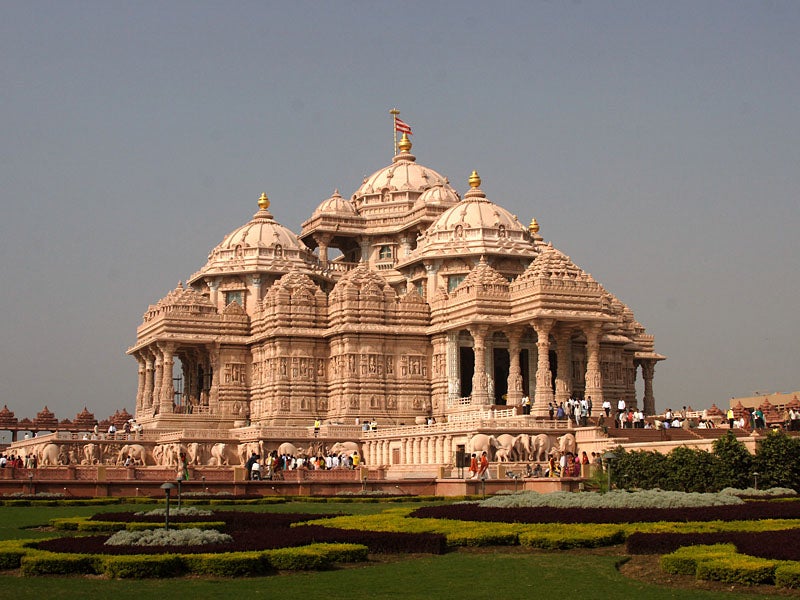
HOUSE OF WORSHIP
- In the U.S., Hindu houses of worship are often called temples.
- Occasionally, a synonym from one of India’s many languages may be used.
- A mandir is Sanskrit for house of the divine.
- A place of study with a spiritual guide is called an ashram (a number exist in the U.S.).
RELIGIOUS LEADERS
Ordained/Commissioned/Licensed Leaders
In the U.S., a variety of traditional spiritual leadership terms are in use:
- Pujari: man specially trained to perform Hindu temple worship rituals, and is often referred to as a priest.
- Guru: teacher around whom disciples gather.
- Pandit or Pundit: scholar and teacher of Hindu literature, law, and ritual.
- Acharya: spiritual guide or instructor in religious matters, in some traditions believed to be an avatar of the divine.
- Swami: ascetic who has renounced his/her birth-name upon initiation into a monastic order.
Lay Leaders
Board of Directors: A Hindu temple founder or president of its board of directors may also be considered a religious leader. Many U.S. temples have been founded by women, or have a woman as chief officer. Temples are governed by lay members of their board of directors who retain control over temple operations and finances.
POINTS OF CONTACT
- Local: Temple / Mandir. Many U.S. Hindu temples are independent entities. First point of contact should be with the president of the board of directors.
- Regional: N/A
- National: N/A Unless the temple is a member of international movements such as Bochasanwasi Shri Akshar Purushottam Swaminarayan Sanstha (BAPS) or International Society of Krishna Consciousness (ISKCON).
NVOAD MEMBERSHIP AND CORE CAPABILITIES IN DISASTER
National Voluntary Organizations Active in Disaster (NVOAD) is a nonprofit, nonpartisan, membership based organization that serves as the forum where organizations share knowledge and resources throughout the disaster cycle. FEMA DSA team members should check with their VAL to determine whether local or regional VOADs exist in their operational area.
While there are no Hindu NVOAD members, Hindu organizations have been active in disaster relief and recovery. BAPS Charities mobilizes volunteers in post-disaster settings including provision of vegetarian food and other services. Hindu American Seva Communities is another charitable organization that has provided direct relief to disaster-affected individuals. ISKCON Food for Life provides vegan and vegetarian food relief.
ETIQUETTE QUICK TIPS
Greeting
When introducing yourself to a religious leader, use formal religious titles unless instructed otherwise.
Namaste greeting: Bringing the palms together at chest level (known as Anjali), slightly bowing the head in a humbling and respectful posture, and uttering the reverential salutation Namaste (translated as, “I bow to the divine in you,” in Sanskrit). This greeting is a good non-contact alternative especially when greeting someone of a different gender, age, or social status.
Physical Interaction
As a general rule, avoid initiating physical contact when meeting or greeting religious leaders from religious traditions that differ from your own, especially those of the opposite sex. Initiating gestures common in the U.S. such as shaking hands or hugging/ embracing may be considered inappropriate or offensive. Be prepared with an alternate gesture, such as the respectful “Namaste” greeting. Most Hindus do welcome handshakes with an embrace, but preferably between same sexes. Responders should understand that this is more customary than religious. Therefore, when greeting a Hindu of the opposite gender, one should wait until after the Namaste greeting to see if a hand is offered first before initiating a handshake. As holding hands between people of the same gender is common practice in some countries where Hinduism is prevalent, it would not be uncommon for a leader to hold someone’s hand while escorting them through a building or to a speaking position. When in doubt, ask before making assumptions or wait for a leader to initiate.
Other
Remove shoes before entering a Hindu home or temple to respect the way that the community treats their home or sacred space. Ask before participating in worship services.

GOVERNANCE / JUDICATORY
Some U.S. Hindu temples are members of international movements (For example temples affiliated with BAPS or ISKCON). In these cases, a national or international headquarters provides governance and sets policies.
MEETING LOGISTICS AND SCHEDULING
Scheduling and Holidays
Hindu holidays vary, depending on the theological branch in which one participates, whether one’s family is from North India or South India, and whether one belongs to one of the more recent Hindu reform movements. Holidays include: Krishna’s Birthday, Navarati, Vijayadasami, Holi, Diwali, and Ganesha festival.
Food
Vegetarian Food: Traditionally observant Hindus follow a Brahmin (vegetarian) diet in accordance with Hindu tradition. Therefore, many Hindus will only eat food from trusted vegetarian or vegan sources, including caterers, purveyors, and MREs (Meals Ready to Eat). The most orthodox Hindus also avoid onion, garlic, and gelatin byproducts. Fasting is commonplace and frequent, generally lasting just one day or one day a week, in connection with devotion to a particular deity or observance of a particular festival. Fasts may involve abstinence from certain foods only, or total abstinence from food and drink during daylight. Provide vegetarian options if scheduling a meeting where food is provided. In addition, snacks should not contain gelatin, meat, meat byproducts, or lard.
Logistics
Generally, Hindus will be comfortable sharing space with others without requiring much in the way of specific items. Some may be more comfortable sitting on cushions on the floor rather than Western-style in chairs. Depending on ethnic and cultural origin, it is not uncommon for men and women to congregate by gender for conversation, eating, and socializing. Hindus of some ethnic/cultural backgrounds may have a culture of greeting before discussing business. This could include sharing tea, a meal, or engaging in conversation. It may be considered rude to start discussing business without going through these rituals.
DRESS
In post-disaster settings, a Hindu person may or may not choose to self-identify and, despite common assumptions, their outward dress or appearance may not identify them as Hindu. Moreover, ethnic South Asian garb does not necessarily indicate religious observance. For example, Buddhists, Christians, Muslims, Sikhs, and members of other faith communities from South Asia may also wear the same/similar ethnic clothing. Religious Hindus (especially women) may dress in clothing that may fall outside of American/Western fashion norms. Females may wear a Salwar Kameez (a long shirt and pant set) or Saree (a 6 yard by 44 inch light weight cloth) draped over a draw string ankle length petticoat) and blouse. Hindu dress is usually a combination of culture and ethnicity, not a religious requirement. It is a false assumption that females are forced or required to dress traditionally, and most would be deeply offended by that assumption. Hindu dress does not indicate a person’s level of education or reflect on a particular conservative (or liberal) religious or political orientation.
Note that the male priest conducting religious ceremonies often does not wear a shirt.
ABOUT HINDUISM
Hinduism is the world’s oldest organized religion and the third largest, with an estimated one billion adherents. Approximately 2 million Hindus live in the U.S. and worship at over 1,000 mandirs (Hindu temples). Most American Hindus or their families have immigrated from India since 1965, but there are also Indo-Caribbean Hindus from Guyana and Trinidad and a small but growing number of white Americans and others who have come to Hinduism through ISKCON and/or yoga practice.
Hinduism is not a singular system of beliefs and ideas, but a conglomerate of diverse beliefs and traditions in which the prominent themes include: Dharma (ethics and duties), Samsara (rebirth), Karma (right action), and Moksha (liberation from the cycle of Samsara). Hinduism teaches that there is only one supreme Absolute called “Brahman.” However, it does not advocate the worship of any one particular deity. The gods and goddesses of Hinduism amount to thousands or even millions, all representing the many aspects of Brahman. Therefore, it is characterized by the multiplicity of deities. Fundamental to many Hindus is the Trinity of Brahma, Vishnu, and Shiva—creator, preserver, and destroyer, respectively.
Hindus believe in the Vedic (scriptural) mandate that “Truth is One,” and that the wise may express that truth in different ways. Therefore they believe that all paths to divinity are valid. A Hindu holy book, the Bhagavad Gita, emphasizes one’s duty to family, community, nation and the world in a selfless manner. Although Hinduism has sects, (e.g., Shaivites and Vaishnavites) these differences are not generally relevant in emergency contexts.
Click here to download a PDF of this tip sheet.
Additional Tips Sheets
-
Click here for a PDF version of this tip sheet.
Cultural competence is the level of knowledge-based skills of individuals or organizations required to provide effective engagement and disaster human services to impacted individuals of a particular cultural group (e.g., racial or ethnic).
Adapted from the Health Resources and Services Administration, Bureau of Health Professions, U.S. Department of Health and Human ServicesWHAT IS CULTURE?
Not only race & ethnicity — groups of people share many attributes, so culture can be defined in many ways.
- Involves shared customs, values, social rules of behavior, rituals and traditions, and perceptions of human nature and natural events. Elements of culture are learned from others and may be passed down from generation to generation. (Source: SAMHSA)
- Broadly defined as a common heritage or learned set of beliefs norms, and values (Source: DHHS, 2001).
- People often identify with more than one culture.
Consider the potential cultural needs related to:
- National origin
- Time in US
- Generation
- Political beliefs
- Perceptions of family and community
- Perceptions of health, well-being, and disability
- Education level
- Geographic location
- Language
- Individual values and life experiences
- Any others can you think of?
WHAT IS CULTURAL COMPETENCE?
The knowledge, skills, attitudes, policies, and structures needed to offer support and care that is responsive and tailored to the needs of culturally diverse population groups (SAMHSA).
Cultural competence is not about being politically correct; rather it is about customizing your engagement strategy to the needs of each group, meeting their needs in the way they want them met, and with the underlying mission of building trust and long-term, sustainable partnerships.
FIRST, LEARN THE BASICS OF THE GROUP(S) YOU ARE ENGAGING
- Refer to FEMA Tip Sheets for Engaging Religious Leaders (see options in menu at right/bottom of this page)
WHAT IS SAID
- Use appropriate forms of address—refer to FEMA Tip Sheets for Engaging Religious Leaders.
- Many lay community leaders also have titles such as Doctor, Brother, Sister, or simply Mr./Ms.
- Ask others for their preferred name/title if unsure—better to err on the side of caution and start with formal titles.
- Some religious traditions have greetings used by members; these may be appreciated but not required for those outside.
WHO’S SAYING IT
- Dialects, words, and even regional accents have different meanings within one language. Using bilingual staff is not always sufficient as the same language does not equal the same culture (e.g. differing socioeconomic backgrounds).
- Involve locals and local leaders, recruiting “cultural brokers”(including civic, spiritual, or religious leaders, teachers, local officials, or long-term residents). Ensure not only representation but active involvement in decision making. Hire locally.
- Where possible, empower local leaders to speak for you, using a train-the-trainer approach.
WHERE IT’S SAID
- Choose meeting locations thoughtfully, considering neutral spaces and those that are ADA-accessible.
- Consider rotating meeting spaces to ensure fairness and avoiding any appearance of bias toward one group, including any cultural factor, especially religion, neighborhood, or socioeconomic group.
- Know the special considerations for Tribal lands.
HOW IT’S SAID
- Use the best medium to reach your audience; not the easiest option for you. While some cultures place importance on written information, others rely heavily on social networks and find in-person communication to be more trustworthy.
- Use non-print medium (TV, radio, social media, in-person meetings) to reach those who may not be literate.
- Is your message linguistically relevant? Consider use of bilingual staff, an interpreter, and translated written material.
- When using an interpreter, there are special guidelines and considerations when working with survivors (see SAMHSA).
- Provide captioning or sign language interpreters for deaf and hard of hearing survivors—see FEMA ODIC for guidelines.
- Ensure the way of delivering your message is age-appropriate. Children have unique needs in disaster and may appreciate activities or games. Older generations may prefer verbal conversations over written documentation.
- Be cognizant of socioeconomic levels—comfort levels with receiving aid and experience with filing paperwork will vary.
- Pay attention to your own nonverbal communication and those of others including eye contact and body language. While direct eye contact is valued in the U.S.; in some cultures it is common to look down or avoid direct eye contact.
- What is verbalized or not verbalized varies by culture and affects which feelings are OK and which are expressed.
CLOTHING, JEWELRY, AND HEADDRESS
- Wear modest clothing when entering houses of worship. Generally, this means clothing that covers shoulders, knees, andelbows. FEMA short-sleeve polo shirts and shorts would not be appropriate for some houses of worship.
- Shoes should be removed when entering homes and houses of worship of Buddhists, Hindus, Muslims, and Sikhs.
- Men should offer to cover their head when entering homes and houses of worship of Jews and Sikhs. Remove head covering when entering most Christian houses of worship.
- Some items of jewelry such as bracelets, necklaces, or beads worn by both males and females may have religious significance and should not be touched or removed without the wearer’s permission.
FOOD
- If hosting a meeting where food is provided, ensure kosher, halal, and vegetarian options are available as appropriate. Ideally a hand-washing station should also be provided (see Hygiene and Washing Practices section).
- Kosher food needs to be offered from a separate serving area using separate utensils. Do not bring non-Kosher food into a synagogue, non-vegetarian food into a Gurdwara/Buddhist temple/Hindu temple, or non-Halal food into a mosque.
GENDER, PHYSICAL INTERACTION, AND PERSONAL SPACE
- Touch can be seen as a friendly gesture or as invasive.
- Cultural norms may mean someone moves closer to you or further away.
- Avoid initiating physical contact when meeting or greeting those from cultural traditions that differ from your own, especially those of the opposite gender. Initiating gestures common in the U.S. such as shaking hands or hugging/embracing may not be welcomed or met with the expected reaction.
- Be prepared with an alternate gesture, such as placing the right hand on one’s own heart when being introduced.
- When in doubt, ask before making assumptions, wait for a leader to initiate or ask first!
MEETING LOGISTICS, SCHEDULING, AND TIMEFRAMES
- Different cultures view time intervals and time durations differently, and perceptions can be altered during a disaster.
- Timeframes set by responders are not always meaningful or realistic for survivors.
- Remember many community & religious leaders are bi-vocational. Avoid meeting scheduling during the daytime when possible or rotate meeting schedules. Respect Sabbath days and religious holy days.
- Most religious groups are open to interreligious/interfaith/multi-faith dialogue. However it isalways important to ask about who they would partner with, as some groups are interested in limiting activities to their members.
ANIMALS
- Some groups including many individuals in the Muslim and Orthodox Jewish communities prefer not to come into contact with dogs.
- Reasons vary due to religious restrictions, reasons of historic violence, and/or cleanliness.
HYGIENE AND WASHING PRACTICES
- Each culture has its own practices about manner and frequency hygiene and bathing.
- Many religions including Islam, Judaism, and Sikhism have specific requirements around ritual hand washing as it relates to prayer and/or daily life.
- In Hinduism and Islam the left hand is considered “unclean” and it is culturally competent touse only the right hand when eating, offering/receiving something, or shaking hands.
VIEWS OF RELIGION/GOD IN DISASTER
Survivors’ views of religion in disaster vary widely—avoid ascribing cause/effect of disaster to religion or referring to God.
Avoid making assumptions of religious adherence based on dress/appearance. Some non-religious individuals may not understand/appreciate accommodations made for religious individuals.
-
This tip sheet explains the LEADER Process for Creating an Engagement Plan.
Step 1: Learn the disaster’s impact
Step 2: Educate yourself on local faith communities
Step 3: Assess your religious literacy & competency
Step 4: Determine engagement plan
Step 5: Engage religious leaders & communitiesClick here to download a PDF of this tip sheet.
-
Building religious literacy and competency is an ongoing process, with a wealth of self-directed study resources as well as classroom training available. A good starting point is taking a religious literacy self-assessment quiz and then proceeding to self-study with a focus on the religious traditions you work with. Smartphone apps are available for use in the field when scheduling meetings and for locating culturally-appropriate food vendors.
National Disaster Interfaiths Network and USC Center for Religion and Civic Culture Resources
Tip Sheets:
NDIN’s Disaster Tip Sheets for U.S. Religious Leaders have been developed to assist religious leaders in any community. Appropriate for any faith tradition, they address all-hazards planning and cover topics from across the entire disaster lifecycle, such as how they and/or their house of worship can respond to crises, including how to coordinate volunteers, manage donations, provide mass care, attend to spiritual and mental health needs, and continue their many services post-disaster.Disaster Tip Sheets for Faith Community Partners are provided to inform religious literacy, cultural competency and reasonable religious accommodation mandates for U.S. Mass Care providers, and to assist staff and volunteers in competently meeting the needs of several major religious groups during sheltering.
Field Guide:
Working with U.S. Faith Communities During Crises, Disasters and Public Health Emergencies. A Field Guide for Engagement, Partnership and Religious Competency is a detailed guide for engaging and building sustainable and competent partnerships with faith communities throughout the entire disaster lifecycle. The Field Guide provides suggestions, best practices, and guidance on how to approach the faith communities, religious leaders, and faith-based non-profits that make up this landscape to build durable, institutional relationships, and develop sustainable, faith-based emergency preparedness and response programs.Primer:
Religious Literacy Primer: For Crises, Disasters, and Public Health Emergencies is a quick-reference document which provides information on basic religious literacy for 24 of the largest religious communities in the United States. It is geared toward enabling emergency managers, public health officials, first responders, volunteers, voluntary agencies, and anyone involved in disaster response and recovery to understand how faith communities and emergency management intersect. The Primer provides guidance for physical interaction/etiquette, drawings of religious symbols, information on holidays, dietary restrictions, and provision of post-disaster mass care including shelter, medical treatment, and mental health care.Assess Your Own Level of Religious Literacy:
U.S. Religious Knowledge Quiz – Pew Forum for Religion and Public Life
Religious Literacy: What Every American Needs to Know—and Doesn’t – Stephen Prothero’s Religious Literacy Quiz
Web Resources for Religious Literacy and Competency
Pew Research, Religion and Public Life Project
Research and extensive U.S. religious landscape survey data.Religious Congregations & Membership Study
Data files on hundreds of religion surveys and provides the ability to map U.S. congregation data for individual cities, states, and zipcodes.Gallup Poll Topics and Trends
Provides survey data and reports on a number of religion trends in the United States.Hartford Institute for Religion Research
Comprehensive list of online religion data resources.The Tanenbaum Center
Resources including etiquette guides for addressing religious leaders and entering houses of worship.University of Southern California Center for Religion and Civic Culture
Research / publications on religious trends in the U.S.CLICK HERE TO SIGN UP FOR CRCC’S NEWSLETTER
Reports
A Local Official’s Guide to Working with Clergy and Congregations. Sacramento, CA: Institute for Local Government, 2010.
Farrag, Hebah, Brie Loskota, and Richard Flory. FAithful Action: Working with Religious Groups in Disaster Planning, Response and Recovery. Rep. Los Angeles: Center for Religion and Civic Culture, USC, 2012.
Hull, Pete. Heralding Unheard Voices: The Role of Faith-Based Organization and Nongovernmental Organizations during Disaster (final report), Homeland Security Institute, Prepared for the Department of Homeland Security Science and Technology Directorate, 2006.
Bridges, Dr. Diane. Culturally Sensitive Religious & Spiritual Care: Creating Resources (2004)
For more resources, including books and apps, please see the full PDF of the tip sheet:
Click here to download a PDF of this tip sheet.
Connect with CRCC
Building Knowledge, Strengthening Communities
Our mission is to advance the understanding of religion and society, and support faith and community leaders in becoming full partners in the work of positive social change.
Support Our Work
The USC Center for Religion and Civic Culture is independently funded by grants, contracts and gifts. We welcome your partnership and financial support.
Make a tax-deductible contribution to support our mission.
Contact Us
Center for Religion and Civic Culture
University of Southern California
Los Angeles, CA 90089-0520