Book
Edited by Ken Chitwood (Bloomsbury, 2026)

Edited by Ken Chitwood (Bloomsbury, 2026)
The rabbi often asks herself why she is so preoccupied with death, and attributes it to officiating at least two funerals a week and being a grandchild of Holocaust survivors. Today, she gives weekly talks on Talmud and Jewish mysticism in a theater filled to its 400-seat capacity, with the audience including, she says, psychoanalysts and film directors. “They understand the power of storytelling to change lives.”
The racist comments made in the conversation between four Los Angeles city leaders are morally reprehensible. Their bigotry reflects a desire to divide and disenfranchise the communities the council members were elected to serve.
In his response to the leaked recording of the exchange, Councilmember Mike Bonin ended his speech at the Los Angeles City Council meeting on October 11 expressing “hope” and “faith” that multiracial coalitions could bring change in Los Angeles.
Since 2016, CRCC has shared the trends in religion and society that we see shaping the coming year. What started as light-hearted predictions has grown more ominous over the years.
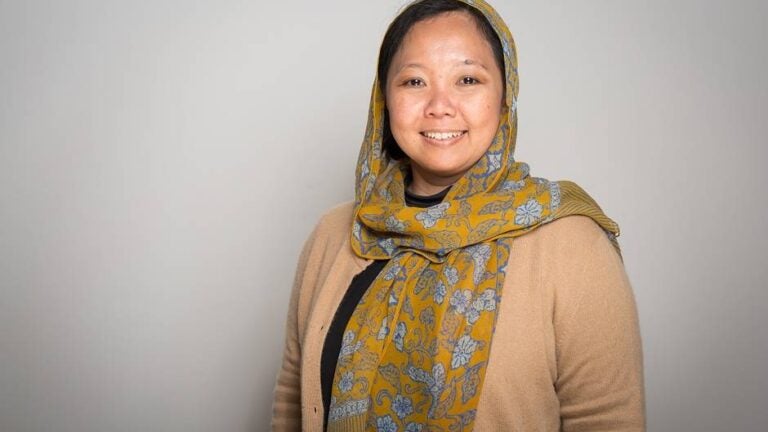
Even so, she channelled her family’s legacy into pioneering an interreligious movement of her own: the Gusdurian Network Indonesia (GNI). Founded in 2010, GNI works with grassroots-level activists across Indonesia to promote interreligious reconciliation, active citizenship, democracy, and human rights.
This report seeks to help practitioners, content creators, academics, and funders understand the landscape of religious literacy content being developed in education, new media, and journalism.
To the editor: Op-ed article writers Rachel S. Mikva, Corey D.B. Walker and Reza Aslan are rightly concerned that what passes for religious freedom in the U.S. is highly selective. Yet they seem puzzled as to why this is so. Why, they ask, is religious freedom for some groups favored over other groups, and second, why is the deciding issue always about sexuality and procreation?
That, as Karam tells it, is one of the prime directives of her tenure as RfP Secretary General — to raise up women’s voices within and across religious traditions and see her fellow females not only “take their seat at the table,” but step out in front and lead the way to meaningful change on a range of issues confronting the world today.
Our mission is to advance the understanding of religion and society, and support faith and community leaders in becoming full partners in the work of positive social change.
The USC Center for Religion and Civic Culture is independently funded by grants, contracts and gifts. We welcome your partnership and financial support.
Make a tax-deductible contribution to support our mission.
Center for Religion and Civic Culture
University of Southern California
Los Angeles, CA 90089-0520