
Division of Social Sciences
Understanding Human Behavior
From neighborhoods to nations, the Social Sciences study how societies organize, govern, and sustain themselves and how people come to make sense of their place within them. That order rarely holds for long. Borders move and power changes hands. Technology reshapes how people live and work just as quickly, often outpacing the institutions built to manage it.
USC Dornsife scholars in the social sciences meet this complexity on multiple fronts, poring over historical records, generating new data, testing ideas against existing evidence, and spending time learning in the spaces where change unfolds. What they learn feeds directly into public life, shaping the policies and institutions that determine how societies function. Working alongside leading faculty, our students learn to ask precise questions of complicated evidence, analyze complex data to answer them, develop the communication skills to convey them, and then translate answers to application.

What Problems Do You Want to Solve?
USC Dornsife students train alongside experts across the social sciences who are taking on some of our most pressing issues.
What’s New

USC Dornsife poll finds Democrats leading in four California congressional races redrawn under Prop. 50
Days before the election, a new poll offers a look at how California’s redistricting response to Texas is playing out in four congressional races.

Surprise guest: Former President Joe Biden joins USC students for a conversation about democracy
About 50 students got an unexpected opportunity to speak with the former president during a USC Dornsife Center for the Political Future study group, with pizza and ice cream on the side.

Word choice matters: The extinction of plants and animals is a crisis, but calling it an “extinction crisis” doesn’t help
A new study by USC Dornsife psychology researcher Wändi Bruine de Bruin finds that using unfamiliar terms results in less public concern and less willingness to support policies that could stave off the extinction of species.

More education reduces dementia risk decades later
Staying in school longer can protect against dementia, with particularly large benefits among people at higher genetic risk, according to a study by USC Dornsife economics scholars.

USC researchers develop low-cost AI tool to help cities map urban tree canopy
Using free aerial imagery and artificial intelligence, the tool gives cities an affordable way to target tree planting, expand shade and make smarter investments in climate resilience.

Ancestors all around – millions of dead people linger in Americans’ memories
The shadow population of deceased relatives is more than three times as large as today’s living population, writes USC Dornsife Professor of Sociology and Spatial Sciences Emily Smith-Greenaway.

Wildfires, falling EV interest and transit doubts test L.A. ahead of the 2028 Olympics
The latest USC Dornsife LABarometer survey finds Angelenos grappling with climate stress, doubting transit readiness for the Olympics and losing interest in electric vehicles.

Grievance and Power: What Colonial History Teaches Us About Political Retribution
A USC Dornsife historian discusses the deep roots of grievance in American politics.

The National Climate Assessment is broken – appointing Matthew Wielicki to lead it won’t help
What communities and businesses really need is information they can act on, with examples of what’s worked elsewhere and why — and what fails.
Social Sciences Centers and Institutes

Join the Dornsife Trojan Family
Why people vote the way they do. Why a community holds together or comes apart. Why a habit spreads. USC Dornsife experts across the social sciences spend their careers researching complex questions like these. Working alongside them, you’ll learn to notice patterns behind what makes society tick and how to use that knowledge to improve it. The skills you pick up travel well — into law, business, noprofits, government, or any field where the hardest part is the people.
But the professional doors that open are only part of your Dornsife Way. That same Dornsife education, no matter what you study, nurtures a love of learning and gives it direction along the way. For social science students, that direction often means turning an understanding of people into a way to help them. Your degree, over time, pays off in a richer understanding of the world and a meaningful life built around what you value and who you show up for.
Why Study Social Sciences?
Divisional Dean and Professor of History Bill Deverell
The big tent of the social sciences offers broad, interdisciplinary, rigorous, and exciting opportunities to explore how people build, and have built, social structures and societies. We can then deploy that foundational knowledge to wrestle with vexing, hard, and big problems.

Professor of Sociology Emily Smith-Greenaway
The social sciences are unique in that they enable students to develop both humanistic and analytic skills. Social science majors learn to think creatively and critically about the human experience, develop empirical research skills to analyze it, and gain communication skills to distill and convey complex findings. The social sciences will prepare students to strategize, innovate, and problem-solve – evergreen skills that remain in demand across various sectors in a rapidly evolving labor market.

Professor of Anthropology Peter Redfield
During a time of significant change and uncertainty, it is even more vital to understand what people do. The social sciences can provide a framework for that, along with a reminder of how humans can be both predictable and yet highly variable.
When you look technology and health from a social perspective, you soon recognize that people change and adapt the devices they use in unplanned ways. Paying attention and learning to ask thoughtful questions is an invaluable skill, especially when answers aren’t obvious.

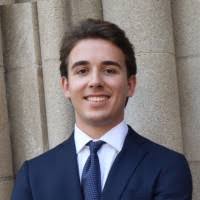
Patrick Done, Political Science Student
Studying the social sciences at Dornsife opened my eyes to perspectives I’d never considered. My classmates come from East LA, California, to Moshi, Tanzania, to Phuket, Thailand, and they’ve pushed me to look at today’s social and political problems in exciting new ways, teaching me both deep empathy and enduring pragmatism. My professors gave me the tools to analyze those problems and build practical solutions, and they made me want to do my part to expand opportunity for the next generation. From challenges to our democracy to the rise of artificial intelligence, understanding how societies and governments work has never mattered more. Dornsife gave me that understanding, and it will keep inspiring future Trojans to build meaningful careers for their families, communities, and nations.



USC Dornsife Spatial Sciences Institute (SSI)
SSI turns geospatial data into solutions for a healthy, prosperous and safe world. By harnessing the power of geospatial sciences and technologies, we foster collaboration, build consensus and support actions that tackle intractable global challenges.
Through innovative research and academic programs, SSI educates today’s and tomorrow’s spatial problem solvers to deploy spatiotemporal perspectives and insights across every possible discipline and industry.

Western Edition
A podcast from the Huntington-USC Institute on California and the West hosted by its director, William Deverell, tells the fascinating stories of the people and communities of our region, connecting the past to the present, and demonstrating the tightly woven fabric of history.

Fixing a Broken Poltical System
The USC Center for the Political Future (CPF) combines rigorous intellectual inquiry, teaching, and practical politics to advance civil dialogue and research that transcends partisan divisions and finds solutions to pressing national and global challenges. Our events, programs, scholarships, and internships inspire and train students for careers in public service and lifetimes of civic engagement.

Alumni Voices
Brian Femminella and Travis Chen started as roommates at USC who majored in Political Science and International Relations. Now, they’re the co-founders of a youth mind management tool that has raised more than $3 million. SoundMind app serves more than 100,000 users and is the go-to resource for 75 schools and more than 100 Boys and Girls Clubs nationwide.
