|
Black Movements in the US - Fall 2008 : Maulana Karenga and the US Organization
This page last changed on Dec 22, 2008 by rdkelley.
Maulana Karenga and the Us Organization Cannot resolve external resource into attachment. Cannot resolve external resource into attachment. Cannot resolve external resource into attachment.
History of UsCannot resolve external resource into attachment. Cannot resolve external resource into attachment.US Organization, or Organization Us, is a Black Nationalist group in the United States founded by Ronald Everett (Maulana Karenga) and several other advocates on September 7th, 1965 following the Watts Riot in Los Angeles, California. Early members of the organization include: Hakim Jamal, Dorothy Jamal, Tommy Jacquette-Mfikiri (Halifu), Karl Key-Hekima, Ken Seaton-Msemaji, Samuel Carr-Damu (Ngao Damu), Sanamu Nyeusi, and Brenda Haiba Karenga. "Out of the fires and struggle of that period they projected a new vision of possibility through service, struggle and institution-building." The Us Organization was developed from a study group called the Circle of Seven (which was led by Karenga), and Jamal was the one who introduced the term "Us." After the Watts Riot in Los Angeles, many Blacks within the community were dealing with social problems and issues. Although some think that "Us" standed for United Slaves, the term actually refers to Black people: US equals Black people versus THEM or THEY which equale the White oppressors. The Organization Us was considered a rival of the Black Panther Party. The two organizations differentiated in their aims, strategies, tactics, and visions. However, the two mainly encountered arguments with one another when it came to recruiting potential members. The Federal Bureau of Investigation only fueled this competition and hostility by "sending forged letters to each group which purported to be from the other group, so that each would believe that the other was publicly humiliating them." This rivalry became a matter of life and death in 1969, when the two groups had different opinions on who should head the Afro-American Studies Center at the University of California, Los Angeles. On January 17, 1969, a shooting between these two groups on the UCLA campus ended in the death of several people, including Alprentice "Bunchy" Carter. About UsUs is black nationalist organization that promotes the essential ideal of what it means to be African and human. Karenga's message about Us is this:"From the beginning, the essential task of our organization Us has been and remains to provide a philosophy, a set of principles, and a program which inspires a personal and social practice that not only satisfies human need but transforms people in the process, making them self-conscious agents of their own life and liberation. Such a transformative practice will, of necessity, also lead to the building of moral community and to the constant becoming of the best of what it means to be both African and human in the fullest sense." Dr. Karenga and his organization strive to promote fundamental qualities. It has established the philosophy, Kawaida (a Swahili term meaning "tradition and reason"), which encourages Africans to maintain a continuous dialogue with African culture and staying connected with the African community. Organization Us ultimately works towards creating a "just and good society." Organization Us constantly works to sustain and expand the dialog of African culture, expand political education, train social change agents who are concerned with "understanding the world," mobilize and organize people "around their own interests" by building new institutions and strengthening current ones, engage in activities geared towards establishing a just and good society, increase participation in projects, providing information and resources to the community, and most importantly "rebuild and sustain the liberation movement." To better illuminate its philosophy, Organization Us has constructed seven principles (Nguzo Saba): Unity (Umoja), Self-Determination (Kujichagulia), Collective Work and Responsibility (Ujima), Cooperative Economics (Ujamaa), Purpose (Nia), Creativity (Kuumba), and Faith (Imani). Together these seven principles are considered as standards; they are what individuals and society as a whole should try to maintain to achieve excellence and establish a strong and moral community, particularly within the African culture. The Us Organization has a semi-complicated hierarchy division. The "List of Titles" to individual members based on leadership roles is as follows: In addition to the hierarchy, Us had many subdivisions within the organization. It has produced: The Us Organization main objective was to influence the Black community to be nationalistic through political and cultural awareness. In general, the organization works for "self-determination, regional autonomy, and Black representation in electoral politics," they protested against the United States involvement in the Vietnam War, and they organized Black Power conferences in order to spread the word of Black nationalism along with becoming united with other organizations involved in the Black Power Movement. To do these things, one would think that the organization was fairly large. However, the organization had very few members compared to the other Black organizations during this era. At the most, the Us Organization had about six hundred members. Despite their relatively small membership, the organization was able to be directly involved in "urban uprisings, school walkouts, student strikes, and underground violent resistance." In 1967, the Us Organization united with the Black Congress. Together these two Organizations strived to promote unity by encouraging activism and bringing together different Black organizations with diverse ideologies. While in the Black Congress, the organization signed the "Treaty of Peace and Harmony, and Mutual Assistance" with the Spanish-American Federal Alliance of Free City States and they also both opposed the Vietnam War. To them, the Vietnam War violated their two principles of Creativity and Self-Determination. The Us Organization believed that the Vietnam War was destructive against human life and development instead of creative, which is it promotes human life. In addition, they thought that the people of Asia had their right to choose their own government, and the Vietnam War only destroys their self-determination to govern themselves. A key aspect of the Us Organization that distinguishes it from other Black nationalist organization like the Black Panther Party, is its principle of cultural nationalism. For the Us Organization, cultural nationalism involves connecting and uniting the Black community by educating them about African culture, history and ideals. In his book Fighting for Us: Maulana Karenga, the US Organization, and Black Cultural Nationalism Scot Brown describes cultural nationalism as being "the view that African Americans possess a distinct aesthic, sense of values, and communal ethos emerging from either, or both, their contemporary folkways and continental African heritage." The Us Organization believes that if they and the Black community were able to adopt this philosophy could they achieve liberation for the oppressed Black community. With the Black community being united under their common African culture can there be revolutionary change for the Black community. Cultural nationalism is a huge contrast to revolutionary nationalism, which advocates "armed struggle to achieve political or economic goals." The Black Panther Party was very fond of revolutionary nationalism instead of cultural nationalism which aided to their rivialry with the Us Organization. However, the Us Organization has displayed aspects of violence and radical action. During the lates sixties into the early seventies, Us members have been caught and arressted for crimes such as robberies of important establishments (banks, stores, hotels, etc.). Some even had to serve prison sentences. The philosophy behind these crimes was that you create havoc, harm the enemy, but at the same time never get caught. This seems to contradict a little to Karenga's protest against revoluatoinary nationalism, but he nonetheless advocated black cultural nationalism constantly and regularly. Biography of Dr. Maulana KarengaCannot resolve external resource into attachment. Cannot resolve external resource into attachment. Cannot resolve external resource into attachment. Maulana Karenga was born on July 14, 1941 as Ronald McKinley Everett. Everett grew up in a Eastern Shore, Maryland and lived in a household with thirteen other siblings. Ronald found himself as the seventh son and the youngest child. His family had a very positive reputation. His mother and father, Addie and Levi Everett, raised children that were "especially bright and hard-working students." Needless to say, the Everett children were academically gifted and successful. Ronald attended Salisbury High School, which was an all-Black High School. There he was under the direction of principle Charles Chipman who was extremely smart and academic. He graduated from Howard University and moved on to graduate studies at the University of Heidelberg, the Universtiy of Chicago, and the University of Pennsylvania. With such a extraordinary intellectual running the high school, Ronald was able to exceed and learn a lot in academics. Ronald graduated high school in 1958 and decided to move to Los Angeles, California where he attended Los Angeles City College (LACC) and later the University of California at Los Angeles (UCLA). He was already making important influences when he was the first African-American to become the student body president of LACC. While at the two-year universtiy (LACC), Ronald had the opportunity to take African history courses. A course that proved to be reflected in his work with the Us Organization was the Kiswahili course (also known as simply Swahili). Ronald found that this pan-African language was of huge importance to the African culture as a whole. In 1966 he stated, "Swahili is a pan-African language. We don't know what tribe we came from, so we chose an African language that is non-tribal, which is widely spoken in Africa." His passion for Swahili at a young adult age demonstrates his future concern with the African people and their connectition with their African culture and history. Ronald continued his interest in African language and history as he finished his undergraduate education at UCLA. Ronald transferred to UCLA after he earned his associates degree at LACC. His goal at UCLA was to earn a Bachelor of Arts degree and a Master's in political science with an emphasis in African affairs. "Most influential on Ronald's thought were studies of African culture groups and ethnicities that attempted to present an overview of the entire way of life of a given people." For Ronald, this study in African culture translated into his ideaology for the Us Organization. Ronald began to have a personal identity transformation when he came in contact with Facing Mount Kenya, which was Jomo Kenyatta's "study of the Gikuyu people of Kenya." Not only did it contribute to the concept of culture for the Us Organization along with Eileen Krige's The Social System of the Zulus, it also introdced him to the term "Kareng'a." In Kenyatta's book, "Kareng'a" was what the independent Gikuyu schools were referred as. To Ronald, "Kareng'a" meant it was "entirely free from missionary influence, both in educational and religious matters." This concept of beig free from outside influences, like the government or society, encourage Ronald to adopt the name as his own. By 1963, Ronald was using Karenga instead of Everett in front of the public. Karenga was also heavily influenced by Negritude, which is "a pan-African literary and cultural movement that stressed the value and utility of traditional Black cultures." In studies and work done on Negritude, Karenga found that Marx idea of socialism was incorrect and he rejected it. Instead, Karenga saw African socialism as being more appropriate. To him, African socialism was a method for social change for the Black community. In order for this social change to happen, Karenga felt that Africa culture was the key ingredient. Only if the Black community began to embrace and become more aware of their African culture and history could they achieve socialism that would reverse all the bad effects colonialism and capitalism has had on Black people. Karenga is quoted for saying the following about the Black man and his culture:
"Re-Africanization" was the key term that Karenga embraced so that revolutionary change could happen for Black people. Only through cultural awareness, can there be revolutionary change for Black people.
Karenga was very active in the Civil Rights Movement. Some of his activist activities included: "picketing at Woolworth's and raising money for SNCC (Student Nonviolent Coordinating Committee) and CORE (Congress of Racial Equality) and other organizations," organizing rallies "against nuclear proliferation and captial punishment," and joining the Afro-American Association which focused on "Black economic, culutural, and community development." By this time, Karenga declared himself a Black nationalist and distanced himself from White assoicates and Black integrationists as he remained with the group from 1964 to 1965. In addition, Karenga was also very involved with the Black Power Movement. Maulana Ron Karenga is an activist scholar, educator, and social theorist who helped create the Us Organization in 1965 and the African holiday Kwanzaa in 1966. He has been apart of many social movements and ideals during the 1960's including independent schools, black arts, black studies, black power, afrocentricity, ancient Egyptian studies, Ifa ethical studies, the Million Person's Marches, and reparations. He has written several books including: Kawaida Theory: An African Communitarian Philosophy, Kwanzaa: A Celebration of Family, Community, and Culture, Selections from the Husia: Sacred Wisdom of Ancient Egypt, Introduction to Black Studies, The Book of Coming Forth by Day: The Ethics of the Declarations of Innocence, The African American Holiday of Kwanzaa: A Celebration of Family, Community & Culture, Reconstructing Kemetic Culture,and Maat, the Moral Ideal in Ancient Egypt: A Study in Classical African Ethics (Africanstudies-History, Politics, Economics, and Culture). Karenga is still heavily involved in the Us Organization. He works to address social issues that are still alive today such as the epidemic of AIDS/HIV in African-Americans, the 2008 Presidential Election between Barack Obama and John McCain, and Troy Davis's incarceration. Later on he attended the University of Southern California where he earned his PH.D in social ethics, and he earned a PH.D in political science at U.S. International University. He is currently the chair of Organization Us and currently a professor of African Studies at California State University, Long Beach. Rivalry with Black Panther Party and 1969 ShootingCannot resolve external resource into attachment. Cannot resolve external resource into attachment. Cannot resolve external resource into attachment. Interestingly enough, both the US Organization and California Chapter of the Black Panther Party were developing into something of a rivalry because of discrepancies found between their political views and tactics; they also constantly competed to recruit new members to their team and gain community spotlight. The Black Panther Party and the Us Organization were, at first, united in the Black Congress. But things soon began to change. Probably the biggest difference between the Black Panther Party and the Us Organizatio is thier philosophy. As previously stated, Karenga advoacted cultural nationalism rather than revolutionary nationalism like the Black Panther Party. He is quoted saying in Scot's book:
What we should concentrate on is not the weapons but the people. How can we win the people? It is not a question of how can we kill the enemy, for the people must decide that that is necessary themselves, or the vanguard will vanish and th revolutionary party which has placed itself in a front position will fall flat on its face and history will hide all of them.
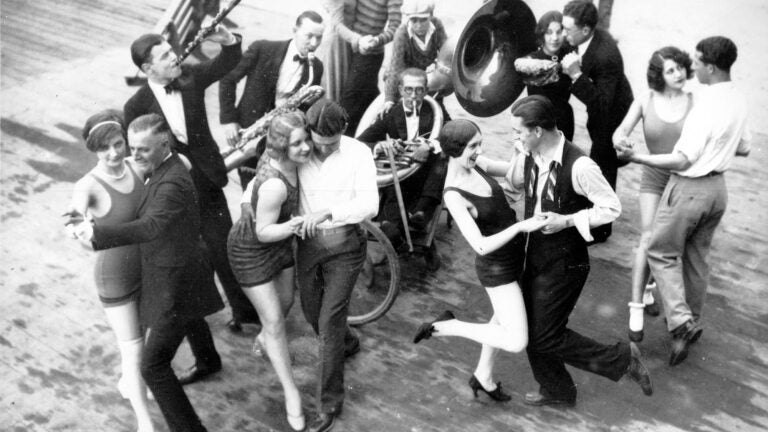
Us Involvement in the ArtsUS's involvement with the arts contributed to the idea of the "Black aesthetic". They wanted to express themselves politically, revealing the beauty of being black in the areas of dance, music, literature and art. In addition, art was a main aspect of black culturalism that the Us Organization encouraged and promoted to its members and the Black commmunity. The Taifa Dance Troupe: According to Joann Kitcheko, co-leader of the dance troupe, we need to "go back to Africa and learn, then you bring it forward and ... recreate it." (Karenga ) The fact that Karenga collaborated with South African singer, Letta Mbulu and her husband, musician-composer Caiphus Semanya, helped bring about a "cultural product of pan-African character" with the Taifa Dance Troupe. For Mbulu and Semanya, who were political exiles, the US Organization dance troupe was their family away from home; they eventually were able to raise money with US to get a lawyer so that they could be free of deportation. Comprised of different subgroups performing certain dances, Taifa did the traditional rain dance with vocal arrangements taught by Letta Mbulu, the Zulu dance, and the miners' boot dance. The boot dance, in particular, originated from the diamond mines and other types of mines in South Africa. The miners had to walk back and forth to and from the mine are, not having any means of transportation. They worked 24hrs each shift, and by these African miners' being creative during these walking trips, they came up with the boot dance, having to wear their rubber boots as they walked and worked. Karenga and US felt a sense of accomplishment and pride as they expanded their organization with these art forms. Karenga felt that for the first time in the Black community, his organization was the one who brought unity within a new culture that contained the wants of revolution and recovery. The Kawaida Theory: Karenga has defined Kawaida as "the synthesis of tradition and reason, has its origin in the 60's and served then as a guiding theory of the Black Cultural Revolution... From its inception, Kawaida has sought to be an ongoing contribution to the development of critical theory of cultural and social change... The two fold thrust of Kawaida as critical theory has been and remains: 1) to offer a continuous uncompromising criticism of the established order of things; and 2) to prose correctives based on the possibilities inherent in us as a people and in the social situation in which we find ourselves." Basically, Kawaida is the study of Black culture and history, both brought out from an Afrocentric perspective. Karenga believes that culture is more than the symbolic representation found in art, but the "totality" of a people's experiences that includes their thoughts and actions. With the unfortunate conflict between US and the Black Panthers that lead to the UCLA shooting, jazz became a factor within the organization's outlook on art. Such artists as Jimmy Heath and Herbie Hancock were involved with the organization, as well as James Mtume, Heath's son. Mtume felt that African drumming can play an essential part with Black music. Though Heath agreed with his son's ideas on this, he felt that it was breaking the traditional way that many jazz musicians play music, speeding up the music so fast that people could not sing nor dance to it. It was basically an art form itself. However, the album "Kawaida" connects jazz and to the US Organization's cultural-nationalist ideology in a most extraordinary way, using wooden flutes that jazz musicians played without any rehearsing. The listener's objective is to focus on the voices of each musician taking turns reciting the meanings of the Seven Principles of Kwanzaa. For example, Hancock (Mwandishi) tells the listener that Ujima means "collective work and responsibility: to build and maintain our community together and to make our brothers' and sisters' problems our problems, and to solve them together." During the time of Black Power, US wanted to get across to its people that "Black Is Beautiful", despite the hardships that they were facing racially and economically. Literature is another art form that US turned to as a way to express their political struggles in society. Karenga thought that writers had a special role in the liberation struggle. He visited Amiri Baraka , along with two other US Organization members, in Newark, New Jersey, which was run by Baraka. Karenga discussed with him about his poems, including Home and Blues people. Though Baraka felt that he was a little too arrogant, he felt that Karenga's "freshness" and total commitment was a cure for the Black Arts movement's undisciplined system. When the meeting was over, Baraka said, I had been stirred to reevaluate where I was coming from, and definitely where I was going." (Karenga 145) It is truly apparent that the US Organization made an impact on culturalnationalist writers during the late 1960s and early 1970s. However, Karenga and Baraka disagreed when it came to the blues music; Karenga believed that blacks would remain stuck in the past of suffering and oppression for his people if they used the blues as a way to heal them of the black struggle, while Baraka felt that the blues was a pure source of entertainment for blacks to enjoy. Though these two had opposing views, according to Baraka, it seemed that the blues and jazz music were the only kinds of art form that helped the Black community escape their troubles. Baraka stated that "Negro music alone...has been able to survive the constant and willful dilutions of the black middle class. Blues and jazz have been the only consistent exhibitors of "Negritude" in formal American culture...because the bearers of its tradition maintained their essential identities as Negroes." (Karenga 147)
Still, Baraka and Karenga came to terms that Black literature was now coming into its existence. Their conversations on music and literature contributed to building a more structural team for the Kawaida project; it operated as "a Black gospel" that expanded Baraka's "poetry, theatrical creation, and [critiques]." (Karenga 147) The purpose for Baraka's writings within Karenga's Kawaida was to reveal the enemy, celebrate blacks, and bring about change. Here is a poem called "In the Year" to describe the 1969 reconstruction period that Black people used to rebuild who they were internally before making that huge leap away from White America into their own Black nation: Cannot resolve external resource into attachment. at our selves, turn again to old understanding experience colors the landscape reality color, curtains of words trap dreams like objects as suicide name America breathe facts on our momentary conclusions so turn again rear up again the thing we need, is each other if we could find completion as sand lays cool far the rising wave a natural though the tide returns each night and the earth speeds through space they look up just the same. Conviction of Dr. Maulana KarengaCannot resolve external resource into attachment. In 1971, Karenga was convicted for torturing two women belonging to the Us Organization. Deborah Jones and Gail Davis testified that Karenga, Louis Smith, Luz Maria Tamayo whipped the women with electrical cords, beat them with a karate baton, hit them with toasters, placed a hot iron in Davis's mouth and against her face, and put detergent and running hoses in their mouths. Supposedly, Karenga started these attack because he thought the women were trying to poison him with "crystals." Karenga denied all these charges, but he was nevertheless sentenced to a one-to-ten year sentence in prison with "counts of felonious assault and false imprisonment." "Karenga was convicted for attacks on Jones, including charges of felonious assault and false imprisonment, that happened in 1970 at Karenga's home in Inglewood, Califiornia." However, the term of imprisonment is in question: some reports say four years and others say five. During his imprisonment, reports state that he was somewhat insane, confused, and suffering from some type of mental disorder. Some would even suggest that he was crazy and "not in contact with reality." These charges against Karenga are confusing. How is that a smart man who established the Us Organization, created Kwanzaa, and promoted black cultural nationalism, could do something so horrible? Is it really possible that Karenga would torture members of his own organization? The crime seems both disturbing and unbelievable, and some still question what really happened in Inglewood. In addition, many wonder if Karenga should be working with social movements and be involved in the Black community because of his past. However, Karenga has made it clear that he will not discuss the case; he will only talk and discuss his philosophy and the Us Organization. In 1975, he was released and revived the Us Organization. The Us Organization is still continuing its work within the Black community, celebrating Kwanzaa, and promoting African culture.
Future ActivitiesUs is still in effect to this day and is actively working within the African community. Here are activities that are scheduled to take place: Sunday 7 December 2008: "In the Spirit of African Solidarity: A Kwanzaa Umoja Reception for Dr. Jorge Ramirez Reyna." *For more information on all of these events, visit: www.us-organization.org/activities/ Our OpinionSydney Champion: Going into this project, I had absolutely no idea what the Us Organization was; I never even heard of it. But I was surprised to find out how big of an impact the organization had on the Black Power Movement and Black Arts though. I think it is impressive and genius that Dr. Maulana Karenga was able to think of ways for the Black community to become united, learn about their African culture, and at the same time fight for liberation. During the Civil Rights Movement, you always hear about the Black Panthers, Martin Luther King, Malcolm X, Black Liberation Army, SNCC, and CORE....all of these groups and people seem WAY more radical than the Us Organization, yet all were fighting for the same goal: freedom, equality, and better overall conditions for African-Americans. Although goups such as the Black Panthers supported armed struggle and combat when necessary to achieve these goals, I applaud Karenga and his organization for advocating other ways to fight oppression. When you really think about it, there needs to be effort from the Black community in order their to be change for the Black community. And I think that effort comes from accepting and understanding Black and African culture...by connecting with your own culture, you'll feel a sense of pride and determination that will encourage you to fight for your people's rights and freedoms. Karenga is an intelligent man, and I wish the Us Organization was a little more well-known than it currently is. Shaylen Dixson Jeff Glaser Laura Elbaz Franklin Caldwell Works CitedBrown, Scott. Fighting for US: Maulana Karenga, the US Organization, and Black Cultural Nationalism. New York: New York University Press, 2003. Swanson, Perry. "Backers say past of founder doesn't diminsh Kwanzaa." The (Colorado Springs) Gazette 23 November 2006. The Organization Us Us Organization. November 16, 2008 <http://www.us-organization.org/>. Group MembersJeff Glaser |
| Document generated by Confluence on Apr 05, 2009 11:24 |