USC Dornsife’s history chair William Deverell explores the birth of a modern metropolis with the organization of an…
Recalling encouragement from his mentor Alice Echols, Sean Little ’06 traces his bachelor’s in English to an M.B.A. to a…
The names of top USC Dornsife students will adorn the wall of Leavey Library in an honor celebrating university-wide students…
The gift creates the Steven and Kathryn Sample Endowment for Ecumenism to support research centered on the foundational…
Howard Wayne Harris proves his 9th grade teacher wrong. Earning his Ph.D. at the USC Dornsife hooding ceremony May 16, he was…
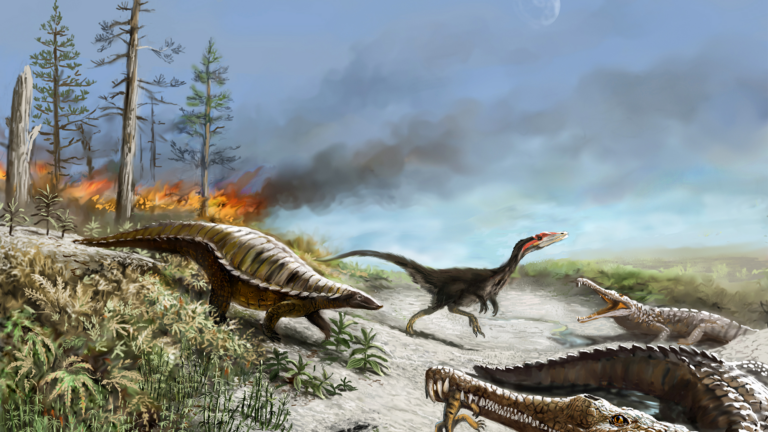
Global warming is not a novel phenomenon, and by studying what happened to the planet during a period of global warming about 250 million years ago, one USC Dornsife scientist hopes to discover what could happen to us this… more>
categories: research, faculty research
tags: biological sciences, david bottjer, earth, earth sciences, fossils, global warming, natural sciences
For the first time, an active delamination of continental lithosphere has been found beneath the Colorado Plateau. Meghan Miller, assistant professor of earth sciences in USC Dornsife, and her team’s discovery is… more>
categories: research, faculty research
tags: earth, earth sciences, meghan miller, natural sciences, nature, publication
When four members of the USC College Department of Earth Sciences took a fieldwork expedition to the United Kingdom, they didn’t have to venture out in the middle of nowhere, drive on dirt roads for hours or hike miles… more>
categories: graduate, research, faculty research, graduate research, diversity, graduate diversity
tags: acidification, canada, david bottjer, earth sciences, england, extinction, fossils, frank corsetti, natural sciences, ocean, travel
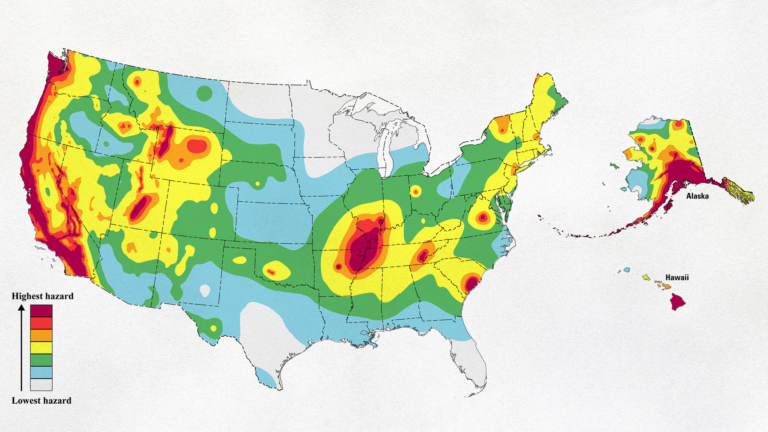
If tectonic plate collisions cause volcanic eruptions, as every fifth grader knows, why do some volcanoes erupt far from a plate boundary? A study in Nature suggests that volcanoes and mountains in the Mediterranean can… more>
categories: research, faculty research
tags: earth, earth sciences, magazine, national science foundation, publication, thorsten becker, volcano
Nonlinear partial differential equations (PDEs) are difficult mathematical problems to study. Notice it didn’t say "solve." Ph.D. students researching nonlinear PDEs aren't looking for solutions. They're analyzing the… more>
categories: graduate, graduate research
tags: award, earth sciences, fellowship, geology, math, mathematics, natural sciences, rocks, wise, women in science and engineering
Hang around the Department of Earth Sciences in USC College in the spring and you might notice posters on the walls asking pointed questions. "Enjoy hiking, climbing, and traveling to exotic spots?" one asks. "Curious about… more>
categories: undergraduate, undergraduate research
tags: earth sciences, geology, natural sciences, nature, soar, surf, undergraduate team research
"I believe that this nation should commit itself to achieving the goal, before this decade is out, of landing a man on the moon and returning him safely to the Earth.” These were the remarkable words spoken by President… more>
categories: research, faculty research, diversity, faculty diversity
tags: biological sciences, earth, earth sciences, grant, katrina edwards, national science foundation, natural sciences, ocean
Katrina J. Edwards, professor of biological sciences and Earth sciences in the University of Southern California's College of Letters, Arts & Sciences, has been recommended for an award of a $25 million NSF grant to… more>
categories: research, faculty research, diversity, faculty diversity
tags: biological sciences, earth sciences, grant, katrina edwards, national science foundation, natural sciences, ocean
This fall, be on the lookout for possibly USC College's youngest researcher. He is David Dominguez, a 16-year-old student at Animo Film and Theatre Arts Charter School. The senior at the south Los Angeles high school is… more>
categories: graduate, faculty research, graduate research, diversity, graduate diversity, community engagement
tags: biological sciences, community, earth sciences, marine environmental biology, natural sciences, oceanography
Iron dust, the gold of the oceans and rarest nutrient for most marine life, can be washed down by rivers or blown out to sea or — a surprising new study finds — float up from the sea floor. The… more>
categories: research, faculty research, diversity, faculty diversity
tags: biological sciences, blog, earth sciences, iron, katrina edwards, natural sciences, nature geoscience, ocean


RSS Feed