USC Dana and David Dornsife College of Letters, Arts & Sciences > Blog

July 5, 2012

Architecture of Tokyo

Filed under: Tokyo — geajapan @ 9:57 pm

By Diana Yan

One of the most fascinating experiences in Japan was getting to see and experience so many of my favorite buildings. As an architecture student I spend a lot of time looking at photos and floor plans of the famous buildings but in Tokyo I had the chance to walk through and experience many of buildings I could only previously stare at photos of.

The first building I knew I wanted to see was the Prada store by Herzon and DeMeuron. It was one of my favorite buildings that I learned about in class. On our last day in Tokyo, Kevin and I made a quick stop to stroll around. It was quite the experience.

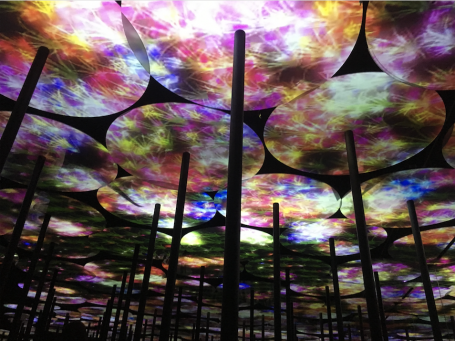
We went to the roof of the neighboring building to see this view. You can kind of see the inside since we couldn’t get any photos inside.

There was so much to see in Tokyo. Tokyo is so dense with fascinating architecture that I stumbled upon these other buildings.

Audi Forum

(more…)

Free Day in Kyoto!

Filed under: Kyoto/Hiroshima,Travel — geajapan @ 9:15 pm

By Kevin Leong

The day after our Hiroshima trip was completely free. Unfortunately, the good weather from that day didn’t carry over and it started to rain again. Our group did many things, such as shop around our hotel/Kyoto Station area, visited Himeji Castle/Himeji Zoo, or head down to Osaka. I spent my day in Osaka. The Osaka Station is also a huge mall, and at the top of the south building there is a Pokemon Center, where we all relived our childhood.

Gotta Catch ‘Em All!
Our group at the Osaka Pokemon Center!

From there, a few of us went to the Osaka Aquarium, and the rest went to Dotonbori. This area is known for its wide variety of restaurants and a lot of shopping. We got a lot of souvenir shopping done in Osaka, even though it wouldn’t stop raining all day.

By Alex Karpos

Another group of us decided to visit Himeji Castle on our free day. After a fairly long train ride, we arrived in Himeji, a city to the south west of Kyoto. Though the city was drenched in seemingly never-ending torrential rain, we decided to slog through the downpour. It was a decision we would not regret. Himeji Castle is truly an astounding complex. Last updated an astounding 400 years ago, this structure is considered the prototypical model for the medieval Japanese castle. The castle is surrounded by a truly amazing complex consisting of several walls, guardhouses, and open lawns surrounding the castle. Though the main, and most recognizable, tower of the castle is under restoration and thus covered from outside elements, this proved to be a blessing in disguise.

Main tower of Himeji Castle, covered in scaffolding for restoration

(more…)

June 28, 2012

The Many Faces of Hiroshima

Filed under: Kyoto/Hiroshima,Travel — geajapan @ 6:00 pm

By Erika Klein and Alex Karpos

Arriving in Hiroshima this morning after our second, and more relaxed, Shinkansen experience of the month, we immediately boarded a bus to visit the city’s well-known sites. Our guide, Masako, began her introduction with the suggestion that “perhaps the name Hiroshima reminds you of the first atomic bomb.” While she went on to mention some statistics related to the bomb, however, the first part of the day unexpectedly focused on less-popularly known aspects of Hiroshima, reminding us that the city is much more than one tragic event. Having learned that Hiroshima is Japan’s largest oyster-producing area, we observed the flat collection of rafts on the Seto Inland Sea as we traveled by ferry to the sacred Miyajima Island to visit Itsukushima Shrine.

Oyster docks surrounding Miyajima

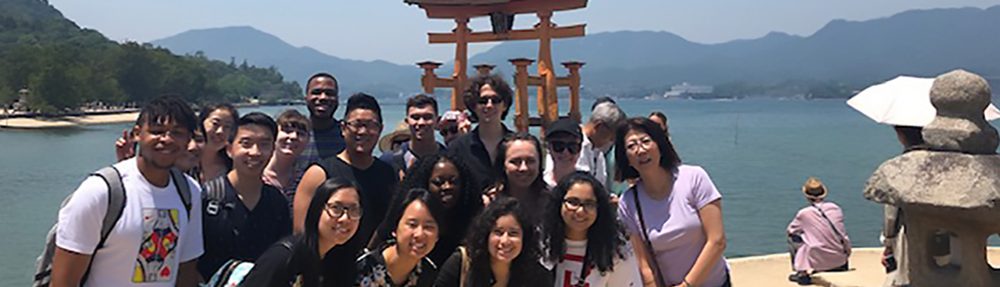
Like Nara, the island was inhabited by half-tame deer, worshipped as divine creatures in Japan and unafraid of approaching humans and attempting to snag food or brochures for a quick snack. Besides photographing the antics of the deer (and those whom they surprised), we took pictures from every angle of Otorii Gate, which appears to float in the ocean during high tide.

Deer Standing Peacefully with Torii Gate in the BackgroundDeer Standing Peacefully with Otorii Gate in the Background
Jumping for joy in front of the Otorii Gate

The gate, serving as a barrier between the Shinto gods’ home on the mountainous island and the human realm of Hiroshima, shared the same orange, evil-expelling color as the ancient shrine, which we explored next.

(more…)

June 27, 2012

Last Day in Kyoto: The Zen Experience

Filed under: Kyoto/Hiroshima,Travel — geajapan @ 5:07 pm

By Morgan Pavey

On our last day in Kyoto, we woke up early to check out of our hotel and head over to Shunkoin Temple for a special Zen meditation session with the attending head priest of the temple, Reverend Takafumi Kawakami. Upon arriving at the temple, we took off our shoes and were led into a traditional tea-ceremony room with tatami mats and simple wooden walls, which was naturally-lit from the sun streaming in from the zen garden outside. The Reverend encouraged us to sit on our cushions in whichever way was most comfortable for us, since comfort and ease were the only reasons why monks used the traditional “half-lotus” leg position. He emphasized the importance of understanding the origins and logic behind traditions like the sitting positions for meditation; it is through this understanding that we will be able to practice the true intent of a tradition and keep it alive.

Reverend Takafumi Kawakami teaching us the Art of Zen.

We enjoyed two brief meditative sessions, initiated by the clapping of wooden sticks and ringing of a bell. As incense floated through the air, we focused on our breathing and accepting any thoughts that entered into our minds without trying to judge or control them. We considered the Zen idea of impermanence, or how each present moment is significant in the way that it will soon become a part of our pasts, but also pave the way for our futures. After the second session, the Reverend showed us the zen garden and the beautiful screen paintings in the adjoining room, pointing out how the gold paint best illuminated the objects depicted when the lighting was dim, as it would have been in ancient times. We then shared fresh matcha and senbei before saying our good-byes, departing a little more enlightened than we had been an hour and a half before.

Screen paintings at Shunkoin Temple

After a quick Japanese bento box lunch on the bus, we arrived with our guide Masako at Ryoan-ji. Ryoan-ji contains a famous rock garden, which embodies the Zen idea of impermanence (each pattern that you rake in the pebbles will become your past as soon as you create it, and will disappear with the wind or human disturbances of the near future). Ryoan-ji’s garden is famous for its fifteen rocks, which are organized in one group of five, two groups of three, and two groups of two. At any given vantage point, however, only fourteen stones are visible at one time. It is said that only through reaching the final stage of enlightenment will a person be able to see all fifteen stones at once.

Enjoying some zen at Ryoan-ji

(more…)

June 26, 2012

Typhoon Tuesday

Filed under: Kyoto/Hiroshima,Travel — geajapan @ 5:00 pm

By Kevin Leong

Our first full day in Kyoto was packed with activities. Unfortunately, a typhoon was forecast to hit us on this day as well.

We woke up to a rainy morning, but nothing too heavy. We all boarded our tour “coach” (bus) with rain gear in hand and headed to our first destination, Kiyomizu Temple. When we arrived at this Buddhist temple, the rain started to really come down. This was a good thing in this situation, though, because at this temple there is a famous fountain that supposedly has ability to extend the life of people who drink from it. Morgan and I decided partake in this local tradition and drank from the fountain. It was very cold and refreshing. The water for the fountain is sourced from the mountain on which Kiyomizu Temple is located. Something I thought was really amazing is that the ladles for the fountain weren’t the usual wooden ones we’ve seen around other temples and shrines in Japan, but made of metal and stored in a box with a UV light to kill any bacteria on the ladle.

Morgan drinking from the famous fountain at Kiyomizu Temple

Another interesting thing about Kiyomizu Temple is that there is a sloped stage at the front of it, from which a Japanese saying has been derived: “to jump off the stage at Kiyomizu.” This is equivalent to the English saying “taking the plunge.” There have been instances where people actually would jump off this stage into the forest area below. Surprisingly, a high percentage of these people survived the plunge.

A group picture in front of the Kiyomizu Temple

Our next stop on Typhoon Tuesday was Nanzenji Temple. At this temple, there is a really nice and peaceful Zen rock garden. Even though the rain was coming down harder than earlier in the day, we all enjoyed this temple and its serenity. There was also a nice arch structure that a few of us took pictures around.

One of the rock gardens in Nanzenji Temple
Photo under the arches of Nanzenji Temple

(more…)

Good-bye Tokyo, Hello Nara!

Filed under: Kyoto/Hiroshima,Travel — geajapan @ 4:48 pm

By Morgan Pavey

After almost three full weeks of exploring Tokyo and getting used to the feel of city life, many of us were excited to experience a change of pace and set out for our week-long experience of Western Japan. We left Sakura Hotel on Monday morning by shinkansen (the famous Japanese bullet train) to Kyoto, the ancient city which was the nation’s capital from its establishment during the Heian Period in 794 until the end of the Tokugawa Shogunate in 1869. After a brief mishap with our departure – which more-or-less involved an epic, movie-esque sprint through Tokyo Station to catch the train before it pulled away from 13 of us, and the heart-breaking separation from Chad and Sheng, who were forced to catch the next train a full thirty minutes later – we arrived safely and met up with our wonderful tour guide, Masako.

The front of the extremely aerodynamic shinkansen, which we used to travel to and from Kyoto!

Our guide Masako took us on a half-day tour of Nara, another former capital just an hour away from Kyoto by bus. We first visited the spectacular Todai-ji Temple, which includes the largest wooden structure in the world. This structure houses the Daibutsu, or Giant Buddha – an enormous statue that welcomed us in with one open palm, meaning “do not fear,” and one up-turned palm, meaning “I will answer your requests.”

Two Buddhas housed within the giant Daibutsuden, the largest wooden structure in the world.

The sacred mood of the temple was accentuated by the hundreds of deer that were wandering freely around the premises, which were so tame that we could actually reach out and touch them. According to the Shinto religion, deer are divine messengers of the gods and guardians of the temple. According to us and the other tourists visiting Todai-ji, they are also adorable.

Ki Bum — the Deer Whisperer!

(more…)

June 25, 2012

Studying in Tokyo

Filed under: Class — geajapan @ 4:35 pm

By Sheng Ge

Time flies. Our three weeks of intense study has officially ended. Looking back, we really had a great time in Tokyo, both in and out of class. Each week we focused on a specific theme: Japanese history in the first week; politics in the second week; and economics in the third week. Through reading the assigned textbooks we had gained a general understanding of Japanese history, its political system, and its economic development, while in the class sessions, Professor Katada gave us enlightening lectures, and Chad divided us into three groups based on our Japanese proficiency to provide us with Japanese language training. We also had the wonderful opportunity of listening to two lectures about the Japanese political system and the current problems Japan is facing given by Meiji professors from the Political Science and Economics School.

Professor Saori Katada Lectures at Meiji University

Besides our coursework, finding awesome food soon became one of our top priorities. We have all had wonderful dining experiences in these first three weeks: delicious CoCo Ichiban curry dishes, budget-friendly fried rice + ramen combos, pasta wonders, fresh-off-the-boat sushi from the famous Tsukiji fish market, and The Insurpassable Ramen Place (a.k.a. Ramen-Jirou) which I will remember the rest of my life… There are just too many awesome food places that can only be found in Japan.

Lecture by the Dean of Meiji Political Science & Economics School
Our Class

I of course also have to mention the awesome Meiji students. They are just so welcoming and helpful to us, always trying to help us in every aspect of our stay in Japan. Even from the first day we met, they asked us all about what we wanted to eat and where we wanted to visit in Tokyo. This was not just their being polite to us; they really took our request and concerns seriously, and made every effort to see that we could do everything we wanted in the following days and weeks. Despite being very busy on weekdays (because we are visiting in the middle of their semester), nearly every day a few supporters would meet up with us to show us around Tokyo and have dinner with us. Then, on the weekends, we would go shopping, dining, and clubbing, all of which contributed to our developing unbreakable friendships. As Chad noted at the Farewell Party, these experiences that Meiji University and its students have enabled us to experience are so unique that not only tourists, but even other exchange students, rarely get to experience them. This is why we all are extremely thankful for the opportunities provided to us by the USC East Asian Studies Center, the Freeman Foundation, Meiji University, JASSO, and of course all the professors, TAs, and supporters who have helped us so much during this trip.

Student Life in Tokyo

Filed under: Class — geajapan @ 4:35 pm

By Diana Yan

Although Los Angeles and Tokyo are both large metropolitan cities, student life in Tokyo is an entirely different experience. On the first day of class, we arrived to Liberty Tower, a large 23-story building that houses the majority of the Meiji University 3rd and 4th year classes.

Getting to know the Meiji students

Soon we had made friends with many of the Meiji supporter students, and learned about their college experiences. Many students commute from home or an apartment because living in Tokyo is simply too expensive. As University of Southern California students, we were startled to learn that some students commute for an hour and a half every day. Moreover, they do this five, and sometimes six, times a week! And to think that when I moved into my off-campus apartment from my sophomore year, I thought a 15-minute walk was far. It really goes to show the dedication of students studying in Tokyo.

Immediately after arriving on campus I had the impression that Japanese students were rigorous and hard-working, so I was even more surprised to learn that the Japanese students thought they did not study hard. At the Yamanaka Lake Seminar House we had an insightful discussion about Japanese student life. We learned that because it is so difficult to get into college, especially a top school like Meiji University, many students felt like they had worked a lot harder in high school. Also, since many of our supporters were juniors and seniors, we talked a lot about getting jobs right out of college. The Meiji students explained that there is really only one chance, or time window, to get a job right after graduation and, just like in America, it is getting harder and harder to find employment. The challenge of only having one chance to enter the work force seems so daunting!

However, while learning about such an education system and job recruitment process seemed so foreign to us, we were also pleasantly surprised to learn that the Meiji University students also make great friends! The first day, when we had our reception, both the USC and Meiji students were rather shy.

USC’s First Day Welcome Reception at Meiji University

We shook hands and introduced ourselves, then started to mingle. Very quickly we realized we had much in common to talk about. Then, three weeks later at our farewell ceremony, we would be toasting to our new best friends and laughing at inside jokes. It has only been a few days since we said farewell to them, and I know that we all miss them already!

June 18, 2012

The Bank of Japan and the Tokyo Stock Exchange: Symbols of Japan’s Economy

Filed under: Tokyo — geajapan @ 4:25 pm

By Ki Bum Kim

To kick off our third week in Japan, our class visited the Bank of Japan (BOJ) and the Tokyo Stock Exchange (TSE) to learn more about some of the major symbols of Japan’s economy. As a business major in the Marshall School of Business, I had been looking forward to these visits so that I could gain a more international perspective on fiscal policy and trading, especially since I took a “Trading and Exchanges” course with Professor Larry Harris back at USC.

The Bank of Japan Entrance
The Courtyard in the Bank of Japan

Our first stop was the Bank of Japan, which was only a couple of subway stations away from the Sakura Hotel, where we are staying in Tokyo. As we entered the courtyard of the fortress-like building, we could see why the BOJ is widely known as a significant cultural landmark. The stately Old Building, built in 1896, contrasted greatly with the modernized buildings that surrounded the bank. As our guide explained later on in the tour, the bank had survived the Great Earthquake of 1923 and the firebombing during World War II, which made it one of the few buildings that remained from the Meiji era.

However, despite how impressive the bank looked from the outside, the most intriguing part of the building may have been the underground vaults. Protected by three doors, including the enormous 25-ton outer door, the vault had many unique features that represented some of the most cutting-edge technology at the time. For example, the architect included a feature that allowed bank officials to reroute water from a nearby river to flood the vault as the last line of defense from thieves. Although the bank floor and the hall of past governors were interesting to see as well, walking through the vault was definitely one of the highlights of the day. (Unfortunately, the BOJ didn’t allow visitors to take pictures, so you’ll have to visit there yourself to see what it looks like!)

After a quick lunch at a nearby shopping complex, we walked over to the Tokyo Stock Exchange, where we were guided into a room for a video presentation. The video, led by a cartoon character named “Arrows,” covered the basics of trading and described the transformation of the TSE from a trading floor to an electronic exchange.

The Official Guide of the Tokyo Stock Exchange: “Arrows”

Because the TSE is now an electronic exchange, the only people working there were a few regulators that looked over the stock exchange to ensure that there was no fraudulent activities happening in the markets. This meant that we were actually able to walk through and see most of the entire stock exchange (and take lots of pictures without bothering people).

The Market Center of the Tokyo Stock Exchange
The Presentation Stage
Fight On!

While we were leaving the TSE and getting ready to call it a day, I realized how important the BOJ and TSE are to the economic infrastructure in Japan. Through the changing conditions both in Japan and the world as a whole, the BOJ and TSE were two of the few constants that led the country for the past century. As we learn more about the Japanese economy in our classes this week, I’m sure that our visits will help us gain a greater understanding of the BOJ and TSE’s role in Japan’s economic development.

June 15, 2012

Tour of the National Diet of Japan: Japanese Political Transformation

Filed under: Tokyo — geajapan @ 4:36 pm

By Keanne Okabayashi

National Diet of Japan (photo courtesy of Kevin Leong)

Upon our arrival at The National Diet of Japan, we were informed that we would receive secretary passes for the day—meaning that we had the same level of access to the Diet as the secretarial workers.

Students With Their Special Access Passes

With our access passes secured, we could then enter the Diet cafeteria for lunch. As we entered the cafeteria, our group shared a collective gasp at what a far cry the Diet cafeteria was from our memories of the freshman dining halls. We slipped into the embroidered seats and gazed at the ornate molding and wood paneled wall, sensing the prestige of those who dined there.

The Diet Cafeteria (photo courtesy of Kevin Leong)
USC Students Enjoying Lunch at the Diet Cafeteria

Following lunch we had the opportunity to see the Speaker Drawing Room, the Chamber of the House of Representatives, the Emperor’s room, and the Central Hall.

Speaker Drawing Room (photo courtesy of Kevin Leong)
Chamber of the House of Representatives (photo courtesy of Kevin Leong)

At the Chamber of the House of Representatives, I was really able to imagine the proceedings of a plenary sitting. Seated in the balcony designated for foreign diplomats, we looked down to the floor where the tour guide pointed out the semi-circle of Members’ seats, row of Cabinet Minister chairs, the Prime Minster’s seat, and the Speaker’s chair.

Next, we were led past the most exquisite and expensive room of the entire building—the Emperor’s room. The room’s entrance is framed by a giant slab of marble and the interior is made of Japanese cypress. The room is used solely by the Emperor, as it only contains a single chair. The cost of such a beautiful room for the use of a single person? $200 million, which is 10% of the entire building’s cost. Unfortunately, photographs of the Emperor’s room were not allowed.

After seeing the Emperor’s room, we moved to the nearby Central Hall 33 meter high ceilings and light streaming in from many stained glass windows, it was easy to see why this housed the Central Entrance. The Central Entrance is only used for the Emperor during the Opening Ceremony, for Diet members’ first convocation day after election, and for State guests.

Central Hall Ceiling (photo courtesy of Kevin Leong)
Stairs Leading to Emperor’s Room, Central Hall (photo courtesy of Kevin Leong)

My favorite part of the tour came as the tour guide pointed out the red carpet leading up to the Emperor’s room. Standing at the base of the stairs, we were forced to move aside as a group of people swept by. As they briskly moved past us, all eyes were on the man leading the group. Following his passing, Professor Katada informed the group that the man was DPJ Chairman Koshiishi. To me, that moment really captured Japan’s transformation. As we stood at the base of the stairs used for the Emperor’s ceremonial entrance, we were quickly confronted with the present as Koshiishi moved past us.

Older Posts »