Faculty
|
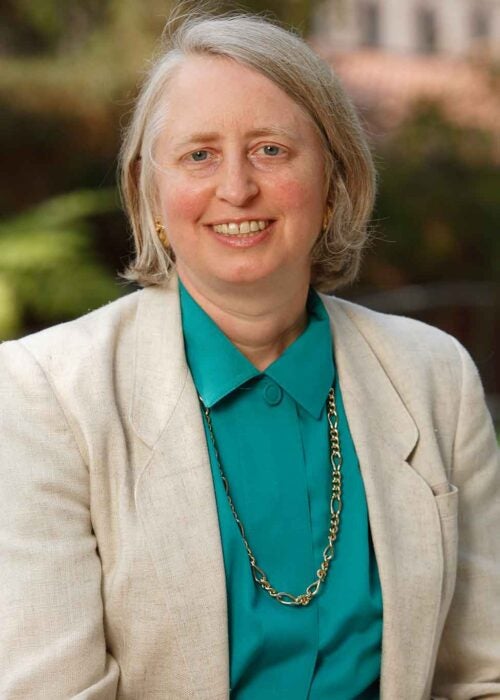
Joan PiggottGordon L. MacDonald Chair in History and Professor of History and East Asian Languages and CulturesContact Information E-mail: joanrp@usc.edu Phone: (213) 821-5872 Office: SOS 168 LINKS Curriculum Vitae Project for Premodern Japan Studies USC Kambun Workshops |
Biographical Sketch
Education
- M.A. East Asian Studies, Stanford University, 1/1972
- Ph.D. History, Stanford University, 1/1987
- Associate Professor of History, Director of the Cornell East Asia Program Kambun Workshops 1997-2001, Cornell University, 01/01/1995-01/01/2002
- Visiting Associate Professor, Department of East Asian Languages and Civilizations, Harvard University, Spring 2001
- Assistant Professor of History, Director of the Cornell East Asia Program Kambun Workshops, Cornell University, 01/01/1989-01/01/1995
- Assistant Professor of History, University of Miami, 01/01/1987-01/01/1989
- Visiting Professor, University of California, Santa Barbara, 01/01/1985-01/01/1987
- Shoen and Obe Estate International Conference, Spring 2012 (Center for Japanese Religions), Joan Piggott, Janet Goodwin, $5,000, 2011-2012
- Shoen in the Medieval Japanese Economy, Obe no Sho as Case Study (North East Asia Council, Assoc Asian Studies), Joan Piggott, Janet Goodwin, $5,000, 2010-2011
- USC Libraries. Expanding the Premodern Japan Collection: I wrote a proposal for outside funding for $40,000, which we got, and which the Library matched. , $80,000, 2009-2010
- Cressant Foundation, funded, Joan Piggott, $80,000, 2009-2010
- Meiji University Graduate School, Program for Interdisciplinary Specialists in Ancient Studies of Japan, Director, Graduate Student and Faculty Exchange in Premodern Japan Studies,http://www.kisc.meiji.ac.jp/~jkodaken/
- Project for Premodern Japan Studies, Director,http://www.usc.edu/schools/college/history/ppjusc
- Reischauer Institute, Harvard University, Research Associate
- University of Tokyo Historiographical Institute, Glossary Advisory Committee and Kambun Workshops, consultant, developer
- USC/Tokyo University Summer Kambun Workshops, Director,http://www.usc.edu/dept/LAS/history/kambun/
- "Interpreting Akihira's Monkey Music, The Author's Intent", Institute of East Asian Studies/Japanese Historical Text Institute, Lecture/Seminar, University of California, Berkeley, Institute of East Asian Studies, UC Berkeley, Invited, 04/29/2011
- "The City in The New Monkey Music of Fujiwara Akihira", Japan in Classical East Asia, Lecture/Seminar, Meiji University, Tokyo Japan, Meiji University, Invited, 11/04/2010-11/06/2010
- "Japan's History in World History", Teikyo University Historical Seminar, Talk/Oral Presentation, Teikyo University, Tokyo Japan, Teikyo University, Invited, 09/04/2010-09/06/2010
- "Tangification in Nara", Nara, City of East Asia Conference, Lecture/Seminar, Paper, University of Oregon, Center for East Asian Studies, Invited, 05/01/2010-05/03/2010
- "Tracking the Wa-Kan Dialectic at Nara", Cultural Crossings Conference, Lecture/Seminar, Paper, University of Virginia, Center for East Asian Studies/Medieval Studies, Invited, 03/11/2010-03/13/2010
- "Reading The Tale of Genji Today", Japan Foundation Fireside Forum, Japan Foundation, Los Angeles, CA, 09/25/2010
- "Singing Kyoto: Fujiwara Akihira's World", Wu Foundation Lecture, Yale University, Center for East Asian Studies, Yale University, 04/23/2010
- "Marriage in the Heian Age", East Asian Studies Center Invited Lectureship, University of California at Santa Barbara East Asian Studies Center, University of California at Santa Barbara, 11/06/2009
- "A Comedy of Marriage and Family in Eleventh-century Kyoto", lecture (in Japanese), Meiji University Premodern Japan Studies Institute, Tokyo, Japan, 02/16/2009
- "Todaiji, Chogen, and Early Obe Estate", Obe Estate Research Group, Project for Premodern Japan Studies, USC, East Asian Library, 05/14/2008
- Piggott, J. R., Goodwin, J., Yoshimura, T. (2009). Yoshimura Takehiko, Essentials of Japan's Classical Civilization. (Joan Piggott, Ed.).
- Piggott, J. R., Yoshida, S. (2008). Teishinkoki: The Year 939 in the Journal of Regent Fujiwara no Tadahira. Ithaca, New York: Cornell East Asian Series.
- Piggott, J. R., Smits, I., Viellard-Baron, M., von Put, I., von Verschuer, C. (2006). Dictionary of Sources of Classical Japan. Paris: College de France.
- Piggott, J. R., Ko, D., Habousch, J. (2003). Women in Three Premodern Confucian Societies. Berkeley, CA: University of California Press.
- Piggott, J. R. (1997). The Emergence of Japanese Kingship, Stanford University Press, 1997. Stanford, CA: Stanford University Press.
- Piggott, J. R. (2009). Navigating Kamakura History: Perspectives on the Last Work of Jeffrey Mass. pp. 30. Los Angeles, CA: USC East Asian Studies Center Monograph Series.
- Piggott, J. R. (2009). Palace and Kingship at Early Heian. (Vol. NA). The Kyoto Historical Atlas/UNESCO.
- Piggott, J. R. (2007). Court and Provinces in the Era of Regent Fujiwara no Tadahira. Honolulu, HI: Centers and Peripheries in Heian Japan/University of Hawaii.
- Piggott, J. R. (2006). Capital and Countryside in Japan 300-1180. Ithaca, NY: Cornell University Press.
- Piggott, J. R. (2010). William W. Farris, Daily Life and Demographics in Ancient Japan. International Journal of Asian Studies.
- Piggott, J. R. (2010). K. Friday, The First Samurai. Journal of Asian Studies. pp. 904-906.
- Piggott, J. R. (2009). G. Barnes, State Formation in Japan; and T. Kidder, Himiko and Japan's Elusive Chiefdom of Yamatai. Journal of Japanese Studies. pp. 413-19.
- Piggott, J. R. (2011). Marriage and Family in Japan, Global Perspectives on the Work of Haruko Wakita. pp. 10. Tokyo. Josei shigaku.
- Piggott, J. R. (2011). What is Classical in Japan?. (Karl Friday, Ed.). pp. 25. New York. Westview Press.
- Piggott, J. R. (2011). Another Heian, the City in Fujiwara Akihira's Shinsarugakuki. (Yoshimura, Takehiko, Ed.). pp. 295-312. Tokyo. Tokyodo shuppan.
- Piggott, J. R. (2009). A Comedy of Marriage and Family in Eleventh-century Kyoto. Kodaigaku. Vol. 1, pp. 51-80.
- Slide Database for Premodern Japanese History, I created and maintain/update a web-based database of 2000 slides illustrating the history of premodern Japan. It plays a prominent role in my classes, as students access it for study and research. More than 500 new slides were added in the last year., 2009-2010
- Inscriptifact Database, I am working with Prof. Bruce Zuckerman to identify and include appropriate Japanese sources for addition to his Inscriptifact Database. We have been building a network of researchers in Japan to help with this important project., 2009-2010
- Kambun Workshop Web Page—source translations, As the director of the Kambun Workshop, I check, correct, and edit the translations from the Workshop and associated reading groups for uploading to our KW website. We now have several years of translations on the site., 2009-2010
- As Director of the Project for Premodern Japan Studies, I manage a Visitors' Series that invites seven or eight speakers to campus annually to give lectures and workshops, often over several days. I also write proposals for funding this series., 2010-2011
- I lead the Obe Estate Research Group, made up of faculty and grad students from USC and elsewhere, that meets monthly and is producing a monographic translation of sources and a compilation of research essays concerning the history of this medieval Japanese estate located in Hyogo Prefecture, near Kobe, in Japan. We expect manuscript submission in 2013., 2010-2011
- I direct the Meiji University-USC Faculty and Graduate Student Research Exchange. Last December (2010) a group of six scholars (3 faculty, 3 graduate student) visited USC for 4 days. They gave papers and participated in research exchange with graduate students and faculty in Japanese studies at USC. In 2012 we are preparing to welcome 6 participants (3 faculty and 3 graduate students) in both premodern and modern Japanese historical studies. , 2010-2011
- We are preparing a monograph that will include translations and research essays on the courtier journal Chuyuki. Several graduate students are participating in the project, and it is providing them with important professionalizing and publication experience. We aim for publication in 2012. , 2010-2011
- I was invited to join the faculty of the History Department in 2003 and charged with creating therein the premier graduate training program for Premodern Japanese History outside of Japan. To achieve that goal I established and direct the Project for Premodern Japan Studies. We recruit top-notch graduate students to study Japanese and East Asian history at USC, and assure that graduate students in the program receive the best possible training as researchers and teachers. The Project is also deeply involved with undergraduate teaching, including primary-source-centered seminars and classes wherein use of Japanese-language materials advances foreign-language learning. Under my direction the Project hosts a dynamic Visitors’ Series that brings leading scholars from Japan, Europe, and North America to our campus; it administers the annual month-long summer Kambun Workshops through which students receive training in the reading of primary sources; it sponsors ongoing research groups that make the reading, translation, and annotation of primary sources the focus; and it advances publication efforts through the new monograph series of the East Asian Studies Center. And at a time when the importance of interdisciplinary research is well understood, the Project fosters close cooperation and research exchanges with partners such as the USC Center for the Study of Japanese Religions, the USC East Asian Studies Center, the joint USC-UCLA East Asia Center, the USC Department of East Asian Languages and Cultures, the Inter-university Center for Japanese Language Studies (Yokohama, Japan), the University of Tokyo Historiographical Institute (Tokyo), and Meiji University’s Interdisciplinary Institute for the Study of Classical Japan (Tokyo). In 2010-2011, Project-affiliated graduate students studied at UCLA, the University of Tokyo, Meiji University, and the Inter-university Center. The Project has sent undergraduates to Japan to participate in study-abroad programs at Sophia, Waseda, and Nanzan universities. Building the East Asian Library is also critically important for our research endeavors, and we advocate energetically for its Japan Collection. I act as curator of the Premodern Japan Collection, for which I make selections of titles for acquisition and secure funding. We competed for and received three external grants in 2010-2011 that were directly linked to Project activities and priorities that I set and oversee. , 2010-2011
- Web Slide Database for Teaching Japanese History, 09/01/2000-
- USC Endowed Chair, Gordon L. MacDonald Chair in History, 1/1/2003-5/15/2013
- Arisawa Prize, from the Association of University Presses, for The Emergence of Japanese Kingship, 1997-1998
- Japan Foundation Fellow, Historiographical Institute, University of Tokyo, 1995-1996
- Director, Project for Premodern Japan Studies, 2010-2011
- Member, Board of Directors, Inter-University Center for Japanese Language Study, Yokohama, Japan, 04/01/2003-04/30/2009
- organizer/coordinator, New Interdisciplinary Currents in Premodern Japanese Studies, USC, History Department, Three faculty members and a graduate student from Meiji University in Tokyo visited USC to present their research on new topics and approaches to history and archaeology in pre-1600 Japan, while interacting with faculty and grad students at USC., 12/06/2009-12/09/2009
- generator, editor, advisor, Super Glossary of Japanese Historical Terms, U Tokyo Historiographical Institute website, 2009-2010
- Executive Editor, Center for East Asian Studies Monograph Series at Cornell, 1998-2001
- American Historical Association, 2009-2010
- Association for Asian Studies, 2009-2010
- Engi shiki Kenkyukai, 2009-2010
- Mokkan Gakkai (Nara, Japan), 2009-2010
- Society for East Asian Archaeology, 2007-2008
Academic Appointment, Affiliation, and Employment History
Description of Research
Summary Statement of Research Interests
A premier Japan historian, Professor Piggott is an expert on premodern Japan and East Asia. Her specialties include the development of kingship, church-state relations, land tenure, and family and marriage in Japan. Her seminal study, The Emergence of Japanese Kingship, combined written records with archaeological evidence to illuminate the reigns of seven Japanese monarchs between the third and eighth centuries. While at Cornell she organized a series of workshops on reading and translating kambun (Sino-Japanese), and those workshops are continuing at USC.
Research Specialties
premodern historical studies: Japan and East Asia; monarchy, family history, and church-state relations
Funded Research
Contracts and Grants Awarded
USC Funding
Proposals Submitted
Affiliations with Research Centers, Labs, and Other Institutions
Conferences and Other Presentations
Conference Presentations
Other Presentations
Publications
Book
Book Chapter
Book Review
Essay
Journal Article
Multimedia Scholarship and Creative Works
Advisement
Other Advisement or Time Devoted to Students
Teaching Innovations and Multimedia Teaching
Honors and Awards
Service to the University
Administrative Appointments
Service to the Profession
Committees
Conferences Organized
Editorships and Editorial Boards
Professional Memberships
- Department of East Asian Languages and Cultures
- University of Southern California
- Taper Hall 356
- Los Angeles, California 90089-0357
All photos taken by Elissa L., Yulee Kim and Ka Wong
- Phone: (213) 740 - 3707
- Email: ealc@usc.edu